
Choosing the right yoga mat thickness is not about finding a single universal standard; it is about matching the mat to your specific practice, joint health, and training environment. The thickness of your mat directly influences your balance, joint comfort, and how easily you can transport your gear.
For fast-paced, dynamic flows where stability and standing balance are paramount, a thin yoga mat (1mm to 3mm) is generally the most effective choice. These mats keep your feet grounded and prevent the micro-wobbles that can lead to ankle fatigue. Conversely, if your practice consists of slow, floor-based poses where you spend extended periods on your knees, hips, or spine, a thick yoga mat (5mm to 6mm or more) provides the necessary cushioning to protect sensitive joints from hard surfaces.
Practitioners who engage in a variety of styles typically find their sweet spot with a standard mat (4mm to 5mm). This middle-ground thickness offers a practical compromise, providing moderate joint protection without severely compromising your stability during standing balance poses.
Products mentioned in this guide
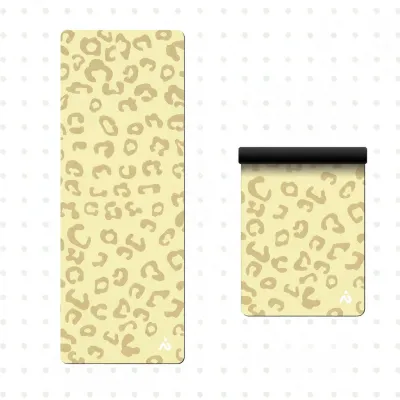
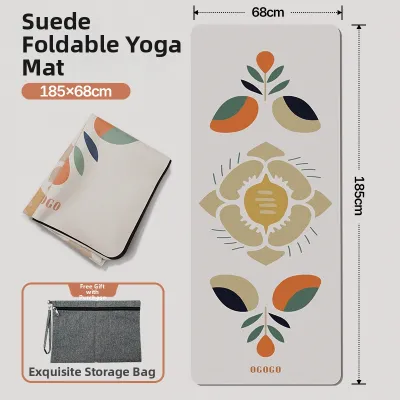
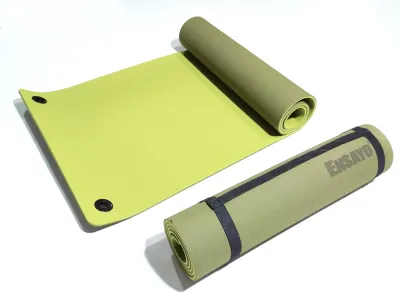
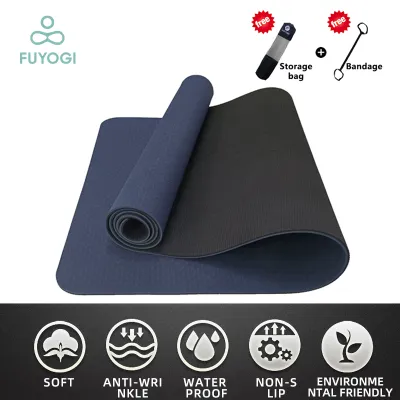
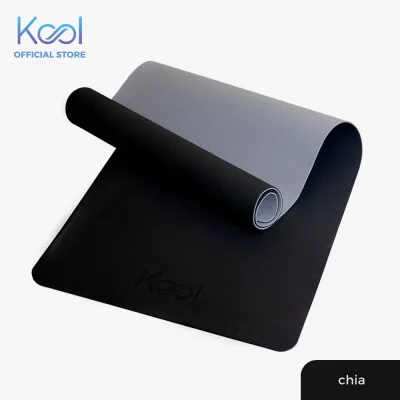
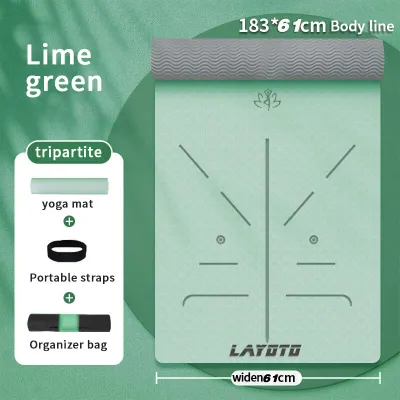
Prices are valid at publication and may change. Please refer to the product page for the latest price.
Understanding Yoga Mat Thickness Standards
Yoga mats are manufactured in a wide range of thicknesses, almost always measured in millimeters (mm). While a few millimeters’ difference might seem negligible on paper, it fundamentally alters your sensory connection to the ground and the amount of shock absorption your body receives.
It is important to understand that thickness does not act alone; it works in tandem with the density of the mat’s material. A thin mat made of a dense material like natural rubber can sometimes feel more supportive and protective than a thicker mat made of cheap, low-density foam that collapses completely under your weight. Common materials include Polyvinyl Chloride (PVC), Thermoplastic Elastomer (TPE), natural rubber, and Polyurethane (PU), each offering distinct weight, density, and compression profiles.
Thin and Travel Mats (1mm to 3mm)
Thin mats, ranging from ultra-thin 1mm travel sheets to standard 3mm utility mats, are engineered for maximum portability and ground feedback. These mats prioritize a lightweight design and a firm, non-yielding surface that allows your hands and feet to make direct, stable contact with the floor. Many travel-specific mats in this category are highly flexible, allowing them to be folded into tight squares and packed into a suitcase or backpack rather than rolled.
Standard to Extra-Thick Mats (4mm to 6mm+)
Standard mats measuring 4mm to 5mm serve as the baseline for most commercial yoga studios because they accommodate the widest range of body types and yoga styles. Extra-thick mats, which measure 6mm or more, are designed with a focus on deep cushioning, joint offloading, and thermal insulation. These thicker options are highly favored for home practices, especially when training on unforgiving residential floors like ceramic tile, polished concrete, or hardwood.
The Case for Thin Yoga Mats: Stability and Flow
Thin yoga mats are favored by experienced practitioners and those who practice dynamic, alignment-focused disciplines. By minimizing the distance between your body and the floor, these mats offer distinct physical advantages during active sequences.

Stability and Balance
A thin mat lowers your center of gravity, which is highly beneficial during challenging standing balances such as Tree Pose (Vrksasana) or Warrior III (Virabhadrasana III). On a thick, squishy surface, the foam compresses unevenly under your feet, forcing the small stabilizing muscles in your ankles and arches to work constantly to correct your balance. A thin mat provides a firm, predictable foundation, reducing ankle fatigue and allowing you to focus on core engagement and alignment.
Ground Connection
Proprioception—your brain’s awareness of where your body is in space—relies heavily on sensory feedback from the soles of your feet and the palms of your hands. Thin mats offer an uninterrupted connection to the subfloor, allowing you to feel the ground clearly. This immediate feedback is highly valued in traditional Hatha, Ashtanga, and Iyengar yoga, where precise foot placement and solid rooting form the foundation of every posture.
Portability
For yogis who commute to a studio, travel frequently, or practice outdoors, carrying a bulky mat is highly inconvenient. Thin mats roll up into exceptionally tight cylinders or fold flat, making them easy to slide into a commuter bag or carry on public transit. Weighing significantly less than their thicker counterparts, they reduce shoulder strain during long walks or hot transits.
Drawbacks
The primary trade-off of a thin mat is the lack of physical cushioning. If you have sensitive joints, previous injuries, or thin skin, a thin mat can make kneeling postures like Camel Pose (Ustrasana) or Low Lunge (Anjaneyasana) highly uncomfortable. The hard floor underneath can cause localized pain in the kneecaps, wrists, and hip bones, which can distract you from your breathwork and alignment.
Best For
Thin mats are ideal for Vinyasa, Ashtanga, Power Yoga, and hot yoga classes. They are also the perfect match for frequent travelers, urban commuters, and practitioners with strong, healthy joints who prioritize stability and sensory feedback over plush comfort.
The Case for Thick Yoga Mats: Cushioning and Comfort
Thick yoga mats prioritize comfort, joint safety, and relaxation, making them an excellent choice for slower, floor-heavy practices and home environments.
Joint Protection
When your knees, elbows, wrists, or spine support your body weight against a hard floor, the contact points experience concentrated pressure. Thick mats, particularly those made from high-density materials, absorb this impact and distribute your body weight across a larger surface area. This offloads the pressure on sensitive joints, preventing the bruising and sharp discomfort that can occur on thinner surfaces.
Comfort for Floor Work
In restorative and Yin yoga practices, poses are held for several minutes at a time to target deep connective tissues. A plush, thick surface makes these long-held floor poses comfortable, allowing your nervous system to fully relax and transition into a parasympathetic state. If your body is constantly fighting the discomfort of a hard floor, your muscles will tense up, defeating the purpose of a restorative session.
Insulation
Practicing on cold tile, stone, or polished concrete floors can drain your body heat, especially during final relaxation poses like Savasana. A thick mat acts as an effective thermal barrier, keeping you warm and insulated from the temperature of the subfloor. This insulation is also beneficial in air-conditioned rooms or during early morning home practices.
Drawbacks
The most notable drawback of a thick mat is its tendency to compress under concentrated weight, which can make standing balance poses feel unstable. Your hands and feet may sink into the material, which can strain your wrists during poses like Plank or Downward-Facing Dog. Additionally, thick mats are bulky, heavy, and difficult to transport, making them less suitable for regular commuting.
Best For
Thick mats are highly recommended for Yin Yoga, Restorative Yoga, Gentle/Therapeutic Yoga, Pilates mat work, and prenatal practices. They are also ideal for beginners, seniors, individuals recovering from joint injuries, and anyone practicing primarily at home on hard tile or concrete floors.
Thin vs. Thick: Comparing Key Performance Dimensions
To help you visualize how these two categories perform in real-world scenarios, the table below compares thin and thick mats across five critical performance dimensions.
| Dimension | Thin Mats (1mm – 3mm) | Thick Mats (5mm+) |
|---|---|---|
| Balance & Stability | High; firm foundation with minimal ankle wobble | Low to Moderate; squishy surface can compromise balance |
| Joint Cushioning | Minimal; requires joint strength or external padding | High; excellent impact absorption for sensitive joints |
| Portability & Weight | High; lightweight, compact, and often foldable | Low; bulky, heavier, and harder to transport |
| Transition Speed | Fast; responsive surface supports quick movements | Slower; feet can sink, slightly delaying quick transitions |
| Floor Insulation | Low; transfers the temperature of the subfloor | High; provides a warm, comfortable thermal barrier |
While thickness plays a massive role in comfort and stability, it is important to remember that grip and sweat management are determined by the mat’s material and surface texture, not its thickness. In hot or highly humid conditions, a closed-cell mat (such as standard PVC) can quickly become slick and slippery, regardless of how thick it is. If you sweat heavily or practice in a tropical climate, look for open-cell materials like natural rubber or polyurethane (PU), or pair your mat with a dedicated non-slip yoga towel to ensure a safe, secure grip.
Final Decision Guide: Match the Mat to Your Practice
To make your final decision, consider your primary yoga style, your physical needs, and where you plan to do most of your practicing. Use this conditional framework to guide your purchase:
Choose a Thin Mat if:
- You practice fast-paced, dynamic styles like Vinyasa, Ashtanga, or Power Yoga.
- You prioritize rock-solid stability and balance in standing postures.
- You commute to a studio on foot, by bike, or via public transport and need a lightweight, packable option.
- You frequently travel and want a mat that can fold flat into a suitcase.
- You already own a thick mat but want a thin travel layer to place on top of studio rental mats for hygiene.
Choose a Thick Mat if:
- You primarily practice Yin, Restorative, or Gentle Yoga, where you spend most of your time on the floor.
- You experience joint pain, stiffness, or sensitivity in your knees, wrists, hips, or spine.
- You are recovering from an injury and require maximum impact absorption.
- You practice almost exclusively at home on hard surfaces like tile, concrete, or hardwood.
- You want a highly insulated surface that keeps you warm during long meditation or Savasana sessions.
Choose a Standard Mat (4mm to 5mm) if:
- You practice a diverse mix of styles, ranging from active Vinyasa flows to slow Restorative classes.
- You want a versatile, "do-it-all" mat that offers a balanced blend of moderate cushioning and reliable stability.
- You want a mat that is comfortable enough for floor work but still light enough to carry to a local studio without hassle.
Pro-Tip for Mixed Practices
If you love the stability of a thin mat but occasionally need extra cushioning for your knees, you do not need to buy two separate mats. You can easily supplement a thin mat by placing a folded yoga towel, a small foam knee pad, or a folded blanket under your knees or wrists during specific floor poses. Alternatively, you can purchase a thin 1.5mm travel mat and layer it directly on top of a standard studio rental mat when you attend class, giving you the perfect combination of personalized grip, hygiene, and extra cushioning.
Frequently Asked Questions (FAQ)
Can I use a thick mat for fast-paced flow classes?
While you can physically use a thick mat for dynamic flow classes, it is generally not recommended. The soft, compressible surface of a thick mat can make fast transitions—such as stepping forward from Downward-Facing Dog to a Low Lunge—feel sluggish and unstable. Furthermore, as your hands sink into the thick foam during poses like Chaturanga or Plank, it can alter your wrist alignment, placing excessive pressure on the wrist joints and increasing the risk of strain or hyperextension.
Will a thin mat cause joint pain during floor poses?
If you have sensitive joints or practice on a very hard subfloor, a thin mat can cause discomfort during kneeling or seated poses because it offers minimal shock absorption. However, you can easily mitigate this issue without sacrificing the standing stability of a thin mat. Simply fold the side of your mat over to double its thickness during kneeling poses, or place a folded yoga towel, blanket, or dedicated gel knee pad under the sensitive joint when needed.
Does mat thickness affect grip in hot or humid conditions?
No, mat thickness has no impact on grip or traction. Your grip is determined entirely by the mat’s surface material, texture, and moisture-absorption capabilities. In hot or humid environments, closed-cell mats (like PVC) will cause sweat to pool on the surface, making them slippery regardless of thickness. To maintain a secure grip when sweating, look for mats made from moisture-wicking polyurethane (PU), open-cell natural rubber, or cork, or use a grippy, microfiber yoga towel over your mat.
Community discussion
Share your experience or ask a question. Comments are reviewed before publication.