
Choosing between a throttle and a pedal-assist sensor (PAS) for your ebike conversion kit determines how you control your motor’s power. A throttle provides instant, on-demand acceleration at the turn of a wrist or push of a button, while a pedal-assist sensor requires you to pedal to activate the motor, offering a more traditional cycling feel and greater battery efficiency. Converting a standard bicycle into an electric bike is an excellent way to tackle long commutes, humid tropical weather, and steep inclines without arriving drenched in sweat. To choose the right setup, you must evaluate your physical comfort, your typical riding terrain, how much effort you want to exert, and the specific mechanical compatibility of your existing bicycle frame.
How Throttle and Pedal-Assist Sensors Actually Work
A throttle acts as a direct manual controller for your e-bike’s motor. When you twist a half-twist or full-twist throttle, or press a thumb throttle, it sends a continuous electrical signal to the motor controller. This signal tells the controller exactly how much power to draw from the battery and deliver to the motor, independent of whether your feet are moving on the pedals.
A pedal-assist system relies on sensors to detect your pedaling motion before engaging the motor. There are two primary types of sensors used in these systems: cadence sensors and torque sensors. Cadence sensors act like a basic switch, measuring the speed at which you rotate the pedal crank arms. Once the sensor detects rotation, it signals the controller to deliver a preset level of motor assistance. Torque sensors are more advanced, measuring the actual physical force you apply to the pedals. They calculate how hard you are pushing and match your effort dynamically, providing a smoother and more intuitive boost.
Products mentioned in this guide
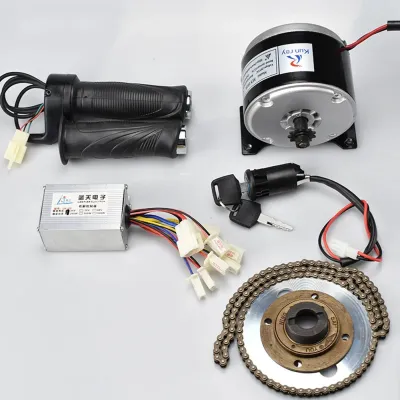
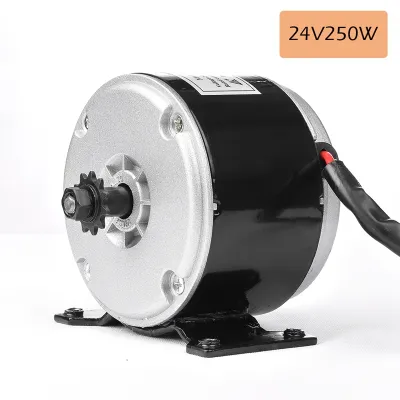
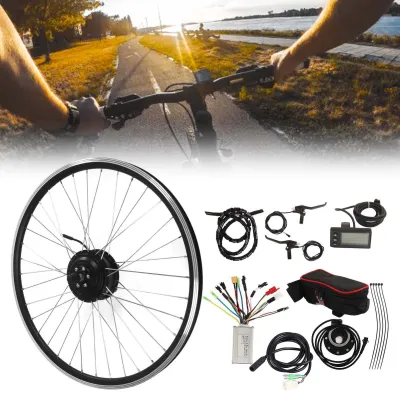
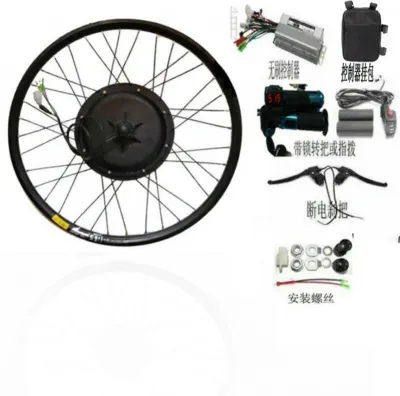
Prices are valid at publication and may change. Please refer to the product page for the latest price.
When you unbox an ebike conversion kit, the hardware components vary significantly based on the sensor type. A throttle setup typically includes the throttle assembly (which slides onto your handlebar grip), a matching grip for the opposite side, and a dedicated wiring harness that connects directly to the controller. A PAS setup includes a magnetic disc ring (often containing 8, 12, or more magnets) that mounts onto the bottom bracket spindle, a stationary sensor bracket that detects the passing magnets, and the corresponding cabling.
Key Differences in Riding Experience and Control
The way these two systems deliver power dramatically alters how your bike behaves on the road. A throttle provides immediate, punchy acceleration from a complete standstill, which is highly useful when you need to quickly clear an intersection or pull away from traffic. In contrast, a pedal-assist system offers a more gradual, progressive power delivery. Because the motor relies on your pedaling input, there is often a slight delay—especially with basic cadence sensors—before the motor kicks in, resulting in a smoother but less instantaneous start.

Your physical engagement with the ride is another major differentiator. Riding with a throttle allows for zero-effort cruising, making it possible to rest your legs entirely while the motor does all the work. This is particularly beneficial on hot, humid afternoons when you want to avoid overexertion. A pedal-assist system, however, requires continuous pedaling to keep the motor engaged. Even at high assist levels, you must maintain a steady pedaling rhythm, which keeps you physically active while still reducing the overall strain on your muscles and joints.
Handling characteristics change depending on how you control the motor. Throttles require careful wrist or thumb modulation, which can sometimes feel tricky when navigating tight spaces, making sharp turns, or walking the bike alongside you. If you accidentally bump the throttle while standing still, the bike can surge forward unexpectedly. A pedal-assist system keeps your hands free to focus entirely on steering and braking, providing a more balanced and natural riding posture. However, you must be mindful of the motor’s assist level when maneuvering at slow speeds, as an unexpected surge from a cadence sensor during a tight turn can disrupt your balance.
Battery Efficiency and Range Expectations
Relying solely on a throttle typically drains your battery much faster. Because the motor must overcome all rolling resistance, wind drag, and rider weight without any physical assistance from your legs, the continuous electrical draw is high. This heavy demand can lead to voltage sag and significantly reduce the distance you can travel on a single charge, especially during stop-and-go city riding.
A pedal-assist system is inherently more efficient because it creates a hybrid power source, combining your physical effort with electrical assistance. By contributing human power to turn the wheels, you reduce the workload on the motor, allowing the battery to discharge at a slower, more stable rate. This cooperative system can easily extend your riding range compared to running on throttle power alone.
Actual range is never a fixed number and depends on several real-world variables. Heavy rider weight, steep uphill climbs, strong headwinds, and low tire pressure all increase the energy required to move the bike. Additionally, selecting a high assist level on your controller will drain the battery much faster than riding in a low, eco-friendly assist mode.
To estimate your potential range, you should check the battery capacity in Watt-hours (Wh) and the motor wattage listed on your ebike conversion kit specifications. You can calculate Watt-hours by multiplying the battery’s voltage (V) by its Amp-hour (Ah) rating (for example, a 48V 10Ah battery provides 480Wh). A higher Watt-hour rating generally indicates a larger energy reservoir, but your actual mileage will ultimately depend on how much physical pedaling you contribute and the terrain you navigate.
Installation and Compatibility Checks
Before purchasing a kit, you must verify that your existing handlebars have enough space to accommodate the throttle assembly. Standard handlebars usually have a 22.2mm diameter, but you must check if your gear shifters, brake levers, and existing grips leave enough flat surface area for a thumb or twist throttle. You also need to plan the cable routing path along the frame to ensure the wires do not pinch or stretch when you turn the handlebars fully.
Installing a pedal-assist sensor requires a close inspection of your bicycle’s bottom bracket area. You will typically need specialized tools, such as a crank puller and a bottom bracket tool, to remove the crank arm and access the spindle. The magnetic disc must be mounted securely on the spindle with a very small, precise clearance (usually 1 to 3 millimeters) between the spinning magnets and the stationary sensor bracket. If your bottom bracket shell is unusually wide or has an uncommon shape, mounting the sensor securely can be challenging.
It is crucial to verify your frame clearance, bottom bracket type, and drivetrain configuration before finalizing your ebike conversion kit purchase. Standard threaded bottom brackets (like square taper spindles) are generally highly compatible with basic PAS rings. However, modern press-fit bottom brackets, hollow spindles, or bikes with chain guards may not have enough exposed spindle space to fit a standard magnetic disc.
While many riders successfully complete these conversions at home, you should know when to stop and consult a professional bicycle mechanic. If your bike requires complex bottom bracket pressing, if you encounter seized components that refuse to budge under normal tool pressure, or if the electrical wiring harness requires custom splicing and waterproofing, taking your bike to a local shop can prevent costly damage to your frame and electrical components.
Decision Framework: Which Sensor System Should You Choose?
A throttle-driven conversion kit is highly suitable if your daily rides involve steep, sudden inclines where starting from a stop is physically demanding. It is also an excellent choice for riders dealing with knee pain, joint stiffness, or other physical limitations that make continuous pedaling uncomfortable. If you view your e-bike primarily as a lightweight utility vehicle or a moped-style commuter to get to work without sweating, the throttle provides the effortless control you need.
A pedal-assist sensor system is a highly practical choice if you want to preserve the authentic, active feel of traditional cycling while simply flattening out the hills. It is an efficient option for long-distance commuters who need to maximize their battery range and avoid the anxiety of running out of power mid-journey. Additionally, because it keeps both hands free to grip the handlebars securely, it offers a highly stable and intuitive ride for fitness-oriented cyclists.
For maximum versatility, look for an ebike conversion kit that supports both a throttle and a pedal-assist sensor. A dual-system setup allows you to use pedal-assist for your steady, long-distance cruising to conserve battery, while keeping the throttle ready for quick bursts of speed, crossing busy roads, or resting your legs when fatigue sets in.
Before making your final decision, you must verify local regulations regarding electric bicycles in your area. In the Philippines, the Land Transportation Office (LTO) and local government units enforce specific guidelines regarding e-bike classifications, maximum motor wattages, and speed limits on public roads. Some jurisdictions restrict throttle-only electric bikes from using major thoroughfares or require specific registration and licensing, whereas low-speed pedal-assist bicycles often face fewer restrictions and are permitted on designated bike lanes.
Frequently Asked Questions (FAQ)
Can I install both a throttle and a pedal-assist sensor on one e-bike conversion kit?
Yes, many modern ebike conversion kit controllers are designed to accept inputs from both a throttle and a pedal-assist sensor simultaneously. In these dual-mode setups, the motor controller is programmed to prioritize safety and rider intent; typically, pressing or twisting the throttle will instantly override the active pedal-assist level, giving you immediate manual control over your speed. While this dual configuration offers high versatility, it does introduce slightly more wiring complexity and requires careful cable management to keep your handlebars and frame clean.
Do pedal-assist sensors work with all types of bicycle drivetrains?
Pedal-assist sensors are highly compatible with standard drivetrains, but they do have physical limitations depending on your bicycle’s bottom bracket design. Standard threaded bottom brackets with square-taper spindles easily accommodate the magnetic disc ring, but press-fit bottom brackets, hollow-tech spindles, and integrated sensor systems often require specialized PAS hardware or custom mounting adapters. Additionally, if your bicycle uses a fully enclosed chain guard, an internal gear hub, or a belt-drive system, you must carefully check the clearance space around the front chainring to ensure the sensor can be aligned properly without rubbing against moving parts.

Community discussion
Share your experience or ask a question. Comments are reviewed before publication.