
Choosing between a dry, absorbent grip like Tourna Grip and a standard tacky overgrip depends entirely on your perspiration levels, local humidity, and preferred racket feedback. If your hands sweat heavily or you play in humid conditions, a dry grip typically maintains its friction by absorbing moisture. Conversely, if you have dry hands and prefer a sticky, secure feel right out of the wrapper, a tacky overgrip will provide better initial control. This guide breaks down the observable differences, environmental factors, and tactile feedback to help you select the right overgrip for your playing style.
When you step onto the court, the connection between your hand and your racket is the single most critical point of control. A grip that slips even a millimeter during a high-speed serve or a heavy topspin groundstroke can cause the racket face to twist, leading to unforced errors or uncomfortable vibrations traveling up your arm. Finding the right balance between moisture management and surface friction is not just about comfort; it directly impacts your confidence on every swing.
Many players make the mistake of buying whatever grip is closest to the cash register or choosing a product based solely on color. However, the engineering behind dry, absorbent grips and tacky, polyurethane-based grips is fundamentally different. By understanding how these materials interact with your skin and the surrounding air, you can customize your racket handle to match your exact physiological needs and playing environment.
Products mentioned in this guide
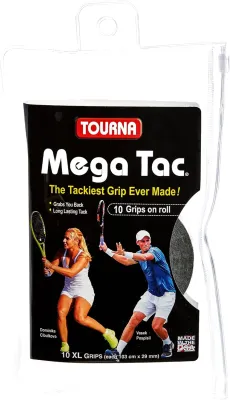
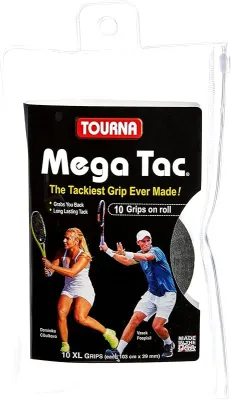
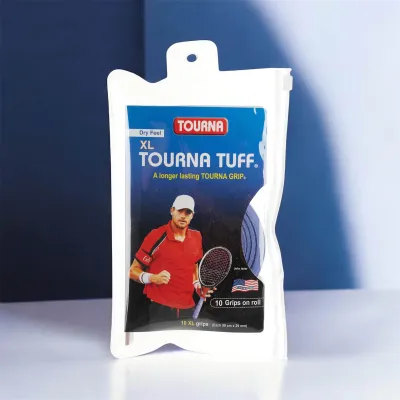
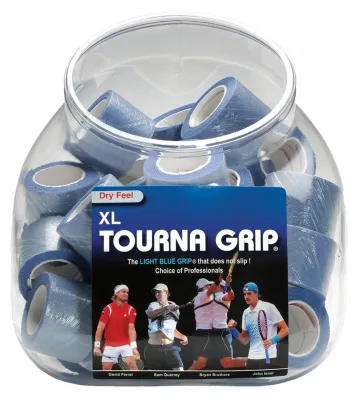
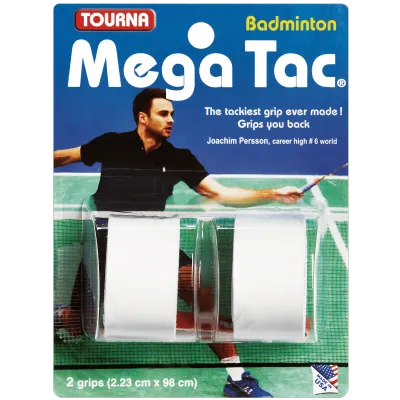
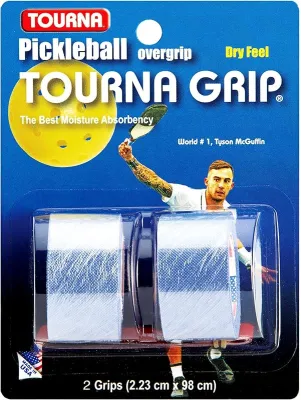
Prices are valid at publication and may change. Please refer to the product page for the latest price.
Core Texture Differences: Dry Absorbent vs. Standard Tacky
To make an informed choice, you must first understand the physical composition of these two grip categories. Dry absorbent overgrips feature a soft, matte, and slightly powdery surface. They are manufactured using specialized non-woven fibers that mimic the feel of suede or a very fine microfiber towel. These fibers are designed to be highly porous, allowing them to draw moisture away from your skin instantly.
In contrast, standard tacky overgrips utilize a polyurethane top layer over a compressed felt base. This chemical formulation creates a smooth, shiny, and rubbery surface that offers immediate adhesion to your skin. When you press your hand against a fresh tacky grip, you will feel a distinct stickiness that holds your fingers in place without requiring a tight squeeze. This surface adhesion is designed to work best when the interface between your hand and the grip remains dry.
The friction mechanisms of these two styles are completely opposite. A dry grip actually requires a small amount of moisture to perform at its best. When your palm sweats, the moisture penetrates the dry fibers, causing them to expand slightly and create a high-friction, slip-resistant surface. A tacky grip, however, relies on dry contact. If a layer of sweat builds up on top of the non-porous polyurethane surface, it cannot escape, creating a slick barrier that can cause the racket to slide out of your hand.
When shopping for overgrips, it is essential to look past brand names and read the packaging labels carefully for texture indicators. Manufacturers will explicitly label dry grips with terms such as “dry feel,” “absorbent,” “moisture-wicking,” or “soft touch.” Tacky grips will be marked with words like “tacky,” “super tack,” “sticky,” or “wet feel.” Recognizing these key terms ensures you do not accidentally purchase a high-tack grip when your hands require maximum sweat absorption.
Matching Grip Choice to Hand Sweat and Tropical Humidity
Selecting the right overgrip requires an honest assessment of your personal sweat levels and the climate where you play. You can perform a simple self-assessment during your next warm-up session. Observe your hands after ten minutes of light rallying: are your palms completely dry, slightly damp, or is sweat actively dripping down your wrists? If you find yourself constantly wiping your hands on your shirt or using a towel between every single game, you fall into the heavy-perspiration category.

Environmental factors play a massive role in how these materials behave on the court. In tropical climates like the Philippines, where high temperatures and intense humidity are the norm, even players who do not normally sweat heavily will find their hands damp within minutes. On outdoor courts under the afternoon sun, the ambient humidity prevents sweat from evaporating off your skin. Under these conditions, a standard tacky grip can quickly become saturated, losing its adhesive properties and turning slick.
This is where the moisture-wicking behavior of a dry grip becomes invaluable. Because the material acts like a sponge, it pulls the sweat deep into the inner layers of the wrap, keeping the outer surface dry and textured. However, this system has a clear limit. If you have naturally dry skin or play in cool, air-conditioned indoor facilities, a dry grip will not receive the moisture it needs to activate its friction. Instead, it will feel papery, dry, and may even cause painful chafing or blisters as it rubs against your dry palms.
Conversely, tacky grips are highly effective for players with dry to normal skin who play in controlled indoor environments. The sticky surface provides an immediate sense of security, allowing you to maintain a relaxed grip on the handle. A relaxed hand leads to smoother stroke mechanics and better wrist snap on serves. If you do not suffer from sweaty palms, the adhesive quality of a tacky grip ensures the racket will not twist, even during off-center hits or heavy volleys.
How Grip Texture Affects Racket Feel and Bevel Feedback
Beyond moisture management, the physical thickness and texture of your overgrip alter how you perceive the racket handle. The handle of a tennis, badminton, or squash racket is octagonal, featuring eight distinct flat sides called bevels. These bevels are crucial for tactile awareness; they allow you to feel exactly which grip orientation you are using without having to look down at your hand.
Tacky overgrips are generally thicker, typically ranging from 0.5mm to 0.7mm, and often feature an integrated foam center or a cushioned backing. While this extra material provides excellent shock absorption and dampens harsh vibrations on off-center hits, it also rounds out the sharp edges of the handle bevels. If you prefer a plush, cushioned feel and do not mind a slightly rounder handle, a thicker tacky grip is highly comfortable.
Dry overgrips are engineered to be much thinner, often measuring between 0.4mm and 0.45mm. Because they lack heavy cushioning layers, they wrap tightly against the original replacement grip of your racket. This thin profile preserves the sharp angles of the handle bevels, giving you maximum feedback and precise control over your racket face angle. Many competitive players prefer this thin profile because it allows for instantaneous grip transitions during fast-paced rallies.
To find your ideal setup, you should test the grip thickness by wrapping a single layer and checking the fit in your hand. Hold the racket in your standard grip; there should be a comfortable gap about the width of your index finger between your fingertips and the heel of your palm. If the fingertips press deeply into your palm, the handle is too small; if they cannot reach near your palm, the handle is too bulky. Adjusting how tightly you stretch the overgrip during wrapping can also help fine-tune this thickness.
Spotting Wear and Tear: When to Replace Your Overgrip
Overgrips are temporary consumables designed to wear out, and playing with a degraded grip can compromise both your performance and safety. You must learn to recognize the physical signs of wear rather than relying on a set number of playing hours. For tacky grips, the most common indicator is the loss of stickiness. The surface will begin to look shiny, smooth, and dirty as dust and skin oils clog the polyurethane pores. In advanced stages, the top tacky layer will begin to peel, flake off, and leave small rubbery debris on your hands.
Dry grips exhibit different wear patterns. Because they rely on fibers, they will begin to fray, pill, or develop a fuzzy texture in the high-friction areas where your fingers rest. You will also notice a distinct color change; for example, a classic light blue dry grip will turn dark purple or grey as it absorbs sweat, dirt, and oils. Once a dry grip has dried out after a heavy session, it may become stiff, rough, and cardboard-like, losing its soft feel and its ability to absorb future moisture.
It is a common misconception that you can wash or clean an overgrip to restore its original properties. Attempting to wash a tacky grip with soap and water will permanently strip away the chemical tackifiers, leaving it slick and useless. Washing a dry grip will break down the delicate non-woven fiber structure, preventing it from absorbing sweat effectively. Once a grip has lost its functional properties, the only safe solution is to remove it and wrap a fresh one.
From a cost-per-use perspective, players in hot, humid regions must accept that highly absorbent dry grips generally require more frequent replacement than tacky ones. A dry grip can become completely saturated and lose its structural integrity after just two or three intense matches in high humidity. Tacky grips, while they also degrade, tend to hold their physical structure together longer, even if their adhesive quality declines. Budgeting for a multi-pack of overgrips (which typically cost around ₱150 to ₱500 depending on the pack size) is a standard part of racket maintenance.
Final Verdict: Which Overgrip Should You Wrap Today?
To make your final decision, evaluate your playing conditions and physical needs against these clear, practical guidelines.
Choose a dry grip if:
- You experience moderate to heavy hand perspiration during play.
- You play primarily on outdoor courts in hot, humid, or tropical climates.
- You prefer a thin, matte texture that preserves the sharp feel of your racket's handle bevels.
- You want a grip that becomes more secure and slip-resistant as it absorbs sweat.
Choose a tacky grip if:
- You have dry to normal hands and rarely experience sweaty palms.
- You play mostly on indoor, air-conditioned courts where humidity is controlled.
- You prioritize a cushioned, plush feel that dampens racket vibrations.
- You want immediate, sticky adhesion to your hand right out of the package.
Verify first if:
- You frequently switch between indoor and outdoor playing environments, as you may need to keep both types in your bag to adapt to changing humidity levels.
- You are recovering from hand blisters, calluses, or wrist strain, which may require checking the exact millimeter thickness and cushioning of your grip setup to ensure adequate protection.
Frequently Asked Questions (FAQ)
Can I use a dry grip if I have naturally dry hands?
Yes, you can use a dry grip, but it may feel dry, papery, or slightly slippery if your hands do not produce enough moisture to activate the fibers. If you prefer the non-sticky, matte texture of a dry grip but have dry skin, you can lightly dampen your hands with water before your match to help the fibers soften and grip your palm. However, if you find the texture too abrasive or if it causes chafing, switching to a mildly tacky overgrip will provide a much more comfortable and secure connection.
Does adding an overgrip change the racket handle size significantly?
Adding a single overgrip will increase your racket handle circumference by approximately 1.5 millimeters, which is roughly equivalent to half a grip size. If you want to maintain the exact original size of your racket handle, you should look for ultra-thin overgrips (around 0.4mm) and wrap them with minimal overlap. If you prefer a larger handle or extra cushioning, you can wrap the overgrip with a heavier overlap, though this will round out the handle bevels and reduce your tactile awareness of the racket face angle.
Community discussion
Share your experience or ask a question. Comments are reviewed before publication.