
Quick Answer: Which Grip Suits Your Playstyle and Climate?
Choosing between a towel grip and a polyurethane (PU) grip for your badminton racket is not about finding a universally superior option. Instead, the right choice depends on your personal sweat levels, your typical playing environment, and how much time you are willing to spend on racket maintenance.
In the tropical climate of the Philippines, where humidity levels regularly soar, your grip choice directly impacts your control over the racket. Towel grips excel at absorbing extreme amounts of sweat, making them a favorite for players who find their hands constantly wet during intense rallies. However, they require frequent replacement to remain hygienic and effective.
Conversely, PU grips offer excellent durability, a cushioned feel, and a tacky surface that provides a secure hold for players with moderate sweating. They perform exceptionally well in controlled environments but can become slippery when saturated. Matching these physical properties to your specific playing conditions—such as whether you play in an open-air community gym or an air-conditioned sports complex—is the key to maintaining a slip-free hold.
Products mentioned in this guide
![[ Buy 2 Take 2 ] Yonex AC102EX Overgrip Yonex Thin Grip Belt Pickleball Tennis Badminton Racket Sweat-absorbent Belt Feather Racket Wrapped Belt Hand Rubbe Tennis Badminton Overgrip Grips Tapes](https://img.lazcdn.com/g/p/cf3d0be0e804a079d742737a426c4aee.jpg_400x400q80.jpg_.webp)
Prices are valid at publication and may change. Please refer to the product page for the latest price.
Understanding Towel Grips and PU Grips
To make an informed decision, it is essential to understand what these grips are made of and how they function on your racket. A towel grip is constructed from cotton terry cloth, very similar to the material used in household bath towels. This highly porous structure is designed specifically for moisture management, drawing sweat away from your palm and trapping it within the fabric fibers. Because cotton naturally expands slightly when wet, it provides a soft, organic texture that many players find comfortable during long sessions.

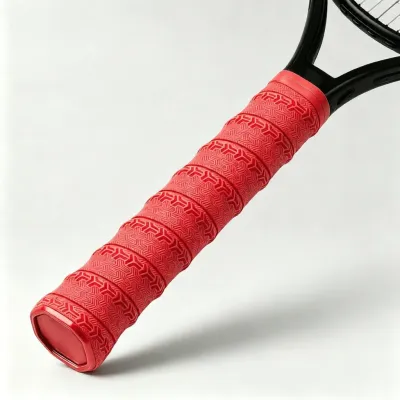
On the other hand, a PU grip is made from polyurethane, a synthetic polymer formulated to offer a smooth, non-porous surface. Instead of absorbing moisture, a PU grip relies on its surface tackiness to create friction between your hand and the handle. Many PU grips also feature a thin layer of foam backing, which provides built-in shock absorption.
These materials interact differently with the wooden handle of your racket. A towel grip is typically wrapped directly over the bare wood or over a thin layer of cushion wrap to prevent sweat from seeping into and rotting the wood. A PU grip can be applied as a replacement grip directly onto the wood, or as a thinner overgrip layered on top of an existing base grip, offering a highly customizable thickness.
Key Comparison Dimensions for Hot and Humid Conditions
Evaluating grip performance in a demanding tropical climate requires looking beyond basic comfort. To determine which material will serve you best on the court, we must analyze how they compare across four critical dimensions: moisture management, tactile feedback, overall lifespan, and physical profile.
Sweat Absorption and Slip Resistance
In high-humidity environments, sweat is the primary enemy of a secure racket hold. Cotton towel grips handle this challenge through direct absorption. When sweat runs down your arm or secretes from your palm, the cotton fibers pull the liquid inward, keeping the outer surface relatively dry to the touch. This mechanism ensures that even during long, high-intensity matches, your hand maintains a firm purchase on the handle. However, there is a physical limit to this absorption; once the cotton fibers are completely saturated, the grip becomes heavy, soggy, and loses its slip resistance.
PU grips operate on an entirely different principle. The synthetic surface relies on a tacky coating to keep your hand from sliding. For players who sweat moderately, this tackiness provides an incredibly secure, locked-in feel. However, because polyurethane is non-porous, sweat cannot penetrate the material. Instead, moisture pools on the surface, creating a thin barrier of liquid between your palm and the grip.
You can easily observe when either material is failing. A failing towel grip will feel squishy, heavy, and cold, often sliding in your hand because the internal fibers can no longer hold more water. A failing PU grip will suddenly lose all its tackiness, becoming slick and glassy, which can cause the racket to twist or even fly out of your hand during a powerful smash.
Durability and Maintenance Requirements
The lifespan of your grip is closely tied to how much maintenance you are willing to perform after each session. Towel grips are notoriously high-maintenance. Because they absorb sweat, skin oils, and dirt, they quickly become a breeding ground for bacteria if left unchecked. Over time, as the absorbed sweat evaporates, salt crystals are left behind in the cotton fibers, causing the grip to harden, lose its soft texture, and develop a persistent, unpleasant odor. To prevent this, players must regularly dry their rackets and replace the grip frequently, sometimes after just a few sessions.
PU grips are far more resilient against dirt and moisture accumulation. The synthetic surface does not absorb sweat, meaning it will not develop deep-seated odors or harbor bacteria in the same way cotton does. You can easily maintain a PU grip by wiping it down with a dry cloth after play.
However, PU grips are not permanent. Over weeks of play, the friction from your fingers will wear down the tacky polyurethane coating. You will notice the material starting to peel, flake, or develop smooth, shiny patches where your thumb and fingers rest. Eventually, the material may crack or tear, indicating that it is time for a replacement.
Thickness, Cushioning, and Racket Feel
The physical profile of your grip alters how you feel the racket’s bevels, which is crucial for quick grip transitions between forehand and backhand shots. Towel grips are generally wrapped tightly and offer a relatively thin, firm profile. This lack of bulky cushioning allows you to feel the octagonal shape of the wooden handle directly, giving you precise tactile feedback and allowing for micro-adjustments with your fingers during delicate net play.
In contrast, PU grips are available in various thicknesses and often feature a cushioned foam backing. This design provides excellent shock absorption, reducing the vibrations transmitted to your wrist and elbow during hard hits. While this cushioning increases comfort, it can round out the handle’s bevels, making it slightly harder to feel the exact orientation of the racket face without looking.
Before purchasing any grip, always check the manufacturer’s specified thickness on the packaging. If you prefer a plush, cushioned feel, look for PU grips with a thickness of 1.5mm or more. If you prefer a raw, responsive feel, a thin towel grip or a 0.6mm PU overgrip wrapped tightly will serve you better.
Performance Trade-offs in the Philippines' Climate
Playing badminton in the Philippines presents unique environmental challenges that directly affect gear performance. Most local players frequent a mix of venues, ranging from modern, air-conditioned indoor sports complexes to open-air covered courts. The ambient temperature and humidity in these venues dictate how your grip behaves.
In non-air-conditioned courts, the tropical heat prevents sweat from evaporating quickly from your skin. In these conditions, a PU grip can become overwhelmed by moisture within minutes of starting a game. The lack of active ventilation means the air is already saturated with water vapor, compounding the slickness on synthetic surfaces. For these hot, stagnant environments, a towel grip is often the practical choice, as it acts as a sponge to keep your hands dry enough to play safely.
Conversely, playing in air-conditioned halls changes the dynamic. The air conditioning actively dehumidifies the space, allowing sweat to evaporate more naturally from your hands. In these cooler settings, a PU grip shines, maintaining its tacky surface without becoming slick.
However, transitioning between these environments can accelerate grip degradation. Moving your racket from a humid outdoor climate into a cold, air-conditioned hall can cause condensation to form on synthetic surfaces, while towel grips can trap damp outdoor air, leading to mold growth if stored immediately in a zipped racket bag. Understanding the ventilation of your primary playing venue is essential before committing to one grip type.
How to Choose the Right Grip for Your Needs
To simplify your decision, use this condition-based framework to match your playing style and environment to the correct grip material.
Choose a Towel Grip if:
- You sweat heavily: Your palms naturally produce significant moisture, or sweat constantly runs down your forearms during play.
- You play in non-air-conditioned venues: Your primary courts are open-air halls, barangay gyms, or multi-purpose centers without climate control.
- You prefer a direct, firm feel: You rely on feeling the sharp bevels of the racket handle for precise finger control and quick shot variations.
- You do not mind frequent maintenance: You are willing to dry your racket after every session and replace the grip regularly to maintain hygiene.
Choose a PU Grip if:
- You sweat moderately or lightly: Your hands stay relatively dry, and you do not experience severe slipping issues during matches.
- You play in air-conditioned halls: Your venues have active climate control and dehumidification that keep ambient moisture low.
- You prioritize cushioning and comfort: You want to minimize shock and vibration to protect your wrist, elbow, and shoulder during heavy hitting.
- You want a low-maintenance setup: You prefer a grip that lasts for weeks without needing replacement and can be cleaned with a simple wipe-down.
Verify first if:
- Your racket handle size is compatible: Adding a thick PU replacement grip or a bulky towel grip can significantly increase the handle's circumference. If your racket has a small grip size (like G5 or G6), a thick wrap might make the handle too large for your hand, limiting your wrist snap. Always measure your hand comfort and check the grip's thickness before wrapping.
Installation and Maintenance Tips for Longevity
Proper installation and post-play care are vital to getting the most out of whichever grip you choose. Before applying a new grip, completely remove the old, worn-out material. Inspect the wooden handle underneath; if it is damp or shows signs of sweat seepage, let it dry completely. It is highly recommended to apply a layer of waterproof electrical tape or specialized cushion wrap over the bare wood to act as a barrier against moisture, which prevents the wood from rotting over time.
When wrapping your new grip, start from the bottom cap of the handle. Maintain consistent, firm tension as you wrap upward, overlapping each turn by about two to three millimeters. Overlapping too much will create thick ridges, while overlapping too little can cause the grip to slide apart and unravel during a match. Once you reach the top of the handle near the cone, cut the grip at an angle for a clean finish, and secure it tightly using the adhesive finishing tape provided in the package.
After a grueling session on the court, never immediately zip your racket into its thermal bag, especially if you use a towel grip. Trapping moisture inside a dark, airtight bag guarantees mold growth, bad odors, and rapid material breakdown. Instead, take your rackets out of their covers as soon as you get home. Stand them upright in a well-ventilated room or near a fan to allow the grips to air-dry completely. This simple habit will double the lifespan of your grips and keep your gear smelling fresh.
Frequently Asked Questions (FAQ)
Can I use an overgrip on top of a towel grip?
While you can physically wrap a PU overgrip over a towel grip, doing so is highly counterproductive. The primary function of a towel grip is to absorb sweat through its porous cotton fibers. Covering it with a non-porous PU overgrip completely blocks moisture from reaching the cotton, rendering the towel grip useless. If you need extra thickness or cushioning under your PU overgrip, use specialized foam cushion wrap or a standard synthetic replacement grip as your base instead.
How often should I replace my badminton grip?
There is no fixed calendar schedule for replacing a grip, as it depends entirely on your play frequency, sweat volume, and how well you maintain your gear. Instead, watch for physical signs of wear. For towel grips, replace them immediately when the cotton fibers harden, thin out, lose their absorbency, or develop a persistent odor that does not go away after air-drying. For PU grips, replace them when you notice peeling, visible cracks, smooth patches that have lost their tackiness, or when the surface becomes permanently slick even when dry.
Community discussion
Share your experience or ask a question. Comments are reviewed before publication.