
Finding the right yoga mat requires looking beyond color and aesthetics. The material of your mat directly dictates how well you can hold a pose, how much support your joints receive, and how long the mat will withstand daily use. In a tropical climate where humidity and sweat are constant factors, choosing between Thermoplastic Elastomer (TPE), Nitrile Butadiene Rubber (NBR), and natural rubber becomes a practical decision that affects your safety and stability during practice.
Your choice should align with your primary yoga style, your physical needs, and your daily routine. A practitioner focusing on slow, restorative poses has vastly different equipment requirements than someone moving through a fast-paced, sweat-inducing flow. By understanding the physical properties of these three common materials, you can make an informed investment that supports your practice without causing unnecessary frustration or joint strain.
Core Differences: How Material Dictates Grip and Cushioning
The fundamental performance of any yoga mat is determined by its density and cell structure. Manufacturers construct mats using either open-cell or closed-cell configurations. Open-cell structures, typical of natural rubber, act like a microscopic sponge that absorbs moisture and sweat. This absorption prevents liquid from pooling on the surface, which maintains high traction even during intense, sweaty sessions. However, this open structure also means the mat can harbor bacteria and oils if not cleaned regularly and thoroughly.
Products mentioned in this guide
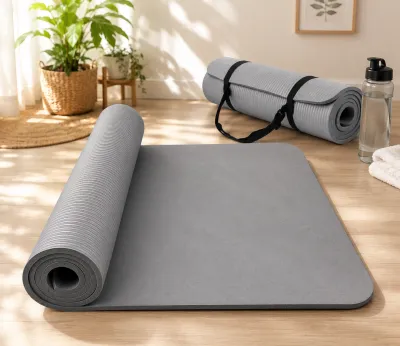
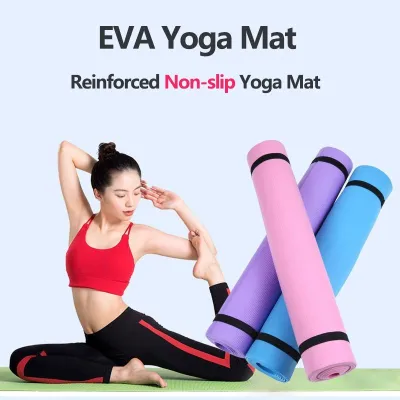
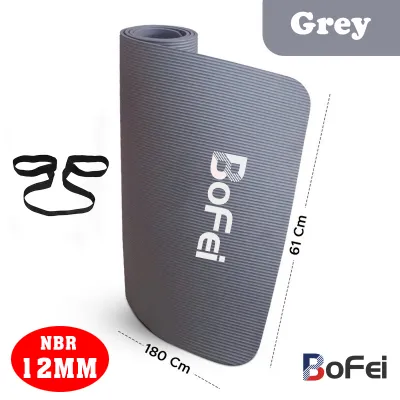
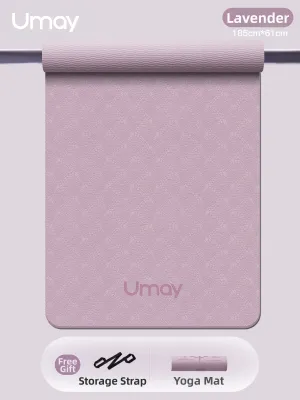
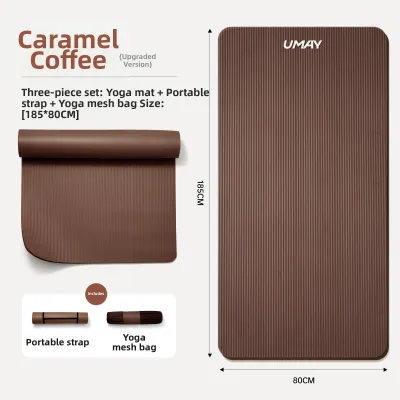
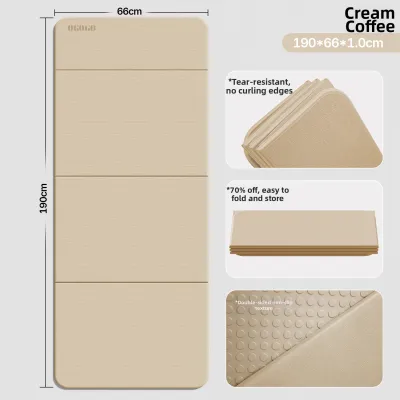
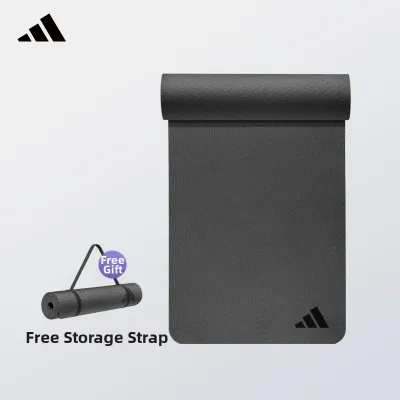
Prices are valid at publication and may change. Please refer to the product page for the latest price.
Conversely, closed-cell structures, which are standard for TPE and NBR, repel moisture entirely. Sweat and dirt remain on the surface, making these mats exceptionally easy to wipe clean after a session. The trade-off is that once moisture accumulates on a closed-cell surface, it can quickly become slippery, acting like a slide under your hands and feet.
Foam composition and density also dictate how the mat handles weight and pressure. High-density materials offer firm resistance, allowing you to press down without bottoming out against the hard floor. Low-density, highly compressible foams provide a soft, pillowy feel but can compromise your balance by shifting under your weight. Additionally, environmental factors like high humidity, ambient heat, and exposure to sunlight can accelerate the breakdown of certain polymers, causing some mats to flake, stretch, or lose their grip over time.
TPE Mats: Evaluating Portability and Budget Constraints
Thermoplastic Elastomer, commonly known as TPE, is a synthetic blend that has gained popularity as a lightweight, cost-effective alternative to traditional PVC mats. For practitioners who frequently travel to studios, commute via public transit, or carry their gear around warm city streets, TPE mats offer a highly portable solution. They typically weigh significantly less than natural rubber mats of the same thickness, reducing shoulder strain during transport.

Because TPE features a closed-cell structure, it does not absorb sweat. During a gentle Hatha session or a basic stretching routine, this surface remains dry and easy to manage. However, if your practice intensifies or if you are practicing in a non-air-conditioned room, sweat will pool on the surface. To maintain traction and prevent slipping, you will need to pair a TPE mat with a high-quality microfiber yoga towel that can absorb excess moisture.
The lower density of TPE means that while it is lightweight, it provides moderate cushioning. It is highly suitable for standard floor poses, but it may not offer enough depth for those with highly sensitive joints. When shopping for a budget-friendly TPE mat on an online marketplace, it is important to verify the product’s construction. Look for dual-layer designs with textured patterns on both sides, which help prevent the mat from sliding across smooth tile or polished wood floors. Avoid options that emit a strong chemical odor upon unpacking, as this can indicate lower-grade manufacturing processes.
NBR Mats: Assessing Foam Cushioning for Joint Protection
Nitrile Butadiene Rubber, or NBR, is a synthetic rubber foam characterized by its extreme thickness and high compressibility. Typically measuring between 10mm and 15mm in thickness, NBR mats are designed primarily for maximum shock absorption. If you experience discomfort in your knees during low lunges, or if your wrists and spine require a soft barrier against hard tile or concrete floors, the thick cushioning of an NBR mat provides immediate physical relief.
However, this pillowy thickness comes with a significant trade-off in stability. During standing balance poses, such as Tree Pose or Warrior III, your feet will sink deep into the foam. This compression makes it difficult to find a stable foundation, forcing your ankles and stabilizing muscles to work much harder to keep you upright. For this reason, NBR mats are generally unsuitable for dynamic, standing-heavy yoga flows.
Instead, NBR mats are highly effective for low-impact, floor-based practices. They excel in Yin yoga, Restorative yoga, and Pilates mat work, where you spend the majority of the session seated, kneeling, or lying down. If you attempt to use an NBR mat for fast-paced transitions like sun salutations, you may find the material stretching and pulling under your hands, which can disrupt your alignment and increase the risk of wrist strain.
Natural Rubber Mats: Weighing Premium Grip Against Weight
Natural rubber mats represent the premium tier of yoga equipment, favored by dedicated practitioners for their exceptional traction and natural origin. Harvested from rubber trees, this material features an open-cell structure that provides an inherently high-friction surface. Even when your hands are damp with sweat during a vigorous session, natural rubber grips your skin firmly, allowing you to hold challenging poses without sliding.
The primary compromise of natural rubber is its substantial weight. A standard 4mm natural rubber mat can weigh twice as much as a thicker TPE mat, making it a cumbersome option for daily commuting on foot or public transit. It is most suited for a dedicated home practice space or for studios where you can store your gear. Additionally, because it is derived from natural sources, anyone with a known latex allergy must exercise caution and verify whether the specific mat has been processed to remove allergenic proteins, or avoid natural rubber entirely.
This material is highly suitable for sweat-heavy, dynamic practices such as Vinyasa, Ashtanga, and Hot Yoga. The open-cell surface absorbs moisture continuously, maintaining its grip throughout the entire practice. However, this high performance requires diligent maintenance. Natural rubber is highly sensitive to environmental factors; exposing it to direct sunlight or leaving it in a hot car can cause the material to dry out, discolor, and crumble. It must be cleaned with specialized, oil-free solutions and stored in a cool, shaded area to preserve its elasticity.
Decision Matrix: Matching Materials to Your Yoga Style
To help you finalize your choice, the following matrix compares the key attributes of TPE, NBR, and natural rubber based on practical performance metrics.
| Material | Grip Level (Dry/Wet) | Cushioning & Support | Weight & Portability | Suitable Practice Styles | Care & Maintenance |
|---|---|---|---|---|---|
| TPE | Moderate / Low (requires towel) | Moderate (lightweight density) | Very Light (easy to commute) | Hatha, Gentle Flow, Yin | Easy (wipe down with water) |
| NBR | Moderate / Low (slippery when wet) | High (thick, soft foam) | Light to Medium (bulky but light) | Restorative, Pilates, Yin | Easy (wipe down, air dry) |
| Natural Rubber | High / High (excellent wet grip) | Firm & Supportive (dense) | Heavy (challenging to carry) | Vinyasa, Ashtanga, Hot Yoga | Moderate (specialized cleaning, no sun) |
When matching these materials to your specific environment, consider your home flooring. If you practice on smooth ceramic tiles common in tropical homes, a heavier natural rubber mat or a textured TPE mat will grip the floor much better than a lightweight, smooth-bottomed NBR mat, which may slide during lateral movements.
Verify first if:
- You have a latex sensitivity: If yes, opt for TPE or a specialized latex-free synthetic mat.
- You commute to class: If you walk or take transit, prioritize TPE for its lightweight properties.
- You practice on hard tile: Ensure your mat has sufficient density (not just thickness) to prevent your joints from pressing directly against the hard floor.
Pre-Purchase Checklist: Verifying Material and Thickness Claims
When browsing online marketplaces, product descriptions can often be misleading, using buzzwords that obscure the actual material composition. Use this checklist to verify your prospective mat before purchasing:
- Confirm the exact material composition: Look for listings that explicitly state "100% TPE" or "100% Natural Rubber." Avoid ambiguous terms like "eco-foam" or "rubber-like polymer" without clear material specifications.
- Check the density, not just the thickness: A 6mm TPE mat will feel very different from a 6mm natural rubber mat. Natural rubber is much denser and will not bottom out, whereas a low-density TPE mat may compress completely under your knees.
- Inspect the texture and backing: Ensure the underside of the mat features a distinct, high-traction pattern (such as a wave or herringbone design) to prevent the mat from sliding on your specific floor type.
- Review the care guidelines: Verify that the cleaning routine fits your lifestyle. If a mat requires specialized, expensive cleaning solutions or cannot tolerate any moisture, ensure you are willing to maintain it.
Frequently Asked Questions (FAQ)
Are TPE and NBR yoga mats safe for hot yoga?
While TPE and NBR mats are non-toxic and safe to use in warm rooms, they are not optimal for high-sweat environments like hot yoga due to safety concerns. Because both materials are closed-cell, sweat cannot penetrate the surface and instead forms slick pools. This creates a significant slip hazard during dynamic transitions. If you choose to use a TPE or NBR mat for hot yoga, you must place a slip-resistant microfiber yoga towel over the entire surface to absorb sweat and secure your footing.
How do I clean and maintain a natural rubber yoga mat?
To preserve the open-cell structure of a natural rubber mat, clean it gently using a soft cloth dampened with a mixture of water and a few drops of mild, oil-free dish soap. Avoid harsh chemical cleaners, bleach, and essential oils, as oils will clog the open cells and permanently destroy the mat’s grip. Never submerge the mat in water or place it in a washing machine. Always allow the mat to air dry completely in a cool, shaded indoor area, keeping it away from direct sunlight to prevent the rubber from drying out and cracking.
Community discussion
Share your experience or ask a question. Comments are reviewed before publication.