
Quick Answer: Which Taekwondo Uniform Do You Need?
Choosing the right taekwondo uniform—traditionally known as a dobok—depends directly on your current training stage, your budget, and how you plan to use it. Because a uniform is your primary piece of equipment, selecting the wrong type can hinder your movement, cause discomfort during intense sessions, or even disqualify you from official events.
Choose a training dobok if:
- You are a beginner or intermediate student attending regular classes.
- Your training focuses primarily on fitness, basic techniques, and self-defense drills.
- You prefer a heavier, highly durable fabric that can withstand daily wear, floor work, and frequent washing.
- You want a budget-friendly option, typically ranging from ₱1,000 to ₱2,500, to start your martial arts journey.
Choose a competition taekwondo uniform if:
Products mentioned in this guide
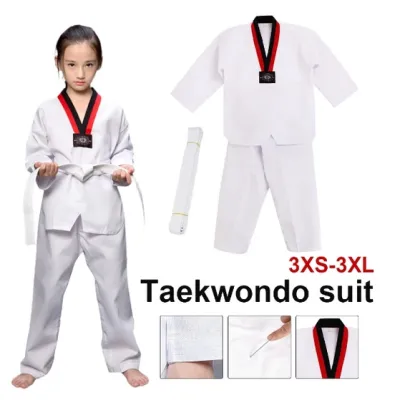
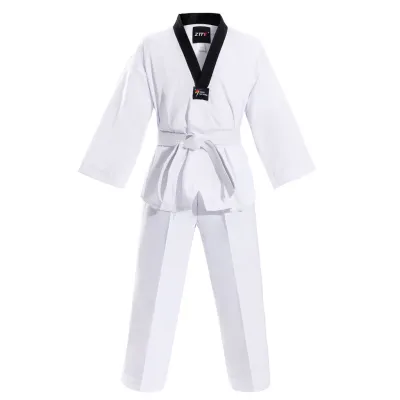
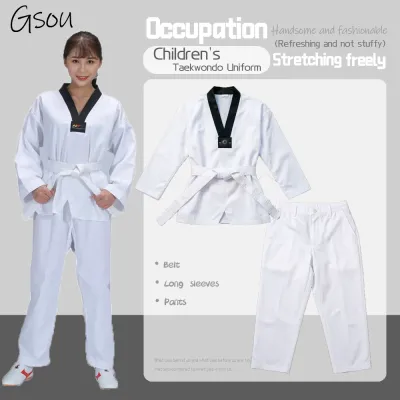
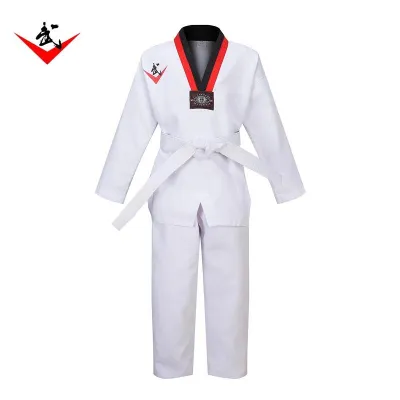
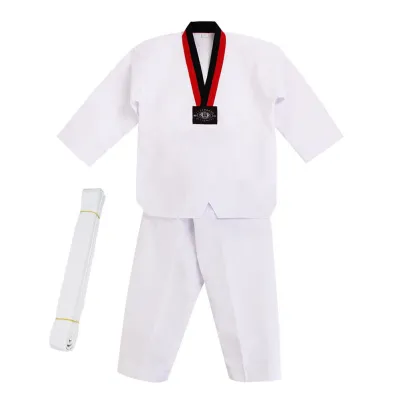
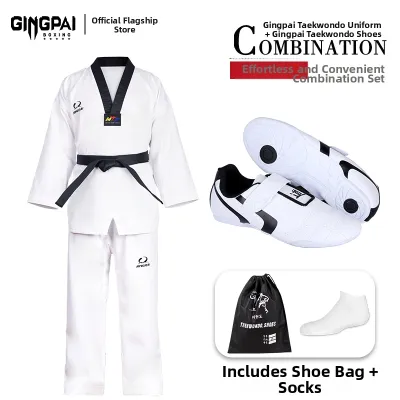
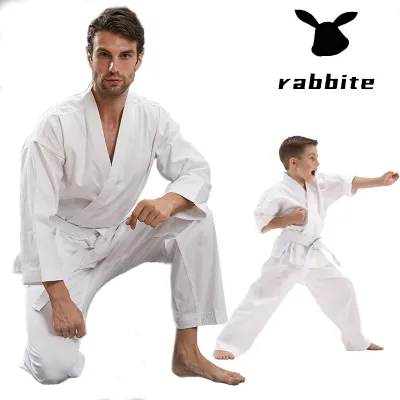
Prices are valid at publication and may change. Please refer to the product page for the latest price.
- You are an active sparring (Kyorugi) competitor preparing for tournaments.
- You require a uniform that carries official World Taekwondo (WT) approval for sanctioned events.
- You need an ultra-lightweight, highly breathable, and sweat-wicking garment that minimizes drag and maximizes kicking speed.
- You are willing to make a premium investment, usually ranging from ₱3,000 to ₱7,000 or more, for high-performance gear.
Verify first if:
- You are preparing specifically for Poomsae (forms) competition. Poomsae requires a highly specialized uniform made from stiff, heavy fabric designed to create a loud, sharp "snap" sound during fast punches and kicks. This is distinct from both standard training doboks and ultra-lightweight sparring uniforms.
Key Differences Between Training and Competition Doboks
To make an informed purchase, you must understand the physical and functional differences between these two categories. While they may look similar from a distance, their materials, cuts, and structural designs are engineered for entirely different environments.

Material, Weight, and Breathability
Training doboks are built for longevity. They are commonly crafted from medium-to-heavyweight cotton or cotton-polyester blends, typically featuring a 55/45 or 65/35 polyester-to-cotton ratio. This blend provides a traditional feel, offering a structured look that holds its shape well. The presence of cotton makes the fabric soft against the skin, but it also means the uniform absorbs moisture. In a tropical, high-humidity environment, a heavy cotton-blend uniform can become saturated with sweat during a long class. This added water weight can cause the fabric to cling to your limbs, increasing friction and making high kicks feel heavier.
In contrast, competition uniforms are engineered strictly for high-speed performance and temperature regulation. They are almost exclusively made from 100% advanced polyester or highly technical synthetic blends. These fabrics are incredibly thin and lightweight, often weighing less than half of a standard training uniform. Instead of absorbing sweat, these synthetic fibers are hydrophobic; they pull moisture away from your skin and push it to the outer surface of the fabric where it can evaporate rapidly. Many competition uniforms also feature integrated micro-mesh ventilation panels under the arms, along the lower back, and behind the knees to maximize airflow in warm training halls.
When browsing online marketplaces or specialty martial arts stores, do not rely solely on vague marketing terms like “breathable” or “cool-tech.” Always check the detailed product specifications or the physical fabric composition label. Look for terms like “ribbed polyester,” “jacquard weave,” or “micro-mesh inserts” to verify if the uniform is truly designed for competition-level heat management.
Cut, Fit, and Design Features
The physical structure of the jacket and pants differs significantly to match the demands of daily practice versus high-stakes sparring. Training doboks often feature a slightly looser, more traditional cut. This generous fit accommodates a wide range of body shapes and allows room for growth, which is especially practical for younger students. While most modern WT-style training uniforms utilize a pull-over V-neck design, some traditional schools still use a cross-over jacket secured by side tie strings. These ties allow for minor adjustments to the fit, but they can easily come undone during intense physical contact or sparring drills, requiring frequent adjustments mid-class.
Competition uniforms are designed to be as streamlined and secure as possible. The jacket is almost always a pull-over V-neck with a tailored, slim-fit cut. This minimizing of excess fabric is intentional; it prevents your opponent from easily grabbing your uniform during close-quarters exchanges and keeps your electronic scoring protectors (PSS) fitting snugly over the torso without bunching up. The collar is typically reinforced but lightweight, ensuring it does not rub uncomfortably against your neck during rapid head movements.
The design of the pants also varies. While both styles generally feature elastic waistbands, competition pants include a heavy-duty, flat drawstring system to ensure the trousers stay locked securely above your hips during explosive, high-reaching kicks. Furthermore, competition pants are engineered with a specialized multi-panel gusset in the crotch area. This diamond-shaped fabric insertion eliminates resistance at the center seam, allowing you to execute a full 180-degree split or a high head kick without the fabric pulling or tearing.
Comparison Table: Training vs. Competition Dobok
| Feature | Training Dobok | Competition Uniform |
|---|---|---|
| Primary Material | Cotton-polyester blend (e.g., 55/45) or 100% cotton | 100% high-performance polyester or micro-mesh synthetics |
| Fabric Weight | Medium to heavy (approx. 7–9 oz per square yard) | Ultra-lightweight (approx. 4–5 oz per square yard) |
| Jacket Style | Standard V-neck or traditional cross-over with side ties | Streamlined, slim-fit V-neck optimized for electronic chest guards |
| Ventilation | Standard fabric breathability; rarely features mesh panels | Targeted mesh zones under arms, back, and behind knees |
| Best For | Daily dojang practice, basic drills, and beginners | Official sparring tournaments and high-intensity sparring drills |
| Typical Price Tier | Budget-Friendly (typically under ₱1,500 to ₱2,500) | Premium Investment (typically ₱3,000 to ₱7,000+) |
Durability and Maintenance
The structural differences directly impact how long your uniform will last and how you must care for it. Because training doboks are made from thicker, denser yarns, they are highly resilient. They can withstand the abrasive texture of puzzle mats, accidental tugs during self-defense drills, and hundreds of trips through a standard washing machine. They are built to be workhorses. However, because they contain cotton, they are prone to minor shrinkage if washed in hot water or dried in a high-heat machine dryer. To preserve their fit and prevent the fabric from stiffening excessively, it is best to wash them in cold water and hang them to dry.
Competition uniforms require a much gentler maintenance routine. The ultra-lightweight synthetic fabrics are highly advanced but can be delicate. The fine, ribbed textures and mesh panels are susceptible to snagging, especially when they come into contact with the rough velcro straps found on sparring gear, such as shin guards, forearm guards, and gloves. When washing a competition uniform, you must secure all velcro on your sparring gear separately and wash the uniform inside out on a gentle cycle.
Always read the manufacturer’s care label stitched inside the garment before washing. Avoid using fabric softeners on competition doboks; the chemicals in softeners can coat the synthetic fibers, clogging the microscopic pores that allow the fabric to wick sweat and breathe. Hang-drying is highly recommended, as the synthetic fabric dries exceptionally fast on its own, especially in warm, breezy weather.
Understanding Competition Rules and Certifications
Before purchasing a uniform for tournament use, you must ensure it complies with the strict regulations set by governing bodies. Wearing an unapproved uniform can lead to disqualification at the registration desk or the edge of the competition mat.
The primary international governing body for the sport is World Taekwondo (WT). For any official, sanctioned sparring competition, your uniform must carry the official “WT Approved” logo. This logo is typically embroidered or printed clearly on the chest of the jacket and the upper thigh of the pants. Manufacturers must pass rigorous testing regarding fabric weight, elasticity, and design standards to receive this certification. If you step onto the mat at a major tournament without this visible logo, the referee officiating the match may refuse to let you compete.
Beyond fabric certification, the color and trim of your uniform are strictly regulated based on your rank and age:
- **Color Belts (Geup ranks)**: Must wear a plain, solid white uniform with a white V-neck collar. No colored trim is permitted on the jacket or pants.
- **Black Belts (Dan ranks)**: Wear a white uniform featuring a black V-neck collar. This black trim is a traditional symbol of achievement and is mandatory for black belt divisions.
- **Junior Black Belts (Poom ranks)**: For practitioners under the age of 15 who hold black belt equivalency, the uniform must feature a red-and-black V-neck collar, matching the dual-color belt worn around their waist.
In the Philippines, tournament rules can vary significantly depending on the organizing body and the level of the event. Local inter-club invitationals, school-level meets, or community tournaments may have relaxed rules, often allowing clean, high-quality training doboks of any brand. However, national-level events, regional qualifiers, and tournaments officially sanctioned by national associations strictly enforce WT rules, including uniform certifications and exact logo placements. Before making a purchase, always consult your head instructor (Sabomnim) or obtain a copy of the official tournament guidelines to confirm what is allowed.
How to Choose Based on Your Training Level and Goals
Your decision should align with where you currently stand in your taekwondo journey and what you hope to achieve in the coming months.
Beginners and Casual Practitioners
If you have recently joined a dojang or train once or twice a week for fitness, a standard training dobok is your best option. There is no practical need to spend a significant amount of money on a high-tech competition uniform when you are still mastering basic stances, blocks, and low kicks. A standard training uniform provides a traditional, structured appearance, offers excellent durability as your body adapts to the physical demands of the martial art, and is highly cost-effective. It allows you to focus on your training without worrying about damaging a delicate, premium garment.
Active Sparring Competitors
If your training is geared toward point-sparring and you actively participate in tournaments, a certified competition uniform is a necessary investment. In competitive sparring, split-second reactions make the difference between scoring a head kick or blocking an incoming strike. The weight reduction offered by a competition uniform directly reduces physical fatigue over multiple rounds. Furthermore, the specialized sweat-wicking fabric prevents the uniform from sticking to your legs, ensuring your movement remains fluid and unrestricted under the hot lights of a competition venue.
The Multi-Uniform Strategy
For advanced students, assistant instructors, and dedicated competitors, owning a single uniform is rarely practical. A highly effective approach is to maintain a multi-uniform rotation. Use your heavier, durable training doboks for regular, grueling weekday classes, heavy bag work, and self-defense drills where the fabric is subjected to constant friction and sweat. Save your pristine, lightweight, WT-approved competition uniform specifically for tournament days and formal mock-sparring sessions. This strategy ensures your expensive competition gear remains free of stains, tears, and fabric wear, extending its overall lifespan.
Sizing and Fit Verification
Taekwondo uniforms do not follow standard Western or local clothing sizes (like Small, Medium, or Large). Instead, they are sized using a metric system based on the practitioner’s total height in centimeters, typically ranging from 110 cm to 210 cm in 10-centimeter increments.
To find your correct size, do not guess based on your height alone. Follow these steps:
- Measure your total height: Stand flat against a wall without shoes and measure from the floor to the top of your head.
- Measure your wingspan and inseam: Measure from wrist to wrist with your arms outstretched, and from your inner groin to just above your ankle bone.
- Consult the brand's specific size chart: Sizing cuts vary significantly between manufacturers. A size 170 from one brand may fit slimmer than a size 170 from another.
- Account for fabric composition: If you are purchasing a training dobok with a high cotton content, consider sizing up slightly if you are at the upper limit of a size range, as the fabric will likely shrink slightly during the first few washes. If you are buying a 100% polyester competition uniform, buy your exact size, as synthetic fabrics will not shrink.
Frequently Asked Questions (FAQ)
Can I wear a training dobok to a local tournament?
It depends entirely on the tournament’s official rules and sanctioning level. For informal, inter-club, or beginner-level local tournaments, organizers often allow competitors to wear clean, well-maintained training doboks to keep the event accessible. However, for regional, national, or any officially sanctioned qualifying events, you must wear a certified, WT-approved uniform. Always check the tournament’s technical handbook or ask your coach well in advance of the competition date.
How should a taekwondo uniform fit?
A properly fitting dobok should provide complete freedom of movement without being excessively baggy. The sleeves of the jacket should end just above the wrist bones when your arms are extended, ensuring they do not interfere with hand strikes or blocks. The hem of the pants should fall just above the ankle bones; pants that are too long can cause you to trip or slip during fast footwork, while pants that are too short may violate competition dress codes. The jacket should overlap fully across your torso without pulling open across the chest.
Do I need to buy a black belt uniform immediately after testing?
While earning your black belt is a major milestone that entitles you to wear the black V-neck collar, you do not always need to purchase a new uniform immediately for daily training. Many dojangs allow new black belts to continue wearing their plain white training uniforms during regular classes until they naturally wear out. However, if you plan to assist in teaching classes, attend formal association events, or enter the black belt division of a tournament, you will need to purchase a black-collared uniform to reflect your rank and comply with official dress standards.
Community discussion
Share your experience or ask a question. Comments are reviewed before publication.