
Finding the right home workout equipment in a bustling Philippine urban center requires balancing fitness goals with real-world spatial constraints. In typical Metro Manila condominiums or tight apartment layouts, every square meter counts. Selecting between a treadmill, a spin bike, or a rowing machine is not just about which exercise you prefer; it is a practical decision involving noise transmission, storage flexibility, and safety. While a treadmill remains the go-to choice for natural running and walking, its physical footprint and structural vibrations require careful planning. By analyzing the physical limits of your living space and the mechanics of each machine, you can establish an effective home gym setup that keeps both you and your downstairs neighbors happy.
Assessing Your Condo Constraints: Space, Noise, and Floor Limits
Before committing to any heavy fitness equipment, you must conduct a thorough spatial and structural audit of your apartment. Start by measuring the exact dimensions of your intended workout area using a standard tape measure. Do not just measure the machine’s static footprint; you must account for door swings, furniture clearance, and a safe mounting or dismounting zone. For safety, manufacturers generally recommend leaving at least 0.5 to 1 meter of clear space on all sides of active equipment, especially behind a moving belt.
It is vital to distinguish between a machine’s active in-use footprint and its static storage footprint. A piece of gear might fold down or stand upright to save space when idle, but it still requires a dedicated, unobstructed path when you are actively exercising.
Products mentioned in this guide
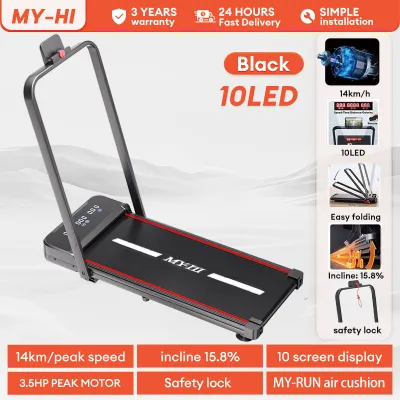
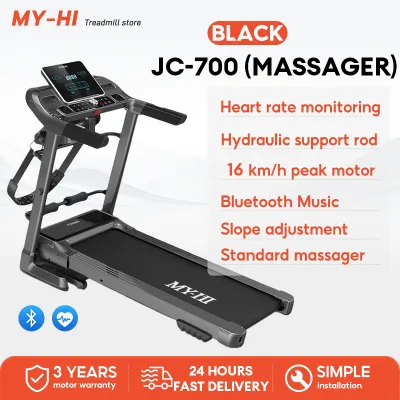
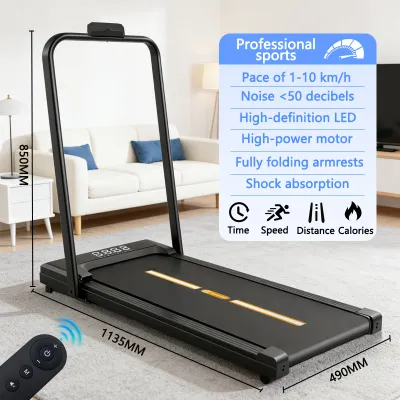
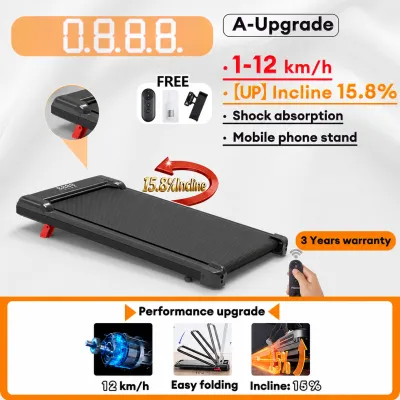
Prices are valid at publication and may change. Please refer to the product page for the latest price.
Acoustic constraints are equally critical in multi-family residential buildings. Noise in condominiums falls into two categories: airborne noise, such as the hum of a motor or a whirring fan, and structure-borne noise, which occurs when physical impacts—like your feet striking a deck—travel directly through the floor slab. In concrete buildings common across the Philippines, these low-frequency impact vibrations can easily telegraph into the ceiling of the unit below, leading to immediate complaints.
Finally, consult your building administration or homeowners association (HOA) guidelines. Many high-rise developments enforce strict weight limits for individual rooms or have clear policies regarding the use of heavy mechanical equipment to prevent structural damage or persistent noise disturbances.
Treadmills in Small Apartments: Foldability, Clearance, and Impact Noise
The treadmill is a highly popular option for maintaining cardiovascular health, offering a straightforward way to walk, jog, or run indoors. However, integrating a treadmill into a small apartment presents distinct spatial and acoustic challenges. The length of the running deck must accommodate your natural stride, which automatically demands a larger floor footprint than stationery cycles. Furthermore, the repetitive force of your feet hitting the deck creates significant kinetic energy that must be managed. To ensure a treadmill is viable for your home, you must verify the manufacturer’s precise operational clearance and folded dimensions against your measured space.

Standard Folding Treadmills vs. Walking Pads
When choosing a treadmill, you will generally decide between a standard folding treadmill and a compact walking pad.
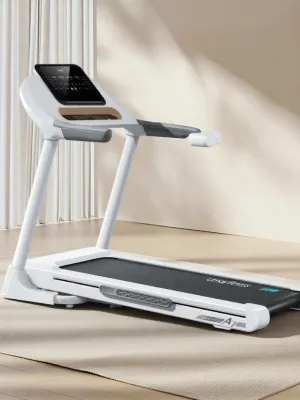
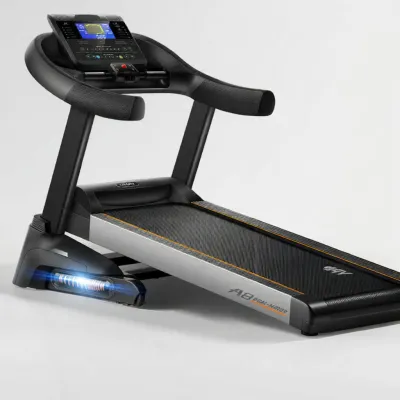
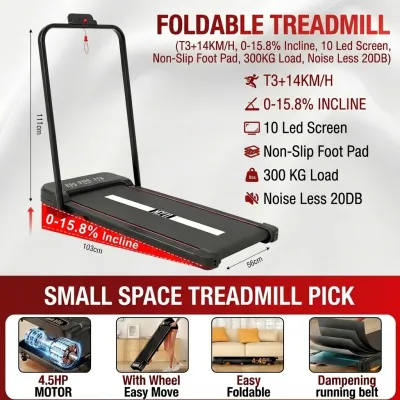
Standard Folding Treadmills: These machines are built for serious runners, offering robust motors, speed capabilities often exceeding 12 km/h, and adjustable incline features. However, their heavy frames and wide running belts require substantial floor space. When in use, they demand a permanent zone of clearance. To make them manageable in a condo, look for models equipped with hydraulic or soft-drop folding mechanisms. These systems allow you to fold the deck upward safely, reducing the horizontal footprint by roughly half when the machine is idle, though the vertical height will increase significantly.
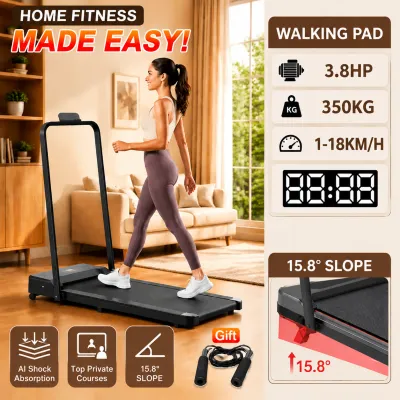
Walking Pads (Under-Desk Treadmills): If your primary goal is to combat a sedentary lifestyle while working or watching television, a walking pad is an efficient alternative. These flat, motor-driven decks lack upright handrails or feature minimalist, fold-down bars. They are designed for lower speeds, typically maxing out at 6 km/h, and do not offer incline options. Their primary benefit is ultra-compact storage; many models are thin enough to slide directly under a bed or a sofa. They also operate with smaller, quieter motors, making them far less obtrusive in shared living spaces.
Managing Footstrike Noise and Vibration
Even if you purchase a treadmill with an ultra-quiet motor, the sound of your feet striking the deck remains a primary source of friction with neighbors. Each step acts like a small hammer blow, sending vibrations directly through the machine’s frame and into the floor.
To mitigate this structure-borne noise, you should invest in a high-density, commercial-grade anti-vibration mat. Standard yoga mats are too soft and thin; instead, choose a specialized rubber or high-density PVC equipment mat that is at least 6mm to 10mm thick. This layer absorbs the kinetic energy before it can transfer into the concrete slab.
Additionally, place your treadmill away from shared drywall partitions, as these can act as sounding boards, amplifying the motor hum. Position the machine over a load-bearing floor joist or near an exterior structural wall where the floor is stiffest. Finally, establish a respectful workout routine. Avoid running during late-night or early-morning hours, and communicate with your downstairs neighbors to identify times when your workouts will cause the least disruption.
Spin Bikes and Rowing Machines: Compact Footprints and Quiet Resistance
If a treadmill proves too acoustically or spatially demanding, spin bikes and rowing machines offer highly effective, low-impact alternatives. Because your feet remain in constant contact with the pedals or footplates, these machines eliminate footstrike impact entirely. This design characteristic dramatically reduces structure-borne noise, making them inherently more apartment-friendly. However, they present different physical profiles, trading the vertical bulk of a folded treadmill for either a highly compact static footprint or a long, horizontal layout that requires creative storage.
Spin Bikes: Minimal Footprint and Magnetic Quietness
Spin bikes are arguably the most space-efficient cardio machines available for apartment dwellers.
Minimal Footprint: A typical spin bike occupies a fixed rectangular area of only about 1.2 meters by 0.6 meters. Because the machine does not fold or expand, it can live permanently in a corner, next to a window, or adjacent to your desk without requiring constant rearrangement.
Magnetic Resistance: For shared walls and close quarters, prioritize models that utilize magnetic resistance rather than physical friction pads. Magnetic systems adjust difficulty by moving magnets closer to or further from a spinning metal flywheel. Because there is no physical contact between the resistance mechanism and the flywheel, the operation is virtually silent. The only sound you will hear is a faint whir of the belt drive.
Ceiling Clearance: If you plan to perform high-intensity interval training (HIIT) that involves standing up out of the saddle (climbing), you must verify your ceiling height. Standard apartment ceilings in the Philippines are often lower than those in houses, so ensure you have at least 15 to 20 centimeters of clearance above your head when standing at full height on the pedals.
Rowing Machines: In-Use Length and Vertical Storage
Rowing machines provide an exceptional full-body workout, engaging up to 86% of your muscles. However, their physical form factor requires unique spatial planning.
In-Use Length: To accommodate the sliding seat and the full extension of your legs, a rowing machine requires a long, clear path. Most standard rowers measure between 2.1 and 2.4 meters in length. In a narrow condo layout, this can easily block main walkways, entryways, or access to a balcony. You must ensure you have a clear, straight corridor of floor space during your workout.
Storage Solutions: Despite their length when active, many modern rowers are designed with vertical storage in mind. Once your workout is complete, you can tip the machine upward to stand on its end, reducing its floor footprint to a tiny square of roughly 0.6 by 0.6 meters. Other models feature a folding frame that hinges in the middle.
Resistance Types: The type of resistance you choose directly impacts the noise level. Magnetic rowers are the quietest and most consistent for apartment use. Water resistance rowers provide a realistic feel and a soothing, rhythmic swooshing sound, though they require periodic water maintenance to prevent algae growth. Air resistance rowers use a spinning flywheel fan; while highly responsive, they generate a loud wind noise that can easily penetrate thin apartment walls.
Decision Matrix: Choosing the Right Cardio Machine for Your Space
To help you synthesize these factors and select the ideal machine for your specific living situation, refer to the comparison matrix below:
| Cardio Machine Type | In-Use Footprint (Approx.) | Storage Footprint (Approx.) | Primary Noise Source | Best Suited For |
|---|---|---|---|---|
| Walking Pad | 1.4 m x 0.6 m | 1.4 m x 0.6 m x 0.15 m (Flat) | Low motor hum | Walkers, multi-taskers, ultra-tight spaces |
| Folding Treadmill | 1.7 m x 0.8 m | 0.9 m x 0.8 m (Folded upright) | Footstrike impact, motor hum | Dedicated runners, incline walkers |
| Spin Bike | 1.2 m x 0.6 m | 1.2 m x 0.6 m (No folding needed) | Minimal belt whir (Magnetic) | High-intensity cycling, quiet spaces |
| Rowing Machine | 2.2 m x 0.6 m | 0.6 m x 0.6 m (Stored vertically) | Seat rollers, air/water resistance | Full-body conditioning, long layouts |
Based on these characteristics, apply these conditional recommendations to your apartment profile:
- Choose a walking pad if your floor space is extremely limited, you live in a studio unit, and your primary goal is to maintain basic daily step counts without running.
- Choose a spin bike if you require a permanent, ultra-quiet setup that fits neatly into a tight corner, and you must avoid any floor vibrations that could disturb downstairs neighbors.
- Choose a rowing machine if you have a long, narrow hallway or living area available during workouts, desire a low-impact full-body exercise, and can easily tip the machine upright for vertical storage.
- Choose a standard folding treadmill only if you are a dedicated runner, have confirmed your building's structural and noise policies, have space for a thick anti-vibration mat, and can accommodate the substantial operational clearance.
Apartment-Friendly Setup and Humidity Maintenance Tips
Setting up and maintaining fitness equipment in the tropical climate of the Philippines requires specific care to protect your investment and your home.
Layout and Safety: Always maintain the manufacturer’s recommended safety clearance zones. Never place the back of a treadmill directly against a wall or furniture; if you lose your footing, you need open space behind the belt to prevent being pinned or injured.
Floor Protection: Always lay down a high-density equipment mat. Beyond dampening noise, these mats protect sensitive apartment flooring—such as laminate, vinyl planks, or engineered wood—from being scratched by the machine’s heavy metal feet and from being damaged by dripping sweat.
Humidity and Climate Care: The high relative humidity in the Philippines can accelerate rust on metal frames and cause corrosion in electronic consoles. Position your equipment away from direct sunlight, open windows, or balconies where rain or intense heat could damage the components. After every workout, immediately wipe down the entire machine with a dry microfiber cloth to remove acidic sweat, paying close attention to the handlebars, console, and seat rails.
Power Safety: High-draw motorized machines, particularly treadmills, place a heavy load on electrical circuits. Always plug your machine directly into a grounded wall outlet. Avoid using cheap extension cords or daisy-chaining multiple power strips, which are common fire hazards in small spaces. If your apartment experiences frequent voltage fluctuations, invest in a high-quality surge protector rated for heavy appliances.
Frequently Asked Questions (FAQ)
Can I use a treadmill on an upper floor without disturbing neighbors?
Yes, but it requires active noise-mitigation strategies. While you can choose a treadmill with a quiet motor, the primary disturbance is the structural impact of your feet hitting the deck. To minimize this, always use a high-density rubber anti-vibration mat, adopt a mid-foot striking technique rather than a heavy heel strike, and limit your workouts to walking or light jogging speeds. Additionally, coordinate with your neighbors to avoid exercising during early morning or late evening hours.
Do rowing machines require more space than treadmills?
Rowing machines require more horizontal length during active use, typically needing a clear path of 2.1 to 2.4 meters, compared to the 1.5 to 1.8 meters required by most compact treadmills. However, rowing machines are often much easier to store in a small apartment. Many models can be stood completely upright on their end, reducing their storage footprint to a tiny fraction of the space required by even a folded treadmill.

Community discussion
Share your experience or ask a question. Comments are reviewed before publication.