
Selecting the ideal home cardio machine is a highly personal decision that directly shapes your long-term fitness consistency. In tropical climates like the Philippines, where outdoor running or cycling can often be disrupted by intense afternoon heat, sudden monsoon downpours, or high humidity, having a reliable indoor workout option is incredibly practical. However, there is no single machine that fits every individual. Treadmills, spin bikes, and rowing machines each utilize distinct movement patterns, engage different muscle groups, and place varying levels of stress on your joints. To make an investment that you will actually use week after week, you must evaluate how each machine aligns with your physical capabilities, your living space, and your specific health objectives.
Core Fitness Goals and Equipment Alignment
Many fitness enthusiasts prioritize calorie expenditure when comparing cardio equipment, but actual energy burn is not a fixed property of the machine itself. Instead, your total energy expenditure is determined by your sustained heart rate, the duration of your session, and your overall level of perceived exertion. A high-intensity session on a spin bike can easily match or exceed a moderate jog on a treadmill, just as an active rowing workout can burn more than a casual walk. When evaluating potential intensity, consider your personal stamina and how long you can comfortably maintain a target heart rate zone on each device.
The muscular demands of these three machines differ significantly across your body. Rowing machines offer a highly comprehensive full-body workout, recruiting roughly eighty-five percent of your musculature, including your legs, core, upper back, and arms, with every complete stroke. Spin bikes focus almost exclusively on the lower body, targeting your quadriceps, hamstrings, glutes, and calves while requiring minimal upper-body movement. Treadmills provide a natural, weight-bearing workout that primarily engages your lower body and core muscles as they work to stabilize your frame against gravity with every stride.
Products mentioned in this guide
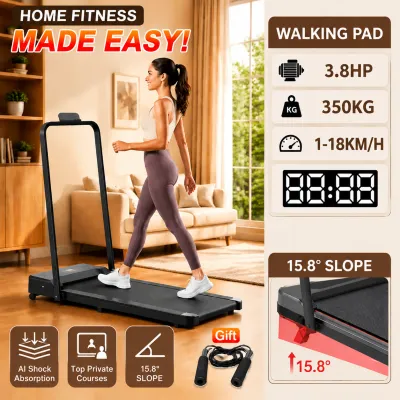
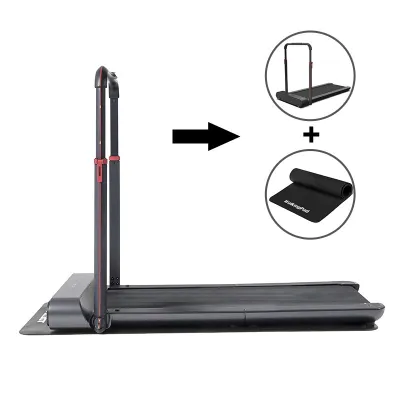
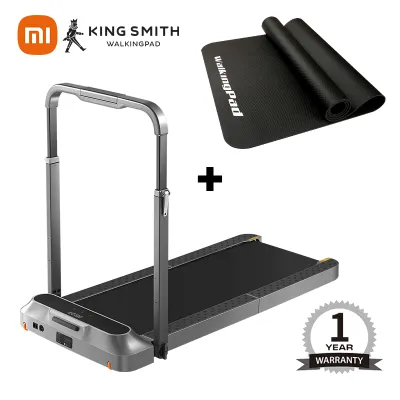
![[COD] Foldable Manual Home Treadmill with Adjustable Slope LED Display Anti-Slip Running Belt Free Twist Disc & Resistance Rope Space Saving Walking Machine for Home Fitness Exercise](https://img.lazcdn.com/g/p/1446617c7dcf63717d1a1640b68a647e.jpg_400x400q80.jpg_.webp)
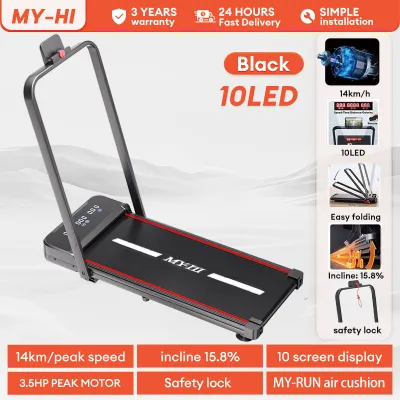
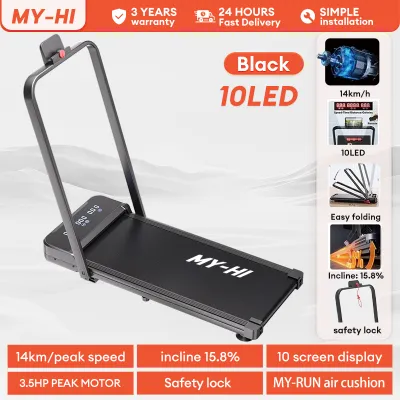
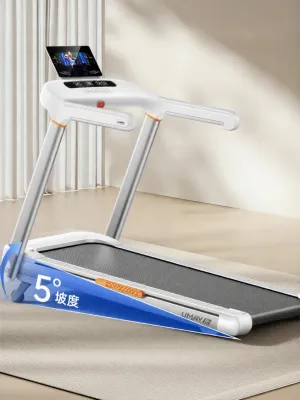
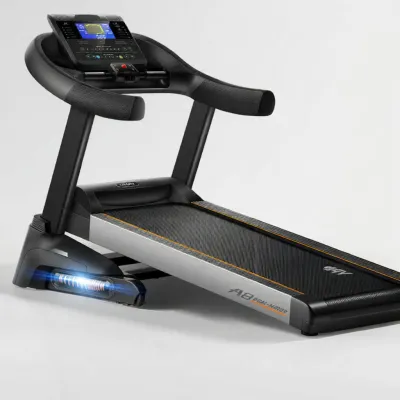
Prices are valid at publication and may change. Please refer to the product page for the latest price.
Managing joint impact is crucial for preventing injuries and ensuring long-term workout consistency. Treadmills represent a high-impact option because your feet repeatedly strike the running deck, which can aggravate sensitive ankles, knees, or lower back joints over time. In contrast, spin bikes and rowing machines are low-impact alternatives where your feet remain in constant contact with pedals or footplates, drastically reducing joint stress. If you experience joint swelling, sharp pain, or lingering discomfort during or after a workout, these are clear signals to stop immediately, modify your intensity, or transition to a lower-impact machine.
Space, Setup, and Daily Usability
Before purchasing any heavy fitness equipment, you must carefully measure your designated workout area and verify the required clearance space. Treadmills generally demand the largest permanent footprint, requiring not only the physical length of the deck but also safety clearance behind and beside the machine. While many home treadmills feature folding decks to save space when idle, they remain bulky vertical structures. Rowing machines are exceptionally long but often feature a slim profile, and many models can be stood upright against a wall or folded in half for storage. Spin bikes are typically the most compact option, making them highly suitable for tight corners or small apartment balconies.

Operating fitness equipment indoors can generate substantial noise and vibration, which is a key consideration if you live in a shared household or a multi-story apartment building. Treadmills produce both motor hum and significant impact noise from your feet striking the deck, which can easily travel through floors. Spin bikes are generally much quieter, especially those utilizing magnetic resistance, though chain-driven models may emit a low mechanical whir. Rowing machines vary by resistance type; water and air rowers produce a noticeable swooshing sound, while magnetic rowers operate almost silently. To protect your flooring from sweat and mechanical vibrations in humid environments, always place a heavy-duty, non-slip rubber floor mat beneath your equipment.
The electrical and setup requirements of your chosen machine can affect where you can safely position it in your home. Most motorized treadmills require a dedicated, grounded electrical outlet to handle the power draw safely without tripping circuit breakers. Spin bikes and many rowing machines, particularly those with manual or water resistance, operate without being plugged into a wall, relying instead on small batteries for their digital consoles or utilizing self-generated power. Because these machines are heavy and contain complex moving parts, professional assembly is highly recommended to ensure all structural bolts, belts, and cables are correctly tensioned and aligned.
Key Specifications to Verify Before Buying
When shopping for a treadmill, the motor is the most critical component to inspect. Look for the continuous duty horsepower (CHP) rating rather than the peak horsepower, as CHP indicates the motor’s ability to maintain speed under a continuous load; heavier users or those planning to run frequently should look for a higher CHP rating. Additionally, verify the running belt dimensions to ensure the width and length accommodate your natural stride without forcing you to walk in an unnaturally narrow path. Finally, examine the deck cushioning system, which absorbs impact forces, and confirm that the manufacturer’s maximum weight capacity comfortably exceeds your current body weight.
For a spin bike, the flywheel weight and the resistance mechanism dictate the overall ride quality. A heavier flywheel generally provides a smoother, more road-like pedaling momentum, though modern magnetic resistance systems can deliver excellent smoothness even with lighter flywheels. Magnetic resistance is highly recommended over friction-pad resistance because it operates silently and requires virtually no maintenance or replacement parts over time. You must also verify the adjustability range of both the seat and the handlebars; look for four-way adjustment (up, down, forward, and backward) to ensure you can achieve a proper biomechanical fit that protects your knees and lower back.
Rowing machines are categorized primarily by their resistance type, each offering a distinct feel and sound profile. Water rowers use physical paddles in a water tank to mimic the natural feel of rowing on a lake, air rowers use a flywheel fan that increases resistance the harder you pull, and magnetic rowers offer smooth, adjustable resistance at a very low noise level. Beyond resistance, verify that the slide rail length is long enough to allow full leg extension at the start of your stroke, especially if you have long legs. You should also inspect the footboard securing mechanisms and the quality of the foot straps to ensure your feet remain locked in place during high-intensity sessions.
Decision Framework: Which Machine Fits Your Routine?
A treadmill is the ideal choice if your primary fitness goal is to train for outdoor running events, improve your walking stamina, or maintain weight-bearing exercise to support bone density. It is highly suited for individuals who prefer straightforward, intuitive movement patterns and have a dedicated ground-floor space or a well-insulated room that can accommodate the physical footprint and the impact noise of running.
A spin bike is highly suitable if you want to perform high-intensity interval training (HIIT) without subjecting your joints to heavy impact forces. It is the perfect fit for smaller living spaces, apartments with strict noise rules, or individuals who prefer a seated workout that focuses intensely on lower-body strength and cardiovascular endurance.
A rowing machine is the best option if you want a highly efficient, low-impact workout that engages both your upper and lower body simultaneously. It is ideal for individuals who want to strengthen their posterior chain—including the glutes, hamstrings, and upper back—and are willing to spend time mastering the proper rhythmic coordination and posture required for safe rowing.
Before making any final purchase, you must carefully assess your current physical condition. If you have pre-existing joint injuries, chronic lower back pain, or cardiovascular conditions, certain movements may aggravate your symptoms. Always consult a qualified medical professional or a certified physical therapist to determine which movement patterns are safe for your body before committing to a specific machine.
Frequently Asked Questions (FAQ)
Can I use a treadmill if I have knee pain?
Whether you can safely use a treadmill with knee pain depends heavily on the intensity of your workout and the design of the machine. Running generates high impact forces that can worsen knee discomfort, whereas walking or walking at a moderate incline reduces these forces significantly while still providing an effective cardiovascular workout. Before using a treadmill, verify that the deck features a high-quality shock absorption system designed to cushion your steps. If you experience any sharp pain or swelling in your knees during your session, stop immediately and consult a physical therapist to evaluate your joint health.
Is a rowing machine better for building muscle than a spin bike?
Both rowing machines and spin bikes are primarily designed for cardiovascular conditioning and muscular endurance rather than building significant muscle mass or hypertrophy. However, a rowing machine engages a much wider range of muscle groups, requiring active pulling from your upper back, shoulders, arms, and core alongside your legs. A spin bike focuses almost exclusively on the endurance of your quadriceps, hamstrings, and glutes. To maximize your strength development on either machine, verify that the equipment offers high resistance levels that allow you to perform shorter, high-effort intervals.
How should I budget for a durable home cardio machine?
When budgeting for a home cardio machine, focus on structural durability and mechanical reliability rather than expensive digital screens or subscription features. Compare the frame materials, the maximum user weight limits, and the length of the motor or frame warranty across different price tiers in ₱. Lower-priced models may save money initially but often use lighter frames that shake during intense use or have shorter lifespans. Additionally, verify the availability of local service centers and replacement parts in your area to ensure that your investment can be easily maintained and repaired over the years.

Community discussion
Share your experience or ask a question. Comments are reviewed before publication.