
In the world of shooting sports and tactical equipment, the rmr trijicon (Ruggedized Miniature Reflex) is widely recognized as a benchmark for handgun red dot sights. Whether you are navigating the high-humidity environments of outdoor shooting ranges in the Philippines or looking to upgrade your home defense setup, understanding this optic’s technical specifications is crucial before making a significant investment.
However, before mounting any electronic sight, shooters must recognize that equipment cannot replace formal training and solid marksmanship fundamentals. A red dot is an aiming aid, not a substitute for safe firearm handling, proper stance, and consistent grip. Always ensure you are fully trained in firearm safety before operating any weapon equipped with an optic.
What the Trijicon RMR Actually Is
The Trijicon RMR is a miniature reflex sight designed to project an illuminated aiming point onto a glass lens. Unlike traditional iron sights, which require you to align the rear sight, front sight, and target, a reflex sight allows you to keep both eyes open and focus entirely on the target. The red or green dot simply hovers over your point of impact, streamlining target acquisition.
Products mentioned in this guide
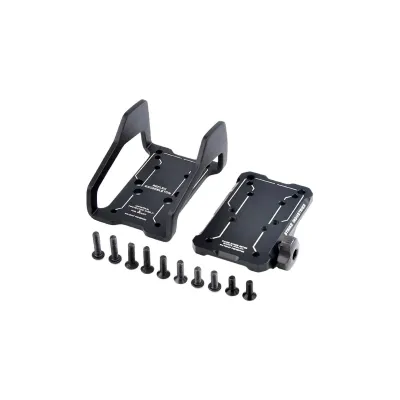
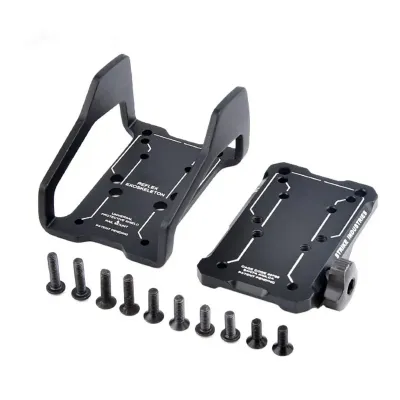
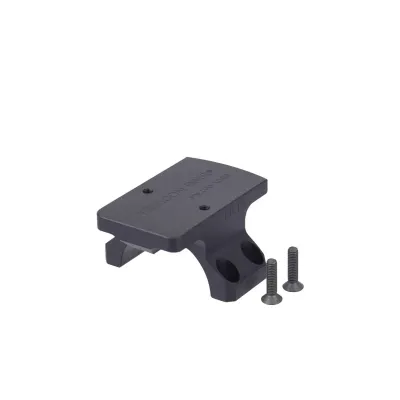
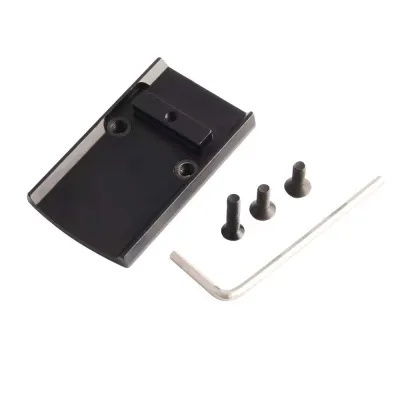
Prices are valid at publication and may change. Please refer to the product page for the latest price.
What sets this optic apart is its patented “Ruggedized” housing design. The unique, curved shape at the top of the optic—often resembling horns—is engineered to absorb and divert impact forces away from the glass lens. This design ensures that if the firearm is dropped or used to rack a slide against a hard surface, the structural housing takes the brunt of the force rather than the delicate glass.
It is equally important to understand what the RMR cannot do. It does not magnify your target, meaning it is built primarily for close-to-medium-range engagement. Furthermore, it will not correct poor shooting habits; if your trigger pull is inconsistent, the dot will merely show you exactly where you missed.
Decoding the Core RMR Trijicon Specifications That Matter
When evaluating the rmr trijicon, translating technical specifications into practical shooting implications helps you select the right configuration for your specific environment.

Dot Size (MOA) The illuminated aiming point is measured in Minute of Angle (MOA), which dictates how much of the target the dot covers at a given distance. For example, a 1.0 MOA dot covers approximately one inch of a target at 100 yards (or roughly 2.9 centimeters at 100 meters), making it ideal for precision shooting and longer distances. Conversely, a larger 6.5 MOA dot is much easier for the human eye to track quickly, making it the preferred choice for rapid, close-quarters pistol transitions. A 3.25 MOA dot serves as a popular middle ground for balanced speed and precision.
Window Size and Field of View The physical dimensions of the lens window dictate your viewing area. While a compact window keeps the optic low-profile and lightweight, it requires consistent presentation to find the dot quickly. In the tropical heat of the Philippines, lens fogging can be a challenge; keeping both eyes open allows your brain to superimpose the dot onto your target even if the lens is partially obstructed.
Battery Life and Illumination Battery life on these units is exceptionally long, often rated for years of continuous use on a medium setting, but actual performance depends heavily on ambient temperatures and brightness levels. Some models require you to remove the entire optic from the slide to access the battery compartment underneath, which requires re-verifying your zero afterward. Brightness settings must be chosen carefully; manual adjustment allows you to crank up the intensity to combat the harsh midday sun, while automatic settings adjust dynamically but can struggle when aiming from a dark room into bright sunlight.
Navigating RMR Variants and Terminology
Choosing the right model requires navigating several generations and illumination configurations.
Generational Differences The market primarily distinguishes between Type 1 and Type 2 models. The Type 1 was initially designed for rifles, but when shooters began mounting them on reciprocating pistol slides, the violent recoil sometimes caused temporary battery contact failures. Trijicon resolved this in the Type 2 by redesigning the battery contacts, upgrading the internal circuitry, and adding a button lockout feature to prevent accidental setting changes during rigorous movement.
Illumination Types You will encounter three primary illumination styles:
- Adjustable LED: Features physical buttons on the sides, giving you complete control over the dot's intensity.
- Automatic LED: Rely on integrated sensors to adjust the dot based on surrounding light, offering a hands-off approach.
- Dual-Illuminated: Uses a combination of fiber optics for daytime and tritium for low-light conditions, operating entirely without batteries.
The RMR Footprint and Mounting Compatibility
Before purchasing, you must ensure the optic can physically attach to your firearm.
The “RMR footprint” refers to the specific layout of mounting screws and positioning pins developed by Trijicon, which has since become an industry standard. Many firearm manufacturers offer “optic-ready” slides that accept this footprint directly or via interchangeable adapter plates.
Always cross-reference your slide’s milling pattern or adapter plate system with official manufacturer specifications. Minor tolerances in third-party plates can lead to a loose fit, which compromises accuracy.
Proper installation is critical for safety and performance. Always use a calibrated torque wrench and follow the manufacturer’s exact torque specifications (usually measured in inch-pounds) along with a thread-locking compound. Over-tightening can strip the threads or warp the optic housing, while under-tightening can cause the optic to fly off under the violent recoil of live fire.
Matching the RMR to Your Shooting Needs
Your final choice should align with your primary shooting discipline, environmental conditions, and skill level.
Concealed Carry and Duty Use For self-defense or duty applications, durability and reliability are paramount. A 3.25 MOA or 6.5 MOA Adjustable LED model is highly recommended. The larger dot ensures rapid acquisition under stress, while the adjustable settings allow you to lock in a bright dot that won’t wash out under bright outdoor conditions. Ensure your holster is specifically molded to accommodate an optic-equipped slide.
Competition and Range Training Competitive shooters often prefer manual brightness control to fine-tune the dot against colored steel targets. Depending on the division and target distances, a smaller 3.25 MOA dot offers a cleaner point of aim for precise shots without obscuring smaller targets at 25 meters or beyond.
Rifle and PCC (Pistol Caliber Carbine) Setups When mounting on a rifle or carbine, you must select an appropriate riser mount to achieve a comfortable cheek weld. Shooters typically choose between an absolute co-witness (where the dot aligns perfectly with backup iron sights) or a lower 1/3 co-witness (where the iron sights sit in the lower portion of the window). A smaller 1.0 or 3.25 MOA dot is preferred here to maximize the precision of the shoulder-fired platform.
Ultimately, no piece of equipment can compensate for a lack of training. Whichever configuration you choose, dedicate time to dry-fire practice and live-fire training at a safe, authorized range to build the muscle memory required to track the red dot consistently.
Frequently Asked Questions (FAQ)
Do I need to re-zero my RMR after changing the battery?
If your specific model features a bottom-loading battery compartment, you must unscrew and remove the optic from the slide to replace the battery. Because the physical connection between the optic and the mount is disrupted, you must perform a confirmation zero at the range afterward. For models with side- or top-loading battery trays, the optic remains mounted, minimizing the risk of zero shift, though a quick check is still recommended.
Can the Trijicon RMR be submerged in water?
Yes, the Trijicon RMR is highly water-resistant, but its ability to withstand submersion depends on proper installation. Bottom-loading models require a specialized sealing plate placed between the optic and the mount to protect the exposed battery compartment. Always consult the manufacturer’s manual for the exact waterproof depth ratings and installation steps to ensure the seal remains intact.
Community discussion
Share your experience or ask a question. Comments are reviewed before publication.