
Finding the right car bike rack depends on matching your vehicle’s physical structure with your budget, physical lifting capacity, and how often you ride. For drivers of SUVs, crossovers, and trucks equipped with a receiver hitch, a hitch-mounted rack typically offers the most stable and user-friendly experience. If you drive a sedan or compact car already equipped with roof crossbars and need uninterrupted access to your trunk, a roof-mounted system keeps your gear secure while preserving rear visibility. Meanwhile, trunk-mounted strap racks provide an accessible, temporary solution for occasional riders who want to transport lightweight bicycles without installing permanent hardware.
Every mounting style interacts with your vehicle’s aerodynamics, weight distribution, and body panels in distinct ways. Choosing incorrectly can lead to strained muscles, damaged paint, or compatibility issues that prevent you from securing your bikes safely. By evaluating how each system mounts to your vehicle, you can select a setup that protects both your car and your cycling equipment during transit.
Core Differences and Vehicle Compatibility
To make an informed choice, you must first understand how each rack style physically connects to your vehicle and which automotive designs support them.
Products mentioned in this guide
12 Lazada user ratings
Securely holds bikes in place, only used once will make a follow up review 🛠️Ease of Installation: Not really compatible with full suspension…Read full reviewShow less
Securely holds bikes in place, only used once will make a follow up review 🛠️Ease of Installation: Not really compatible with full suspension bike in my dartmoor blackbird medium 29er ☔Weather Resistance: is ok so far 🔨Durability: to be tested
Thank you seller Ang bilis dumating parcel ko completo no damage maganda Ang customer service ni seller he/she polilitely answered all my me…Read full reviewShow less
Thank you seller Ang bilis dumating parcel ko completo no damage maganda Ang customer service ni seller he/she polilitely answered all my messages....
Item is better than numbered lever,you can adjust if the chain still touches the fd. And can be easily return to original position.
Thank you lazada! I received already my item, nice quality and it works very good. Thank you seller. i will order again next time!
I bought it here many times. Every time, the seller gave me a small gift. This is a good seller. I will buy it again
Prices are valid at publication and may change. Please refer to the product page for the latest price.
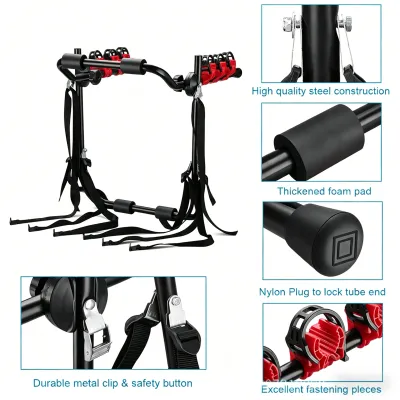
Trunk Mounts: Trunk-mounted racks rely on a system of adjustable straps, hooks, and padded support bars that rest directly against the rear trunk lid, bumper, or hatchback glass. These racks are highly portable and generally fit a wide variety of sedans and hatchbacks. However, because they transfer the weight of the bikes directly onto the vehicle’s sheet metal and glass, they require careful installation to avoid scratching the paint or denting panels. You must verify that your vehicle does not feature an active rear spoiler, fragile plastic trim, or an all-glass hatch hinge, as the tension from the straps can crack or warp these components.
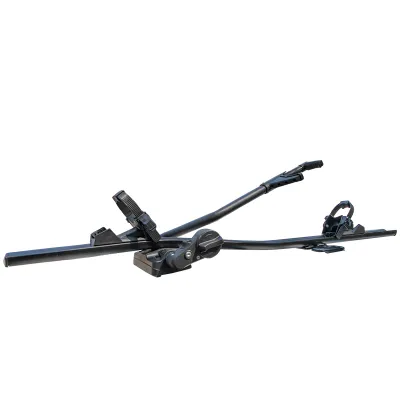
Roof Mounts: Roof-mounted racks secure your bicycles upright on top of the vehicle, clamping onto the wheels or the frame. This style requires your vehicle to have a functional roof rack system, consisting of either factory-installed or aftermarket crossbars running side-to-side. Roof mounts are highly versatile and keep your rear cargo area completely unobstructed, making them popular for station wagons, hatchbacks, and compact SUVs. The primary trade-off is the significant increase in your vehicle’s vertical profile, which requires constant awareness when driving under low-clearance structures.
Hitch Mounts: Hitch-mounted racks slide directly into a metal receiver hitch bolted to your vehicle’s frame. These systems are categorized by the class of the receiver hitch (typically Class I, II, or III), which dictates the tongue weight capacity and the size of the receiver opening (usually 1.25 inches or 2 inches). Hitch racks are exceptionally sturdy and keep the bikes positioned low behind the vehicle, minimizing wind resistance compared to roof racks. They are ideal for larger vehicles like SUVs, minivans, and pickup trucks, but they do require your vehicle to have a compatible receiver hitch installed beforehand.
Key Decision Factors: Loading Effort, Budget, and Clearance
Once you understand the compatibility of each style, you must weigh the practical daily factors that influence how easy, affordable, and safe the rack will be to use.

Physical Loading Effort: The physical demand of loading and unloading your bicycles varies dramatically between these three styles. Roof racks require you to lift the entire weight of the bicycle completely over your head and hold it steady while securing the mounting clamps. This can be highly challenging or physically impossible for shorter riders, those with limited upper-body strength, or anyone transporting heavy bicycles. Hitch racks, by contrast, position the loading trays or cradles at roughly waist height, requiring minimal lifting and making them the preferred choice for heavy mountain bikes or electric models. Trunk racks sit at an intermediate height, requiring you to lift the bike to chest level to hang the frame on the support arms, which can still be awkward depending on the vehicle’s shape.
Budget Considerations: Your total investment involves not just the cost of the rack itself, but also any necessary vehicle modifications. Trunk-mounted racks are generally the most economical option, with entry-level models starting at lower price points in the Philippines, often under ₱4,000, and requiring no additional vehicle hardware. Roof racks can range from moderate to high cost; while individual bike trays may be affordable, you must factor in the price of high-quality crossbars if your vehicle does not already have them, which can add ₱10,000 to ₱25,000 to your total setup cost. Hitch racks typically represent the highest initial investment, with premium platform models often exceeding ₱20,000, plus the additional cost of purchasing and professionally installing a receiver hitch (which can range from ₱8,000 to ₱15,000 depending on your vehicle model).
Vehicle Clearance and Access: How you access your vehicle and where you park should heavily influence your decision. A roof rack preserves complete access to your rear trunk or hatch, but it significantly increases your vehicle’s height clearance. This setup can prevent you from parking in standard residential garages, entering low-clearance multi-level parking structures in urban areas, or navigating roads with low-hanging tree branches. On the other hand, hitch and trunk racks keep your vehicle’s height profile unchanged but block access to your rear cargo area. While some premium hitch racks feature tilting or swinging mechanisms that allow you to open the tailgate or hatch, cheaper models and almost all trunk racks must be completely unloaded—and sometimes fully removed—before you can open the rear door.
Decision Framework: Matching the Rack to Your Routine
To narrow down your options, use this structured framework to align your vehicle’s specifications, your physical capabilities, and your riding habits.
Choose a hitch rack if: You have a vehicle equipped with a robust receiver hitch (or are willing to install one), prefer a simple waist-level loading process, and plan to transport heavy bicycles, full-suspension mountain bikes, or electric bikes. Hitch platform racks support the bikes by their wheels, which prevents frame-to-frame contact and provides the most secure ride over long distances. Always verify that your vehicle’s hitch tongue weight capacity can support the combined weight of the rack and the loaded bikes.
Choose a roof rack if: Your vehicle is already equipped with sturdy roof crossbars, you require frequent and unobstructed access to your rear trunk or hatch, and you are physically comfortable lifting your bicycle’s weight above your shoulders. Roof racks are also excellent for drivers who want to keep their rear license plate and taillights completely visible without adding extra width or length to the vehicle’s footprint.
Choose a trunk rack if: You are looking for a budget-friendly, temporary solution for occasional weekend rides, do not want to install permanent roof bars or a hitch receiver, and own standard, lightweight road or hybrid bikes. Trunk racks are highly portable and can be folded flat for storage in your closet or trunk when not in use, making them ideal for renters or those who change vehicles frequently.
Neither may fit if: Your vehicle features a delicate glass-edge hatchback design, an active or plastic rear spoiler, or lacks structural metal mounting points along the trunk seams. In these cases, attempting to mount a trunk rack can cause catastrophic glass breakage or body damage. If your vehicle also lacks roof rails and cannot support a hitch receiver, you must consult your vehicle’s owner’s manual or a professional installer to explore custom roof-rack fitments or specialized interior storage solutions.
Pre-Purchase Verification Checklist
Before finalizing your purchase, perform these critical checks to ensure absolute compatibility, safety, and legal compliance.
Verify Vehicle Fit: Never assume a rack will fit your car based on general body style. Always consult the rack manufacturer’s official, updated fit guide online. Input your exact vehicle make, model, year, and trim level to confirm that the rack’s mounting clips, straps, or hitch attachments are certified to work with your specific vehicle configuration.
Check Weight Limits: Calculate the total weight of all the bicycles you plan to carry simultaneously. Compare this sum against the maximum load capacity specified by the rack manufacturer. Additionally, verify your vehicle’s dynamic roof load limit (for roof racks) or the maximum tongue weight rating of your hitch receiver (for hitch racks) to ensure you do not overload your vehicle’s structural frame.
Inspect Bike Frame Compatibility: Standard trunk racks and hanging-style hitch racks support bikes by their top tubes. If you ride a step-through frame, a full-suspension mountain bike, or a child’s bike, the frame may lack a straight top tube, requiring you to purchase an additional frame adapter bar to create a temporary mounting point. Alternatively, wheel-mount platform hitch racks or roof trays bypass this issue entirely by securing the bike by its tires.
Review Local Transport Regulations in the Philippines: When driving in the Philippines, you must ensure your loaded bike rack complies with local road safety laws. The Land Transportation Office (LTO) mandates that your vehicle’s rear license plate and taillights must remain clearly visible at all times. If your hitch or trunk rack blocks these elements, you must install an auxiliary license plate holder and a light board connected to your vehicle’s trailer wiring to avoid costly traffic citations. Ensure all straps and mounting bolts are checked and retightened after the first few kilometers of your journey to prevent shifting in transit.

Community discussion
Share your experience or ask a question. Comments are reviewed before publication.