
Selecting the right twirling baton for Philippine school cheerleading competitions requires balancing performance, safety, and durability. Whether preparing for a local inter-school meet or a national championship, your equipment must match your physical measurements and routine style. The ideal baton features a precise length tailored to your arm span, a weight that balances speed and stability, a sweat-resistant grip suited for tropical humidity, and floor-safe rubber tips that absorb impact on indoor wooden courts.
In the vibrant cheerleading culture of the Philippines, routines are fast-paced, highly athletic, and visually demanding. Every toss, roll, and catch must be executed with absolute precision. Using a baton with improper specifications not only hinders your performance but also increases the risk of drops and injuries during high-stakes routines.
By understanding how different specifications affect your handling and control, you can make an informed decision that elevates your performance. From shaft materials to tip shapes, every detail plays a crucial role in how the baton behaves in the air and in your hands.
Products mentioned in this guide

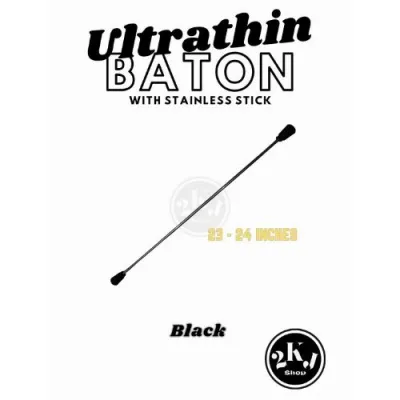
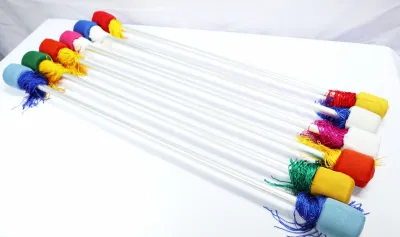
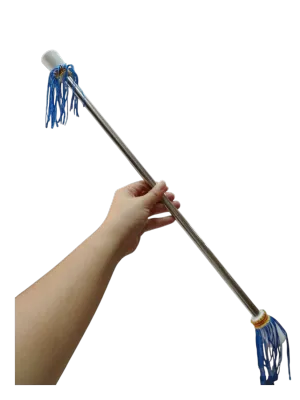
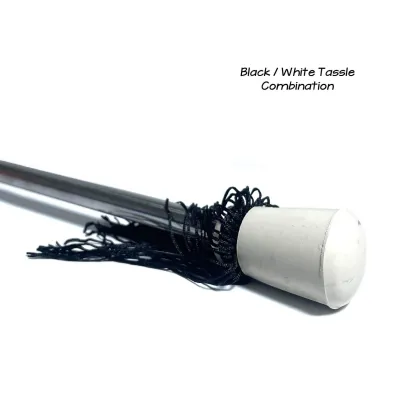
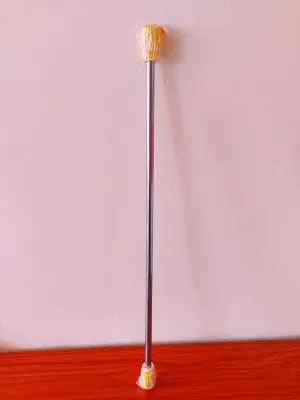
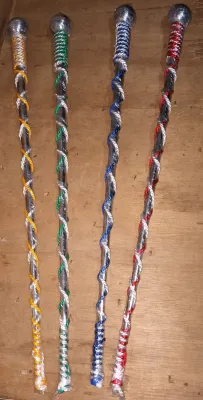
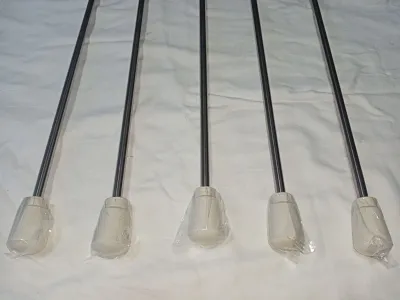
Prices are valid at publication and may change. Please refer to the product page for the latest price.
Measuring and Choosing the Right Baton Length for Your Routine
Baton length is the most critical specification to consider, as it directly influences your control, toss height, and rotation speed. A baton that is too long will constantly hit your body or the floor during close-contact moves, while a baton that is too short will limit your leverage and look visually underwhelming to the judges.
To find your correct size, use the standard armpit-to-fingertip measurement method. Stand straight with your dominant arm extended parallel to the floor, keeping your fingers relaxed and straight. Measure from the apex of your armpit along the inside of your arm to the very tip of your middle finger. If your measurement falls between sizes, it is generally best for beginners to round down for better control, while advanced twirlers may round up to maximize visual impact.
- Longer Batons: Provide greater leverage for high tosses and create larger, more dramatic visual patterns. They are ideal for grand stadium performances where movements need to be visible from the highest spectator tiers.
- Shorter Batons: Offer faster rotation speeds and are much easier to handle during intricate finger work, close-body rolls, and rapid transitions. They are highly suited for fast-tempo cheer-dance routines.
Never purchase a uniform batch of batons for an entire cheer squad based on a single “average” size. Because individual heights and arm lengths vary significantly, each cheerleader must be measured individually. Forcing a student to use an ill-fitting baton leads to awkward catches, frequent drops, and compromised technique.
How Baton Weight and Balance Affect Tosses and Stamina
An athletic cheerleading routine demands high energy and continuous movement, making the weight and balance of your baton key factors in managing physical fatigue and ensuring precise execution.

Lightweight batons are highly favored for speed and rapid transitions. They reduce strain on the wrists and shoulders during long, repetitive practice sessions, allowing athletes to maintain their stamina throughout a grueling multi-minute routine. However, extremely light batons can be difficult to control during high tosses, as they lack the momentum needed to cut through air currents.
In the Philippines, many school competitions and practices take place in open-air covered courts or drafty indoor gymnasiums. In these venues, a standard-weight baton is often preferred. The slightly heavier shaft provides better stability in the air, making the baton less susceptible to being blown off course by sudden gusts of wind or overhead fans.
Equally important is the baton’s center of gravity. A high-quality baton must be perfectly balanced at its midpoint. You can verify this by resting the center of the shaft on your index finger; it should balance horizontally without tilting. A well-balanced baton ensures predictable rolls across your shoulders, neck, and arms, giving you the confidence to execute complex contact work.
If a cheerleader experiences persistent wrist soreness, lagging rotation, or struggles to complete basic flips, the baton may be too heavy. This is a critical stop condition. Continuing to practice with an overweight baton can lead to repetitive strain injuries, so you should immediately switch to a lighter model or consult a coach to assess your throwing mechanics.
Selecting Shaft Materials and Grips for Humid Climates
Operating in a tropical climate presents unique challenges for sports equipment. High humidity and intense heat mean that sweat is an inevitable part of every practice session, making your choice of shaft material and grip treatment vital for maintaining control.
Most competition batons feature shafts made of chrome-plated steel or anodized aluminum. Steel shafts offer exceptional durability and are highly resistant to bending when dropped repeatedly on hard court surfaces, though they carry more weight. Aluminum shafts are significantly lighter and naturally rust-resistant, making them an excellent choice for younger athletes, though cheaper aluminum alloys may bend under extreme impact.
When it comes to maintaining a secure hold, bare metal shafts can become incredibly slick when hands get sweaty. To combat this, cheerleaders use various grip options:
- Bare Metal: Offers a traditional feel but requires frequent hand-drying and is highly prone to slipping in humid conditions.
- Rubberized Coatings: Provide built-in traction along the shaft, though the coating can wear down or become sticky over time in tropical heat.
- Athletic Grip Tape: Often the most practical solution. Applying high-quality, moisture-wicking grip tape (similar to tennis or badminton overgrips) to the center of the shaft dramatically improves tactile control and is easily replaced when worn.
To protect your investment and prevent premature degradation, establish a simple maintenance routine. After every practice, wipe down the metal shaft with a clean, dry microfiber cloth to remove sweat, skin oils, and moisture. Store your baton horizontally in a dry, ventilated area. Avoid leaving it inside a damp gym bag or exposed to direct sunlight, which can dry out the rubber components and degrade grip adhesives.
Choosing Tip Types for Gym Floors and Drop Recovery
The ends of your baton, known as the tip (the larger end) and the butt (the smaller end), serve functional purposes beyond aesthetics. They are crucial for shock absorption, noise reduction, and protecting both your equipment and the venue’s flooring.
Most school competitions in the Philippines are held on polished hardwood or synthetic indoor gym floors. Hard plastic tips should be avoided, as they slide and bounce unpredictably when dropped, making recovery chaotic. Furthermore, hard plastic can easily scratch or dent expensive wooden court finishes, which can lead to venue damage fees or disqualification.
Soft, high-quality rubber tips are the industry standard for indoor competitions. They absorb the impact of a drop, reducing the loud clatter that can disrupt the flow of a routine, and they provide a predictable, vertical bounce. This predictability allows a cheerleader to quickly recover a dropped baton and continue the performance with minimal disruption.
- Star-Shaped Tips: Feature fluted edges that prevent the baton from rolling away across the floor when dropped, keeping it within arm's reach for a quick recovery.
- Rounded Tips: Offer a classic, streamlined look and excellent aerodynamics, though they may roll further on flat surfaces.
Before every competition and practice session, perform a quick safety check on your baton’s tips. Inspect them for deep cracks, flattening, or loose fitting. A loose tip can fly off mid-spin, posing a safety hazard to teammates and judges. If you detect any damage, replace the tips immediately according to the manufacturer’s instructions to ensure safe operation.
Checking Equipment Rules for Philippine Cheerleading Events
While understanding general specifications helps you select a high-performing baton, you must always verify that your equipment complies with the specific rules of your athletic association. Different school leagues, regional meets, and national governing bodies enforce strict guidelines that override personal preferences.
Before purchasing or modifying any equipment, obtain and review the official rulebook for your upcoming competition. Some events have strict regulations regarding the maximum allowable length of the baton or the total weight of the equipment to ensure a level playing field and maintain safety standards.
Additionally, pay close attention to rules regarding decorative elements. Many competitions prohibit the use of highly reflective metallic tape, flashing LED lights, or glitter coatings that could catch the bright venue spotlights and temporarily blind the judges or other athletes on the floor. Prohibited tip materials, such as exposed metal ends, are also common safety violations.
If you find that your preferred baton specifications conflict with the event guidelines, do not attempt to bypass the rules. Consult your head coach or reach out directly to the event organizers for clarification. It is always better to adjust your equipment beforehand than to face severe point deductions or disqualification on competition day.
Frequently Asked Questions (FAQ)
Can I use a traditional majorette baton for cheerleading?
While traditional marching majorette batons and cheerleading batons share a similar basic structure, they are optimized for different environments. Majorette batons are often heavier and designed for outdoor use, featuring larger, decorative metal or heavy rubber ends that maximize visual presence in parades. Cheerleading batons used in modern school routines are lighter and more streamlined, prioritizing rapid transitions, indoor floor safety, and predictable bounce characteristics on wooden courts.
How should I store my metal baton to prevent rust?
In the humid climate of the Philippines, moisture control is essential for preventing rust on steel batons. Always wipe the entire shaft dry with a clean, soft cloth after every use to remove sweat and oils. Store the baton horizontally in a padded, breathable carrying case rather than leaving it loose in a damp gym bag. Keep the storage case in a cool, dry room away from direct sunlight and high-humidity areas like laundry rooms or damp lockers.
Community discussion
Share your experience or ask a question. Comments are reviewed before publication.