
Choosing the right twister body exercise depends entirely on your specific training objective, as each option provides a different type of resistance and stability demand. A twist board prioritizes balance and low-impact movement, making it an accessible choice for home workouts. An ab twister machine offers isolated, adjustable resistance for targeted muscle building, typically found in commercial fitness centers. Meanwhile, a weighted Russian twist develops functional, dynamic power by challenging your core to support a free weight through an unsupported range of motion. Understanding how these tools interact with your spine, hips, and stabilizing muscles is key to selecting the most effective method for your routine.
Understanding the Mechanics of Each Twister Body Exercise
To understand how each twister body exercise impacts your body, you must look at the physics of rotational movement. Rotational training primarily targets the internal and external obliques, which run diagonally along the sides of your midsection. However, the way these muscles are loaded varies dramatically across different equipment. A twist board relies on your body weight and gravity, utilizing a low-friction rotating platform to allow your lower body to twist relative to your upper body. This setup requires constant, active stabilization from your feet up to your shoulders.
In contrast, an ab twister machine utilizes a fixed pivot point and a selectorized weight stack or resistance bands. This design isolates the rotational movement by locking either your upper or lower body in place, forcing the obliques to pull against a set path of resistance. Finally, the Russian twist with weights introduces a free-weight load, such as a dumbbell or a weight plate, which gravity pulls straight down. Because you perform this exercise in an unsupported, seated V-position, your core must simultaneously resist extension (preventing your back from arching) and control the rotational path of the weight.
Products mentioned in this guide
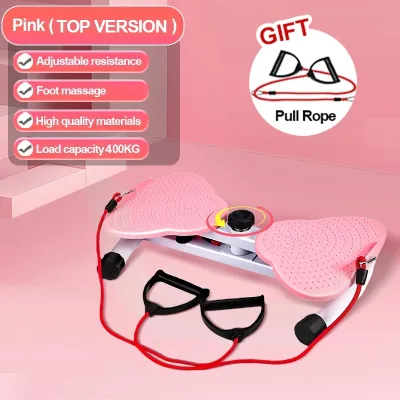
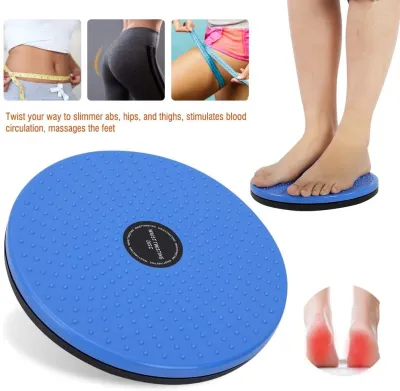
Prices are valid at publication and may change. Please refer to the product page for the latest price.
Twist Board: Balance and Low-Impact Rotation
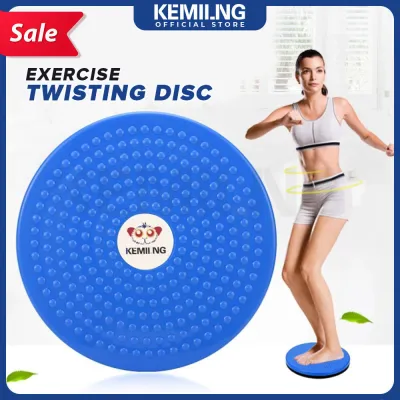
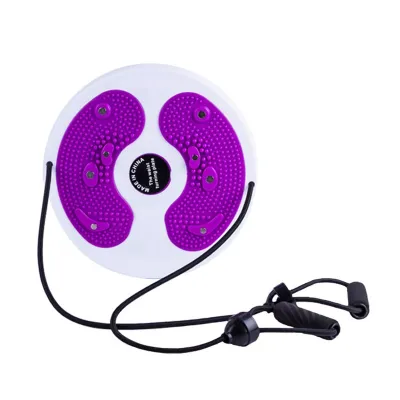
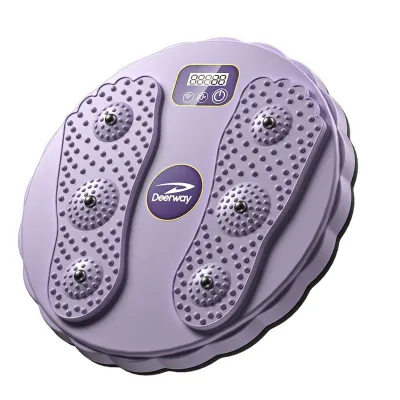
The twist board is a compact, circular platform that rotates on a central ball-bearing system. It is highly popular for home workouts in the Philippines because it requires minimal floor space and can be easily stored away in humid, tropical environments where larger metal equipment might rust. When using a twist board, the resistance is minimal, relying almost entirely on your own body mass and the speed of your movement. This makes it an exceptionally low-impact option that places very little stress on the spinal column, making it suitable for active recovery or light mobility work.

Because the platform is unstable, a twist board places a high demand on the stabilizing muscles of your ankles, knees, and hips. To maintain your balance while twisting, your lower body must constantly make micro-adjustments. This makes the tool excellent for improving overall proprioception and balance. However, this high demand on balance limits its effectiveness for muscle hypertrophy. Because you cannot easily add heavy external loads without compromising your balance and safety, the twist board is not designed for building significant muscle mass or achieving progressive overload.
Ab Twister Machine: Isolated Resistance and Stability
The ab twister machine, commonly found in commercial gyms, offers a highly structured approach to core rotation. This equipment typically features a padded seat or knee platform that rotates against a weight stack, allowing you to select a precise level of resistance. By securing your upper body with chest pads or handles, the machine ensures that the rotation occurs almost exclusively at the waist. This fixed axis of rotation is highly beneficial for isolating the oblique muscles, as it prevents other muscle groups from compensating during the movement.
For individuals looking to build defined obliques, the ability to adjust the weight stack supports the principle of progressive overload. You can gradually increase the resistance over time, stimulating muscle growth in a controlled manner. Additionally, the supported position reduces the stabilization demands on your lower back, making it a safer option for those who struggle to maintain proper posture during free-weight exercises. However, this isolation comes with a trade-off. Because the machine guides your body along a pre-determined path, it does not train the stabilizing muscles required for real-world movements. The strength gained on an ab twister machine has limited functional carryover to standing athletic activities, such as swinging a golf club or throwing a ball.
Russian Twist with Weights: Functional Power and Range of Motion
The Russian twist with weights is a classic functional core exercise that requires no specialized machinery, making it highly versatile for both home and gym settings. To perform it, you sit on a fitness mat, lean your torso back at a 45-degree angle, lift your feet off the floor, and rotate a weight from side to side. This unsupported position forces your entire core—including the rectus abdominis, obliques, transverse abdominis, and erector spinae—to work together to keep you upright.
Using free weights like dumbbells, kettlebells, or weight plates allows you to easily customize the resistance to match your current strength level. You can also adapt the range of motion, twisting further to challenge your flexibility or keeping the movement short and explosive to build rotational power. This dynamic integration of the hips, spine, and shoulders closely mimics the rotational demands of sports like basketball, tennis, and martial arts. However, this freedom of movement carries a higher risk of injury. If your core fatigues and your lower back begins to round under the weight, the lumbar spine is subjected to dangerous shear forces. Maintaining strict form is essential to prevent lower back strain.
Comparison Matrix and Decision Framework
To help you choose the right tool for your fitness goals, the table below outlines the key differences between these three core rotation methods:
| Exercise Type | Primary Resistance | Stability Demand | Primary Focus | Ideal User Profile |
|---|---|---|---|---|
| Twist Board | Bodyweight & Friction | High (Ankles, Knees, Hips) | Balance & Low-Impact Mobility | Beginners, seniors, or rehab |
| Ab Twister Machine | Weight Stack / Cable | Low (Fixed Path) | Oblique Hypertrophy | Bodybuilders & gym-goers |
| Weighted Russian Twist | Free Weights & Gravity | High (Entire Core & Spine) | Functional Power & Athleticism | Athletes & intermediate lifters |
To choose the right tool, align your selection with your primary fitness goal. If you are recovering from an injury, want to improve your balance, or prefer a low-impact workout you can do while watching television at home, the twist board is an accessible option. If your primary goal is to sculpt your obliques and you have access to a local gym, the ab twister machine provides the targeted resistance needed for muscle growth. If you want to build athletic power, improve your coordination, and strengthen your core for daily physical tasks, prioritize the weighted Russian twist.
Before starting any rotational program, verify your physical readiness. If you have a history of lower back pain, herniated discs, knee instability, or shoulder issues, consult a healthcare professional. Rotational movements under load can exacerbate spinal conditions if not executed with correct mechanics.
Safety Checks and Form Corrections for Twisting Movements
Rotational training is highly beneficial, but only when performed safely. The most critical rule of core rotation is to initiate the movement from your thoracic spine (your mid-to-upper back) rather than your lumbar spine (your lower back). The lumbar spine is anatomically designed for stability, offering very limited rotational range. Forcing your lower back to twist, especially under load, can lead to disc injuries.
When performing any twister body exercise, watch for key red flags that indicate your form is breaking down. If you notice your lower back rounding, your movements becoming jerky and uncontrolled, or your knees caving inward, stop the exercise immediately. These are signs that your stabilizing muscles are fatigued, and your joints are absorbing the stress. Always prioritize slow, controlled movements over speed or heavy weight. If you experience any sharp pain, tingling, or discomfort in your spine or joints, discontinue the exercise and consult a physical therapist or qualified fitness professional.
Frequently Asked Questions (FAQ)
Can twisting exercises reduce belly fat?
No, twisting exercises cannot selectively reduce belly fat. The concept of spot reduction—losing fat from a specific area of the body by exercising that specific muscle group—is a myth. While a twister body exercise will strengthen and tone the underlying oblique muscles, it does not burn the fat overlying those muscles. To lose belly fat and reveal a toned midsection, you must combine consistent core training with a sustained caloric deficit, which is achieved through a balanced diet and regular cardiovascular exercise.
How often should I train core rotation?
You should treat your core muscles like any other muscle group in your body, meaning they require adequate recovery time to repair and grow. Training core rotation too frequently can lead to overuse injuries and fatigue. For light, low-impact movements like using a twist board, you can safely perform them daily or every other day as part of a warm-up or active recovery routine. However, for intense, loaded exercises like heavy weighted Russian twists or ab twister machine sessions, limit your training to two or three times per week, ensuring at least 48 hours of rest between sessions.
Community discussion
Share your experience or ask a question. Comments are reviewed before publication.