
Upgrading or replacing a bicycle fork is one of the most significant modifications you can make to your ride, but it is also one of the easiest areas to make a costly compatibility mistake. The front fork is the cornerstone of your bicycle’s front-end geometry, directly influencing steering responsiveness, stability, and how the bike handles rough terrain. Choosing the wrong specifications can result in a fork that physically cannot fit your frame, or worse, a setup that compromises your safety on the road or trail. Whether you are navigating the potholed streets of Metro Manila or tackling muddy singletracks in Rizal, understanding these technical details ensures your new component integrates seamlessly with your existing setup.
Steerer Tube Diameter and Length: Matching Your Frame
The steerer tube is the vertical pipe at the top of the fork that slides through your frame’s head tube and connects to your handlebar stem. To ensure a physical fit, you must match the steerer tube design to your frame’s head tube and headset configuration. Modern bicycles primarily use two designs: straight and tapered. Straight steerer tubes maintain a uniform diameter—most commonly 1-1/8 inches—from top to bottom. Tapered steerer tubes, which are standard on most modern mountain bikes and mid-to-high-end road bikes, measure 1-1/8 inches at the top and flare out to 1.5 inches at the base. A tapered fork cannot fit into a straight 1-1/8 inch head tube, though some tapered head tubes can accommodate straight forks using specialized conversion headset cups.
Beyond the shape, you must consider the steerer tube length. New aftermarket forks ship with an uncut, extra-long steerer tube to accommodate various frame sizes and handlebar height preferences. You will need to measure your current setup, including the head tube height, headset stack, and any spacers you plan to use under your stem, before cutting the new steerer tube to size. Remember that once a steerer tube is cut too short, it cannot be safely lengthened, which would require replacing the entire crown-steerer assembly. To find your exact requirements, consult your frame manufacturer’s documentation or use a caliper to measure your current fork’s steerer tube.
Products mentioned in this guide
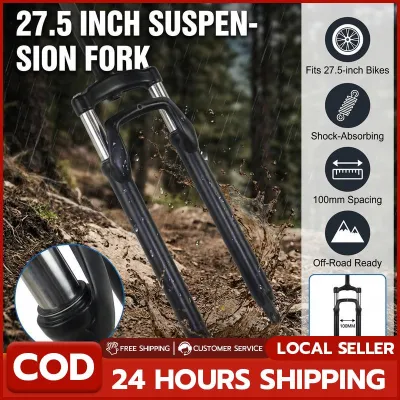
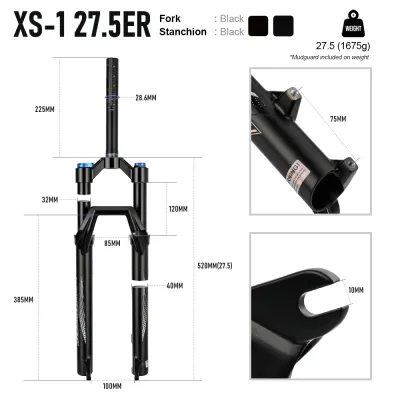
1 Lazada user ratings
recieved the parcel late and had guarantee compensation in the form of lazrewards, mtb fork is lightweight and seems durable, have yet to in…Read full reviewShow less
recieved the parcel late and had guarantee compensation in the form of lazrewards, mtb fork is lightweight and seems durable, have yet to install and test for break-in to know performance
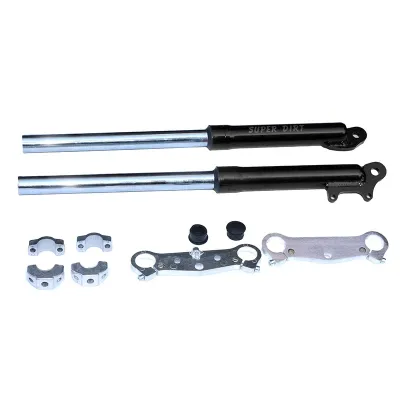
14 Lazada user ratings
Compatible with small vehicles, enhances suspension performance, improves suspension efficiency, performs well on uneven roads, delivers a s…Read full reviewShow less
Compatible with small vehicles, enhances suspension performance, improves suspension efficiency, performs well on uneven roads, delivers a smoother ride, ideal for children’s motorcycles, made from high-quality spring material, easy to install.
Beautiful and worth the price. Shipped from overseas—please wait a bit. Take it and modify it further.
i fire and lockdown the mofo coz it aint no match my OD
🔌Compatibility: Perfect for small motorcycles,
Late delivery, very late.
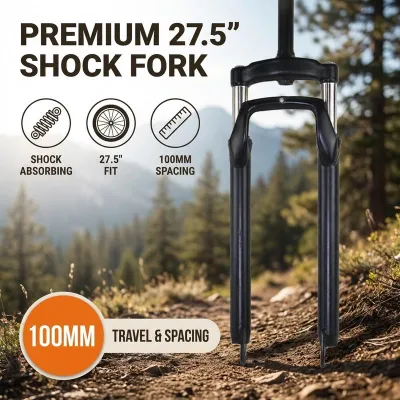
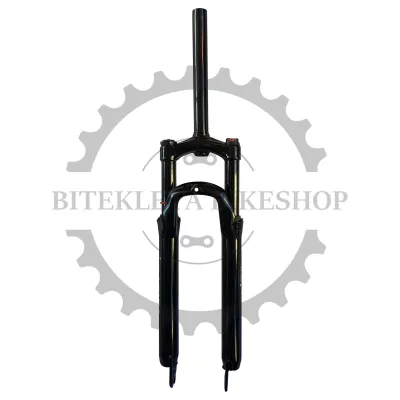
8 Lazada user ratings
Salamat Seller maganda! Maayos pagkakabalot! Manilis pang dumating!! Salamat din lazada!!! 10⭐️ akin!! Para sa akin highly recommended kayo!!
not a ragusa brand as the stock indicates
Steel construction ensures durability,
ok nman may kunti lang gasgas pero tnx
sulit sa presyo 👍👍👍
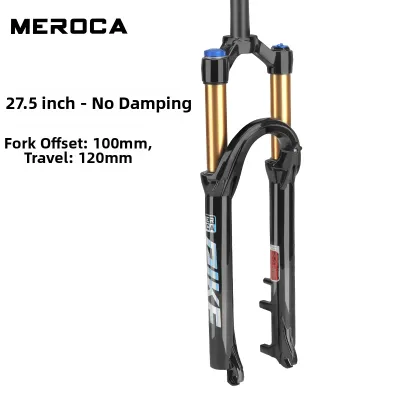
33 Lazada user ratings
Finally, after 30 days my order was delivered. Actually, it's NOT the Seller or LAZ problem, it's the local courier XDE. They tag twice as F…Read full reviewShow less
Finally, after 30 days my order was delivered. Actually, it's NOT the Seller or LAZ problem, it's the local courier XDE. They tag twice as Failed Delivery due to customer unreachable but in reality they never deliver or call me. Im tracking this when the status was ready for delivery and was at home the whole day and weeks. The courier was dishonest and they wanted to blame the customer instead of their fault. The courier posted a pic of call log, they call at 12AM midnight and 10:28PM just to say they have proof, how dumb they are! Thanks to LAZ they escalated my complaint and was delivered the following day. For the product, I'm 101% certified. To LAZ agent, good job👍
🔨Durability:good 👍👍👍Sturdy construction, 🔌Compatibility:good 👍👍👍 🛠️Ease of Installation:good 👍👍👍 quality Fast shipping service, Good size compatibi…Read full reviewShow less
🔨Durability:good 👍👍👍Sturdy construction, 🔌Compatibility:good 👍👍👍 🛠️Ease of Installation:good 👍👍👍 quality Fast shipping service, Good size compatibility, maraming salamat seller and lasada
🔨Durability:good legit solid 🔌Compatibility:good size 26 🛠️Ease of Installation:thanks seller and delivery kahit matagal dumating dahil over …Read full reviewShow less
🔨Durability:good legit solid 🔌Compatibility:good size 26 🛠️Ease of Installation:thanks seller and delivery kahit matagal dumating dahil over seas sulit sa price
The Meroca Airfork is good and overall fork parts is working. Good for everyday ride in different kind of roads.
very good, ganda ng gawaDurable gold tube, Excellent shock absorption,
Prices are valid at publication and may change. Please refer to the product page for the latest price.
Suspension Travel: Aligning Distance with Your Riding Terrain
Suspension travel refers to the distance the fork compresses to absorb impacts, measured in millimeters. Matching this travel to your riding discipline and local terrain is crucial for both comfort and control. Rigid forks offer no travel and are preferred for paved roads, smooth gravel, and efficient urban commuting. Short-travel suspension forks, typically ranging from 80mm to 120mm, are designed for cross-country riding where climbing efficiency and quick handling are priorities. Long-travel forks, spanning 140mm to 180mm or more, are built for enduro and downhill trails, providing the necessary impact absorption for steep drops and rocky descents.

However, you cannot simply install the longest-travel fork available on any frame. Bicycle frames are engineered around a specific axle-to-crown length, which dictates the bike’s head tube angle and bottom bracket height. Installing a fork with excessive travel raises the front end, slackening the steering angle and making the bike sluggish during climbs. More critically, the increased leverage of a longer fork puts immense structural stress on the head tube junction, which can lead to catastrophic frame failure. Always verify your frame manufacturer’s maximum recommended travel limit—typically keeping any changes within 10mm of the original fork’s travel—to preserve handling and structural safety.
Axle Standards: Securing Your Front Wheel Properly
Your new fork must also match your front wheel’s hub configuration to ensure a secure connection. Older and entry-level bicycles commonly use traditional quick-release (QR) skewers, which feature a thin 9mm axle that drops into open slots at the bottom of the fork. Modern mountain and disc-brake road bikes have largely transitioned to thru-axle systems, where a thicker axle passes directly through closed holes in the fork dropouts and the wheel hub, screwing directly into the opposite side. Thru-axles provide significantly higher stiffness and steering precision, especially under heavy braking or on rough terrain.
When selecting a thru-axle fork, you must match both the axle diameter and the hub spacing width. Common standards include 15x100mm for standard road, gravel, and older mountain bikes, and 15x110mm (often called “Boost” spacing) for modern trail and enduro mountain bikes. Downhill bikes may use even thicker 20mm axles. Measuring the inner width of your current front hub and checking the axle diameter is essential before purchasing. Additionally, ensure the replacement axle matches the exact thread pitch and length specified by the fork manufacturer, as using an incompatible axle can damage the fork threads and compromise wheel security.
Fork Offset and Rake: Decoding Handling Characteristics
Fork offset, also known as rake, is the distance the front axle is offset from the steering axis. This specification, combined with your frame’s head tube angle and wheel size, determines “trail”—the mechanical self-centering effect that keeps your front wheel pointing straight. A larger fork offset reduces trail, resulting in quicker, more agile steering at slow speeds but less stability at high speeds. Conversely, a shorter offset increases trail, making the steering feel more stable and planted when descending rapidly, though it may require more effort to maneuver through tight, slow-speed corners.
For most everyday riders and commuters, matching the frame’s original offset is the safest approach to maintain the handling characteristics intended by the bike designer. Manufacturers optimize this specification based on extensive testing. Unless you are an experienced rider looking to fine-tune your bike’s handling for specific racing conditions or highly technical trails, offset should be a secondary consideration compared to steerer diameter, travel, and axle compatibility.
Pre-Purchase Compatibility Checklist
Before finalizing your purchase of a new bicycle fork, go through this step-by-step verification process to avoid compatibility issues:
- Steerer Tube Type: Confirm if your frame requires a straight (1-1/8 inch) or tapered (1-1/8 to 1.5 inch) steerer tube.
- Axle-to-Crown Length and Travel: Ensure the new fork's travel matches your frame's design limits to prevent altering the geometry or stressing the head tube.
- Axle Type and Spacing: Verify whether your wheel hub uses a 9mm quick-release or a thru-axle (such as 15x100mm or 15x110mm Boost).
- Brake Mount Type: Check if your front brake caliper uses a Post Mount (PM) or International Standard (IS) system, and ensure you have the correct adapter if needed.
- Wheel and Tire Clearance: Confirm the fork is designed for your wheel size (e.g., 27.5-inch, 29-inch, or 700c) and provides adequate clearance for your tire width, especially when riding in muddy tropical conditions.
If you are unsure about any of these measurements or cannot find your frame’s official documentation, take your bicycle to a professional bike mechanic in the Philippines. A local shop can precisely measure your head tube and hub dimensions with calipers, ensuring you purchase the correct component and have it installed safely.
Community discussion
Share your experience or ask a question. Comments are reviewed before publication.