
When you step onto the court, your gear dictates how much control you have over the ball’s trajectory, depth, and rotation. The Yonex Vcore 98 is widely regarded as a premier spin-friendly weapon, but its technical specifications can be intimidating on paper. At its core, this racket is engineered to deliver surgical precision and heavy topspin for players who can generate their own power. If you have the mechanics to consistently find the sweet spot, these specifications translate into a highly responsive tool that rewards aggressive baseline play and sharp angles.
In the tropical climate of the Philippines, where high humidity and heat can make tennis balls feel heavy and soft, understanding your equipment is even more critical. A racket’s physical attributes determine how well it cuts through dense air and how much energy is transferred to the ball. By breaking down the head size, string bed, weight, and balance, you can determine if this frame will elevate your performance or work against your natural mechanics.
Head Size and String Pattern: Decoding Spin and Control
The 98-square-inch head size of this frame represents a deliberate shift away from the more forgiving 100-square-inch standard. This smaller head size yields a more compact, concentrated sweet spot that demands precise footwork and highly consistent ball contact. When you strike the ball cleanly, the smaller hoop offers exceptional directional control and feedback, allowing you to aim for the lines with high confidence. However, if your positioning is slightly off, you will notice a immediate drop in depth and a harsher vibration through the handle.
Products mentioned in this guide
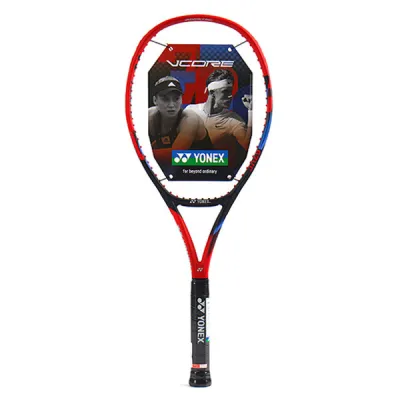
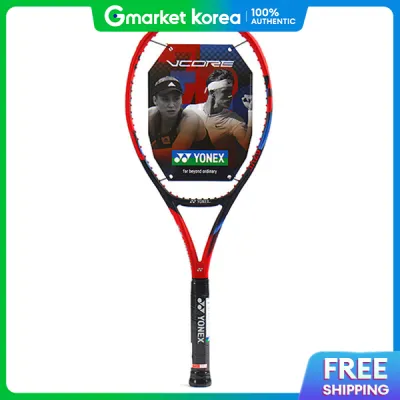
Prices are valid at publication and may change. Please refer to the product page for the latest price.
Complementing this control-oriented head size is the open 16×19 string pattern. This configuration features wider spacing between the main and cross strings, which allows the mains to slide and snap back dynamically upon ball impact. This snapback effect is the primary physical mechanism behind heavy topspin, gripping the ball and sending it over the net with a steep downward arc. In humid local conditions, where clay or hard courts can slow down flat shots, generating this level of heavy spin is essential for keeping your opponents pinned deep behind the baseline.
While players often fixate on the raw stiffness rating or beam width listed on the manufacturer’s spec sheet, these numbers matter much less than the overall head size and string bed interaction. Raw stiffness ratings do not account for the dynamic flex of the frame during a live swing. Instead of overanalyzing the frame’s structural rigidity, prioritize the overall feel of the ball pocketing on the strings. The design of this racket focuses on keeping the ball on the string bed just long enough to guide it accurately to your target.
To optimize this setup, your choice of string tension is a critical variable:
- Lower tension (48 to 52 lbs): Increases the trampoline effect of the string bed, offering more depth, a softer feel on the arm, and enhanced spin potential.
- Higher tension (53 to 58 lbs): Restricts string movement, offering maximum directional control and a crisper response for flat, hard hitters.
Weight and Balance: How Swing Dynamics Translate to the Court
On the spec sheet, this frame typically lists an unstrung weight of approximately 305 grams. It is vital to recognize that this number does not represent the actual weight you will swing during a match. Once you add a high-performance polyester string, a dampener, and a fresh overgrip to combat sweat in warm weather, you will add roughly 15 to 20 grams to the overall package. This additional mass directly impacts the racket’s swing weight, making it feel heavier and more substantial during fast exchanges.

To balance this overall weight, the frame is designed with a slightly head-light balance. This distribution places more of the racket’s mass closer to the handle, which keeps the frame highly maneuverable despite its 300g+ weight class. This head-light balance allows you to accelerate the racket head quickly through the hitting zone, execute rapid reflex volleys at the net, and make quick defensive flicks when pulled wide out of court. It ensures that the racket does not feel sluggish during long, grueling three-set matches under the sun.
This specific mass distribution also enhances the “plow-through” effect, which refers to the racket’s ability to resist twisting when meeting a heavy incoming ball. When defending against high-pace groundstrokes, the physical weight of the frame stabilizes the racket face, absorbing the shock and redirecting the ball’s energy back across the net. This stability prevents the frame from twisting in your hand on off-center hits, protecting your wrist and elbow from repetitive stress.
While advanced players often customize their frames by adding adhesive lead tape to the hoop to increase stability and power, you must approach this with caution. Adding weight to the 12 or 3 and 9 o’clock positions will increase the swing weight significantly. While this can make your groundstrokes heavier, it will also slow down your racket head speed, make quick volleys more difficult, and accelerate shoulder and arm fatigue during long training sessions.
Skill Level Match: Do These Specs Fit Your Playing Style?
The combination of a 98-square-inch head, a 305g unstrung weight, and a control-first design makes this frame ideal for intermediate to advanced players, typically rated NTRP 4.0 or higher. These players possess full, fast swing paths and have developed the technique required to generate their own pace. If your game relies on constructing points through precise placement, heavy angles, and consistent depth, these specifications will feel like a natural extension of your arm.
Conversely, beginners or players with short, compact swings will likely find this frame highly unforgiving. Without a fast swing speed, the ball will often land short in the opponent’s court, and the smaller sweet spot will result in frequent frame hits and uncomfortable vibrations. If you do not have the physical strength or clean technique to handle the 305g weight, you may find your arm tiring quickly, leading to late contact and increased unforced errors as the match progresses.
Before deciding to upgrade, run through a quick self-assessment of your current game:
- Unforced errors: Do you consistently hit the center of the string bed, or do you struggle with off-center mishits?
- Pace generation: Can you easily hit deep into the court using your own body rotation, or do you rely on a flexible, powerful racket to push the ball deep?
- Tactical style: Do you win points by constructing rallies with heavy spin and placement, or do you prefer to hit flat, direct winners?
If you are transitioning from a lighter, oversized game-improvement racket, do not purchase this frame blindly. It is highly recommended to demo the racket first at your local club or pro shop. This allows you to evaluate how the swing weight feels during real-world rallies and ensures your shoulder and wrist can handle the physical demands of the frame before making a financial commitment.
Frequently Asked Questions (FAQ)
What string tension is recommended for the Vcore 98 to maximize spin?
You should always begin by checking the recommended tension range printed directly on the inside throat of your specific frame. To maximize spin, string your racket at the lower end of that recommended range, typically between 48 and 51 pounds. Lower tension allows the strings to deflect more upon impact, creating a deeper pocket and a more pronounced snapback effect that generates heavy topspin. If you play in highly humid conditions where strings naturally soften, start in the middle of the recommended range and adjust by 2 pounds after your initial hitting session.
How does the Vcore 98 compare to the Vcore 100 for baseline players?
The primary difference lies in the balance between surgical precision and forgiving power. The Vcore 98 features a smaller head size and a slightly thinner beam, prioritizing directional control and a heavier, spin-loaded ball for players with established technique. The Vcore 100 offers a larger sweet spot, a thicker frame, and a more forgiving response, making it much easier to generate depth and power on off-center hits. Choose the 98 if you want to dictate points with precise placement and heavy spin; choose the 100 if you want easier depth and greater forgiveness during defensive baseline rallies.
Community discussion
Share your experience or ask a question. Comments are reviewed before publication.