
Choosing between a walk pad and a regular treadmill depends on your fitness goals, available space, and budget. If you want to accumulate daily steps while working at a desk or living in a compact apartment, a walk pad is a highly portable, space-saving solution. If your routine includes running, high-intensity interval training (HIIT), or incline workouts, a traditional treadmill offers the necessary motor power, stability, and speed ranges. Understanding the structural and functional differences between these two types of fitness equipment will help you make an informed decision that aligns with your lifestyle.
Core Differences in Design and Functionality
Walk pads are designed with a minimalist, low-profile frame that often lacks a permanent upright console or handrails. Many models feature a folding deck or a completely flat design that can slide under a bed or sofa. In contrast, regular treadmills are built with heavy-duty steel frames, integrated upright consoles, and sturdy handrails to support high-impact running. This structural difference directly impacts the stability of the machine during use, with traditional treadmills offering a much more solid foundation for intense workouts.
Motor placement and speed ranges differ significantly between the two categories. Walk pads typically house smaller motors, often positioned at the front of the deck, with speed limits usually capping out around 6 km/h to 8 km/h. Traditional treadmills feature larger, more robust motors designed to sustain continuous high speeds, often reaching up to 16 km/h or 20 km/h, along with advanced cooling systems to prevent overheating during long runs. This makes regular treadmills far better suited for cardiovascular conditioning and speed training.
Products mentioned in this guide
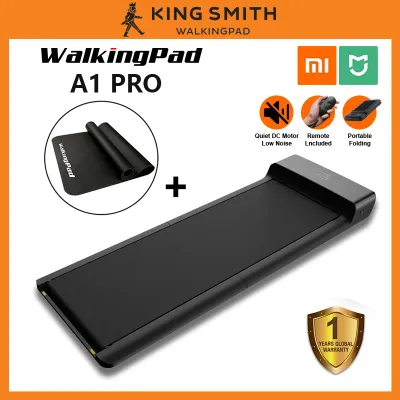
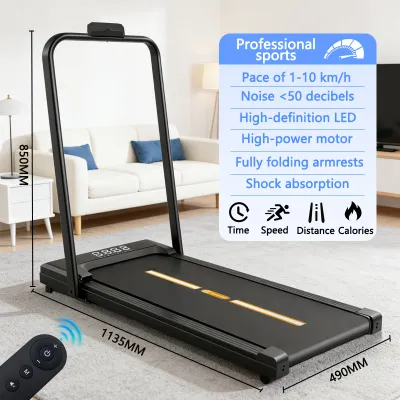
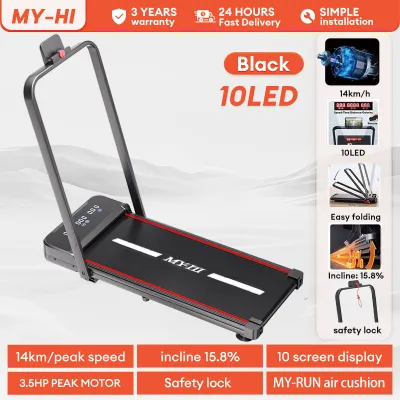
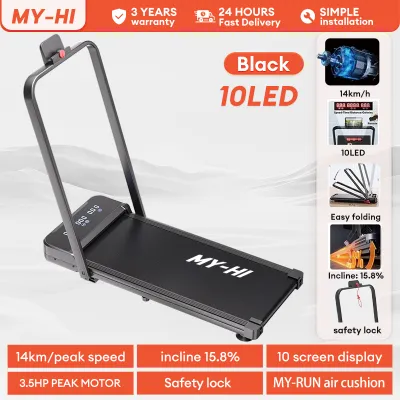
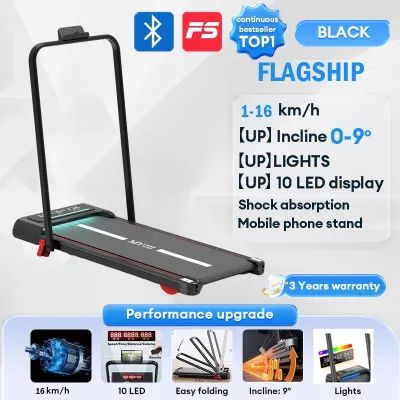
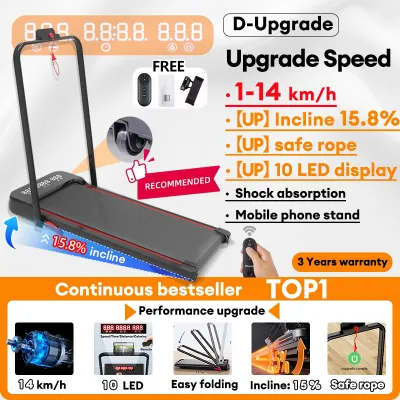
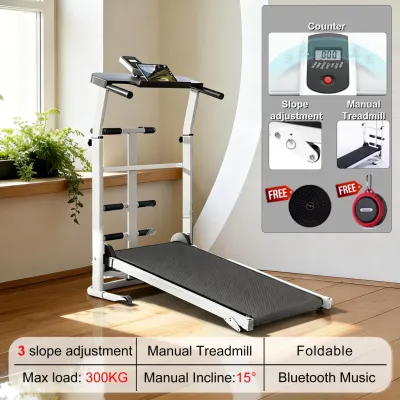
Prices are valid at publication and may change. Please refer to the product page for the latest price.
Consoles on walk pads are often simplified, sometimes integrated directly into the motor cover or controlled via a small remote control or smartphone app. Regular treadmills boast comprehensive consoles with physical buttons, built-in workout programs, heart rate monitors, and sometimes large touchscreen displays. These consoles allow users to track their progress in real-time and adjust settings instantly without interrupting their stride.
The presence of handrails and incline mechanisms is another major differentiator. Traditional treadmills feature sturdy handrails for safety at high speeds and motorized or manual incline systems to simulate outdoor hills. Walk pads generally omit these features to maintain their slim profile, though some models include a fold-down safety bar that limits speed when lowered. Without an incline option, walk pads are limited to flat-surface walking, which may not provide enough resistance for advanced fitness goals.
Matching the Equipment to Your Fitness Goals
In the Philippines, where tropical heat and high humidity can make outdoor midday walks uncomfortable, indoor cardio equipment is a practical way to stay active. If your primary goal is to combat a sedentary lifestyle by getting more steps during remote work hours, a walk pad fits seamlessly under a standing desk. It allows for low-impact, steady-state movement that keeps you active without causing excessive sweating or distraction.

For those training for local fun runs, marathons, or engaging in high-intensity interval training (HIIT), a regular treadmill is indispensable. The robust deck cushioning on a traditional treadmill absorbs the impact of running, protecting your joints far better than the thinner belts found on most walk pads. Additionally, the ability to perform incline walking or running is crucial for building cardiovascular endurance and lower-body strength.
To decide which machine fits your routine, evaluate your current and future fitness aspirations. Ask yourself whether you plan to transition from walking to jogging or running in the coming months. If your routine requires speed variations above 8 km/h or any form of incline resistance, a traditional treadmill is the appropriate choice. If you strictly want to maintain a daily step count while watching television or working, a walk pad will suffice.
Space, Storage, and Setup Considerations
Before purchasing any fitness equipment, it is essential to measure your designated workout area. For a regular treadmill, you must account not only for the physical footprint of the machine but also for safety clearance. Manufacturers typically recommend leaving at least two meters of clear space behind the treadmill belt and one meter on either side to prevent injury in case of a fall.
Ceiling height is another critical factor, especially when using a traditional treadmill with an incline feature. When you stand on a treadmill deck, you are elevated by several inches; engaging the incline raises you even higher. Ensure your ceiling height accommodates your full height plus the deck elevation with ample clearance. Walk pads, being much lower to the ground, rarely present ceiling height issues.
Storage and portability vary greatly between the two types. Walk pads are lightweight, often weighing between 20 to 30 kilograms, and feature built-in transport wheels that make it easy to slide them under a bed, sofa, or upright against a wall. Regular treadmills are significantly heavier, often exceeding 70 kilograms, and while many models offer a folding deck that locks vertically, they still occupy a substantial permanent footprint and are difficult to move once assembled.
Assembly requirements should also influence your decision. Walk pads usually arrive fully assembled and ready to plug in right out of the box. Traditional treadmills often require complex assembly, involving heavy lifting, wiring connections through the console uprights, and securing multiple structural bolts, which may require two people or professional installation services.
Evaluating Budget and Long-Term Value
Budget is a primary consideration for many households in the Philippines. Walk pads generally represent a lower initial investment, with entry-level models starting at accessible price points on local online marketplaces. The primary cost drivers for walk pads are smart connectivity features, folding deck technology, and ultra-quiet brushless motors.
Traditional treadmills sit at a higher price tier due to their heavy-duty steel construction, larger motors, complex incline mechanisms, and advanced console electronics. While the initial cost is higher, a well-built regular treadmill can offer better long-term value for households with multiple users or individuals who train daily at high intensities.
Ongoing operational costs, such as electricity consumption, should also be factored into your budget. Check the manufacturer’s specifications for the motor’s wattage or horsepower rating. Walk pads with smaller motors consume less electricity during operation, whereas high-horsepower treadmill motors will draw more power, especially when running at high speeds or maximum incline.
Reviewing the warranty terms is crucial for protecting your investment. Look for manufacturers that offer separate, extended warranties for the motor and frame, as these are the most expensive components to replace or repair. A short or non-existent warranty on electronic components is a common risk with ultra-budget machines, so verifying these terms before buying is essential.
Key Specifications to Verify Before Buying
When comparing product listings, always verify the manufacturer’s stated maximum weight capacity. It is wise to choose a machine with a weight limit that exceeds your actual body weight by at least 15 to 20 kilograms. This safety margin ensures the motor and belt do not operate under constant strain, which can lead to premature motor failure or belt slipping.
Measure the running belt dimensions carefully. For walking, a belt width of 40 centimeters and a length of 100 centimeters may be sufficient. However, if you are taller or plan to run, you will need a wider and longer belt—ideally at least 45 centimeters wide and 120 centimeters long—to accommodate a natural, unrestricted stride without risk of stepping off the side of the belt.
Pay close attention to how motor power is advertised. Look for the Continuous Horsepower (CHP) rating rather than the peak horsepower. CHP indicates the power the motor can continuously deliver during a workout, whereas peak horsepower only represents the maximum power the motor can reach for a brief moment. For running, a motor with at least 2.5 CHP is recommended, while walk pads typically operate on 1.0 to 1.5 CHP.
Noise levels are a common concern in shared living spaces, apartments, or condominiums. Check user reviews and manufacturer specifications for decibel ratings, and verify the seller’s return policy. If the machine produces excessive noise or vibration that disturbs your household or neighbors, having a clear, hassle-free return window is invaluable.
Frequently Asked Questions (FAQ)
Can a walk pad support running or high-intensity workouts?
Most walk pads are structurally and mechanically designed only for walking or light jogging. To determine if a specific model can handle faster paces, check the maximum speed and motor specifications on the product label. If you attempt to run on a machine not rated for high speeds, you may experience belt slipping, motor overheating, or severe shaking. If the equipment feels unstable or vibrates excessively at its highest speed setting, stop using it immediately to prevent injury or mechanical damage.
Do I need a special mat for a walk pad or regular treadmill?
Using a dedicated equipment mat is highly recommended for both walk pads and regular treadmills, especially when placed on hard floors like tile, laminate, or hardwood. Consult your equipment manual for specific mat recommendations. A dense rubber or PVC mat helps reduce noise and vibration, protects your flooring from scratches and sweat, and prevents carpet fibers or dust from entering the motor compartment, which can extend the lifespan of your machine.
How do I maintain the belt on either type of treadmill?
Regular maintenance is essential to keep the belt running smoothly and to prevent motor strain. Always consult your user manual for the exact lubrication type, as using the wrong oil can damage the belt materials. Perform regular visual checks to ensure the belt is centered and has the correct tension; a belt that is too loose will slip, while one that is too tight can damage the rollers. Wipe down the belt after each workout to remove sweat and dust, and check for signs of wear or fraying along the edges.
Community discussion
Share your experience or ask a question. Comments are reviewed before publication.