
Understanding the noise levels of a walking pad treadmill is crucial before setting up a home gym in a shared-wall building. While these compact machines are generally quieter than traditional running treadmills, they still generate both motor hum and footstep impact. Whether they disturb your neighbors depends heavily on your floor construction, your workout habits, and the steps you take to dampen the sound.
Understanding Walking Pad Treadmill Noise Sources
To manage the sound of a walking pad treadmill, you must first distinguish between its two primary noise types: airborne noise and structure-borne noise. The motor produces a continuous, low-frequency hum that travels through the air. At lower walking speeds, such as a casual pace of 2 to 3 kilometers per hour, this sound is usually comparable to a household fan. However, as you increase the speed, the motor works harder and the belt moves faster, raising the overall decibel level.
The more significant challenge in a condo is structure-borne noise, which is the physical impact of your feet hitting the deck. Every step sends a shockwave down through the machine’s frame and directly into the floor. Your body weight and walking style play a major role here; a heavy heel-strike will produce a much louder thud than a light, mid-foot landing.
Products mentioned in this guide
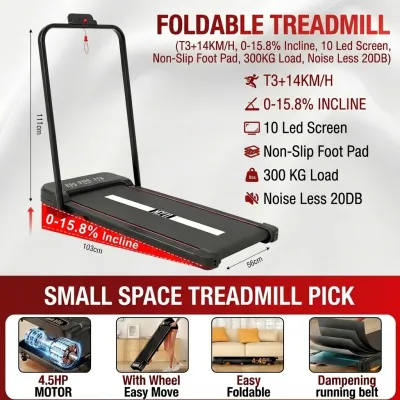
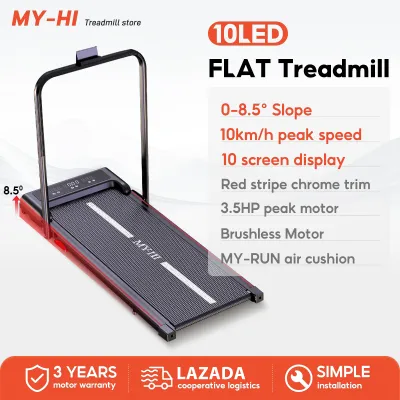
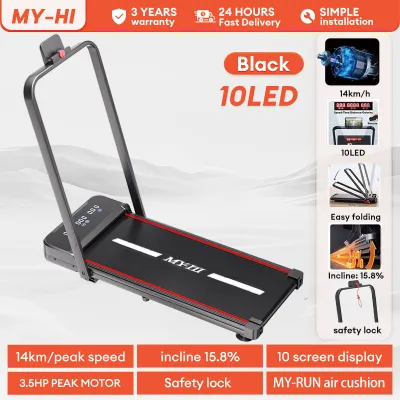
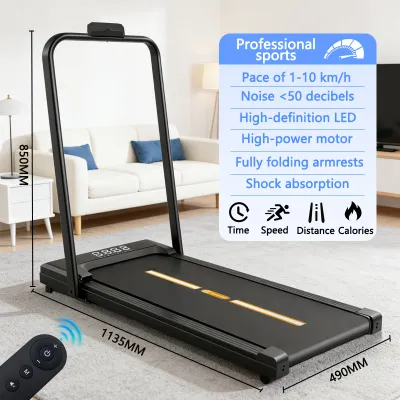

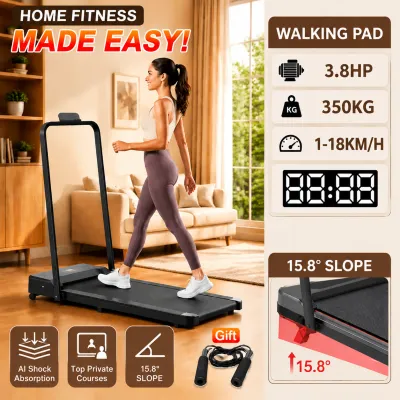
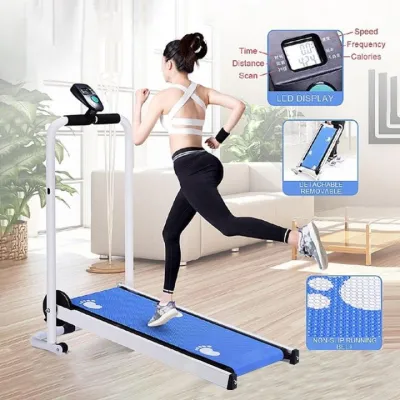
Prices are valid at publication and may change. Please refer to the product page for the latest price.
It is also important to look past manufacturer decibel ratings. These tests are typically conducted in controlled, sound-dampened environments. In a real-world condo—especially one with hard tile or polished concrete flooring common in tropical climates—sound waves bounce off bare walls and hard surfaces, making the machine sound significantly louder than advertised.
Assessing the Risk to Your Condo Neighbors
In a typical high-rise condominium, the physical connection between units determines how far sound travels. Concrete floor slabs are excellent at blocking airborne sounds like talking or television audio, but they are highly conductive when it comes to impact vibrations. When you walk on a walking pad treadmill, the downward force can vibrate the entire floor slab, turning your downstairs neighbor’s ceiling into a speaker diaphragm that broadcasts a dull, rhythmic thudding.

Airborne noise from the motor can also seep through shared walls, particularly if your condo uses lightweight drywall partitions or hollow concrete blocks with minimal insulation. If your workout area is directly adjacent to a neighbor’s living room or bedroom, even a quiet motor hum can become a source of irritation during quiet hours.
Before setting up your equipment, review your condo association’s house rules. Most properties in the Philippines enforce strict quiet hours, often from 10:00 PM to 6:00 AM. Even outside these hours, excessive vibration can violate general nuisance clauses. Understanding your building’s layout—such as whether your floor plan places your living room directly above a neighbor’s bedroom—will help you schedule your walks during times that minimize disruption.
Practical Ways to Minimize Noise and Vibration
Fortunately, you can significantly reduce the sound transmission of a walking pad treadmill with a few strategic adjustments. The most effective step is to decouple the machine from the floor. Placing a high-density, specialized anti-vibration rubber mat under the treadmill absorbs the kinetic energy of your footsteps before it reaches the concrete slab. Standard yoga mats or thin interlocking foam tiles are often too soft and compress completely under the machine’s weight, offering little to no vibration dampening.
Placement is equally critical. Avoid placing your walking pad in the middle of a room, where the floor slab has the most flexibility and is prone to flexing like a drumhead. Instead, position the unit close to structural columns, load-bearing walls, or main beams where the floor is stiffest and least likely to vibrate. Additionally, keep the machine away from shared walls, especially those bordering a neighbor’s bedroom or study.
Regular maintenance is another low-cost way to prevent squeaks and rattles. Over time, the walking belt can stretch or shift off-center, causing it to rub against the side rails and create a loud scraping sound. Periodically check the belt alignment and tension according to the manufacturer’s instructions. Keeping the deck lubricated with 100% silicone oil reduces friction between the belt and the deck, which lowers both motor strain and operational noise.
Condo-Friendly Features to Look for Before Buying
If you are still in the shopping phase, selecting a walking pad treadmill with the right specifications can save you from future neighbor complaints. Look for models equipped with brushless DC motors. Brushless motors operate with less friction than traditional brushed motors, resulting in a quieter hum and a longer lifespan, especially in humid environments where dust and moisture can accelerate wear.
Pay close attention to the deck’s suspension and cushioning system. High-quality walking pads feature built-in shock absorbers, rubber dampers, or flexible decks designed to flex slightly under impact. This built-in cushioning not only protects your joints but also absorbs a substantial portion of the footstep energy before it ever reaches your floor mat.
Finally, always verify the manufacturer’s weight capacity and recommended floor surfaces in the user manual. Operating a walking pad close to its maximum weight limit forces the motor to run hotter and louder, while also increasing the impact force on the deck. Choosing a model with a weight capacity that comfortably exceeds your body weight ensures quieter, more efficient operation.
Frequently Asked Questions (FAQ)
Does a walking pad get louder over time?
Yes, a walking pad treadmill can become louder over time if it is not properly maintained. The most common cause of increased noise is dry belt friction. As the factory lubricant wears off, the belt rubs harshly against the deck, creating a squeaking or grinding sound and forcing the motor to work harder. Regularly applying silicone lubricant as specified in your manual will prevent this issue.
Mechanical wear can also play a role. Over months of use, the constant vibration can loosen structural bolts, leading to annoying rattles during your workout. Additionally, if the internal bearings in the motor or rollers begin to degrade due to dust accumulation or heavy use, you may notice a louder, high-pitched hum or grinding noise. Performing a quick monthly check to tighten loose parts and clean away dust will help maintain a quiet workout environment.
Community discussion
Share your experience or ask a question. Comments are reviewed before publication.