
Deciding between a walking pad and a foldable treadmill for a small condo in the Philippines comes down to your fitness goals, available floor area, and storage limits. If your primary goal is to accumulate daily steps while working or watching television, and you need a machine that slides completely out of sight under a sofa, a walking pad is a highly practical choice. Conversely, if your routine includes running, interval training, or incline workouts, a foldable treadmill is necessary to provide the required motor power, belt speed, and structural stability, even though it demands a larger permanent footprint.
Core Mechanical and Design Differences
Walking pads and foldable treadmills differ significantly in their physical architecture and safety features. Walking pads often feature a minimalist design, frequently omitting handrails entirely or using a simple fold-down bar. Their consoles are typically integrated into the motor cover or controlled via a remote or smartphone app. Foldable treadmills, on the other hand, feature robust, permanent handrails and a physical console that displays real-time metrics and houses safety key clips.
The safety clip is a critical differentiator that directly impacts high-speed workouts. While almost all treadmills require the safety key to operate, some basic walking pads lack this physical tether, relying instead on automatic stop sensors or remote control buttons. This makes walking pads less suitable for high-speed running where an immediate emergency stop is essential to prevent injury.
Products mentioned in this guide
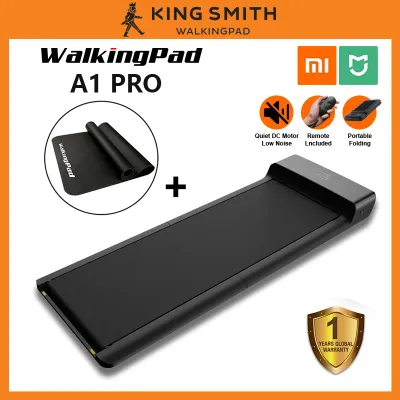
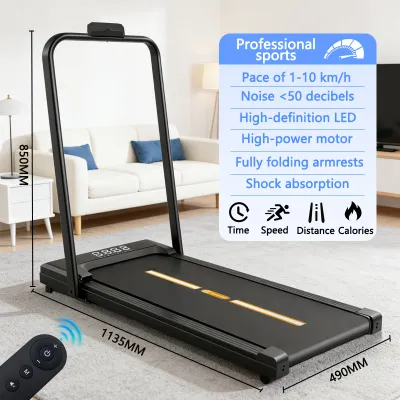
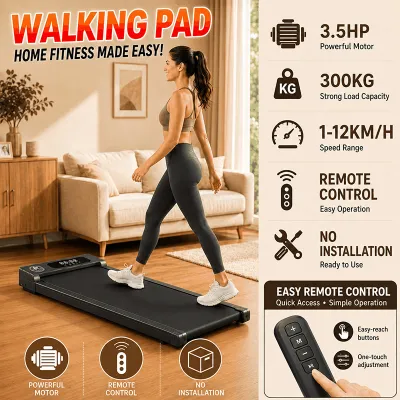
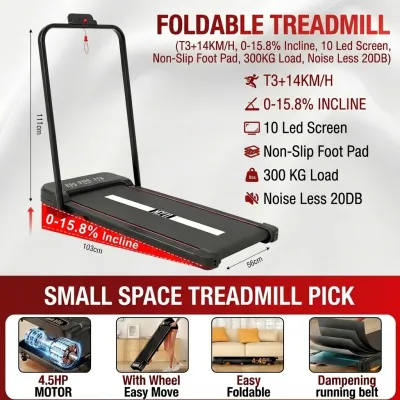
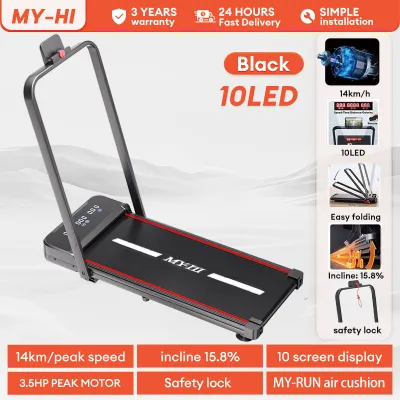
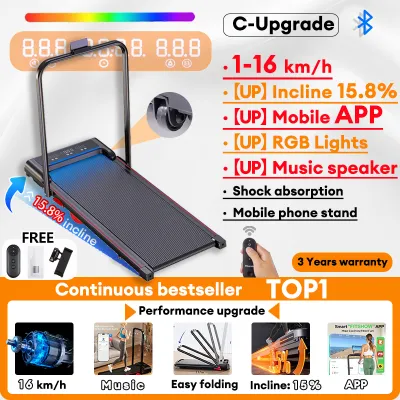
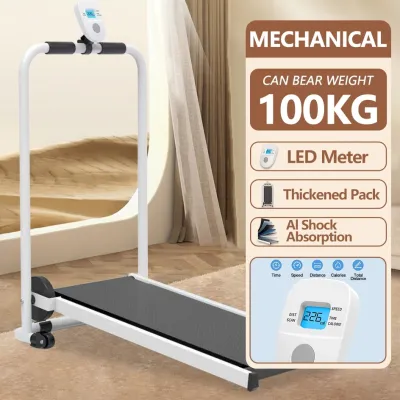
Prices are valid at publication and may change. Please refer to the product page for the latest price.
Folding mechanisms also vary to accommodate different storage preferences. Walking pads are designed for flat folding, with some advanced models folding in half to minimize their length. Foldable treadmills usually fold vertically, where the deck pivots upward toward the console, secured by a hydraulic assist or manual latch, which requires a dedicated vertical space.
Before purchasing, check the manufacturer’s specifications for motor size, measured in Continuous Horsepower (CHP). Walking pads typically utilize smaller motors, often under 1.5 CHP, designed for lower speeds and lighter usage. Foldable treadmills feature larger motors, typically 2.0 to 3.5 CHP, to sustain running speeds without overheating. Belt dimensions also vary; walking pads have shorter, narrower belts suitable for walking strides, while treadmills offer wider, longer running surfaces to accommodate a full running gait safely.
Frame materials dictate both stability and portability. Walking pads often use lightweight aluminum alloys to keep the machine under 30 kilograms, allowing you to roll it away easily. Foldable treadmills rely on heavy-duty steel frames that can exceed 60 kilograms, providing the necessary stability to prevent shaking during high-impact runs but making them significantly harder to move.
Space, Storage, and Condo Layout Limits
In a compact Philippine condominium, every square meter of floor space is premium real estate. You must measure both the active footprint—the space the machine occupies while in use, including safety clearance zones behind the belt—and the stored footprint. A machine that fits suitably when folded might still block essential pathways when fully extended.

Walking pads excel in ultra-compact layouts because their folded height is often under 15 centimeters. Before purchasing, verify the clearance under your bed frame or sofa using a tape measure, and compare it directly to the manufacturer’s folded-height specifications. This ensures the unit can be stored completely out of sight when not in use.
Foldable treadmills, when folded vertically, require significant vertical clearance and dedicated wall space. You must ensure the folded machine does not block walkways, emergency exits, or built-in cabinet doors. Additionally, check your condo’s floor weight limits if you plan to place a heavy treadmill in a specific corner, especially in older high-rise buildings.
Living in close proximity to neighbors means noise and vibration transfer through concrete floors is a major consideration. The impact of footsteps, especially during runs, can create low-frequency vibrations that travel through the building’s structure. To mitigate this, check if the equipment requires specialized high-density anti-vibration rubber mats to absorb the impact before it reaches the floor.
Tropical conditions in the Philippines, such as high humidity, can also affect storage. Storing equipment in damp, unventilated corners can lead to rust or electrical damage. Ensure your storage area is dry and well-ventilated to protect the machine’s internal components.
Workout Intensity and Fitness Capabilities
These machines are engineered specifically for low-impact, steady-state cardio. Walking pads typically cap speeds between 6 to 8 kilometers per hour, making them ideal for brisk walking or light jogging. If your fitness routine centers on active recovery, desk walking, or meeting a daily step goal, the walking pad aligns suitably with your needs.
If your training involves running, sprinting, or high-intensity interval training (HIIT), a foldable treadmill is indispensable. These machines support speeds up to 16 kilometers per hour or higher and often feature motorized or manual incline options to simulate outdoor terrain. This versatility is essential for cardiovascular conditioning and athletic training.
Always check the manufacturer’s stated maximum user weight capacity and motor continuous horsepower (CHP) before buying. Exceeding the weight limit or running a low-CHP motor at high speeds for extended periods can lead to premature motor wear. Matching your body weight and workout intensity to the machine’s certified specifications is crucial for longevity.
Pushing fitness equipment beyond its designed limits can trigger safety stop conditions. For instance, a walking pad motor may overheat and shut down automatically if subjected to continuous running speeds. Belt slippage is another risk when a user’s stride force exceeds the motor’s torque capacity, emphasizing the need to follow the manufacturer’s guidelines.
Budget, Maintenance, and Local Support
Budget planning is crucial when setting up a condo gym. Walking pads generally occupy a lower price tier, often ranging from ₱8,000 to ₱20,000, making them an accessible entry point. Foldable treadmills represent a higher initial investment, typically starting around ₱25,000 and scaling up to ₱60,000 or more, reflecting their larger motors, robust frames, and advanced consoles.
Long-term value depends heavily on warranty terms. Look for products that offer separate warranties for the motor, frame, and belt. A longer motor warranty indicates manufacturer confidence in the machine’s durability under regular use, which is especially important for motorized fitness equipment.
In the Philippines, verifying the availability of authorized service centers and replacement parts is essential before finalizing your purchase. Shipping heavy fitness equipment back for repairs is highly impractical, so having local technicians who can source replacement belts, motors, or control boards is a major advantage.
Do not forget to factor the cost of necessary accessories into your total budget. High-density equipment mats protect your condo’s flooring from scratches and sweat, while a high-quality surge protector is vital to shield the machine’s sensitive control boards from local power fluctuations. Regular belt lubrication is also required, so include the cost of silicone lubricant in your maintenance budget.
Final Decision Framework for Condo Dwellers
Opt for a walking pad if your primary objective is to increase daily step counts, you lack a dedicated workout corner, and you must store the machine completely out of sight under existing furniture. It is also the preferred choice if you live in a strictly regulated condo where noise must be kept to an absolute minimum.
Choose a foldable treadmill if your fitness goals require running speeds, incline training, and the physical stability of handrails. This option is suitable if you have a dedicated corner of your condo where the machine can remain folded vertically without obstructing daily traffic.
Before making any purchase, verify your condo building management’s specific rules regarding heavy fitness equipment, floor load limits, or noise restrictions. Some properties require written permission or have strict guidelines on moving heavy items through passenger elevators.
Always stop and consult the manufacturer or a qualified fitness professional if your intended workout intensity, body weight, or usage frequency approaches or exceeds the equipment’s stated safety specifications. Operating equipment outside its certified limits poses safety risks and voids the warranty.
Frequently Asked Questions (FAQ)
Can I use a treadmill on an upper-floor condo without disturbing neighbors?
Yes, but it requires careful preparation. Impact noise from running transfers easily through concrete floors as structure-borne vibration, which can sound like loud thuds to the neighbor below. To minimize this, check the manufacturer’s noise decibel ratings and place a high-density, multi-layered anti-vibration rubber mat beneath the treadmill. It is also highly recommended to consult your condo’s building rules regarding heavy equipment and noise ordinances to ensure compliance before setting up your machine.
Do walking pads require special electrical setups or floor reinforcement?
No, walking pads do not require special electrical setups or floor reinforcement. Most models operate safely on standard household electrical outlets without the need for dedicated circuits or specialized wiring. Because they are lightweight and designed for low-impact walking, they do not exert enough force to require floor reinforcement in modern concrete condominiums. However, you should always check the specific power draw and plug type on the product label to ensure compatibility with your local wall sockets and to avoid overloading your circuit.
Community discussion
Share your experience or ask a question. Comments are reviewed before publication.