
Deciding how to maintain an active lifestyle while living in a high-density urban area like Metro Manila or Cebu can be a structural puzzle. During the heavy downpours of the monsoon season, or on sweltering afternoon days when the tropical heat makes outdoor jogging uncomfortable, indoor exercise equipment becomes highly appealing. However, the spatial constraints of modern condominium units require careful planning before bringing any fitness machinery home. If you want to stay active from your living room, you face a common decision: should you invest in a compact treadmill walking pad or a traditional, full-sized treadmill?
The choice depends on your space limits, fitness goals, and building rules. A treadmill walking pad is ideal for light, consistent movement and tight spaces, whereas a full treadmill is necessary for running and high-intensity cardio but demands a permanent, heavy footprint. To make the right choice, you must analyze your condo layout, define your daily exercise habits, and understand the technical specifications of each machine.
Assess Your Space: Condo Layout and Storage Realities
Condominium units in the Philippines often range from compact studio apartments to slightly larger multi-bedroom layouts, meaning every square meter of floor space is valuable. Before purchasing any fitness equipment, grab a tape measure and map out your available space. You must account for not just the physical footprint of the machine itself, but also the safety clearance around it. Manufacturers typically recommend leaving at least two meters of clear, unobstructed space behind the treadmill belt and at least half a meter on both sides. This clearance is crucial to prevent serious injury in case you lose your balance or slip off the moving belt.
Products mentioned in this guide
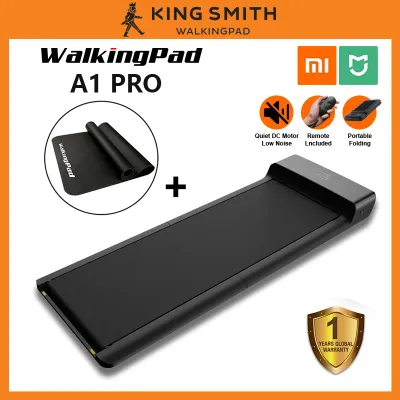
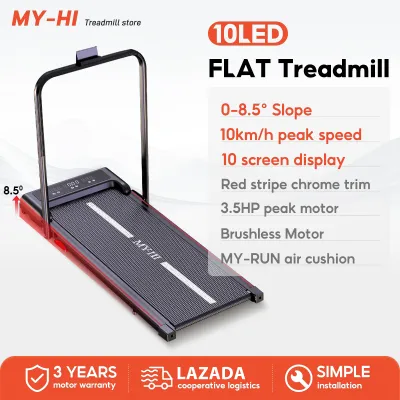
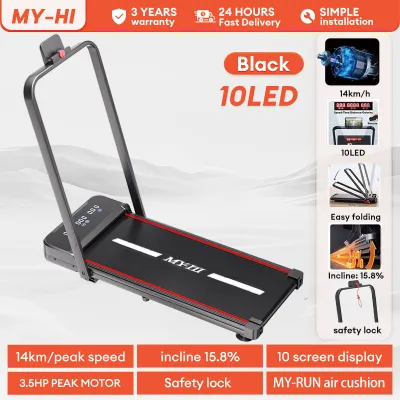
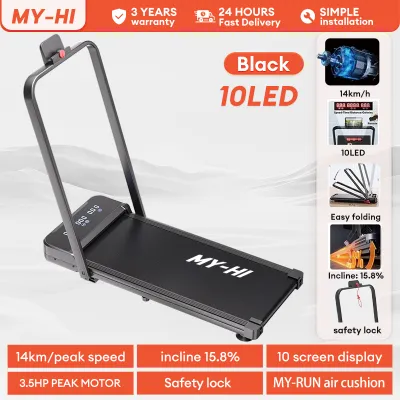
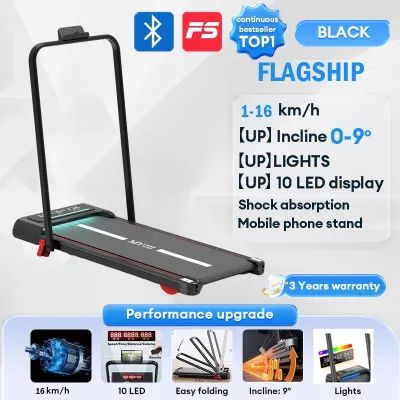
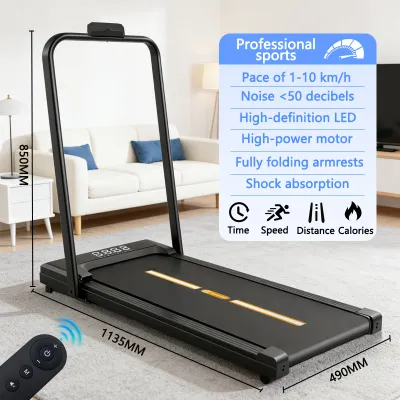
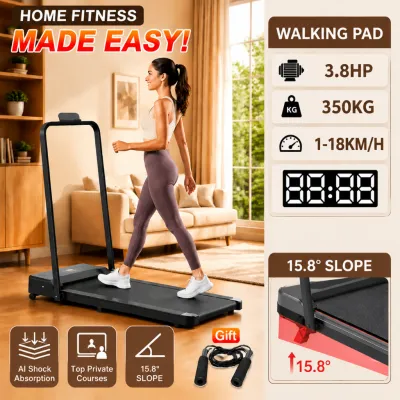
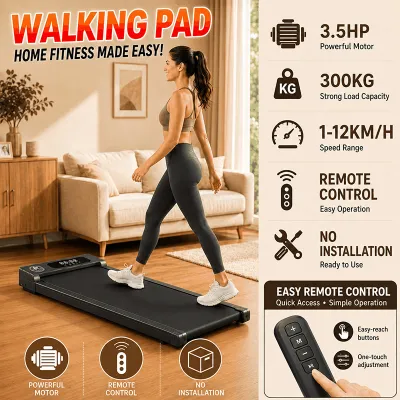
Prices are valid at publication and may change. Please refer to the product page for the latest price.
Ceiling height is another critical factor that condo owners frequently overlook. Many local high-rise developments feature standard ceiling heights of 2.4 to 2.7 meters. If you select a full-sized treadmill, the running deck itself can stand 20 to 30 centimeters off the ground. Once you step onto the machine, your head will be significantly closer to the ceiling. If you plan to use incline features, this height increases further, potentially bringing your head dangerously close to light fixtures, ceiling fans, or concrete beams.
Storage realities differ dramatically between these two types of equipment. A treadmill walking pad is designed with a flat, low-profile frame that can slide easily under a bed, behind a wardrobe, or beneath a low-profile sofa when not in use. In contrast, even “foldable” full-sized treadmills usually fold upward at an angle, meaning they still occupy a substantial vertical and horizontal footprint. They remain highly visible and can easily dominate a small living room or bedroom, disrupting your home’s aesthetics.
Finally, do not forget to check your condominium corporation’s rules regarding heavy equipment, floor load limits, and noise or vibration policies. High-rise buildings have strict guidelines to maintain structural integrity and a peaceful living environment. Heavy, vibrating equipment can easily transmit low-frequency noise through concrete floor slabs, which can disturb downstairs neighbors and lead to formal complaints.
Define Your Fitness Goals: Daily Steps vs. Serious Cardio
It is easy to fall into the trap of purchasing fitness gear for the person you hope to become rather than the person you actually are. If your primary goal is to combat a sedentary lifestyle, lower your sitting time, and increase your Non-Exercise Activity Thermogenesis (NEAT), a treadmill walking pad is highly effective. These machines are engineered for low-intensity, steady-state movement. They allow you to walk comfortably at speeds of 2 to 6 kilometers per hour, which is the ideal range for typing, reading, or participating in virtual meetings without losing your breath.

However, if your fitness routine involves structured cardiovascular training, high-intensity interval training (HIIT), or preparation for local fun runs and marathons, a walking pad will fall short. Serious running demands a machine that can handle high-velocity impacts and rapid speed changes. Full treadmills are built with robust frames and advanced deck cushioning systems designed to absorb the shock of your footfalls. Running on a hard, uncushioned surface—which is common in basic, ultra-slim walking pads—can place excessive stress on your joints over time.
If you plan to run multiple times a week, a full-sized treadmill is a safer investment for your joints, provided you have the space to accommodate it. Running generates forces up to several times your body weight, and a spacious, cushioned deck helps mitigate this impact. Be honest about your current consistency; if you do not currently run outdoors or at a gym, buying a massive treadmill with the hope that it will force you to run often leads to the machine becoming an expensive clothes rack.
Key Equipment Differences to Compare Before Buying
To make an informed decision, you must look past marketing buzzwords and compare the physical specifications of each machine. Always verify these details on the manufacturer’s official spec sheet or product label before finalizing your purchase.
Motor, Speed, and Incline Capabilities
The heart of any treadmill is its motor, measured in horsepower (HP) or continuous horsepower (CHP). Walking pads typically utilize smaller, quieter motors ranging from 0.75 to 1.5 HP. These motors are optimized for walking speeds and can overheat if forced to run continuously at high speeds or under heavy loads. Full treadmills require heavy-duty motors, usually starting at 2.5 CHP and going up to 4.0 CHP. This continuous power allows the motor to maintain consistent belt speeds under the high friction generated by running.
Additionally, speed limits and incline features differ dramatically between the two categories:
- Speed Limits: Walking pads are generally capped at 6 to 8 km/h, whereas full treadmills can easily reach speeds of 16 to 20 km/h.
- Incline Features: Most walking pads feature a completely flat deck, though some manual models offer a slight, fixed incline. Full treadmills offer motorized incline adjustments, allowing you to simulate hill climbs, which increases cardiovascular demand and muscle engagement without requiring you to run faster.
Running Surface and Weight Capacity
The size of the running belt directly impacts your safety and comfort. Walking pads are designed to save space, meaning their belts are narrower and shorter—often measuring around 40 centimeters wide and 100 to 110 centimeters long. While this is adequate for a standard walking stride, it can feel incredibly restrictive for taller individuals or anyone with a longer natural gait. If your stride is restricted, you risk stepping off the side of the belt or tripping over the front motor cover.
A full treadmill typically offers a spacious deck measuring 50 centimeters wide and 140 centimeters or more in length, providing ample room for lateral movement and long running strides. Weight capacity is another vital metric. Because walking pads have smaller motors and lighter frames, their maximum weight limits are often lower, sometimes capped at 90 to 100 kilograms. You must verify that your weight falls safely within the manufacturer’s specified limits. Operating any treadmill near or above its maximum weight capacity strains the motor, degrades the belt, and can void your warranty.
Footprint, Folding Mechanisms, and Storage
When comparing these machines, you must evaluate both the “in-use” footprint and the “stored” footprint. A walking pad typically occupies a minimal in-use area and can be easily rolled away. Most models weigh between 20 and 35 kilograms and feature small transport wheels on the front base. This lightweight design allows a single person to lift one end and roll the machine under a bed or into a closet.
Full treadmills are massive, semi-permanent structures. Even models advertised as “space-saving” or “foldable” often weigh between 70 and 110 kilograms. While they may feature hydraulic folding mechanisms that lift the deck vertically, they still require a dedicated floor area and are incredibly difficult to move once assembled. Attempting to drag a heavy treadmill across delicate condo floors, such as engineered wood, vinyl, or laminate, can cause permanent scratching and structural damage.
The Verdict: When to Choose a Walking Pad or a Full Treadmill
To finalize your decision, match your space constraints, budget, and fitness goals to one of the following paths:
- Path A (Choose a Walking Pad): This is the best choice if you live in a compact studio or one-bedroom condo where floor space is at a premium. It is ideal if your primary goal is to increase daily movement while working from home, if you need to store the equipment completely out of sight, and if you prefer a budget-friendly option. In the Philippines, entry-level walking pads are widely available on local online marketplaces, typically ranging from ₱8,000 to ₱20,000.
- Path B (Choose a Full Treadmill): This is the best choice if you are a dedicated runner, if multiple family members with varying fitness goals will use the machine, or if you are actively training for athletic events. This path requires a dedicated, permanent workout space in your condo and a higher ceiling clearance. It also demands a larger financial investment, with reliable, entry-level running treadmills starting around ₱25,000 and premium, commercial-grade models exceeding ₱60,000.
- Path C (Consider Alternatives): If neither machine fits your condo layout or lifestyle, consider alternative fitness strategies. If you enjoy the social aspect of fitness or require high-end equipment, a local gym membership may be more practical. Alternatively, you can take advantage of outdoor pedestrian-friendly areas in the Philippines, such as the active zones in Bonifacio Global City (BGC), local university tracks, or community parks. If you still want indoor convenience but have zero floor space for a belt, compact alternatives like mini-steppers or under-desk ellipticals provide low-impact movement with a virtually silent operation and a footprint smaller than a doormat.
Ultimately, the best fitness equipment is the one that aligns with your daily habits and gets used consistently rather than serving as an expensive storage rack.
Setup and Safety Tips for Condo Treadmills
Using fitness equipment in a multi-story condominium requires careful consideration of safety and neighborly courtesy. First, always place a high-density rubber equipment mat under your machine. This mat serves a dual purpose: it protects your condo’s flooring from scratches and sweat, and it significantly dampens the low-frequency vibrations and motor hum that can travel through concrete structural slabs to the unit below you.
Second, ensure your electrical setup is safe. Treadmills, especially those with larger motors, draw a significant amount of electrical current. Always plug your machine directly into a grounded wall outlet. Avoid using thin extension cords, multi-plug adapters, or sharing the outlet with other high-power appliances like air conditioners or refrigerators, as this can overload your circuit and pose a fire hazard.
Third, maintain the mandatory safety clearance behind the machine. Keep the area behind the belt completely clear of walls, furniture, or toys to prevent injury if you fall. Finally, perform regular maintenance. Check the belt alignment weekly to ensure it runs centered, and apply silicone lubricant under the belt according to the manufacturer’s instructions. Proper lubrication reduces friction, keeps the motor running quietly, and extends the lifespan of the machine.
Frequently Asked Questions (FAQ)
Can I run on a walking pad?
Most walking pads are engineered strictly for walking speeds (typically up to 6 km/h) and lack the structural frame, motor power, and shock absorption required for running. Attempting to run on a standard walking pad can strain the motor, damage the belt, and increase the risk of slips or falls. Always check the manufacturer’s manual for specific speed limits and intended usage.
Do walking pads consume a lot of electricity?
Walking pads generally feature smaller, lower-wattage motors (typically ranging from 500 to 1,000 watts) compared to full-sized treadmills, making them relatively energy-efficient. Their power consumption is comparable to running a household microwave or a small air conditioning unit. To prevent phantom power draw, check the product label for exact wattage and unplug the unit when not in use.
How do I reduce treadmill noise for my downstairs neighbors?
To minimize noise and structural vibrations, place a thick, high-density rubber mat directly under the machine. Position the equipment away from shared drywall partitions, ideally on a solid concrete floor area. Regularly lubricate the running belt according to the manufacturer’s instructions to eliminate squeaks and reduce motor strain. Additionally, consult your condo’s property management office to ensure compliance with building noise regulations.
Community discussion
Share your experience or ask a question. Comments are reviewed before publication.