
Choosing between a walking pad and a regular treadmill comes down to three main factors: your primary exercise speed, your available living space, and your budget. Walking pads, also known as under-desk treadmills, are designed for low-impact, steady-state walking at speeds typically capping at 6 to 8 kilometers per hour. Their flat, low-profile design allows them to slide under desks or beds, making them ideal for remote workers, casual walkers, and compact apartments.
Regular treadmills are heavy-duty machines built for running, sprinting, and high-intensity interval training (HIIT). They offer robust motors, speeds up to 16 kilometers per hour or higher, motorized incline settings, and advanced shock absorption. However, they require a permanent dedicated space and a larger financial investment. The right choice depends entirely on your available space, primary workout intensity, and budget.
Key Specifications and Feature Comparison
Understanding the mechanical differences between these two types of cardio equipment helps clarify what each machine can safely handle. Motor power, belt size, and weight limits directly affect both the safety of your workouts and the lifespan of the machine.
Products mentioned in this guide
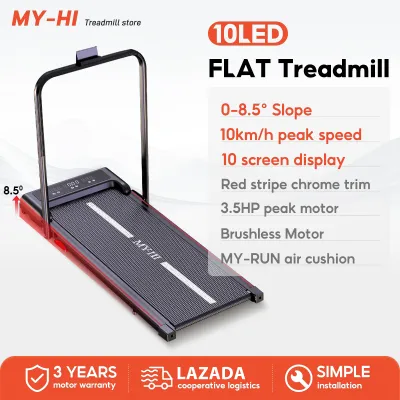
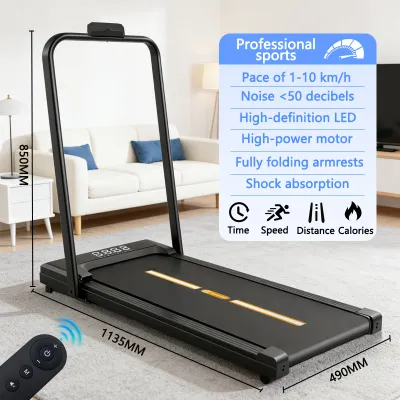
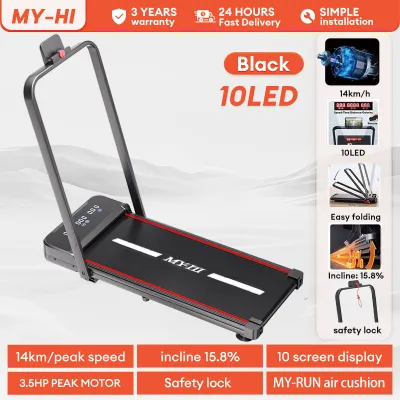
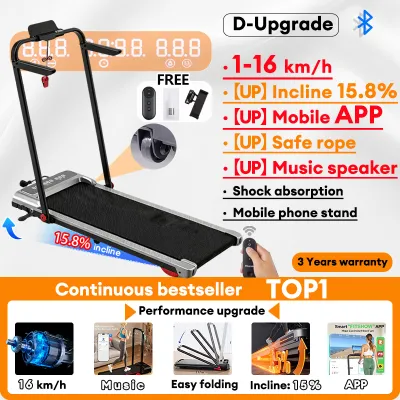
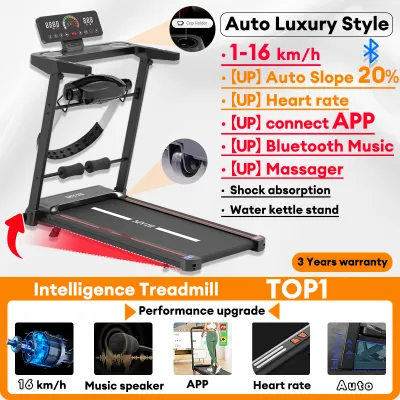
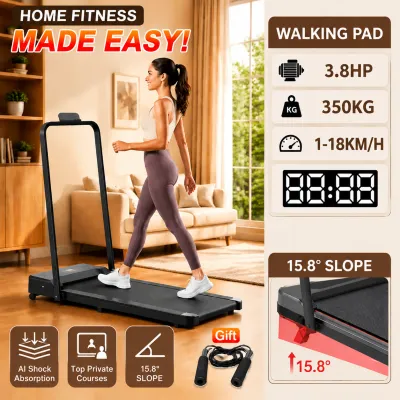
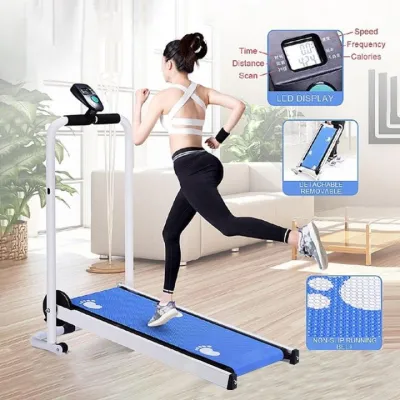
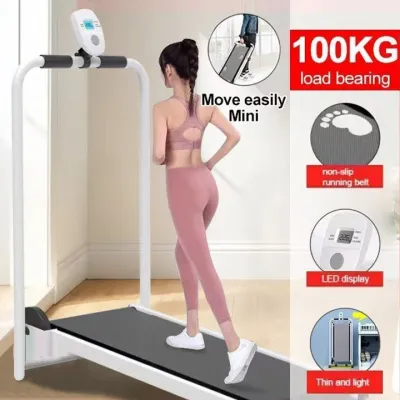
Prices are valid at publication and may change. Please refer to the product page for the latest price.
Before purchasing, verify these specifications on product labels or manufacturer sites, as individual models vary widely. The table below outlines the typical operational ranges for both walking pads and regular treadmills:
| Feature | Walking Pad (Under-Desk) | Regular Treadmill |
|---|---|---|
| Motor Size | 0.5 to 1.5 CHP (Continuous Horsepower) | 2.0 to 4.0+ CHP |
| Speed Range | 1 to 6 km/h (some up to 8 or 10 km/h) | 1 to 16+ km/h |
| Incline Options | Flat (rarely manual incline of 1% to 3%) | Motorized incline (0% to 12% or 15%) |
| Weight Capacity | 90 kg to 110 kg | 110 kg to 150+ kg |
| Running Deck Size | Approx. 100 cm x 40 cm | Approx. 130 to 150 cm x 50 cm |
Motor power is measured in Continuous Horsepower (CHP), which indicates the horsepower a motor can maintain continuously under a load, rather than peak horsepower. Walking pads utilize smaller motors because walking requires less torque to keep the belt moving at low speeds. Regular treadmills require larger motors to sustain the high-speed impacts of running without overheating or lagging.
Deck size is another critical safety specification. A wider and longer running deck on a regular treadmill prevents you from accidentally stepping off the side or back during long, fast strides. Walking pads feature narrower, shorter belts that are perfectly adequate for walking but too restrictive for a natural running gait.
Space, Storage, and Home Setup Requirements
Physical space is often the deciding factor for home fitness equipment. Urban living in the Philippines, particularly in high-rise condominiums or townhouses, requires careful measurement of your floor plan and vertical clearance before bringing a large machine home.

Footprint and Ceiling Clearance
A regular treadmill has a substantial physical footprint, typically requiring a permanent dedicated space of about 1.5 to 2 square meters. When setting up a regular treadmill, ceiling height is a crucial safety factor that is often overlooked. The running deck of a regular treadmill sits roughly 15 to 25 centimeters off the floor. If you use a machine with a motorized incline, the deck will rise even higher during use.
To calculate your safety clearance, add your height to the deck height of the treadmill, plus an additional 30 centimeters of overhead clearance. This ensures you will not strike your head against the ceiling or ceiling fans during a high-intensity run. Walking pads sit extremely low to the ground, often only 5 to 10 centimeters high, making them highly compatible with standard or low-ceiling rooms.
Portability and Storage Options
Walking pads are built for maximum portability. Most models weigh between 20 and 35 kilograms and feature built-in transport wheels on the front frame. This design allows you to lift the rear of the unit and roll it under a bed, sofa, or into a closet when your workout is finished. This level of flexibility is perfect for multi-purpose rooms where a permanent fitness machine would disrupt the living space.
Regular treadmills are heavy, often weighing between 70 and 120 kilograms. While many modern home treadmills feature a folding deck that locks vertically to save floor space, they remain bulky and difficult to move once assembled. Before purchasing a heavy regular treadmill, verify your floor’s weight capacity, especially if you live in an older building or on an upper floor with wooden joists. Additionally, in the humid tropical climate of the Philippines, storing fitness equipment in damp, unventilated areas can lead to premature rust or electrical component failure, so keeping the machine in a dry, well-ventilated room is essential.
Matching the Equipment to Your Fitness Goals
Your fitness objectives dictate the level of machinery you need. Purchasing a machine that does not match your physical training style can lead to frustration, joint pain, or premature equipment failure.
Walking, Jogging, and Running Limits
Walking pads are strictly optimized for lower-speed activities. Because walking requires shorter strides, the running belt on a walking pad is relatively short. If you attempt to jog or run on a short belt, your stride will naturally lengthen, creating a high risk of stepping off the front or back of the machine.
Regular treadmills are designed to accommodate the elongated stride of running, sprinting, and long-distance training. Running exerts a downward force of up to two to three times your body weight on the deck. A walking pad’s small motor is not engineered to withstand this high level of friction and impact, and attempting to run on one can cause the motor to overheat, slip, or burn out quickly.
Incline Training and Workout Programs
Incline training is an excellent way to increase cardiovascular intensity and burn more calories without increasing joint-stressing speed. Regular treadmills excel in this area, offering motorized incline adjustments that you can change mid-workout with the press of a button. Many models also feature built-in digital workout programs that automatically adjust speed and incline to simulate outdoor terrain, keeping your workouts engaging.
In contrast, the vast majority of walking pads are completely flat. A few models offer a small, fixed manual incline that must be set before you turn on the machine, limiting your workout variety. If your fitness goals include hill climbs, trail preparation, or high-calorie-burn walking workouts, a regular treadmill is the superior choice.
Joint Impact and Deck Stability
The construction of the deck determines how your joints feel after a workout. Regular treadmills feature advanced shock absorption systems, such as elastomer cushions or spring-loaded shocks underneath the deck. These systems absorb the force of your footstrike, reducing the impact on your knees, ankles, and hips.
Walking pads have thin, firm decks with minimal cushioning to maintain their slim, lightweight profile. If you plan to walk for several hours a day while working, or if you have pre-existing joint issues, the firmer surface of a walking pad may lead to joint fatigue or discomfort over time. For those recovering from joint injuries, a highly cushioned regular treadmill deck offers a much safer training environment.
Budget, Durability, and Long-Term Value
Investing in home fitness equipment requires balancing the upfront purchase price against the expected lifespan and maintenance costs of the machine.
Entry-level walking pads on major e-commerce platforms in the Philippines typically range from ₱6,000 to ₱12,000. These are basic models with simple LED displays and remote controls. Mid-range to premium walking pads, which may feature folding frames, smart app integration, or higher weight capacities, range from ₱13,000 to ₱25,000.
Entry-level regular treadmills start around ₱15,000 to ₱25,000, but these often have smaller motors and narrow belts. Reliable, mid-range home treadmills built for regular jogging and light running cost between ₱30,000 and ₱60,000. Premium, high-performance treadmills with robust motors, advanced cushioning, and large interactive screens can easily exceed ₱70,000 to ₱120,000.
Durability and maintenance are key to long-term value. Regular treadmills are built with heavier frames and commercial-grade parts, meaning they can last for many years with basic maintenance like regular belt alignment and lubrication. Walking pads have a shorter operational lifespan if subjected to heavy, daily use, as their smaller motors work harder to overcome friction.
In the Philippines, high relative humidity can cause dust to stick to lubricated belts, increasing motor strain. Always check the manufacturer’s warranty terms before purchasing, paying close attention to warranty coverage for the motor and frame, and verify if the seller has local service centers for replacement parts.
Noise, Power, and Household Impact
In a shared household, apartment, or home office, the daily impact of your machine on your living environment is an important consideration.
Noise levels differ significantly between the two machines. A walking pad operating at walking speeds (3 to 5 km/h) produces a quiet hum, typically around 45 to 55 decibels, which is easily masked by office noise or a television. The footstrike noise is also minimal because walking involves a low-impact heel-to-toe roll.
A regular treadmill operating at running speeds (8 km/h and above) produces a louder motor whine and a highly audible thumping sound from the runner’s feet striking the deck. This low-frequency vibration can travel through floors, potentially disturbing neighbors below or family members in adjacent rooms. Using a thick, high-density rubber anti-vibration mat under either machine is highly recommended to protect your flooring and dampen sound.
Power consumption is another practical consideration. Large treadmill motors can draw significant current, sometimes requiring a dedicated 15-amp or 20-amp grounded electrical outlet to prevent tripping your home’s circuit breakers. Walking pads draw much less power, making them safer for standard household outlets. However, given the occasional voltage fluctuations in some regions of the Philippines, it is wise to plug your fitness equipment into a high-quality surge protector to safeguard the sensitive electronic control boards from damage.
How to Choose: Final Decision Framework
To make your final decision, evaluate your living space, workout goals, and physical needs against these clear guidelines.
Choose a Walking Pad if:
- Your primary goal is to increase your daily step count while working at a standing desk or watching television.
- You live in a compact apartment or condominium where floor space is limited.
- You need lightweight equipment that can be easily folded and stored completely out of sight under a bed or sofa.
- You have a limited budget and want an affordable, low-impact entry point into home fitness.
Choose a Regular Treadmill if:
- Your fitness routine includes jogging, running, sprinting, or high-intensity interval training.
- You want to build cardiovascular endurance using motorized incline variations and structured workout programs.
- You have a dedicated home gym area or a spacious room with high ceiling clearance.
- You require advanced shock absorption to protect your joints during high-impact workouts.
Verify First if:
- You are unsure about your ceiling height, floor weight capacity, or electrical outlet grounding. Always measure your space and check your home's electrical capacity before ordering.
- You are recovering from an injury or have chronic joint pain. Consult a physical therapist or fitness professional to determine if a low-impact walking pad or a cushioned treadmill is safer for your rehabilitation.
Frequently Asked Questions (FAQ)
Can I safely run on a walking pad?
No, running on a standard walking pad is generally unsafe. Most walking pads have a maximum speed limit of 6 to 8 kilometers per hour, which is only suitable for a fast walk or light jog. More importantly, their short running decks do not provide enough space for the longer stride of a running gait, creating a high risk of tripping or falling off. Additionally, the small motors are not designed to handle the high friction and impact forces of running, which can cause the motor to overheat and fail prematurely. Always check the manufacturer’s specified speed and weight limits before attempting anything faster than a brisk walk.
Do walking pads consume a lot of electricity?
No, walking pads are highly energy-efficient compared to regular treadmills. A typical walking pad operates on a motor rated between 500 to 1,000 watts. If you use a walking pad for one hour a day, the electricity consumption is relatively low, comparable to running a small household appliance like a microwave or a pedestal fan. Regular treadmills, with motors ranging from 1,500 to 3,000 watts, consume significantly more power, especially when operating at high speeds or steep inclines. To find the exact power draw, check the energy label or product manual provided by the manufacturer.
Is a walking pad safe for seniors or beginners?
A walking pad can be an excellent, low-impact way for beginners to start moving, but it may present safety challenges for seniors or individuals with balance issues. Most compact walking pads do not have handrails, or only feature a single, low-profile folding bar. Without sturdy, full-length side handrails to grab onto, users with compromised balance are at a higher risk of falling if they lose their footing. For seniors or those requiring extra stability, a regular treadmill with robust, permanent handrails and a physical emergency safety key that clips to your clothing is a much safer alternative.
Community discussion
Share your experience or ask a question. Comments are reviewed before publication.