
Quick Answer: Which Machine Matches Your Lifestyle?
Choosing the right home cardio machine comes down to your available floor space, primary fitness intensity, and budget. There is no single “winner” in the matchup between a walking pad and a regular treadmill; instead, the ideal choice is dictated by your daily living conditions and your specific workout routines.
A walking pad is best if you have limited space, live in a compact apartment or condominium, work from home and want to increase your daily step count (Non-Exercise Activity Thermogenesis, or NEAT), or are shopping on a stricter budget. These low-profile, lightweight machines are designed to slide under desks or beds when not in use, making them highly practical for urban homes.
A regular treadmill is the superior choice if you are a dedicated runner, require incline training to build cardiovascular endurance, or have a dedicated home gym space. These robust machines are built to withstand high-impact running and offer advanced shock absorption, larger motors, and higher user weight capacities.
Products mentioned in this guide
![Xiaomi Kingsmith Walkingpad R2 Foldable Treadmill [ International Edition Exclusive Distribution Brushless Motor CE Certified Running Walking 1.25hp 12km/h Low Noise 110kg Load Capacity LED Display APP Control Remote Control Home Gym ]](https://img.lazcdn.com/g/p/a6ceb707a445e9ca0f3cd948962e282c.jpg_400x400q80.jpg_.webp)
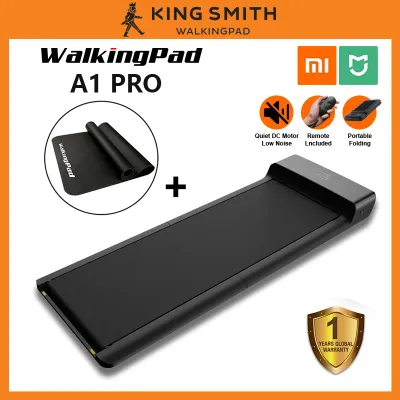
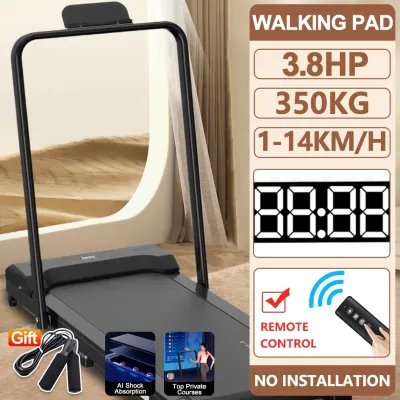
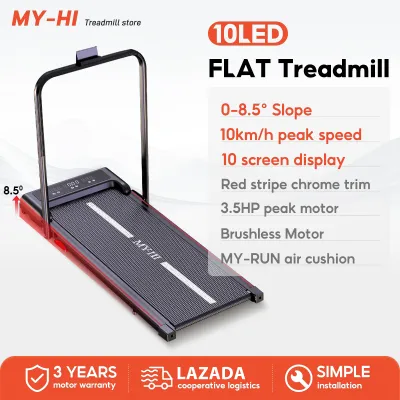
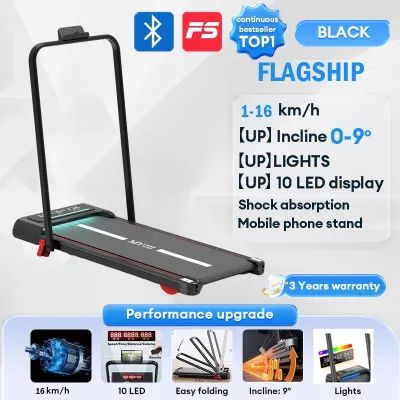
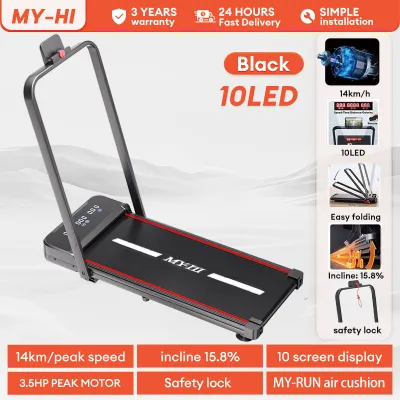
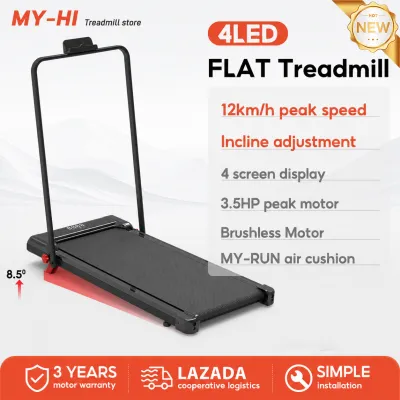
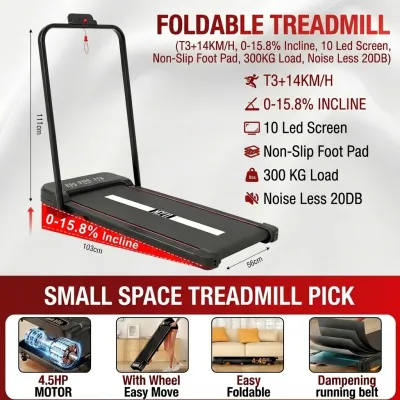
Prices are valid at publication and may change. Please refer to the product page for the latest price.
Core Specifications: Walking Pad vs Regular Treadmill
To understand which machine fits your home, it helps to examine their physical and mechanical differences. While both machines feature a moving belt, their structural designs serve entirely different workout intensities.

| Feature | Walking Pad (Under-Desk/Folding) | Regular Treadmill |
|---|---|---|
| Typical Belt Size | 100 cm to 115 cm long; 40 cm to 43 cm wide | 130 cm to 150 cm long; 45 cm to 55 cm wide |
| Handrail/Console | None, or a simple folding handrail | Permanent console with handrails and safety key |
| Maximum Speed Range | 6 km/h to 12 km/h | 16 km/h to 22 km/h |
| Incline Capability | None (flat deck) | Manual or motorized incline (up to 15% or more) |
| Motor Size (CHP) | 0.5 to 1.5 Continuous Horsepower | 2.0 to 4.0 Continuous Horsepower |
Always verify the exact specifications, weight capacities, and motor ratings on the manufacturer’s product label or manual before purchasing. These specifications vary significantly by brand and price tier, and choosing a machine with insufficient motor power for your body weight can lead to premature motor failure.
Space and Storage: Managing Your Home Footprint
The physical footprint of your fitness equipment directly impacts your daily living comfort, especially in typical Philippine urban residences like studio apartments or high-rise condominiums. Managing this footprint requires looking at both active usage space and storage convenience.
Walking pads feature an ultra-compact, low-profile design that typically stands less than 15 centimeters tall. This slim profile allows you to slide the machine under a bed, sofa, or standing desk once your workout is complete. Most models weigh between 20 and 35 kilograms and feature built-in transport wheels on the front frame, allowing you to tilt and roll the unit away without heavy lifting.
In contrast, a regular treadmill demands a permanent or semi-permanent footprint. Even “foldable” regular treadmills do not fold completely flat; instead, the running deck folds upward at an angle toward the console. This configuration still requires significant vertical clearance and a sturdy base that often dominates a room. Moving a regular treadmill is a multi-person task, as these machines frequently weigh between 60 and 100 kilograms and are designed to remain in a fixed spot.
Before purchasing either machine, measure your intended usage area carefully. You must account for safety clearance: leave at least 1 to 2 meters of clear, unobstructed space directly behind the running belt, and at least 0.5 meters on both sides. This safety buffer is crucial to prevent severe injury if you lose your balance or trip while the belt is moving.
Fitness Goals: Walking, Jogging, or Intense Running?
Your fitness objectives should dictate the mechanical capabilities of the machine you buy. Using a machine outside its intended design parameters can compromise your safety and void the manufacturer’s warranty.
Walking Pads and Daily Movement
Walking pads are engineered primarily to promote Non-Exercise Activity Thermogenesis (NEAT) and light cardiovascular exercise. They are ideal for multitasking, such as walking at a slow pace of 2 to 4 km/h while typing, taking virtual meetings, or watching television. Because they lack advanced shock-absorption systems and have shorter belts, they are unsuitable for sprinting or long running strides. Attempting to run on a standard walking pad can cause the belt to slip or the motor to overheat.
Regular Treadmills and Athletic Training
Regular treadmills are designed for structured athletic training, high-intensity interval training (HIIT), long-distance running, and physical rehabilitation. The longer belt length accommodates the wider stride of a running runner, while the wider deck provides a safety margin against stepping off the belt. Additionally, adjustable incline features allow you to simulate outdoor hills, which increases calorie burn and targets different muscle groups like the glutes and calves without increasing joint impact.
Weight Capacity and Motor Durability
User weight capacity is a critical safety and durability metric. Regular treadmills feature heavy-duty steel frames and larger motors that support higher user weight limits, typically ranging from 120 to 150 kilograms. Walking pads generally have lower weight limits, often between 90 and 110 kilograms. Always check the manufacturer’s stated maximum user weight and add a 10% to 15% safety buffer to ensure the motor operates efficiently without straining.
Budget and Maintenance: Upfront Costs and Longevity
Purchasing home fitness equipment involves both immediate upfront costs and ongoing maintenance responsibilities. Understanding these financial commitments will help you choose a machine that fits your budget over its entire lifespan.
Upfront Pricing Tiers
In the Philippines, entry-level walking pads are highly accessible, typically costing between ₱8,000 and ₱15,000. Mid-range to premium folding walking pads with smart app integration range from ₱18,000 to ₱30,000. Regular motorized treadmills represent a much larger investment, with basic home models starting around ₱20,000 and high-end, commercial-grade machines with interactive touchscreens and high-CHP motors exceeding ₱60,000 to ₱100,000.
Hidden Costs to Consider
Beyond the purchase price, consider potential hidden costs. Regular treadmills are heavy and often require professional assembly services to ensure the frame and electronics are correctly aligned. You may also need to purchase a high-density rubber floor mat (ranging from ₱1,500 to ₱4,000) to protect your flooring from scratches and indentation. Additionally, larger treadmill motors draw more electricity, which will impact your monthly utility bill depending on your usage frequency.
Maintenance and Warranty Support
All fitness equipment requires regular upkeep to ensure longevity, especially in humid, tropical climates.
- Walking Pads: These machines have fewer moving parts but require frequent belt centering and manual lubrication with silicone oil. Because the motors are smaller, any excess friction between the belt and the deck can quickly burn out the motor.
- Regular Treadmills: These units feature more complex electronics, motorized incline gears, and larger drive belts that may require professional servicing over time. Dust and sweat must be wiped down regularly to prevent corrosion on the internal circuit boards.
Always purchase your equipment from authorized brand official stores or reputable local retailers. This ensures you receive a valid warranty—ideally covering the motor and frame for at least one to two years—and have access to local customer service and spare parts.
Noise and Vibration: Considerations for Condo Living
If you live in a multi-story building, condominium, or townhouse, the acoustic and physical impact of your exercise machine is a primary consideration. Noise and structural vibrations can easily strain relationships with neighbors.
The operational noise of a machine is largely determined by its motor size and your exercise speed. Walking pads use smaller, often brushless motors that run quietly at low speeds. Because you are walking rather than running, your feet make low-impact contact with the deck, producing minimal noise that is easily masked by a television or normal conversation.
Running on a regular treadmill, however, generates significant impact noise and structural vibration. Every time your foot strikes the deck during a run, a shockwave travels down through the treadmill frame and straight into the building’s floor structure. In concrete condominium buildings, these low-frequency vibrations can travel through walls and ceilings, sounding like loud, rhythmic thuds to the neighbors living directly below you.
To mitigate noise and vibration in your home, implement these strategies:
- Place a high-density, anti-vibration rubber treadmill mat under the machine to absorb structural shockwaves.
- Position the machine on a solid concrete subfloor rather than elevated wooden floors or mezzanine levels, which can act like a drum and amplify the sound.
- Check your condominium or homeowner association (HOA) rules regarding heavy fitness equipment, and schedule your workouts during approved daytime hours to avoid disturbing others.
Final Decision Framework: Which One Should You Buy?
To make your final decision, evaluate your living space, budget, and fitness goals against this structured checklist.
Choose a Walking Pad if:
- Your living space is limited, and you need a machine that can be easily stored under a bed or sofa.
- Your primary goal is to accumulate daily steps (NEAT) while working from home or watching television.
- You require a quiet machine that will not disturb family members or neighbors in a multi-story building.
- Your budget is limited to under ₱20,000.
Choose a Regular Treadmill if:
- You are a dedicated runner training for outdoor races, marathons, or high-intensity interval training (HIIT).
- You want to incorporate incline training to increase workout intensity and target different muscle groups.
- You have a dedicated home gym or permanent floor space where the machine can remain assembled.
- You require a high weight capacity and advanced deck shock absorption to protect your joints during high-impact running.
Verify First if:
- You are unsure about your long-term commitment to home workouts; in this case, consider starting with outdoor walking or a local gym membership before investing in expensive equipment.
- Your floor or building structure can support the heavy point-load of a full-sized treadmill, particularly in older wooden homes or lofts.
Before completing your purchase, read verified user reviews on your chosen model, paying close attention to comments regarding belt slipping, motor durability, and actual noise levels during operation.
Frequently Asked Questions (FAQ)
Can I run on a folding walking pad with a handrail?
While some hybrid walking pads feature a folding handrail that unlocks higher speed limits (often up to 10 or 12 km/h), they are still not designed for intense running. These hybrid models lack the robust shock absorption, wide belt width, and high-horsepower motors found on regular treadmills. Running on them regularly can cause the belt to wear out prematurely and strain the motor. Limit your workouts on these machines to brisk walking or light jogging, and strictly follow the manufacturer’s speed and weight guidelines.
Do walking pads require a dedicated electrical circuit?
Walking pads typically draw less electrical power (usually between 500 and 900 watts) and can safely be plugged into standard household electrical outlets. Regular treadmills with large continuous-duty motors (2.5 CHP or higher) draw significantly more power and may require a dedicated electrical circuit to prevent tripping your home’s circuit breakers, especially when operating at high speeds or inclines. Always check the electrical rating label on the machine and consult a qualified electrician if you are unsure about your home’s wiring capacity.
Is a treadmill desk a better alternative to a walking pad?
An integrated treadmill desk features a built-in, non-adjustable workspace attached to a walking track. While stable, these units are bulky, highly expensive, and difficult to move or store. A standalone walking pad paired with a height-adjustable standing desk is generally a much better alternative. This modular setup offers superior flexibility, allowing you to easily roll the walking pad away when you want to stand or sit, and represents a much lower overall financial investment.
Community discussion
Share your experience or ask a question. Comments are reviewed before publication.