
Choosing between a walking pad treadmill and a traditional treadmill depends on your available floor space, fitness objectives, and budget. If your goal is to maintain daily step counts while working at a desk or living in a compact condominium, a walking pad offers a space-saving, low-profile solution. Conversely, if you are training for outdoor runs, require high-speed intervals, or need robust incline options, a traditional treadmill remains the necessary choice for your home gym.
In a warm and humid tropical climate, indoor cardio equipment provides a reliable way to exercise without facing intense outdoor heat or sudden downpours. However, selecting the wrong machine can lead to cluttered living areas or underutilized equipment. Understanding the mechanical, spatial, and financial differences ensures you invest in a machine that matches your lifestyle and home environment.
Core Differences in Design and Functionality
Walking pads feature a minimalist, low-profile frame designed to lay flat on the floor. Many models incorporate a folding hinge in the middle of the deck or a sliding mechanism that allows the unit to compress for storage. Traditional treadmills utilize a heavy-duty steel frame with upright console masts, a fixed deck, and a much wider, longer running belt to accommodate longer strides.
Products mentioned in this guide
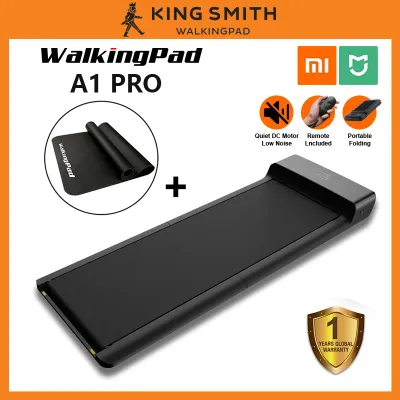
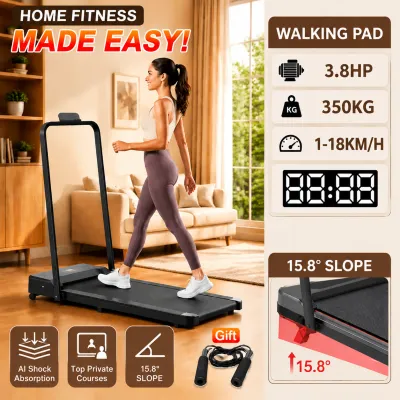
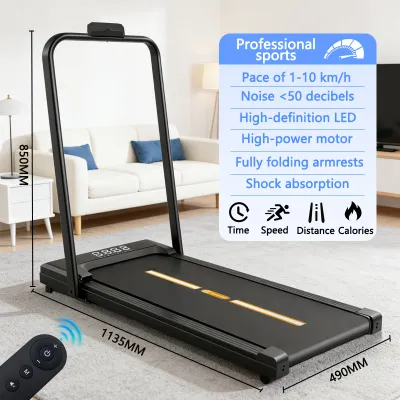
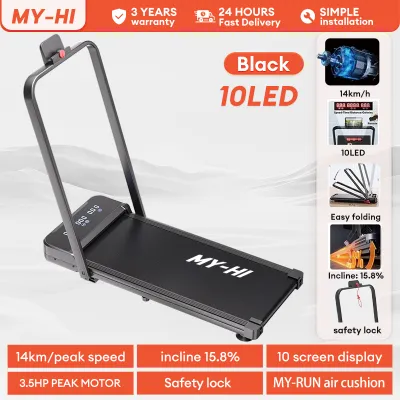
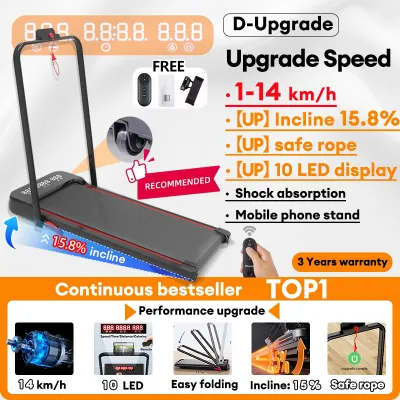
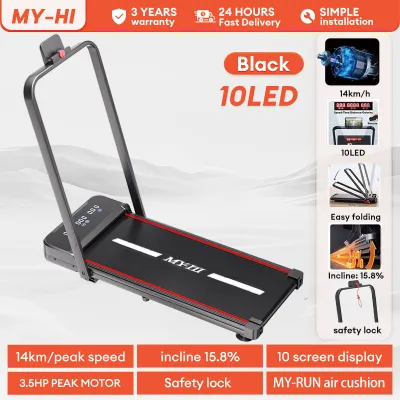
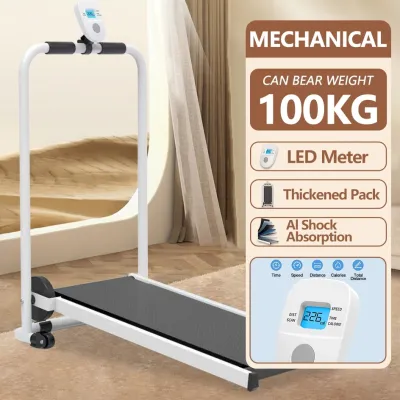
Prices are valid at publication and may change. Please refer to the product page for the latest price.
Walking pads typically use smaller motors, often ranging from 0.75 to 1.5 continuous horsepower (CHP), which limits their maximum speed to around 6 to 8 kilometers per hour. Traditional treadmills feature larger motors, usually starting at 2.0 to 4.0 CHP, enabling them to sustain speeds up to 16 to 20 kilometers per hour for extended running sessions without overheating.
Most walking pads lack incline mechanisms and handrails, or only feature a basic fold-up safety bar. Their cushioning systems are thin to maintain a low profile, relying on basic rubber dampeners. Traditional treadmills offer motorized incline systems, robust handrails with integrated heart rate sensors, and advanced deck cushioning designed to absorb high-impact foot strikes.
Space and Storage Considerations for Home Use
Before purchasing, measure your intended workout area carefully. A walking pad requires a smaller active footprint, but you must still maintain at least 0.5 meters of clear space on both sides and 1 to 2 meters behind the machine for safety. Traditional treadmills demand a much larger permanent footprint, requiring substantial clearance to prevent injury in case of a fall.

Walking pads excel in tight living spaces, such as urban apartments or condominiums, because they can slide under a bed, fit inside a closet, or stand vertically against a wall when not in use. Traditional treadmills, even those with folding decks, still occupy significant vertical and horizontal space, often requiring a dedicated corner where they remain permanently set up.
Consider the structural limits of your home. Traditional treadmills are heavy, sometimes exceeding 80 kilograms, which requires verifying your floor’s load capacity. Additionally, running on a traditional treadmill creates high-impact vibrations that can easily transmit through concrete floors to neighbors below, whereas walking pads generate lower-frequency noise that is easier to dampen. Ensure your ceiling height accommodates your height plus the deck elevation, especially if using an incline treadmill.
Matching Equipment to Your Fitness Goals
If your primary objective is to combat a sedentary lifestyle, accumulate daily steps while working at a standing desk, or engage in low-intensity recovery walks, a walking pad treadmill is highly suitable. It allows you to multitask safely at speeds below 4 kilometers per hour, making it an excellent companion for remote work setups.
For users training for marathons, performing high-intensity interval training (HIIT), or seeking structured workout programs, a traditional treadmill is indispensable. The larger motor handles rapid speed transitions, and the console provides advanced metrics, pre-programmed workouts, and compatibility with interactive training applications.
Always verify the manufacturer’s specifications on the product label before buying. Walking pads generally have lower weight capacities, often capped between 90 to 110 kilograms, and shorter belts that may feel restrictive for taller users with long strides. Traditional treadmills offer higher weight limits, often up to 130 to 150 kilograms, and longer decks that allow for safe, unrestricted running strides.
Budget and Long-Term Value Assessment
In the local market, walking pads represent a more accessible entry point, with basic models typically ranging from ₱8,000 to ₱20,000 depending on smart features and folding designs. Traditional treadmills require a larger initial investment, with entry-level motorized models starting around ₱25,000 and heavy-duty, commercial-grade units exceeding ₱60,000.
Consider the ongoing costs of ownership. While walking pads consume less electricity due to their smaller motors, their compact components can wear out faster under heavy use, requiring regular belt alignment and silicone lubrication every few months. Traditional treadmills consume more power but are built with highly durable components that require less frequent maintenance, though lubricating the large deck remains essential.
Review the warranty terms carefully before making a decision. High-quality traditional treadmills often come with multi-year warranties covering the frame and motor, backed by local service centers that can supply replacement parts. Walking pads may offer shorter warranty periods, making it crucial to purchase from reputable local distributors who can guarantee customer support and spare parts availability in the Philippines.
Decision Framework: Which One Should You Choose?
Opt for a walking pad treadmill if you live in a compact apartment, prioritize easy storage, and want to increase your daily activity level through walking or light jogging while working or watching television. It is the ideal choice for budget-conscious users who do not require high speeds or incline training.
Select a traditional treadmill if you are committed to a dedicated running routine, require incline options to simulate outdoor terrain, need advanced workout tracking, and have sufficient dedicated space in your home. It is the better long-term investment for multi-user households with diverse fitness levels.
Before finalizing your purchase, verify your flooring type and structural limits. If you live in a multi-story building, consider consulting a professional regarding soundproofing mats, and always check with a healthcare provider if you have pre-existing joint conditions or balance concerns that might require the safety handrails of a traditional treadmill.
Frequently Asked Questions (FAQ)
Can a walking pad support running or high-intensity workouts?
Generally, walking pads are not designed to support running or high-intensity workouts. Most models have a maximum speed limit of 6 to 8 kilometers per hour, which is only suitable for a brisk walk or a very light jog. Additionally, the lack of sturdy handrails and the shorter belt length make running at higher speeds unsafe, as there is a higher risk of losing balance. Always check the specific model’s user manual and weight limits to verify if light jogging is officially supported.
Do I need a special mat for a walking pad or traditional treadmill?
Using a high-density equipment mat is highly recommended for both walking pads and traditional treadmills. A specialized mat protects your flooring from scratches, prevents dust and carpet fibers from entering the motor compartment, and significantly dampens noise and vibrations. This is particularly important in tropical climates where humidity can cause sweat to drip onto the floor, potentially damaging wood or tile surfaces. Check the manufacturer’s guidelines to select a mat compatible with your specific flooring type.
Community discussion
Share your experience or ask a question. Comments are reviewed before publication.