
Choosing the right equipment to build upper-body strength at home depends heavily on your living situation, your training goals, and the physical structure of your dwelling. If you are trying to decide between a wall mounted pull up bar, a doorway bar, or a ceiling-mounted alternative, the correct choice is rarely universal. Instead, it is a balance of structural safety, available space, and the types of exercises you plan to perform.
To find the best fit for your home gym, you can guide your decision using these conditional rules:
- Choose a doorway pull up bar if you are renting an apartment, cannot drill into your walls, have limited space, and plan to perform only strict, slow pull-ups and chin-ups.
- Choose a wall mounted pull up bar if you own your home (or have landlord approval), have solid concrete, concrete hollow block, or wooden stud walls, and want a highly stable, dedicated workout station that supports hanging leg raises and weighted variations.
- Choose a ceiling mounted pull up bar if you have high ceilings, want 360-degree movement freedom, plan to hang gymnastic rings or suspension trainers, and have access to solid structural ceiling joists or a concrete slab.
In the Philippines, residential construction heavily influences this decision. Many homes and condominiums feature concrete hollow block (CHB) walls or lightweight drywall partitions rather than wooden studs. Understanding how these materials interact with fitness equipment is the first step to preventing property damage and ensuring your personal safety during high-intensity workouts.
Products mentioned in this guide
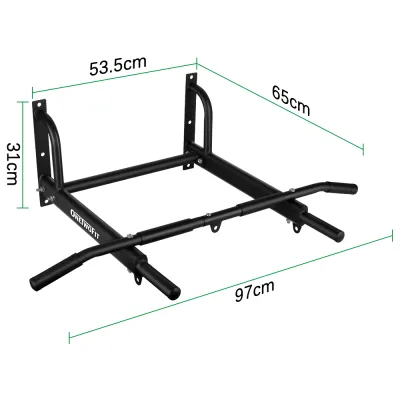
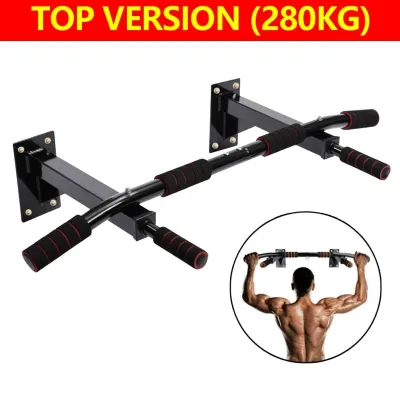
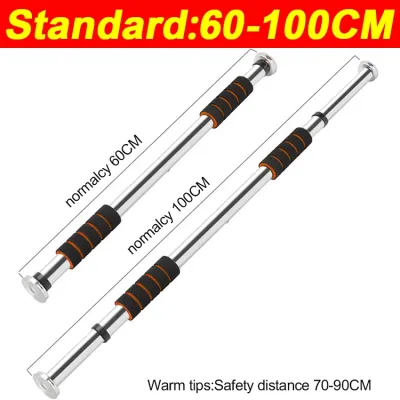
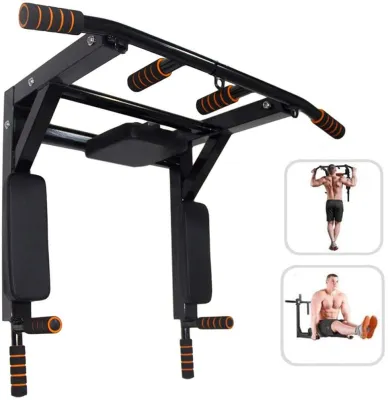
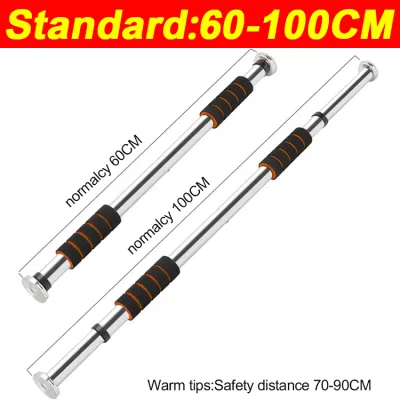
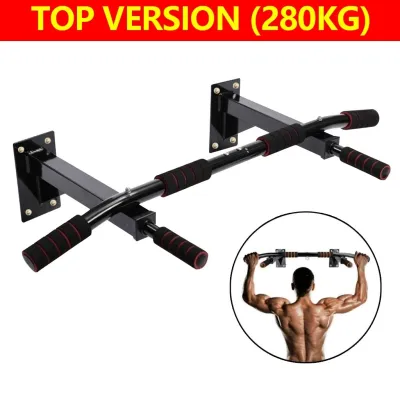
Prices are valid at publication and may change. Please refer to the product page for the latest price.
Space and Layout: How Each Bar Fits Your Room
Before purchasing any fitness equipment, you must evaluate the physical footprint and clearance requirements of your workout space. A pull-up bar does not just occupy the physical space of the metal frame itself; it also requires a safe zone around it to accommodate your body’s movement during exercise.
Doorway pull-up bars are the most compact option available. They require a standard door frame with sturdy trim for support. While they take up virtually zero floor space and can be taken down and stored in a closet when not in use, they present distinct layout challenges. When installed, they block the doorway, which can be inconvenient in busy households. Furthermore, the narrow width of a standard door frame limits your grip options, and the low height of most doorways means taller users must bend their knees significantly to avoid touching the floor.
A wall mounted pull up bar requires a dedicated, unobstructed section of a wall. Because these bars extend outward from the wall—typically between 30 to 60 centimeters—you must calculate the clearance behind and in front of the bar. This clearance is vital to prevent your knees, feet, or chest from colliding with the wall during your sets. If you are short on space, some manufacturers offer foldable wall-mounted models that pivot flat against the wall when you finish your workout, preserving valuable floor space in multi-use rooms.
Ceiling-mounted bars demand the most vertical space but offer the cleanest floor and wall layout. To use a ceiling bar safely, your ceiling must be high enough that your feet do not drag on the floor when hanging with fully extended arms, while still leaving enough overhead clearance so you do not strike your head on the ceiling at the top of the movement. This setup is highly favored in garage gyms, homes with exposed structural beams, or modern loft apartments with high ceilings, as it keeps the walls completely clear for other storage or equipment.
Installation and Wall Integrity: What Your Home Can Support
Installing fitness equipment requires a realistic assessment of your home’s structural integrity. Failing to match your pull-up bar to the correct wall or ceiling material can lead to catastrophic structural failure, severe injury, and costly home repairs.

Doorway bars are popular because they offer tool-free or minimal-tool installation. Leverage-based doorway bars use gravity and leverage to press against the door trim and the wall above the frame. However, this pressure can easily crack cheap MDF (medium-density fibreboard) trim, dent soft wood, or puncture thin drywall. If your door frame is loose, old, or made of lightweight materials, the force of your body weight can pull the entire frame away from the wall. Telescopic screw-in doorway bars, which expand outward to grip the inside of the frame, can also bow or split the wood if over-tightened.
Installing a wall mounted pull up bar requires heavy-duty hardware and a solid mounting surface. In Philippine residential construction, walls are commonly made of concrete hollow blocks (CHB) or solid poured concrete. Mounting a bar to solid concrete is highly secure when using high-quality masonry anchors or expansion bolts. However, mounting to hollow blocks requires specialized toggle bolts or sleeve anchors designed to expand inside the block’s hollow cavity. Standard plastic wall plugs or simple wood screws will quickly pull out under dynamic loads. If you are mounting to a drywall partition, you must locate the wooden or metal studs behind the plaster; never attempt to mount a pull-up bar directly into drywall using hollow-wall anchors.
Ceiling installation is the most complex and demanding process. A ceiling-mounted bar must be anchored directly into structural ceiling joists or a solid concrete ceiling slab. You must never install a pull-up bar into a suspended ceiling, drop ceiling, or decorative plasterboard. Because ceiling joists carry the structural load of your roof or upper floor, miscalculating your drill points or using the wrong fasteners can compromise your home’s safety.
If you are renting an apartment, living in an older building, or feel unsure about identifying your wall and ceiling materials, stop immediately. Consult a qualified local contractor or structural engineer to assess your space and perform the installation. Always prioritize professional advice over DIY guesswork when dealing with load-bearing structures.
Stability and Movement: What You Can Actually Do
The physical design of your pull-up bar directly dictates the intensity and variety of the exercises you can perform. Different mounting styles handle the forces of human movement in very different ways.
Weight Capacity and Structural Limits
Ceiling and wall-mounted systems inherently offer much higher weight capacities than doorway bars. Because they are bolted directly into the structural skeleton of your home, they can easily support heavy weighted pull-ups, where athletes wear a dip belt loaded with plates. Doorway bars, by contrast, rely on friction, leverage, or small bracket screws. Their weight limits are significantly lower and highly dependent on the strength of your door frame. Always check the manufacturer’s product label and manual for the exact weight capacity, and remember that these ratings assume a perfectly stable, professional installation.
Exercise Variety and Biomechanics
Your training style should align with the physical limitations of your chosen bar type. Consider how each option handles different movement patterns:
- Doorway Bars: These are strictly limited to slow, controlled, vertical movements like strict pull-ups, chin-ups, and hanging knee tucks. Because the bar is boxed in by the door frame, you cannot perform wide-grip variations comfortably. Dynamic movements, swinging, or kipping are highly dangerous on a doorway bar, as the lateral force can easily dislodge the bar from the frame.
- Wall Mounted Bars: These bars provide excellent stability for lateral and vertical forces. If your bar has sufficient wall clearance (at least 50 centimeters), you can safely perform kipping pull-ups, hanging leg raises, and windshield wipers. However, the proximity of the wall behind you still prevents true 360-degree movements and may restrict advanced calisthenics like muscle-ups unless you have high ceilings and a deep-reaching bracket.
- Ceiling Mounted Bars: This style offers unmatched movement freedom. With no walls or frames to obstruct your body, you can perform advanced calisthenics, 360-degree spins, and dynamic kipping without restriction. Furthermore, a ceiling bar is the perfect anchor point for hanging gymnastic rings or suspension trainers, allowing you to perform dips, push-ups, and core exercises directly beneath the mount.
At-a-Glance Comparison Matrix
To help you visualize the trade-offs between these three options, the table below summarizes the key differences in installation, space requirements, and movement capabilities.
| Installation Type | Ideal User & Space | Structural Requirement | Movement Freedom | Rent-Friendly |
|---|---|---|---|---|
| Doorway | Renters, small rooms, budget setups | Sturdy door frame with strong wood trim | Low (Strict vertical movements only) | Yes (No drilling required) |
| Wall Mounted | Dedicated home gyms, concrete/stud walls | Solid concrete, CHB with toggle bolts, or wood studs | Medium to High (Supports kipping & leg raises) | Conditional (Requires landlord approval to drill) |
| Ceiling Mounted | High ceilings, garage gyms, advanced calisthenics | Structural wood joists or solid concrete slab | High (360-degree clearance, supports rings) | No (Requires permanent structural drilling) |
Disclaimer: The structural requirements, movement capabilities, and suitability ratings listed above are general guidelines. Exact weight capacities, clearance dimensions, and installation safety must always be verified against your specific product’s instruction manual and your home’s architectural blueprints.
Final Verdict: Which Type Fits Your Home Gym?
To make your final decision, evaluate your current living situation, your budget, and your long-term fitness goals.
Choose a Doorway Pull Up Bar If:
You live in a rented condo or apartment where drilling holes into the walls is strictly prohibited by your lease. This option is also ideal if you have a limited budget, want a tool-free setup, and only plan to perform basic, strict pull-ups to maintain your fitness. It is a highly portable solution for those who move frequently.
Choose a Wall Mounted Pull Up Bar If:
You own your home or have explicit written permission from your landlord to drill into the walls. You must have access to a solid concrete wall, a concrete hollow block wall (using appropriate hollow-core anchors), or structural wooden studs. This setup is perfect if you want to build a dedicated, highly stable strength-training corner in your room or garage and want to perform weighted pull-ups or core work.
Choose a Ceiling Mounted Pull Up Bar If:
You have high ceilings (ideally 2.7 meters or higher) and want completely unrestricted movement for advanced calisthenics. This is the ultimate choice if you want to hang gymnastic rings or suspension straps to expand your exercise library. You must have a verified structural anchor point, such as an exposed wooden beam or a solid concrete ceiling slab.
Verify Your Structure First
Before you click buy on any online marketplace, inspect your installation site. If you live in an older building, have hollow-block partitions, or are unsure whether your ceiling is plasterboard or solid concrete, do not guess. No pull-up bar is safe if the anchor point fails under your body weight. Take the time to consult a local hardware professional or a contractor to ensure your home can safely support your fitness goals.
Frequently Asked Questions (FAQ)
Can I install a wall mounted pull up bar on a hollow block wall?
Yes, you can install a wall mounted pull up bar on a concrete hollow block (CHB) wall, but you must not use the standard plastic wall plugs or basic lag shields that typically come in the product box. Hollow blocks have thin outer shells and empty air cavities inside. Standard anchors will expand inside the empty space and easily pull out under the dynamic force of a workout.
To install a bar safely on CHB, you must use heavy-duty sleeve anchors, toggle bolts, or chemical anchoring systems designed specifically for hollow masonry. These fasteners grip a wider surface area inside the block to distribute the load. If you are unsure of the block’s thickness or strength, it is highly recommended to mount a thick wooden backer board (such as a 2×6 timber stringer) across multiple sections of the wall first, and then mount the pull-up bar to the wood. Always consult a local builder if you are uncertain about the wall’s load capacity.
Will a doorway pull up bar damage my door frame?
Yes, there is a high risk of cosmetic or structural damage to your door frame when using a doorway pull-up bar. Leverage-style bars distribute your body weight across the top trim of the door and the drywall directly above it. If your home has lightweight MDF trim or thin plasterboard, the intense pressure can crack the wood, dent the frame, or leave deep indentations in the wall.
Telescopic screw-in bars, which expand outward to wedge themselves inside the frame, rely entirely on lateral pressure. This pressure can bow the door jambs, making it difficult to close the door properly. To minimize damage, look for bars with thick, high-density foam padding on all contact points, or place small pieces of scrap wood or rubber pads between the bar and your trim to distribute the pressure. Always remove the bar when not in use to prevent long-term warping of the wood.
How high should a ceiling mounted pull up bar be installed?
To determine the ideal installation height for a ceiling-mounted bar, you must calculate your personal reach and the clearance required for your exercises. As a general rule, the bar should be positioned high enough that when you hang with your arms fully extended, your feet hang clear of the floor by at least 10 to 15 centimeters. This prevents you from having to awkwardly bend your knees during strict movements.
Additionally, you must ensure there is adequate clearance above the bar. You need at least 30 to 50 centimeters of open space between the bar and your ceiling so that your head and shoulders do not collide with the ceiling at the top of a pull-up. To find your perfect height, stand on your tiptoes, reach your hands straight up, and measure the distance from the floor to your fingertips. Add 10 centimeters to this measurement to find your ideal bar height, and ensure your ceiling is high enough to accommodate both this height and the necessary overhead clearance.
Community discussion
Share your experience or ask a question. Comments are reviewed before publication.