
Selecting the right basketball ring set for your home is not just about choosing a brand or a backboard material; it is primarily a spatial, structural, and environmental decision. In the Philippines, where residential spaces range from tight townhouse carports to spacious suburban yards, the physical layout of your property dictates which setup will function safely and effectively. The ideal choice depends on your property ownership status, the structural integrity of your walls, and how much ground space you can permanently allocate to active play.
Quick Answer: Which Basketball Ring Set Fits Your Space?
To identify the right setup for your home, evaluate your space availability, property ownership, and willingness to perform permanent modifications. Each system serves a distinct residential scenario:
- Choose a wall-mounted basketball ring set if you have limited ground space, a short driveway, and a solid concrete or masonry wall capable of handling heavy structural loads. This configuration keeps the ground completely clear for parking cars.
- Choose a portable basketball ring set if you are renting your home, need to clear the driveway or street for daily vehicle parking, or want a system that can be easily stored away during severe weather.
- Choose an in-ground basketball ring set if you own your home, have a dedicated concrete court or a large driveway, and want the absolute highest level of stability, rebound performance, and safety for aggressive play.
Ultimately, the best configuration is determined by your physical space constraints, your budget, and whether you are permitted or willing to make permanent structural modifications to your property. Equipment cannot replace proper spatial planning and structural verification.
Products mentioned in this guide
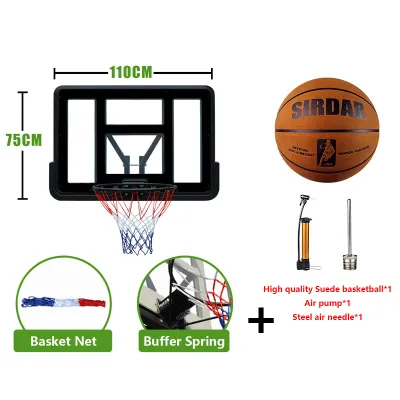
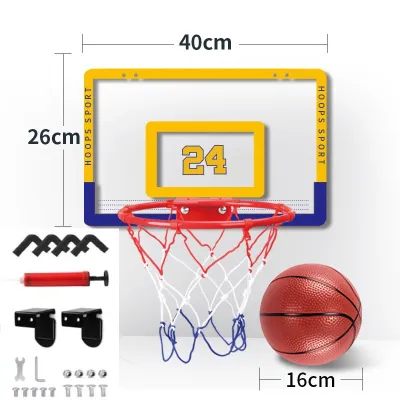
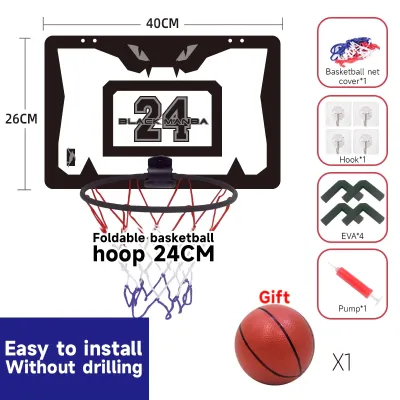
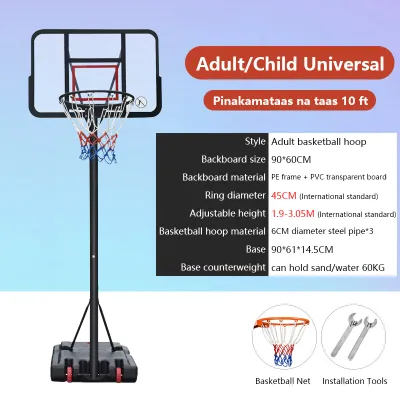
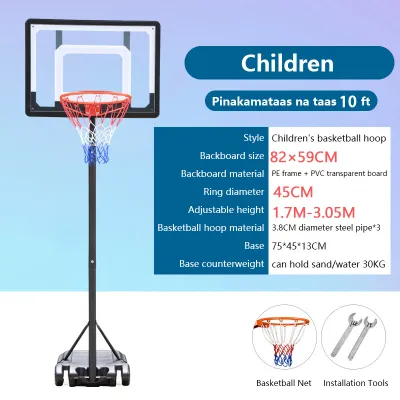
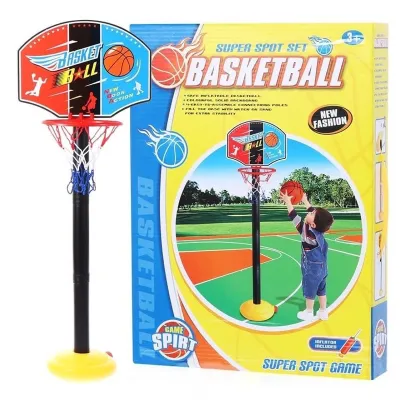
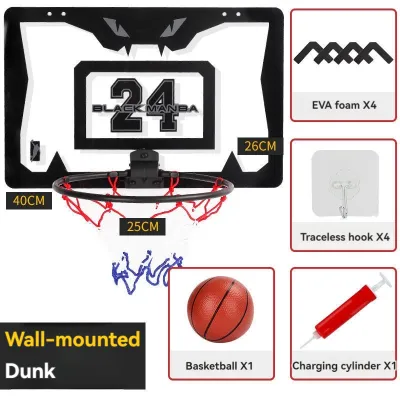
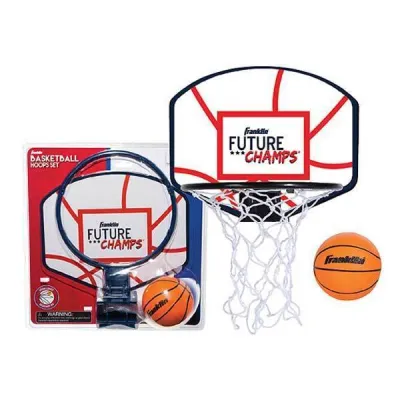
Prices are valid at publication and may change. Please refer to the product page for the latest price.
Wall-Mounted, Portable, and In-Ground Basketball Ring Sets Explained
Understanding the structural differences and physical requirements of each mounting system is the first step in making an informed purchase.

Wall-Mounted Basketball Ring Sets
Wall-mounted systems attach directly to an existing vertical structure, such as an exterior concrete hollow block wall, a reinforced concrete pillar, or a garage fascia. By eliminating the vertical pole and heavy base entirely, they preserve the maximum amount of ground clearance on your driveway.
This design makes them highly suitable for narrow residential driveways or compact townhouse carports where every square meter of floor space is needed for parking. However, they require a highly robust, load-bearing surface for installation, as the forces generated by a basketball striking the backboard—or a player hanging on the rim—are transferred directly into the building’s structure.
Once mounted, their position is fixed, meaning you cannot easily adjust the court layout or take the system with you if you relocate. It is a permanent spatial commitment that requires careful initial placement.
Portable Basketball Ring Sets
Designed for maximum flexibility, portable systems feature a large, hollow plastic base at the bottom of the support pole. This base must be filled with a heavy counterweight—typically water or sand—to prevent the entire structure from tipping forward during use.
Most portable units are equipped with small wheels molded into the front of the base, allowing you to tilt the system forward and roll it to a different location. This mobility makes portable sets the primary choice for renters, families who share a multi-use driveway, or those who must park vehicles exactly where the hoop stands during non-play hours.
However, the large base occupies a significant amount of ground space directly beneath and behind the backboard. This footprint can limit player movement and restrict under-basket play, making it less suitable for high-speed, aggressive games.
In-Ground Basketball Ring Sets
In-ground systems represent the gold standard for stability and performance. Installation requires digging a deep hole into the ground, assembling a steel pole or anchor system, and securing it permanently with poured concrete.
Because the support pole is anchored deep within a solid concrete foundation, these systems suffer from minimal vibration and can support heavier, professional-grade tempered glass backboards. The absence of a bulky plastic base on the playing surface allows players to drive safely to the basket, execute layups, and run underneath the hoop without the risk of tripping.
This is a permanent, long-term investment best suited for homeowners with dedicated outdoor yards, private half-courts, or large driveways where structural modifications are fully permitted.
Key Comparison Dimensions for Your Setup
Evaluating how each system performs across critical operational dimensions will help you choose the best match for your home.
Space, Clearance, and Installation Constraints
The physical footprint of each system dictates how much usable court space remains for actual play. A portable system requires a substantial amount of ground clearance behind the baseline because the weighted base typically extends 1 to 1.5 meters backward from the pole. If your driveway is short, this base forces the backboard further into the playing area, reducing the distance between the free-throw line and the hoop.
Wall-mounted systems, conversely, require zero ground space, but they demand significant vertical and overhead clearance. You must ensure that the backboard does not conflict with low-hanging roof eaves, gutters, or overhead utility lines. In-ground systems require a dedicated digging zone that is clear of underground utility pipes, sewage lines, or electrical conduits.
The installation effort varies dramatically across these three types. Installing a portable ring set is primarily an assembly task that can be completed in a few hours using standard hand tools, followed by filling the base with water or sand. Wall-mounted systems require high-tensile drilling into solid masonry or concrete, requiring heavy-duty anchors, leveling tools, and often multiple people to lift and secure the heavy backboard safely.
In-ground installation is the most labor-intensive process, demanding manual excavation, precise leveling of the anchor plate, concrete mixing, and a curing period of at least 72 hours before the pole and backboard can be safely mounted. Regardless of the system you choose, always measure your driveway length to ensure there is a safe buffer zone between the playing area and the street, preventing players from running blindly into traffic.
Stability, Rebound, and Play Style
The rigidity of the support structure directly influences the quality of play, particularly the rebound characteristics of the backboard. In-ground systems offer unmatched rigidity, absorbing the impact of hard shots with minimal shake or sway, which results in a highly predictable and realistic ball rebound.
Portable systems, because they rely on a flexible plastic base and multi-piece poles, tend to vibrate and wobble significantly after a shot, which can dampen the rebound energy and alter the ball’s trajectory. Wall-mounted systems can offer excellent stability, but only if they are anchored to a completely solid, non-yielding concrete wall; mounting them to thin wood or hollow blocks without proper reinforcement will result in excessive vibration and potential structural damage.
If your play style includes aggressive drives, layups, or dunking, safety and structural limits must be your primary concern. Dunking or hanging on the rim places extreme downward force on the entire system. Before attempting any dunking, you must verify the manufacturer’s weight limits and confirm that the system is equipped with a high-quality breakaway rim designed to flex under pressure.
Portable systems have a high risk of tipping forward if a player hangs on the rim, even when the base is fully weighted. Wall-mounted systems can pull out of the wall if the anchors are not rated for dynamic shear loads. Another critical factor is “overhang”—the horizontal distance from the front of the support pole or wall to the backboard. A larger overhang (typically 1 to 1.5 meters) provides a safer playing environment by allowing players to drive hard to the hoop and complete layups without colliding with the support pole or the concrete wall behind the backboard.
Durability and Weather Resistance
Outdoor basketball systems in the Philippines must withstand intense tropical elements, including extreme UV exposure, high humidity, salt-laden air in coastal regions, and torrential rainfall. Do not assume all steel components are naturally weatherproof; instead, carefully check the manufacturer’s specifications for specialized rust-preventative powder coatings or hot-dip galvanization on all poles, brackets, and hardware.
Standard painted steel can quickly rust at the joints and weld points when exposed to constant moisture, leading to structural failure over time. The choice of backboard material also dictates how well the system ages under the sun.
Polycarbonate backboards are highly impact-resistant and virtually shatterproof, but they are highly susceptible to UV degradation, which causes them to turn yellow, become cloudy, and grow brittle within a few years of constant sun exposure unless they carry a certified UV-treated label. Acrylic backboards offer superior optical clarity and do not yellow as quickly, but they are more prone to scratching and have a slightly softer rebound.
Tempered glass backboards provide the ultimate professional playing experience with perfect ball response, but they are exceptionally heavy and require robust, weather-resistant mounting brackets. For portable systems, the plastic base itself is vulnerable to the tropical sun; over time, UV rays can break down the high-density polyethylene (HDPE), making the base brittle and prone to hairline cracks that leak water or sand.
Decision Framework: Matching the Ring Set to Your Situation
To finalize your choice, match your specific property constraints and lifestyle needs against this practical decision checklist.
Choose Wall-Mounted if:
- You have a solid concrete hollow block (CHB) or reinforced concrete wall that can support heavy structural loads.
- Your driveway has limited depth, and you need to keep the ground completely clear for parking vehicles or pedestrian access.
- You want a clean, minimalist aesthetic without a bulky pole or base obstructing your outdoor area.
- You are a homeowner who does not plan to relocate the basketball system in the foreseeable future.
Choose Portable if:
- You currently rent your home or reside in a temporary living arrangement where permanent installations are prohibited.
- You must clear the playing area daily to park cars, or you share a communal driveway with neighbors.
- You want the convenience of moving the hoop to different flat surfaces around your property or storing it away during the off-season.
- You have young children and require a system that allows frequent, easy height adjustments to grow with them.
Choose In-Ground if:
- You own the property and have a dedicated yard, concrete pad, or a large, spacious driveway.
- You prioritize maximum stability, professional-grade rebound performance, and safety for older, more aggressive players.
- You want a permanent, durable fixture that adds long-term value to your residential recreation space.
Verify First if:
- Your local homeowner association (HOA), subdivision village rules, or barangay guidelines restrict the installation of permanent outdoor structures or street-facing hoops.
- There are local noise ordinances or designated quiet hours that could affect late-night or early-morning shooting practice.
- You have clearly identified your exact property lines and underground utility layouts before initiating any digging or mounting to shared firewall structures.
Installation Safety and Maintenance Boundaries
Proper installation and routine maintenance are critical to prevent structural failures, accidents, and premature equipment degradation.
Wall-mount structural checks: Never attempt to mount a wall-mounted basketball system directly to drywall, vinyl siding, decorative cladding, or unsupported wood panels. These materials cannot bear the dynamic forces of a basketball game and will fail, risking severe injury or property damage. Always locate the underlying structural studs, concrete columns, or solid masonry. Use heavy-duty sleeve anchors or wedge bolts specifically rated for concrete. If you are unsure of your wall’s structural integrity or load capacity, consult a licensed civil engineer or hire a professional installation service to perform the mounting.
Portable base safety: The safety of a portable hoop relies entirely on the weight of its base. Periodically check the base for any signs of water evaporation, slow leaks, or physical damage. If using water, ensure the cap is tightly sealed to prevent evaporation and eliminate potential breeding grounds for mosquitoes. During periods of severe weather, active tropical storms, or typhoons, always lower the hoop to its lowest height setting and move the unit into a sheltered garage, or secure it firmly to ground anchors using heavy-duty tie-down straps to prevent it from blowing over and causing damage.
In-ground anchor inspection: For in-ground systems, conduct routine inspections of the concrete foundation and the metal base plate. Look for hairline cracks in the concrete, soil erosion or shifting around the perimeter of the foundation, and standing water that could accelerate rust. Inspect the ground line where the steel pole meets the concrete, as this area is highly susceptible to moisture retention and corrosion. Apply a rust-inhibiting touch-up paint immediately if you detect any chipped powder coating or surface rust.
General hardware maintenance: Regularly inspect the breakaway rim springs to ensure they remain responsive and lubricated. Tighten all backboard bolts, pole joint connections, and adjustment mechanisms at least once every six months, as the vibrations from play can gradually loosen hardware. Replace frayed, weathered, or torn nets promptly; damaged nets can snag players’ fingers during layups, posing a significant safety hazard.
Frequently Asked Questions (FAQ)
Can I convert a portable basketball ring set to an in-ground system later?
While some manufacturers offer specialized conversion brackets or ground sleeve kits that allow you to mount a portable pole and backboard to an in-ground anchor, this feature is not universal. You must verify compatibility with your specific brand and model before purchasing. Keep in mind that converting a portable system means the original plastic base and wheel assembly will become redundant and must be disposed of or stored.
What is the safest base filling for a portable hoop in a hot climate?
Sand is generally the safer and more stable option for hot, tropical climates. Unlike water, sand does not evaporate under intense heat, will not leak out of minor hairline cracks, and cannot become a breeding ground for insects. However, sand is significantly heavier and much more difficult to remove if you need to relocate the hoop. Always check the manufacturer’s manual for the maximum weight capacity of the base before filling.
How much overhang do I need for a realistic playing experience?
For a safe and realistic playing experience, look for a system that offers an overhang of at least 60 to 90 centimeters (approximately 2 to 3 feet). This distance provides enough room for players to run underneath the basket and complete layups safely without colliding with the support pole or the wall. Professional setups often feature an overhang of 1.2 to 1.5 meters for maximum safety during high-speed play.
Community discussion
Share your experience or ask a question. Comments are reviewed before publication.