
Organizing a home gym requires more than just buying heavy equipment; it demands a safe, efficient layout that protects both your body and your property. When dealing with heavy iron, choosing the right weight plate storage is critical for maintaining a safe training environment and a smooth workout flow. In a home gym, loose plates left scattered on the floor create immediate tripping hazards, damage expensive flooring, and slow down your training momentum.
In the tropical climate of the Philippines, proper storage is also a matter of equipment preservation. High humidity levels can accelerate rust on exposed metal, making proper storage and material selection essential to protect your investment. The ideal storage setup depends on your plate type, available floor space, and the structural limits of your home. This guide breaks down the main types of storage racks, the exact specifications you need to verify, and practical tips for sourcing and setting up your gear to build a secure, clutter-free workout space.
How to Assess Your Home Gym Space and Needs
Before purchasing any storage unit, grab a tape measure to evaluate your training area. You need to measure not just the physical footprint of the rack, but the active clearance zone around it. A vertical tree might only take up a small square on the floor, but you need at least an additional forty centimeters of clear space on all sides to slide a heavy plate off the peg without hitting walls, other equipment, or your own shins.
Products mentioned in this guide
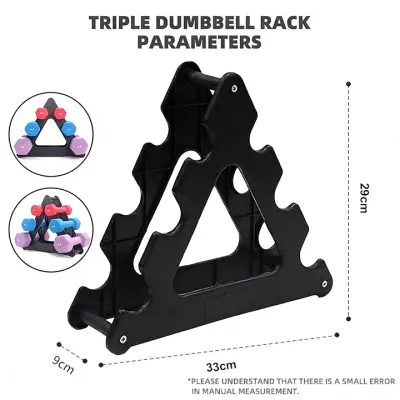
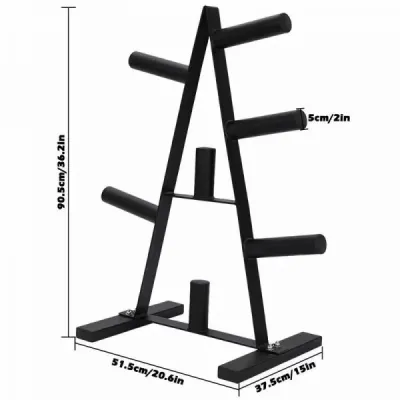
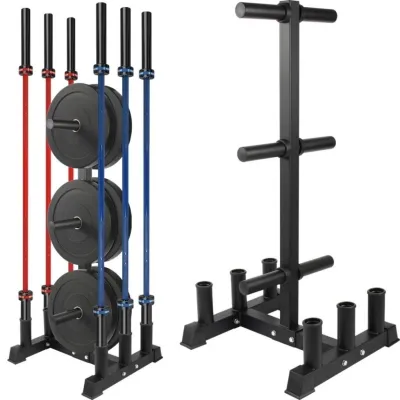
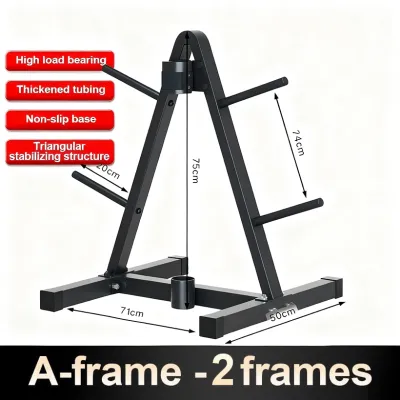
Prices are valid at publication and may change. Please refer to the product page for the latest price.
Next, take a detailed inventory of your current plate collection and plan for future expansion. Count your plates and note their dimensions, keeping in mind that bumper plates made of dense rubber are significantly thicker than cast iron plates of the same weight. If you own a standard bumper plate set, you will need much longer storage pegs than someone using thin cast iron plates. Always calculate your total weight capacity and add a twenty to thirty percent buffer to accommodate future strength gains and equipment purchases.
Your training workflow should dictate where you place your storage. If you perform most of your heavy lifts inside a power rack, having plate storage attached directly to the rack or positioned immediately adjacent to it minimizes carrying distance. If you have a dedicated deadlift platform, a low-profile horizontal rack placed right next to the platform keeps the plates exactly where you need them, reducing unnecessary lower back strain during setup and teardown.
Consider the flooring and structural limits of your designated gym space. Heavy weight plates concentrated in a small area exert immense localized pressure on your floor. If your gym is located on a second floor or a loft, you must verify the load-bearing capacity of the structure. Even on ground-floor concrete, using thick rubber gym mats under your storage racks is highly recommended to distribute the weight evenly and prevent cracking or indentation over time.
Main Types of Weight Plate Storage Solutions
Weight plate storage solutions generally fall into three primary categories: vertical plate trees, horizontal or A-frame racks, and wall-mounted or rack-attached systems. Each design serves a distinct spatial and functional purpose, offering unique advantages depending on your gym layout.

Your choice should align with your ceiling height, available floor space, and the structural integrity of your workout room. Selecting the wrong form factor can lead to cramped quarters, inefficient workouts, or even safety hazards if the unit is prone to tipping.
Vertical Plate Trees
Vertical plate trees are the classic space-savers of the fitness world. They utilize vertical space, making them ideal for small spare rooms, garage corners, or balcony gyms where floor space is at a premium. Most models feature a central upright post with four to six storage pegs branching out at angles, allowing you to stack multiple denominations of plates in a compact footprint.
However, vertical designs introduce a higher center of gravity that requires careful management. If you load heavy plates on the top pegs while leaving the bottom pegs empty, the unit becomes highly unstable and prone to tipping. To prevent tipping hazards, you must establish a strict loading discipline: always place your heaviest plates on the lowest pegs and lighter change plates near the top.
Horizontal Racks and A-Frames
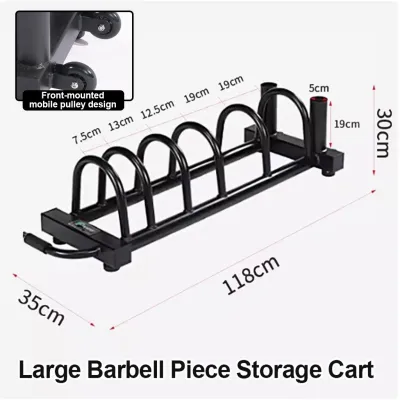
Horizontal racks, often called toaster racks, store plates side-by-side in individual slots along the floor, while A-frame racks use a triangular structure with pegs on both sloping sides. These designs offer exceptional stability because their weight is distributed close to the ground, virtually eliminating the risk of tipping even when loaded unevenly.
Additionally, horizontal racks make reading plate weights and sliding them on and off significantly easier, as you do not have to slide off multiple lighter plates to reach a heavy one. The primary trade-off is the footprint; horizontal racks require a substantial amount of linear floor space, which can quickly crowd a narrow room or a single-car garage gym. They can also become tripping hazards if placed in high-traffic walkways.
Wall-Mounted and Rack-Attached Options
For lifters with extremely limited floor space, wall-mounted pegs and rack-attached holders offer a zero-footprint alternative. Rack-attached storage bolts directly onto the uprights of an existing power rack, utilizing the heavy steel frame of your main lifting station to support the weight and keeping your plates within arm’s reach during workouts.
Wall-mounted options require careful structural evaluation before installation. You cannot simply screw a plate holder into standard drywall or thin plywood paneling, as the weight of even a single plate can tear the hardware right out of the wall. Wall-mounted systems must be anchored directly into solid concrete walls using heavy-duty masonry expansion bolts, or secured firmly into solid wooden wall studs.
Critical Specifications and Compatibility Checks
The most critical compatibility check before buying any storage rack is the peg diameter. Olympic plates have a fifty-millimeter center hole, while standard plates typically have a twenty-five or thirty-millimeter hole. An Olympic storage rack will not fit standard plates, whereas standard pegs will leave Olympic plates loose and unstable unless you install specialized adapter sleeves.
Measure the usable peg length and compare it to the thickness of your widest plates. If you use thick, low-density bumper plates, a short twenty-centimeter peg might only hold two plates. Ensure the usable peg length matches your specific plate package so you do not run out of storage space before you run out of weight.
Check the manufacturer’s rated maximum weight capacity and compare it to the net weight of the empty rack. A cheap, thin-walled steel rack might buckle under a heavy load, whereas a heavier empty frame indicates thicker steel and a more stable base. Look for units constructed from eleven-gauge or fourteen-gauge steel to ensure long-term structural integrity.
In the humid, tropical climate of the Philippines, rust is a constant threat to steel gym equipment. Inspect the finish of the rack and prioritize high-quality, electrostatic powder coating over cheap spray paint. Powder coating provides a durable barrier against moisture, sweat, and the constant friction of sliding metal plates, preventing raw steel from exposing itself to rust.
Buying Gym Equipment in the Philippines: What to Expect
When shopping for gym equipment in the Philippines, you will find a wide range of options across different price points. Specialized local fitness distributors offer heavy-duty, commercial-grade storage solutions, with prices typically ranging from ₱3,000 for basic vertical trees to ₱10,000 or more for heavy-duty horizontal toaster racks. Online marketplaces also list budget-friendly options, but you must carefully scrutinize user reviews and material specifications to avoid flimsy, unsafe products.
Because weight plate storage units are inherently heavy and bulky, shipping fees can add a significant premium to your total cost. When ordering online, check if the seller offers localized shipping, cargo delivery, or warehouse pickup options to save on delivery fees. Be prepared for the logistics of delivery, as courier services often drop heavy boxes at the curb or gate of your subdivision or condominium, meaning you will need a plan to transport the heavy steel components to your actual gym room.
Always verify the seller’s warranty terms and return policies before finalizing your purchase. Heavy steel items can occasionally suffer from chipped powder coating, missing assembly hardware, or misaligned bolt holes during transit. Ensure the seller has a clear policy for replacing damaged parts or sending missing hardware promptly without requiring you to ship the entire heavy unit back at your own expense.
Safe Setup and Ongoing Maintenance
When assembling your storage rack, do not tighten the bolts fully right away. Assemble the entire frame loosely first, place it on a flat, level surface, and then systematically tighten all bolts using the correct wrenches. This prevents the frame from warping or sitting unevenly, which can cause a persistent wobble once loaded with heavy plates.
If you choose a tall vertical tree or a wall-mounted system, anchoring is non-negotiable for safety. For concrete floors or walls, use high-quality sleeve anchors or concrete screws to secure the unit in place. If you are renting your home and cannot drill into the floors or walls, stick to low-profile horizontal racks or A-frames that do not require anchoring to remain stable.
Ongoing maintenance is essential to combat the effects of tropical humidity. Periodically inspect the welds and joints of your rack for any signs of hairline cracks or structural fatigue. Wipe down the storage pegs with a dry microfiber cloth after sweaty workouts to prevent moisture from sitting on the metal, and replace any worn protective plastic sleeves on the pegs to prevent metal-on-metal friction.
Frequently Asked Questions (FAQ)
Can I mix Olympic and standard plates on the same storage rack?
Yes, but it requires careful planning. Olympic plates will easily slide onto standard pegs, but they will wobble, sit unevenly, and slide around during loading. To solve this, you can purchase plastic or rubber Olympic adapter sleeves that slide over standard pegs to increase their diameter. However, standard plates cannot fit onto Olympic pegs under any circumstances. For a mixed collection, it is highly recommended to use dedicated, separate storage units or pegs to maintain a safe, organized, and efficient workout flow.
How do I prevent my weight plate tree from tipping over?
Preventing a vertical plate tree from tipping relies entirely on smart weight distribution and proper placement. Always load your heaviest plates on the lowest pegs closest to the floor, which lowers the unit’s center of gravity and makes it highly resistant to tipping. Keep lighter change plates on the upper pegs. Additionally, ensure the tree is placed on a completely flat, level surface—such as a rubber gym mat over concrete—and avoid placing it in high-traffic areas where it could be accidentally bumped.
Are wall-mounted plate holders safe for drywall?
No, wall-mounted plate holders are absolutely not safe to install directly onto drywall alone. Drywall is a soft, brittle material that cannot support the immense static weight of gym plates, let alone the dynamic forces generated when sliding plates on and off the pegs. Attempting to mount holders to drywall will result in catastrophic structural failure, damaging your wall and risking serious injury. Wall-mounted storage must be anchored directly into solid concrete walls using expansion bolts, or secured firmly into the center of wooden wall studs using heavy-duty lag screws.
Community discussion
Share your experience or ask a question. Comments are reviewed before publication.