
When shopping for strength training equipment, understanding the specifications of a weight stack is crucial for matching the machine to your fitness level and long-term goals. A weight stack consists of rectangular metal plates stacked vertically, guided by steel rods, and selected using a pin. The total load rating and the individual plate weights determine not only how heavy you can lift but also how smoothly you can progress. In the Philippines, where home gym setups must withstand high humidity and varying space constraints, choosing the right weight stack configuration ensures your investment remains functional and safe for years to come.
Decoding Weight Stack Specifications: Plate Weight vs. Total Capacity
Individual plate weight, often referred to as the increment size, dictates the smallest step you can take when increasing resistance. For instance, a machine with 5-pound (approx. 2.3 kg) plates allows for much finer progression than one with 10-pound (approx. 4.5 kg) plates. This precision is helpful for micro-loading, which helps prevent plateaus and reduces the risk of strain during isolation movements.
Total load capacity represents the cumulative weight of all the plates in the stack. This figure indicates the maximum resistance limit the machine can offer under standard mechanical conditions. It also serves as an indicator of the machine’s overall structural design; a higher total capacity typically requires a heavier steel frame, thicker guide rods, and more robust cables to support the load safely.
Products mentioned in this guide
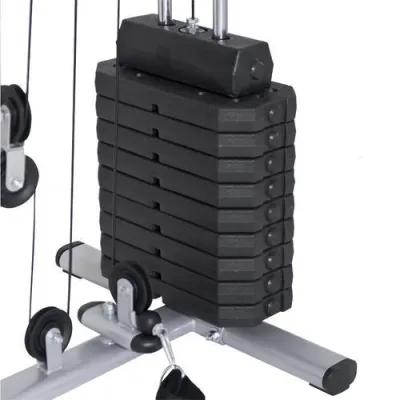
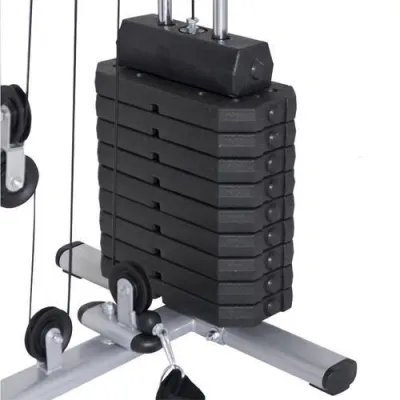
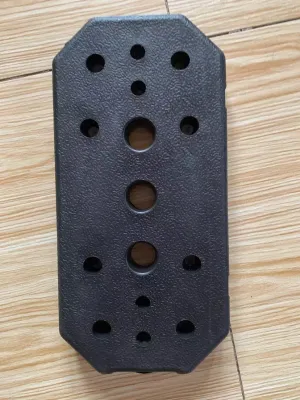
Prices are valid at publication and may change. Please refer to the product page for the latest price.
To verify these specifications, always check the manufacturer’s official spec sheet, product label, or user manual. Do not rely solely on the numbers printed on the plates themselves, as some manufacturers label plates with effective resistance rather than actual physical weight. Look for the physical weight specifications in the technical manual to understand exactly what you are lifting.
Matching Weight Stack Specs to Your Strength and Progression Goals
Your current strength level and fitness goals should dictate the weight stack specifications you prioritize. For beginners, seniors, or individuals undergoing physical rehabilitation, the total capacity is often less important than the increment size. Smaller plate increments allow for gentle, manageable transitions that protect recovering joints and muscles from sudden overloads.

Intermediate and advanced lifters, on the other hand, must focus on a higher total capacity. If you choose a machine with a low maximum limit, you risk outgrowing its resistance within a few months of consistent training, especially on compound movements like lat pulldowns or seated rows. Outgrowing a machine limits your progression and often leads to premature equipment replacement.
To determine your needs, use this quick assessment checklist before purchasing:
- Identify your current working weight for your strongest exercise on this machine type.
- Multiply that baseline weight by 1.5 to project your strength progression over the next two to three years.
- Check if the machine's total capacity comfortably exceeds this projected target.
- Verify that the increment size matches your weakest exercise (e.g., tricep pressdowns require smaller increments than chest presses).
Beyond the Numbers: Structural and Mechanical Factors to Verify
The numbers printed on a weight stack do not always represent the actual force you must exert. This discrepancy is primarily due to the pulley ratio. In a 1:1 pulley system, lifting 50 pounds of weight requires 50 pounds of force. However, many home gym machines utilize a 2:1 pulley ratio, which cuts the felt resistance in half. On a 2:1 system, a 100-pound weight stack only provides 50 pounds of actual resistance, though it allows for longer cable travel and a smoother pull. Always verify the pulley ratio in the product specifications to calculate the true maximum resistance.
In tropical environments like the Philippines, high humidity can accelerate rust and increase friction along the guide rods. Look for guide rods made of solid steel with a chrome plating to resist corrosion. The plates themselves should ideally be made of cast iron or steel rather than plastic-coated cement, as plastic casings can crack over time under humid conditions. Regularly applying a silicone-based lubricant to clean guide rods minimizes friction and ensures smooth, quiet operation.
Before operating any selectorized machine, verify the manufacturer’s safety guidelines. Check the maximum user weight limit for the frame, which is distinct from the weight stack capacity. Ensure the selector pin is fully inserted into the stack before lifting, and inspect the cables weekly for any signs of fraying or plastic peeling. If you observe any cable damage, stop using the machine immediately until the cable is replaced.
Evaluating Weight Stack Upgrades and Add-Ons
As your strength increases, you might consider upgrading your existing weight stack. Before attempting this, check if the manufacturer offers official weight stack upgrade kits specifically designed for your machine model. These kits usually include longer selector rods, additional plates, and sometimes heavier-duty cables or top plates to accommodate the extra load safely.
Avoid using unofficial add-on weights, DIY modifications, or hanging standard plates from the selector pin. Adding unauthorized weight places excessive stress on the frame, pulleys, and cables beyond their engineered limits. This practice can lead to sudden cable failure, structural bending, and will almost certainly void your manufacturer’s warranty.
If your machine does not support official upgrades and you have consistently maxed out the stack, purchasing a higher-capacity machine is a safer and more practical solution. Forcing an upgrade on a light-duty frame compromises your safety and can result in severe injury if the cables or pulleys snap mid-exercise.
Frequently Asked Questions (FAQ)
Does a higher total weight stack capacity always mean a better machine?
Not necessarily. A higher total capacity must be evaluated alongside the pulley ratio and your personal fitness goals. A machine with a 200-pound stack on a 2:1 ratio only delivers 100 pounds of resistance, whereas a 150-pound stack on a 1:1 ratio delivers 150 pounds. Additionally, excessively heavy stacks require bulkier frames, which increase the machine’s physical footprint and cost without offering practical benefits for beginners or those with limited space.
How do I know if the weight stack increments are too large for my rehab exercises?
Compare the machine’s smallest plate weight with the starting resistance recommended by your physical therapist. If the standard increment (such as 10 pounds) is too heavy for a safe progression, look for machines that feature micro-adjustment options. Some systems allow you to slide a smaller add-on weight (often 2.5 or 5 pounds) onto the top plate, or you can use compatible magnetic add-on weights designed to stick securely to the steel plates.
Community discussion
Share your experience or ask a question. Comments are reviewed before publication.