
Searching for a brand-new, high-performance road bike for ₱2,000 on Lazada and other major online marketplaces in the Philippines is a search for an illusion. The short answer is simple: you cannot buy a genuine, newly manufactured road bike at this price point. A true road bike requires specialized engineering, lightweight materials, and precise componentry that cost significantly more to produce, package, and ship.
When you filter your search on popular e-commerce platforms to a strict ₱2,000 limit, the listings that appear are almost always leveraging search terms to capture your attention. Instead of a lightweight machine built for speed and long-distance cycling, you will encounter basic utility bikes, single-speed commuters, or heavily compromised models. Understanding what actually lies behind these budget-friendly listings is the first step to avoiding unsafe purchases, mechanical frustration, and wasted money.
The Reality of a ₱2,000 Budget for Road Bikes
To understand why a ₱2,000 road bike does not exist in the retail market, it helps to look at what defines a genuine road bike. These bicycles are designed specifically for speed, efficiency, and pavement performance. They feature drop handlebars to allow for aerodynamic riding positions, lightweight aluminum or carbon fiber frames, high-pressure narrow tires, and integrated brake and shift levers (often called STI shifters) that let you change gears without moving your hands from the bars.
Products mentioned in this guide
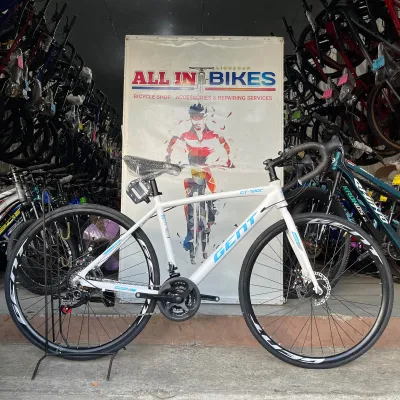
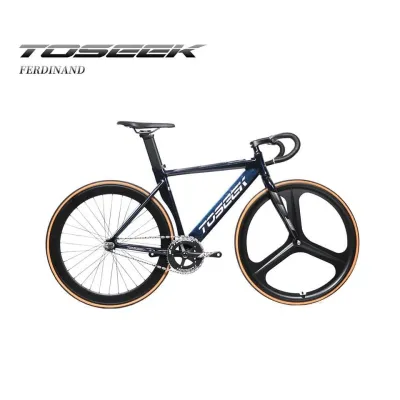
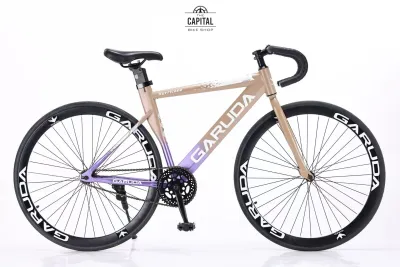
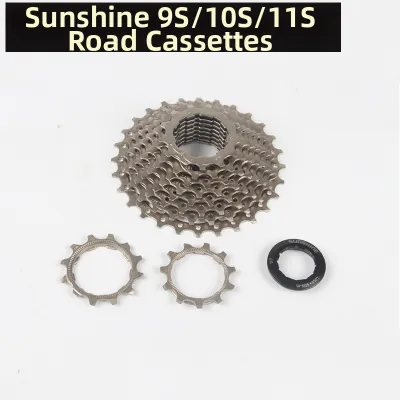
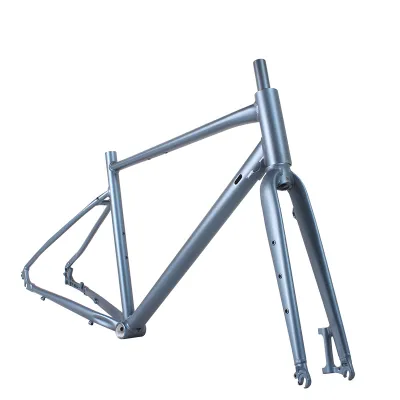
Prices are valid at publication and may change. Please refer to the product page for the latest price.
Manufacturing these components requires strict quality control and precise tolerances. The integrated gear-shifting system alone on an entry-level road bike typically costs more than ₱2,000 to purchase as a standalone group set. When a listing on an e-commerce platform claims to offer a complete “road bike” for this price, the seller is almost always using “road bike” as a generic keyword rather than an accurate description of the bicycle’s geometry, weight, or parts.
In the cycling industry, a ₱2,000 budget (roughly equivalent to $35 USD) is a strict constraint that forces extreme manufacturing compromises. At this price, manufacturers must use heavy, low-grade high-tensile steel for the frame, basic plastic or stamped-metal components, and rudimentary friction shifters. While these materials can be formed into the shape of a bicycle, they do not deliver the speed, responsiveness, or lightweight handling that defines the road cycling experience.
What You Will Actually Find Under ₱2,000 Online
If you set your search filters to a maximum of ₱2,000 on major online marketplaces, you will not find a blank page. Instead, you will see dozens of colorful listings. It is crucial to understand what these products actually are before clicking “add to cart.”

Commuter and Single-Speed City Bikes
The most common legitimate bicycles available in this ultra-budget price range are basic commuter bikes, utility models, and single-speed city bikes. These are highly functional machines, but they are not road bikes.
- Frame Material: These bikes almost exclusively feature heavy high-tensile steel frames. They are durable but can weigh anywhere from 14 to 18 kilograms, making climbing hills a significant physical challenge.
- Handlebars and Position: Instead of drop bars, they usually feature flat or upright handlebars. This design places you in an upright riding position, which is comfortable for short utility trips but creates high wind resistance and is inefficient for long-distance fitness riding.
- Drivetrain: At ₱2,000, these bikes are typically single-speed (having only one gear) or feature a very basic, unbranded 6-speed or 7-speed rear derailleur. They lack the wide gear range needed to maintain a consistent pedaling cadence over varying terrain.
- Tires and Wheels: They are equipped with wider, heavier tires designed for durability and puncture resistance on rough city streets, rather than the narrow, high-pressure tires that allow road bikes to glide effortlessly.
Misleading Listings and Keyword Stuffing
Online sellers frequently use aggressive search engine optimization tactics to get their listings in front of budget-conscious shoppers. You must learn to look past the product titles.
Many listings titled “Professional Carbon Road Bike 21-Speed” are actually cheap folding bikes, basic mountain bikes with heavy suspension forks, or fixed-gear bikes (fixies) with drop handlebars bolted on. Sellers know that “road bike” is a highly searched term, so they attach it to any product with two wheels.
To spot these traps, look past the promotional banners and check the detailed specifications. Inspect the frame geometry in the user review photos. If the bike has thick, knobby tires, a heavy front suspension fork, or flat plastic pedals on a bulky steel frame, it is not a road bike, regardless of what the title claims.
Second-Hand or Project Bikes
Another option that occasionally appears in local online classifieds or social media marketplace groups is a used or “surplus” bicycle. While you might find an older, authentic road bike for ₱2,000, these deals always come with a catch.
At this price, a used road bike will almost certainly require immediate, significant repairs. Components like tires, inner tubes, brake pads, and cables degrade over time, especially in the hot, humid tropical climate of the Philippines. Replacing these worn-out parts and paying for a professional tune-up at a local bike shop (LBS) will quickly add another ₱1,500 to ₱3,000 to your initial investment, pushing your total expenditure far beyond the original ₱2,000 budget.
Listing Red Flags and Hidden Costs to Avoid
Navigating the ultra-budget segment of online marketplaces requires a high degree of skepticism. To protect your wallet and your physical safety, keep a checklist of common e-commerce traps and hidden expenses.
- The "Frame-Only" Trap: Some sellers list a highly attractive road bike image with a ₱1,800 price tag, only for the buyer to discover that the price is for the frame alone, or does not include essential parts like wheels, pedals, or a saddle. Always read the variation options carefully before purchasing.
- Exorbitant Shipping Fees: Bicycles are bulky, heavy items. A bike priced at ₱1,999 might carry a shipping fee of ₱800 to ₱1,500 to provinces outside Metro Manila. This shipping cost destroys the budget and makes the purchase far less economical than buying a bike locally.
- Imitation and Plastic Components: To hit the ₱2,000 price point, manufacturers often use silver-painted plastic for brake levers, derailleur bodies, and pedal cages. These parts look like aluminum alloy in low-resolution online photos but flex under pressure and break easily during regular use.
- Unbranded Friction Shifters: If the bike does have gears, they are often controlled by cheap friction sliders mounted on the stem or handlebars. These shifters do not "click" into place, require constant adjustment while riding, and easily slip out of gear when you apply force to the pedals.
- Assembly and Tool Requirements: Online bikes are shipped 70% to 85% assembled in a cardboard box. To assemble the remaining parts, you will need a set of metric Allen keys, open-ended wrenches, a pedal wrench, and a high-pressure floor pump. If you do not own these tools, buying them will add to your costs. Furthermore, if you lack mechanical experience, paying a local bike shop to safely assemble and tune the bike is highly recommended, adding an assembly fee of ₱300 to ₱600.
How to Adjust Your Strategy for a Real Road Bike
If your goal is to experience the speed, fitness benefits, and community of real road cycling, buying a compromised ₱2,000 bicycle online is likely to result in frustration. A poorly built bike that constantly breaks down or feels incredibly heavy to ride will sit unused in your home. Consider these alternative pathways to get a genuine road riding experience:
- Save for a True Entry-Level Budget: In the Philippine market, the entry-level price bracket for a reliable, safe, and brand-new road bike starts around ₱10,000 to ₱15,000. Brands like Trinx, Sunpeed, and Ryder offer entry-level models in this range. These bikes feature lightweight aluminum alloy frames, reliable Shimano or L-Twoo drivetrains, and proper integrated shifters that provide a genuine road cycling experience.
- Explore the Local Japanese Surplus Market: Many cities in the Philippines have physical Japanese surplus shops. For ₱3,000 to ₱5,000, you can often find high-quality, pre-owned Japanese commuter bikes, hybrids, or vintage road bikes. While they are used, these bikes were manufactured to strict Japanese quality standards and are incredibly durable, safe, and easy to maintain.
- Prioritize Utility Over Style: If ₱2,000 is your absolute limit and you need transportation immediately, abandon the "road bike" aesthetic. Look for a simple, sturdy, single-speed commuter bike or a basic folding bike from a reputable local dealer. A well-built, heavy steel commuter bike is far safer and more reliable than a cheap, fragile imitation of a road bike.
Mandatory Safety Checks for Ultra-Budget Bikes
If you decide to proceed with purchasing a ₱2,000 bicycle online, you must accept that factory quality control at this price point is minimal to non-existent. Before taking any cheap bike out onto public roads, especially in busy Philippine traffic alongside jeepneys, motorcycles, and trucks, you must perform a rigorous safety inspection. Always consult the manufacturer’s assembly manual if available, or take the bike to a professional mechanic at a local bike shop if you are unsure of its structural integrity.
- Verify Brake Functionality: Cheap caliper or disc brakes often come with hard, plastic-like pads that slide over the metal rim rather than gripping it. Ensure the brake pads align perfectly with the braking surface of the wheel rim and do not rub against the tire rubber. Squeeze the brake levers hard; if they flex easily to touch the handlebars, the cables must be tightened. If the brakes fail to stop the bike quickly on a flat driveway, do not ride it in traffic.
- Check Wheel True and Spoke Tension: Spin both wheels and look at them from above. If the wheel wobbles from side to side (out of true) or rubs against the brake pads, the spokes must be adjusted. Squeeze pairs of spokes around the wheel; if any are completely loose or rattling, the wheel is structurally compromised and could collapse under a sudden impact, such as hitting a pothole.
- Inspect the Stem and Handlebars: Ensure the bolt securing the handlebar stem into the fork steering tube is tightened to the recommended torque. Hold the front wheel firmly between your knees and try to twist the handlebars. If the handlebars turn independently of the wheel, do not ride the bike. A slipping handlebar at speed is a catastrophic safety hazard.
- Check the Seatpost and Pedals: Verify that the seatpost clamp is secure and does not slip downward when you sit on the saddle. Inspect the pedals to ensure they are threaded correctly into the crank arms (the left pedal is reverse-threaded) and tightened securely. Loose pedals can strip the soft aluminum threads in the crank arm, causing the pedal to fall off while you are riding.
- Assess Wet-Weather Tire Grip: Ultra-budget tires are often made of hard nylon compounds rather than soft rubber. These tires offer very poor traction on wet asphalt or concrete. If you must ride in the rain or during the monsoon season, reduce your speed significantly, avoid sudden turns, and test your stopping distance early.
Community discussion
Share your experience or ask a question. Comments are reviewed before publication.