
When shopping for angling gear, understanding the numerical sizing system is essential to matching your equipment to your target species and environment. If you are looking at a fishing reel 6000 series, you are looking at a medium-heavy to heavy-duty spinning reel built to handle larger, hard-fighting fish in both fresh and saltwater. This size class bridges the gap between light inshore tackle and massive offshore big-game gear, making it a highly versatile choice for anglers who need extra line capacity and robust stopping power without the extreme weight of an offshore specialist reel.
What the "6000" Label Actually Means
The “6000” label on a spinning reel primarily indicates its physical size, spool dimensions, and line capacity relative to other models within a specific manufacturer’s lineup. Spinning reels generally use a numbering system ranging from tiny 1000-size models designed for ultra-light freshwater panfish up to massive 10000+ sizes built for blue-water giants. Within this spectrum, the 6000 series stands firmly in the heavy-duty category, engineered to hold thicker lines and withstand the high torque generated by large fish.
However, it is crucial to recognize that there is no universal industry standard for reel sizing. A 6000-size reel from one brand may have a significantly different weight, spool depth, and physical footprint compared to a 6000-size reel from another manufacturer. For instance, some brands prioritize compact, lightweight bodies with deep spools, while others build oversized, heavily armored frames that feel much bulkier in hand.
Products mentioned in this guide
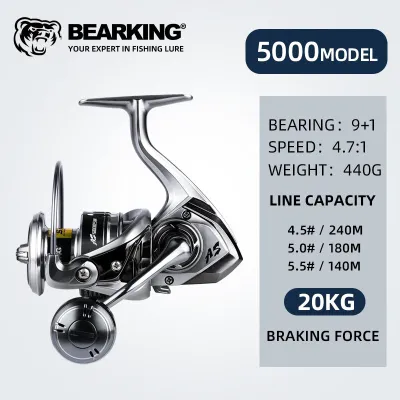
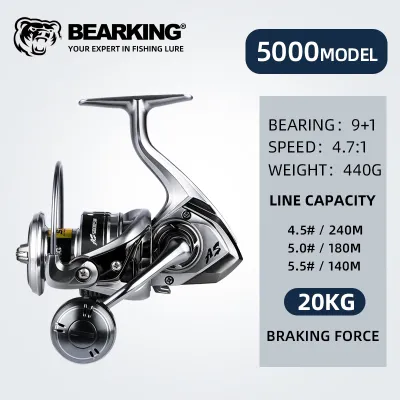
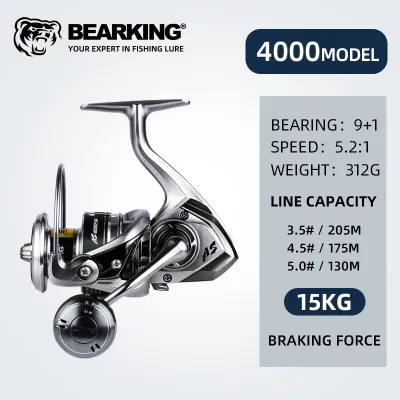
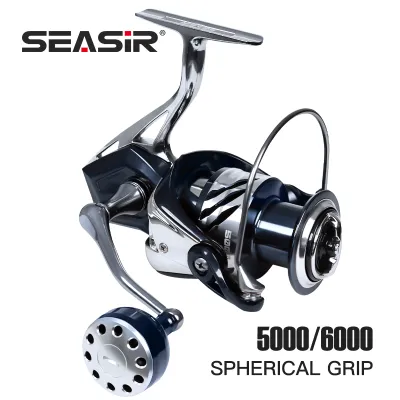
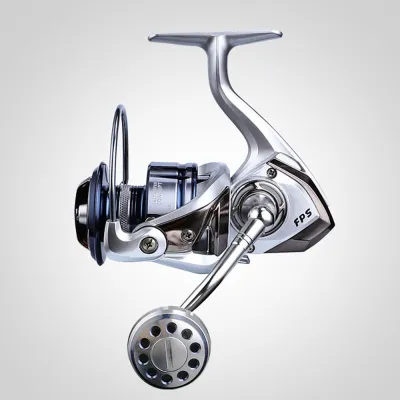
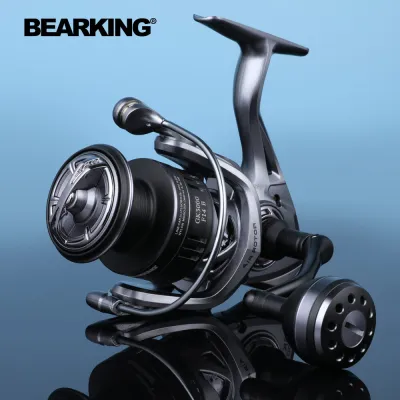
Prices are valid at publication and may change. Please refer to the product page for the latest price.
In the Philippine market, 6000-size reels are available across various price points, from budget-friendly entry models under ₱3,000 to durable mid-range workhorses up to ₱8,000, and premium salt-sealed models exceeding ₱15,000. Because of these brand-to-brand variations, you should always check the manufacturer’s specific specification sheet, physical dimensions, and weight in grams or ounces before making a purchase. Do not rely solely on the “6000” designation to guarantee compatibility with your existing rods or intended fishing style.
Decoding the Core Specs of a 6000 Reel
To fully appreciate what a 6000-size reel brings to your angling setup, you must look closely at how its technical specifications translate to actual on-the-water performance. These specifications determine how far you can cast, how quickly you can retrieve your lure, and how effectively you can stop a powerful fish from running into structure.

Line Capacity and Line Weight
The primary advantage of a 6000-size spool is its generous line capacity, which is essential when targeting fast-running fish that make long, sustained runs. In typical configurations, a 6000 series reel can hold approximately 200 to 300 meters of 30-pound braided line, or roughly 150 to 220 meters of 15-pound monofilament line. This volume ensures you have plenty of line left on the spool even after a fish peels off a massive amount of drag during the initial run.
For this reel size, suitable line weight classes generally range from 20-pound to 50-pound test for braided lines, or 12-pound to 20-pound test for monofilament lines. Braided line is highly recommended for most modern applications because its thinner diameter allows you to pack significantly more yardage onto the spool while maintaining a high breaking strength. Always check the physical spool lip or the product manual for the exact capacity ratings, as manufacturers frequently offer shallow-spool or specialized casting variants.
Gear Ratio and Retrieval Speed
The gear ratio of a fishing reel determines how many times the spool’s rotor spins for every single turn of the handle. For 6000 series reels, manufacturers typically employ moderate to lower gear ratios, often ranging from 4.5:1 to 5.5:1. These lower ratios are designed to prioritize mechanical advantage and cranking power, allowing you to winch heavy fish up from deep water or pull them out of thick cover.
Despite these lower gear ratios, a 6000-size reel still retrieves a substantial amount of line per turn of the handle because of its large spool diameter. While a smaller 2500 reel with a high 6.2:1 ratio might retrieve 80 centimeters of line per turn, a 6000 reel with a moderate 4.8:1 ratio can easily match or exceed that rate due to the sheer physical circumference of its spool. When selecting your reel, match the retrieval speed to your target presentation. For bottom fishing, bait fishing, or slow-rolling heavy lures where maximum torque is required, a lower gear ratio is far more effective.
Drag Power and Stopping Force
Drag power is the measure of resistance a reel can apply to a pulling line, and 6000 series reels are built to deliver serious stopping force. Typical maximum drag ratings for this size category range from 15 pounds to over 30 pounds (approximately 7 to 14+ kilograms), depending heavily on the reel’s internal construction and materials.
While maximum drag is an important mechanical specification, actual working drag should always be set much lower—typically around 25% to 30% of your line’s actual breaking strength. Setting the drag too high can lead to snapped lines, bent hooks, or structural damage to your rod and reel. The real value of a 6000-size drag system lies in its ability to dissipate heat and maintain smooth, consistent pressure during long, grueling fights. Look for reels featuring sealed carbon fiber drag washers, which offer superior heat resistance and prevent water intrusion.
Best Fishing Scenarios and Target Species for a 6000 Reel
A 6000-size reel shines in demanding environments where both physical durability and high line capacity are non-negotiable. In saltwater settings, this size is incredibly popular for surf casting along sandy beaches, pier fishing, and light offshore bottom fishing. It provides the casting weight and line capacity needed to reach deep channels from the shore while offering the muscle to pull reef-dwelling species out of sharp coral structures.
In the Philippines, a 6000 series reel is an exceptional choice for targeting powerful local species like talakitok (giant trevally), lapu-lapu (grouper), mangagat (mangrove jack), and barracuda. Whether you are casting heavy lures from the rocky shores of surf destinations like Siargao or jigging over deep reefs in the Verde Island Passage, this reel size provides the necessary leverage to control these aggressive predators. For freshwater anglers, a 6000 reel is ideal for heavy-duty applications in large lakes and fast-flowing rivers. It is perfectly suited for targeting massive freshwater catfish, large carp, or giant snakeheads (haruan) hiding in dense, snag-filled vegetation where you must immediately muscle the fish away from hazards.
However, a 6000-size reel is not a universal tool, and understanding when to scale your gear up or down is key to angling success:
- Downsize to a 3000 or 4000 reel if you are fishing in calm, shallow estuaries, casting light lures for smaller species, or spending hours casting continuously where a heavy setup would cause arm fatigue.
- Upsize to an 8000 or 10000+ reel if you are targeting massive pelagic species like yellowfin tuna, sailfish, or large sharks, where you require hundreds of meters of heavy-duty line and extreme drag pressures.
Keep in mind that a 6000-size reel is physically heavy, often weighing between 400 to 600 grams depending on whether the frame is made of aluminum, graphite, or carbon composites. If you plan to cast continuously for hours under the hot tropical sun, the physical weight of a 6000 setup can lead to rapid fatigue. Assess your physical stamina and consider using a rod holder or taking regular breaks to avoid wrist and shoulder strain.
How to Pair and Balance a 6000 Reel With the Right Rod
Pairing a heavy 6000-size reel with an inappropriate rod will result in an unbalanced setup that is tiring to cast and difficult to control. To achieve optimal performance, you must match the reel with a rod of suitable length, power, and line rating.
For surf casting and pier fishing, a 6000 reel pairs beautifully with medium-heavy to heavy power rods measuring between 7 to 9 feet (or even up to 10 feet for maximum casting distance from the beach). If you are fishing from a boat or navigating tight mangrove channels, a shorter rod of 6.5 to 7.5 feet with a heavy action will provide better leverage and maneuverability.
The balance point of your setup is critical. To check this, mount the reel onto the rod and place your finger on the rod blank just ahead of the reel seat. A well-balanced setup should sit relatively level or slightly tip-up. If the rod tip dives sharply toward the ground, the rod is too heavy or the reel is too light; if the butt of the rod drops heavily, the setup is tip-light and will feel awkward during casts. Proper balance significantly reduces wrist strain and improves your ability to feel subtle bites. Always consult the rod manufacturer’s recommended specifications printed just above the foregrip. Ensure the rod’s rated line weight (e.g., 15-30 lb or 20-50 lb) matches the line class you intend to run on your 6000 reel.
Frequently Asked Questions (FAQ)
Is a 6000 reel too big for standard bass fishing?
Yes, a 6000-size reel is generally far too large and heavy for standard largemouth or smallmouth bass fishing. For typical bass techniques, a lighter 2000 to 3000-size spinning reel is preferred to minimize fatigue and allow for precise, delicate lure presentations. The only exception is if you are targeting trophy-sized bass in exceptionally heavy cover or casting massive, heavy swimbaits that require a heavy-duty line class and high cranking power.
Can I use a 6000 spinning reel for surf fishing?
Absolutely. A 6000-size spinning reel is one of the most popular and effective choices for surf fishing. It offers the perfect balance of high line capacity for long casts past the breakers, robust drag power to fight strong fish in turbulent currents, and the physical durability to withstand harsh saltwater environments. Pair it with a 9-foot to 11-foot surf rod to maximize your casting distance and keep your line high above the crashing waves.
Community discussion
Share your experience or ask a question. Comments are reviewed before publication.