
Starting your strength training journey with dumbbells requires finding a balance between a load that stimulates your muscles and one that allows you to maintain perfect form. Choosing the wrong starting weight can lead to early fatigue, frustration, or joint strain, especially when exercising in a warm, humid home environment where grip and core stability are constantly challenged. The ideal starting weight is not a single universal number; rather, it depends entirely on your current physical baseline, the specific movements you perform, and your body’s feedback during a controlled test.
By focusing on movement quality over heavy lifting, you can safely build a foundation of strength that protects your joints and ensures long-term progress. Let’s look at how to evaluate your body’s readiness and systematically find the right starting load for your fitness goals.
Evaluate Your Current Strength Baseline
Before picking up any weight, you must assess your daily physical demands and activity levels. If your routine involves regular physical labor, such as carrying heavy loads, lifting boxes, or walking long distances in tropical heat, your muscles and connective tissues already possess a baseline level of conditioning. Conversely, if you spend most of your day sitting at a desk in an air-conditioned office, your muscles may require a more gradual introduction to resistance training to avoid sudden shock to your joints.
Products mentioned in this guide
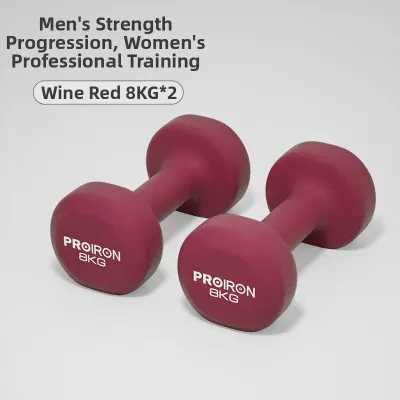
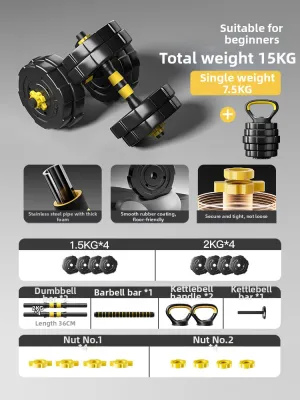
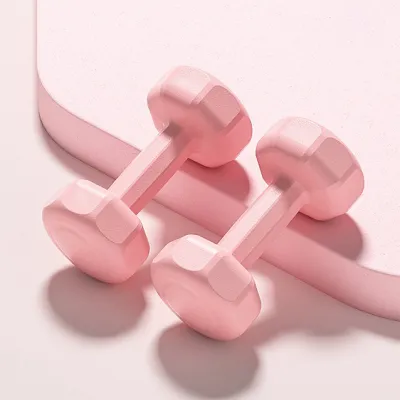
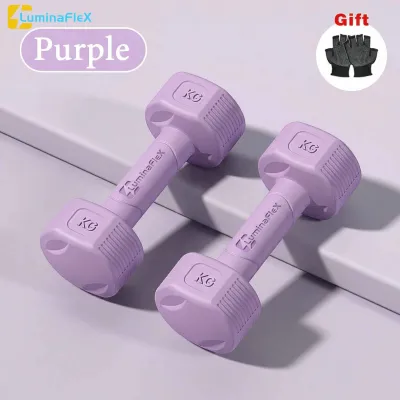
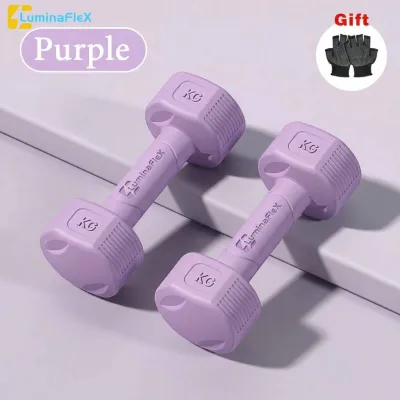
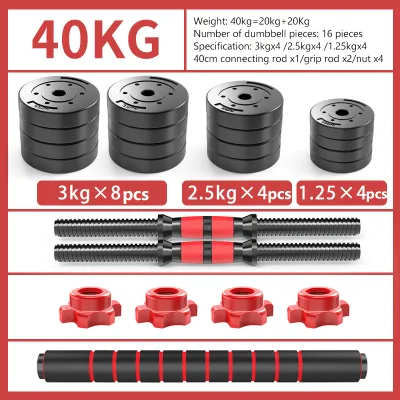
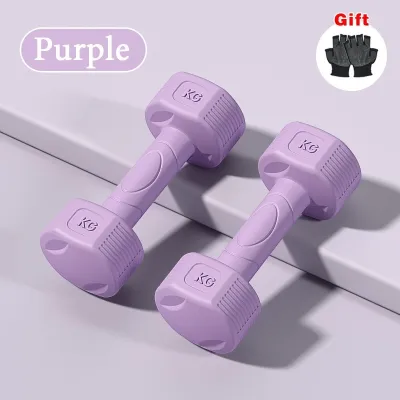
Prices are valid at publication and may change. Please refer to the product page for the latest price.
Your previous experience with bodyweight exercises also plays a critical role in determining your starting point. If you can comfortably perform controlled push-ups, bodyweight squats, and planks with stable form, your nervous system is already accustomed to coordinating movement under tension. If you struggle to support your own body weight, starting with the lightest available dumbbells—or even focusing on bodyweight movements first—is the safest path forward.
Finally, baseline joint mobility and core stability are absolute prerequisites for holding external weights. Humid conditions can increase joint laxity for some, while dehydration can lead to stiffness. Ensure your shoulders, elbows, and wrists can move through their full range of motion without pain before adding resistance. A stable core acts as the anchor for every dumbbell exercise; if your lower back arches or your torso sways during basic movements, your body is telling you to prioritize stability before reaching for heavier loads.
Match the Load to Your Exercise Type
Your body is a complex system of large and small muscle groups, meaning a single pair of dumbbells cannot serve every exercise. There is a significant strength disparity between your lower body and your upper body. For example, your glutes and quadriceps are large, powerful muscles designed to carry your body weight daily, allowing you to handle a heavier load during a goblet squat. In contrast, the smaller muscles of your shoulders, such as the deltoids, require a much lighter weight to safely execute an overhead shoulder press.

The distinction between compound and isolation movements further dictates your weight selection. Compound exercises, like dumbbell rows, recruit multiple joints and large muscle groups simultaneously, allowing you to lift a relatively heavier weight because the workload is shared. Isolation movements, such as bicep curls or lateral raises, target a single joint and a specific muscle, meaning even a minor increase in weight can quickly overwhelm the target muscle and force other parts of your body to compensate.
Additionally, stability requirements and smaller stabilizer muscles heavily limit the load you can handle during overhead or unilateral exercises. When you lift a dumbbell overhead, your rotator cuff and core must work intensely to keep the weight balanced. In humid tropical climates, sweat can also affect your grip stability, making heavy overhead movements riskier. Always verify that your grip is secure and start with a lighter load on unilateral exercises to ensure your stabilizing muscles can maintain control throughout the entire range of motion.
Use the "Test Set" Method to Find Your Exact Weight
To find your ideal starting weight without relying on generic charts, you can perform a practical “test set” using a highly conservative initial load. Prioritizing joint safety and form is paramount during this test. Select a weight that feels exceptionally light—one you are certain you can lift multiple times without any struggle. This conservative approach allows your nervous system to warm up and lets you focus entirely on the path of the movement.
Once you have selected your test weight, perform a target range of 8 to 12 repetitions while closely monitoring your technique. Each repetition should be slow and controlled, taking roughly two seconds to lift the weight and another two seconds to lower it. Avoid using momentum or swinging your body to complete the movement.
To gauge the difficulty of the set, use the Rate of Perceived Exertion (RPE) scale, which ranges from 1 to 10, or the concept of “reps in reserve” (RIR). An RPE of 7 or 8 means the exercise feels challenging but manageable, leaving about 2 to 3 clean repetitions in reserve before your muscles would fail. If you finish 12 repetitions and feel like you could easily perform 10 more, the weight is too light; if you struggle to reach 8 repetitions, the weight is too heavy.
Crucially, identify form breakdown as your absolute signal to stop the set and adjust the load downward. If your wrists begin to bend, your shoulders shrug toward your ears, or your lower back starts to arch, your muscles are no longer controlling the weight. Stop the exercise immediately, rest, and select a lighter dumbbell for your next attempt to protect your joints from injury.
Recognize When to Increase or Decrease Your Weight
As you progress, your body will adapt to the resistance, making it necessary to monitor your ongoing performance and adjust your dumbbells accordingly. Recognizing the signs that a weight is too heavy is vital for preventing long-term injury. If you experience sharp joint pain, find yourself swinging your torso to lift the weight, or cannot complete the minimum target of 8 repetitions with perfect form, the load is too high. In these cases, reduce the weight immediately to protect your connective tissues.
Conversely, you must also watch for signs that your current dumbbells are too light to stimulate muscle growth or strength gains. If you complete your entire set without feeling any muscle fatigue, find yourself bored during the movement, or easily exceed 12 repetitions with flawless technique, the stimulus is insufficient. Training with a weight that is too light will limit your progress and make your workouts less effective over time.
To continue making progress safely, apply the principle of progressive overload by transitioning to the next available weight increment. In a home gym setup, this usually means moving up by small increments, such as 1 to 2 kilograms (or roughly 2 to 5 pounds). Always ensure you can maintain perfect form with the new weight for at least 8 repetitions before attempting to increase the load further.
Frequently Asked Questions (FAQ)
Should I buy fixed dumbbells or adjustable ones as a beginner?
Deciding between fixed and adjustable dumbbells depends largely on your home workout space, budget, and long-term fitness goals. Fixed dumbbells are incredibly durable, simple to use, and highly stable, making them a safe choice for quick workouts. However, buying multiple pairs of fixed weights to match your growing strength can quickly clutter a small living space and require a larger total investment in pesos. Adjustable dumbbells, which allow you to change the weight plates on a single handle, offer excellent space efficiency and long-term cost savings as you progress. If you choose adjustable models, verify that the locking collars are highly secure to prevent plates from slipping during overhead movements, especially in humid conditions where sweat can make surfaces slick.
Is it normal to use different dumbbell weights for different exercises?
Yes, using different weights for different exercises is completely normal and highly recommended for a balanced workout routine. Your body’s muscle groups vary significantly in size and natural strength; your legs and back can handle much heavier loads than your shoulders and arms. Attempting to use a single pair of dumbbells for your entire body will either leave your lower body under-challenged or overload your upper body joints, increasing the risk of injury. To manage this practically in a home gym with limited equipment, consider starting with a versatile adjustable set or a small, curated selection of three distinct weight pairs: a light pair for isolation movements, a medium pair for upper-body compound exercises, and a heavier pair for lower-body movements.
Community discussion
Share your experience or ask a question. Comments are reviewed before publication.