
Starting your kettlebell journey requires moving away from the standard dumbbell mindset. For most women, a starting kettlebell weight ranges from 4 kg to 12 kg, depending on your current physical activity and the specific movements you plan to perform. Because a kettlebell’s center of mass is offset, it challenges your core, grip, and stabilizing muscles far more than a balanced dumbbell of the same weight. Choosing the right starting weight ensures you build a solid foundation of functional strength without risking injury.
Assess Your Current Fitness Baseline
To find your ideal starting point, evaluate your current physical activity level. Absolute beginners who are new to any form of resistance training generally benefit from starting with a lighter load, such as a 4 kg or 6 kg kettlebell. If you regularly engage in cardiovascular exercises, yoga, or Pilates, you likely possess decent core stability and mobility, making a 6 kg or 8 kg kettlebell a suitable starting point. Those with prior experience in barbell or dumbbell training can often begin with an 8 kg or 12 kg kettlebell, as their muscles are already accustomed to handling external resistance.
Before purchasing, perform a few simple bodyweight self-assessments at home to gauge your baseline strength. Try performing a standard plank; if you can maintain a straight line from head to heels for 45 seconds without your hips sagging, your core is ready for basic kettlebell movements. Next, perform ten bodyweight squats; look for knee stability and the ability to keep your chest upright. Finally, attempt five push-ups from the floor or an elevated surface like a sturdy bench. If you struggle with these bodyweight movements, prioritize lighter kettlebells to master the mechanics first.
Products mentioned in this guide
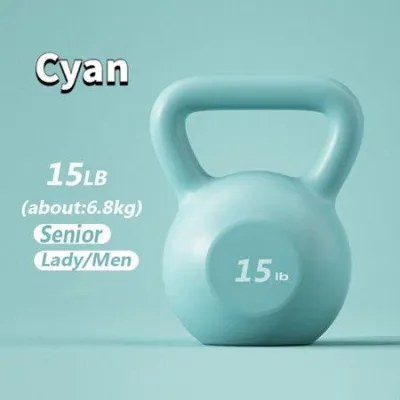
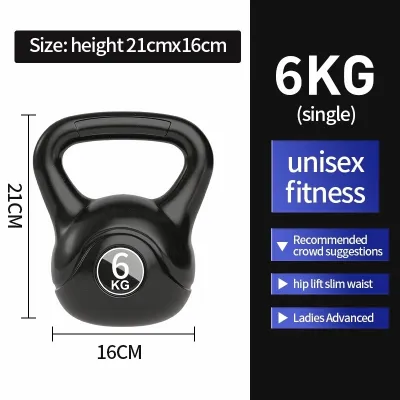
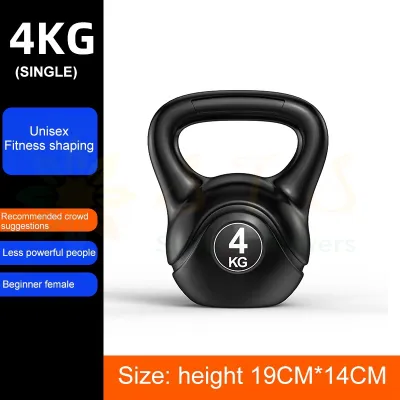
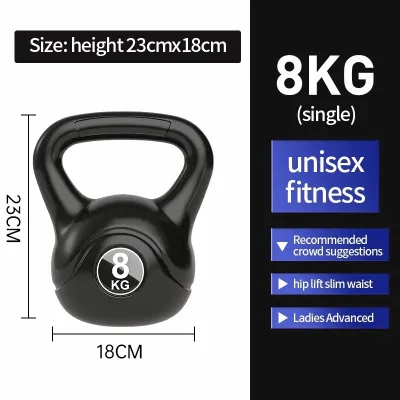
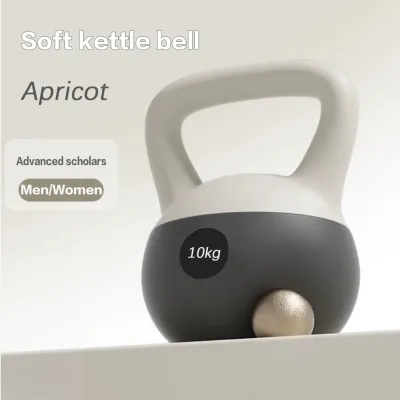
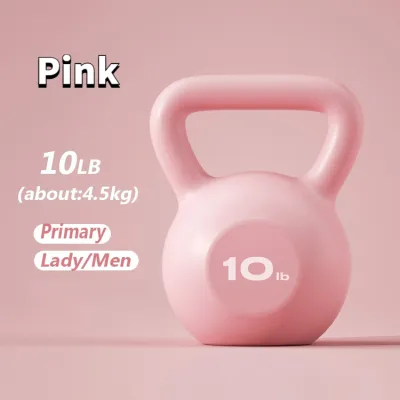
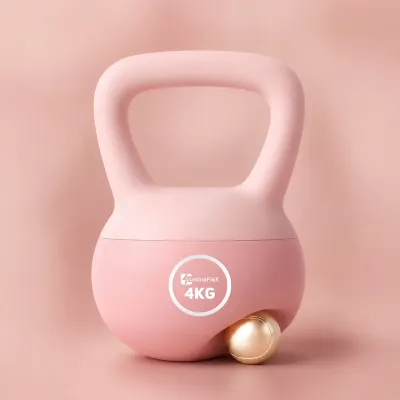
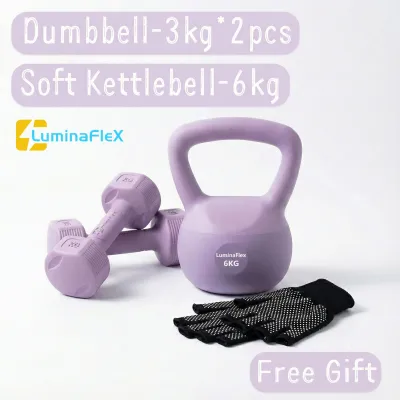
Prices are valid at publication and may change. Please refer to the product page for the latest price.
It is crucial to understand that kettlebell physics differ fundamentally from dumbbells. A dumbbell distributes its weight evenly on both sides of your hand, making it highly predictable. A kettlebell, however, suspends its weight below a loop handle, creating a dynamic lever arm during movement. This offset center of mass constantly pulls against your grip and requires your stabilizing muscles to work overtime. Consequently, even if you can easily press a 10 kg dumbbell, you may need to drop to a 6 kg or 8 kg kettlebell to perform the same movement safely.
Match the Weight to Your Target Exercises
Your body uses different muscle groups depending on the movement, meaning a single kettlebell weight cannot serve all exercises equally. Upper-body isolation and overhead movements, such as strict presses, halos, and Turkish get-ups, rely on smaller muscle groups like the deltoids and rotator cuffs. These exercises demand a lighter weight—typically 4 kg to 8 kg—to prevent shoulder strain and maintain proper alignment.

In contrast, lower-body and full-body ballistic movements leverage your body’s largest muscle groups, including the glutes, hamstrings, and core. Exercises like the kettlebell swing, goblet squat, and deadlift require a heavier load to properly engage these muscles and force your hips to drive the movement. For these exercises, a starting weight of 8 kg to 12 kg is generally appropriate, as a weight that is too light will fail to activate the posterior chain and may lead you to pull the bell with your arms instead of driving it with your hips.
Because of these differing mechanical demands, relying on a single kettlebell for a complete workout routine is rarely effective. If you choose a bell light enough for overhead presses, it will quickly become too light to challenge your legs during swings and squats. Conversely, a bell heavy enough for swings might prove impossible to press safely. Investing in a “light” and “heavy” pair—such as a 6 kg bell for upper-body work and a 12 kg bell for lower-body movements—provides a balanced foundation for full-body progression.
To guide your selection, categorize your planned routine into “grinds” and “ballistics.” Grinds are slow, controlled movements like presses, squats, and get-ups where you maintain constant tension. Ballistics are explosive, dynamic movements like swings, cleans, and snatches where momentum is generated by the hips. Always assign your lighter kettlebell to grinds and overhead work, and reserve your heavier kettlebell for ballistic hip-hinge movements.
How to Test if the Weight Is Right for You
Once you have a kettlebell in hand, you can verify its suitability using the Reps in Reserve (RIR) framework. When performing a set of eight to ten repetitions of a specific exercise, observe how many more clean reps you could realistically complete before your form breaks down. Ideally, you should finish your set with an RIR of two to three reps, meaning you feel challenged but could still perform two or three perfect repetitions if pushed. If you finish a set and feel you could easily perform ten more reps, the weight is too light; if your form crumbles before reaching your target reps, the weight is too heavy.
Pay close attention to physical checkpoints during use, particularly in the rack position where the kettlebell rests against your chest. The handle should sit diagonally across your palm, keeping your wrist completely straight rather than bent backward. The body of the bell should rest comfortably on the outer fleshy part of your forearm, and your elbow should tuck tightly against your ribs. If the bell causes sharp pain on your forearm bone or forces your wrist to collapse, check your hand insertion or consider a bell with a different handle geometry.
Safety must always take priority, especially when training at home in humid tropical conditions where sweat can compromise your grip. Establish clear stop conditions: immediately halt your workout if you experience sharp joint discomfort, lower back strain, or a loss of core stability. A sudden rounding of the lower back during a swing or a shaky shoulder during an overhead press indicates that your muscles are fatigued and can no longer stabilize the load. In these moments, put the bell down, rest, and consider dropping to a lighter weight or consulting a certified fitness professional.
Planning Your First Kettlebell Set Purchase
When shopping for a kettlebell set for women, you will generally choose between cast iron, competition, and adjustable models. Cast iron kettlebells are cast from a single piece of metal, making them incredibly durable, and their physical size increases as they get heavier. Competition kettlebells maintain the exact same dimensions and handle size regardless of weight, which helps keep your technique consistent as you progress, though they tend to carry a higher price tag. Adjustable kettlebells allow you to change the weight by adding or removing internal plates, offering excellent space efficiency for small homes, though they lack the solid, seamless feel of traditional single-cast bells.
To ensure long-term progress, plan your purchase around a progressive overload roadmap. You will know it is time to transition to a heavier bell when your current “heavy” bell feels light during swings, and you can easily complete your sets with an RIR of four or more while maintaining perfect form. Rather than buying an entirely new set all at once, you can gradually add individual bells to your collection as your strength baseline climbs.
Structuring your budget effectively helps prevent overspending on equipment you do not yet need. In the Philippines, high-quality powder-coated cast iron kettlebells typically range from ₱1,200 to ₱3,500 depending on the weight. If you have a starting budget of around ₱3,000, prioritize purchasing a single, versatile medium-weight bell (such as an 8 kg bell) that can handle both light swings and heavy presses. If your budget allows for ₱5,000 or more, invest in a two-bell set consisting of a lighter 6 kg bell for upper-body grinds and a heavier 12 kg bell for lower-body ballistic training, ensuring you have the right tools to target every muscle group effectively.
Frequently Asked Questions (FAQ)
Will lifting kettlebells make women bulky?
No, lifting kettlebells will not make women bulky. Building massive muscle bulk requires a specific combination of high testosterone levels, heavy hypertrophy-focused lifting programs, and a consistent caloric surplus. Kettlebell training typically focuses on functional strength, endurance, and power, which enhances muscle density, refines posture, and boosts cardiovascular fitness without adding excessive muscle volume.
Can I use dumbbells instead of a kettlebell set?
You can adapt several basic exercises, such as goblet squats, lunges, and overhead presses, to dumbbells quite safely. However, dumbbells cannot fully replicate the unique benefits of a kettlebell set for women during ballistic and rotational movements. The offset center of gravity of a kettlebell is essential for generating the proper centrifugal force during swings, cleans, and Turkish get-ups, making it a superior tool for developing explosive hip power and shoulder stability.
Community discussion
Share your experience or ask a question. Comments are reviewed before publication.