
A truly portable electric scooter is defined by much more than just a folding hinge. For a daily commuter, genuine portability is a delicate balance of total weight, folded dimensions, locking security, and carrying ergonomics. Finding the right portable electric scooter requires looking past marketing catchphrases and evaluating how a machine’s physical specifications match your personal physical strength, local transit rules, and daily route.
In dense urban environments, a scooter that is easy to carry and store can transform a stressful commute into a seamless journey. However, prioritizing portability often means making calculated trade-offs in battery range, motor power, and ride comfort. Understanding these design relationships is the first step toward choosing a vehicle that fits your lifestyle without becoming a physical burden.
Assess Your Commute: Do You Really Need a Highly Portable Scooter?
Before diving into specifications, it is essential to distinguish between a “foldable” scooter and a “truly portable” one. Nearly all modern electric scooters have stems that fold down, but a 25-kilogram model designed for high-speed off-road riding is not something you can easily carry up a flight of stairs. True portability means you can comfortably lift, carry, and maneuver the scooter with one hand for extended periods without straining your back or shoulders.
Products mentioned in this guide
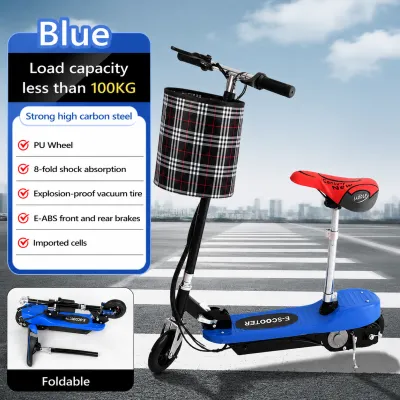
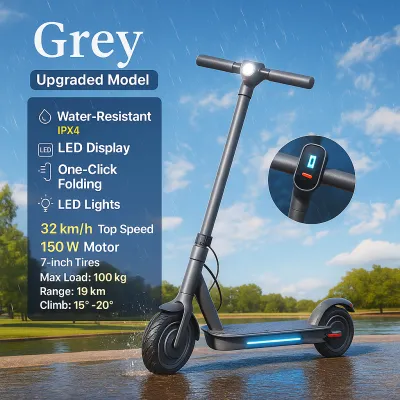
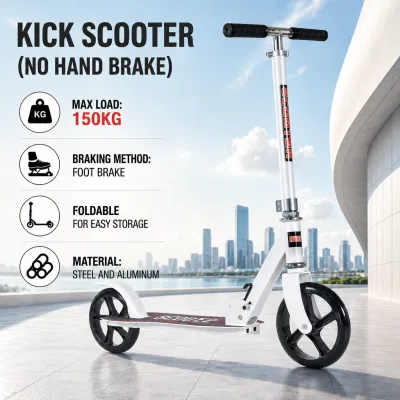

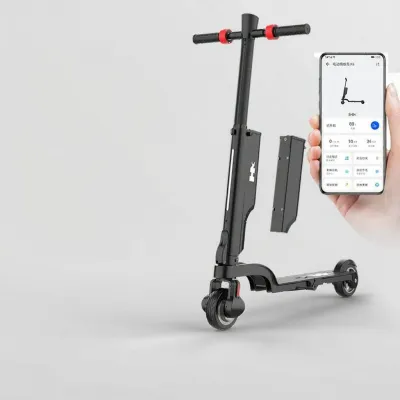
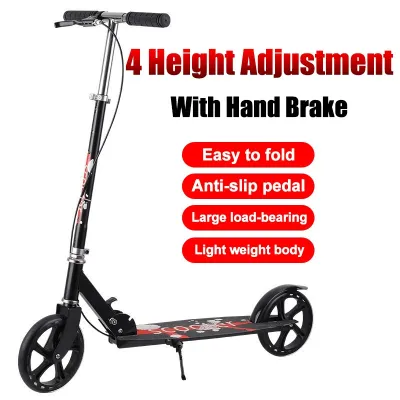
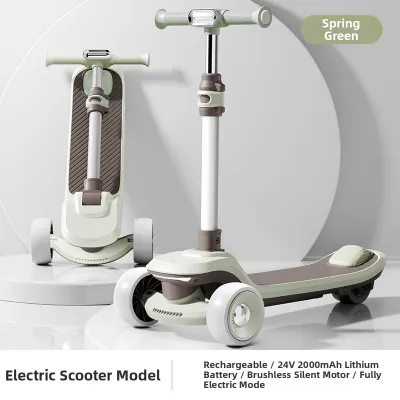
Prices are valid at publication and may change. Please refer to the product page for the latest price.
Your daily route and environment will dictate whether you need an ultra-lightweight, highly compact model or if a standard foldable scooter will suffice. If your commute is direct and point-to-point—meaning you ride directly from a ground-floor garage at home to a secure, designated parking area at your workplace—extreme portability is rarely a priority. In this scenario, a heavier scooter with larger wheels, a bigger battery, and dual suspension will provide a smoother, more comfortable ride.
Conversely, specific commute signals demand a highly portable machine. If you practice multi-modal commuting—such as riding to a train station, carrying the scooter onto a crowded train or bus, and then riding the final kilometer to your office—every kilogram and centimeter matters. Strict office building storage rules, frequent elevator outages, or the need to carry your scooter up multiple flights of stairs to your apartment are also clear indicators that you require an ultra-portable model.
To help determine if investing in premium lightweight materials and compact folding designs is justified, consider this quick self-check:
- Multi-Modal Transit: Do you need to board trains, buses, or jeepneys with your scooter daily?
- Stair Climbing: Will you regularly carry the scooter up more than one flight of stairs?
- Elevator Access: Does your workplace or apartment building have reliable elevator service, or must you prepare for frequent outages?
- Storage Constraints: Is your designated storage space limited to a small closet, a tight spot under an office desk, or a compact car trunk?
- Rider Physical Strength: Can you comfortably lift and carry a weight equivalent to a heavy suitcase with one hand for several minutes?
If you answered yes to two or more of these questions, prioritizing ultra-portable features over raw power and long-range specifications is highly recommended.
Weight vs. Carrying Capacity: Finding Your Physical Limit
An electric scooter’s overall weight is primarily dictated by three main components: the battery pack, the motor, and the frame material. Lithium-ion batteries are heavy, and because battery capacity directly correlates with weight, a longer-range scooter will always weigh more. Similarly, high-wattage motors require larger magnets and copper coils, adding bulk to the wheel hubs. Frame materials also play a critical role, with standard models utilizing heavy steel or basic aluminum alloys, while premium lightweight models often feature aviation-grade aluminum or carbon fiber.

This engineering reality creates an unavoidable trade-off between portability and performance. Ultra-lightweight scooters (typically weighing under 12 kilograms) often sacrifice built-in suspension systems, utilize smaller solid rubber tires, and feature smaller batteries. This results in a stiffer ride on rough pavement and a shorter maximum range. Heavier, more robust models (weighing 15 to 20 kilograms or more) offer plush pneumatic tires, active suspension, and ample battery capacity, but they quickly become exhausting to carry over short distances.
To find your personal physical limit, do not rely solely on the product’s specification sheet. A practical way to test your carrying capacity is to simulate the weight using common household items. Pack a sturdy duffel bag or backpack with weights, books, or water bottles until it matches the advertised weight of the scooter you are considering. Practice carrying this bag with one hand up a flight of stairs or walking with it for a continuous five-minute stretch to gauge how your wrists, arms, and back respond to the load.
Beyond raw weight, the physical design of the scooter greatly influences how heavy it actually feels in hand. A folded scooter’s weight distribution and center of gravity determine its balance; if a scooter is rear-heavy due to a hub motor, carrying it by the middle of the stem will cause it to tip frustratingly. Handle ergonomics and stem thickness are equally vital. A stem that is too thick to wrap your fingers around securely, or one with sharp structural edges, will cause rapid hand fatigue and increase the risk of dropping the machine.
Folding Mechanisms and Folded Footprint: Beyond the Basic Hinge
How a scooter folds determines how quickly you can transition from riding to carrying, as well as how neatly the machine fits into tight spaces. The most common folding mechanism is the stem hinge, where the vertical steering column folds down toward the rear deck and locks into place. Some advanced portable models also feature telescopic steering stems that slide down to reduce height, and folding handlebars that collapse inward to dramatically decrease the scooter’s overall width.
When evaluating these mechanisms, look closely at the folded footprint, which is the total length, width, and height of the collapsed machine. A scooter with a long deck might fold flat but still fail to fit inside a compact car trunk or under a standard 75-centimeter-high office desk. Telescopic stems and folding handlebars are incredibly useful for navigating narrow spaces, crowded train turnstiles, and tight office cubicles, as they minimize the horizontal and vertical space the scooter occupies.
However, there is a distinct trade-off regarding complexity. Overly complex folding systems with numerous moving joints, latches, and pins are more susceptible to developing structural play or rattling over time. This mechanical looseness, often called “stem wobble,” can compromise your steering control and overall safety while riding. When researching models, prioritize robust, simple latching designs that feature secondary manual locking collars or safety pins to prevent accidental folding during operation.
For maximum convenience, look for practical carrying features built directly into the frame. Magnetic latches that automatically secure the folded stem to the rear mudguard prevent the scooter from swinging open unexpectedly while carried. Dedicated carrying straps, integrated grab handles, or a design that allows the folded stem to serve as a perfectly balanced carry bar will make transporting the scooter much more comfortable and secure.
Matching Scooter Features to Your Daily Transit Reality
To get the most out of a portable electric scooter, you must match its specific features to the environmental realities of your daily commute. In the Philippines, urban commuting presents unique challenges, including high humidity, intense tropical heat, sudden afternoon downpours, and highly varied road conditions. Your scooter must be physically equipped to handle these factors while remaining easy to transport.
If your commute relies on multi-modal transit—such as boarding the MRT-3, LRT-2, or public buses—speed and size are your primary concerns. You need a scooter with a rapid folding mechanism that allows you to collapse the machine in under three seconds as you approach train turnstiles or bus doors. A narrow folded profile ensures you can stand the scooter vertically between your legs on a crowded train platform without blocking aisles or tripping other passengers.
For office and indoor storage, cleanliness and a compact footprint are paramount. During the rainy season, scooter tires easily pick up wet road grime, mud, and debris. Opting for a scooter with enclosed wheels, mudguards, or a dedicated storage bag prevents dirty water from dripping onto office floors or staining your clothing while carrying it. Ensure the folded dimensions allow the scooter to slide completely under your desk or fit neatly into a designated locker.
If your daily route involves a significant amount of last-mile walking, look for rolling capabilities, often referred to as “trolley mode.” Some portable scooters are designed to roll on their auxiliary wheels or main wheels while folded, allowing you to pull them behind you like a piece of rolling luggage. This feature is a lifesaver on long elevated walkways or flat transit concourses, as it spares you from carrying the full weight of the machine. Additionally, ensure the wheel size is appropriate for your route; while small 8-inch solid wheels keep the scooter light, larger 8.5-inch or 10-inch pneumatic tires are much safer and more stable when rolling over cracked sidewalks, potholes, and uneven pavement.
Before purchasing any electric scooter, always check the specific rules of your local transit authorities, building management, and employers. Many office towers and train networks enforce strict limits on battery capacities (often measured in Watt-hours) and maximum folded dimensions for personal mobility devices.
How to Verify Portability Claims Before You Buy
Manufacturer specification sheets can sometimes be misleading, as they may list the “dry weight” of the scooter without the battery, mudguards, or accessories installed. To ensure you do not end up with a machine that is too heavy or awkward for your daily routine, take proactive steps to verify all portability claims before making your final decision.
Whenever possible, visit a physical retail store to interact with the scooter in person. If a local shop is not accessible, seek out detailed, unedited video reviews that show real users folding, carrying, and lifting the scooter in real-world environments rather than polished promotional footage. This allows you to observe the actual speed of the folding mechanism and see how much effort is required to lift the machine.
Once you have access to the scooter, perform a physical “dry run” test. Fold and unfold the scooter at least five times consecutively. Pay close attention to how intuitive the latches are, whether they require excessive physical force to lock, and if there are any dangerous pinching hazards that could catch your fingers. If you have already purchased the scooter online, weigh it on a digital luggage scale immediately upon delivery to confirm it matches the advertised specifications within a reasonable margin.
Finally, always prioritize structural safety over convenience. Before embarking on any ride, verify that all folding latches, safety sleeves, and locking pins are fully engaged and secure. If you ever detect looseness, structural play, or misalignment in the folding mechanism, stop riding the scooter immediately. Refer to the manufacturer’s user manual for adjustment procedures, check the warranty guidelines, or consult a certified technician to resolve the issue before riding again.
Frequently Asked Questions (FAQ)
Can I bring a portable electric scooter on public transit?
Public transit policies regarding electric scooters vary widely depending on the specific transit operator, city regulations, and current safety guidelines. Generally, most train and bus networks permit electric scooters provided they are fully folded, clean, and carried by hand rather than ridden on platforms or concourses. Scooters must not block aisles, doors, or emergency exits. Always check the official guidelines of your local transit authority for exact rules regarding maximum folded dimensions and battery capacity limits before attempting to travel.
Does a lighter electric scooter mean a shorter battery range?
Yes, there is a direct engineering relationship between a scooter’s weight and its battery range. Lithium-ion battery cells are inherently heavy, meaning that a larger battery pack capable of providing longer range will inevitably add significant weight to the scooter. Lightweight scooters utilize smaller, lower-capacity battery packs to keep the overall weight down, which naturally reduces their maximum travel distance on a single charge. To find the right balance, calculate your actual daily round-trip commuting distance and choose a model that comfortably covers that range while remaining light enough for you to carry.
Are carbon fiber electric scooters worth the extra cost for portability?
Carbon fiber electric scooters offer an exceptional strength-to-weight ratio, making them significantly lighter than their aluminum or steel counterparts. However, carbon fiber is a premium material that substantially increases the purchase price of the scooter. This investment is generally highly worthwhile if your daily commute demands that you frequently carry the scooter up multiple flights of stairs, lift it onto crowded public transit, or transport it over long walking distances. If your carrying needs are only occasional or if you can utilize a rolling trolley mode, a high-quality aluminum alloy scooter will typically offer a more cost-effective solution.
Community discussion
Share your experience or ask a question. Comments are reviewed before publication.