
To choose the right starting resistance level for a rubber strap, you must match the band’s tension to your current physical strength, exercise experience, and specific workout goals. Beginners, those recovering from injuries, or users focusing on joint mobility should start with extra-light to light straps (typically offering 2 to 15 pounds of resistance). Intermediate fitness enthusiasts aiming for muscle toning and endurance should opt for medium straps (15 to 35 pounds). Advanced lifters or athletes looking to build maximum power or assist with bodyweight movements like pull-ups should begin with heavy to extra-heavy straps (35 to 150+ pounds).
Selecting the wrong tension can hinder your progress. A band that is too heavy compromises your exercise form, leading to joint strain and potential injury. Conversely, a band that is too light will not provide enough stimulus to trigger muscle growth or endurance adaptations. By systematically evaluating your fitness profile, understanding how rubber tension works, and executing a simple performance test, you can pinpoint the ideal starting strap for your home or gym workouts.
Assess Your Current Fitness Level and Workout Goals
Before browsing online marketplaces or visiting local sports shops, you must honestly evaluate your physical baseline. Your current fitness level is the most reliable predictor of the resistance your muscles and joints can safely handle. Misjudging this starting point often leads to purchasing equipment that either gathers dust or causes unnecessary physical strain.
Products mentioned in this guide
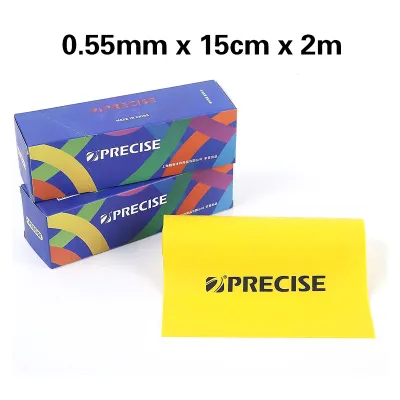
Prices are valid at publication and may change. Please refer to the product page for the latest price.
- Beginner Profile: This tier includes individuals who are completely new to resistance training, those returning to exercise after a prolonged hiatus of several months or years, and anyone undergoing active physical rehabilitation. If you are recovering from a shoulder impingement, lower back issues, or knee strain, your primary objective is joint mobilization and muscle activation rather than muscle fatigue.
- Intermediate Profile: This category applies to individuals who have consistently engaged in structured strength training, calisthenics, or active sports for at least six consecutive months. If you possess a solid foundation of core stability, understand basic movement patterns like the squat and overhead press, and regularly challenge your muscles, you have the baseline strength required for moderate resistance.
- Advanced Profile: This level is reserved for experienced lifters, competitive athletes, or dedicated calisthenics practitioners with years of progressive overload training. If you can easily handle heavy free weights or perform advanced bodyweight movements, you require substantial external resistance to stimulate further muscle growth or power development.
Your workout goals must also dictate your choice of rubber strap. If your primary objective is mobility, dynamic stretching, or active recovery, you will need a low-tension band regardless of your overall strength. This allows your joints to move through their full range of motion without triggering protective muscle guarding.
On the other hand, if you aim to build muscular hypertrophy, improve endurance, or add resistance to lower-body movements like squats and glute bridges, you require a moderate to high level of tension. The goal here is to create sufficient mechanical tension to stimulate muscle fiber recruitment and adaptation.
Starting with a manageable resistance level is critical for establishing proper biomechanics. Unlike free weights, which rely on gravity, rubber straps provide continuous, multidirectional tension. If the strap is too heavy, your body will instinctively recruit secondary muscles to cheat the movement, placing dangerous shearing forces on your joints and tendons.
Decoding Rubber Strap Resistance Levels and Specs
To make an informed purchase, you must understand how manufacturers measure and label the resistance of rubber straps. Relying solely on visual cues or generic descriptions can lead to a mismatched purchase, as there is no universal standardization across the fitness industry.

- Tension Measurement: Resistance is typically expressed in a range of pounds (lbs) or kilograms (kg), such as 15–35 lbs (7–16 kg). This number represents the amount of force required to stretch the band to a specific percentage of its original length, usually 100% to 200% elongation. A light band might require only 5 pounds of force to stretch, while a heavy powerlifting band might require over 100 pounds.
- The Color-Coding Trap: Many buyers assume that certain colors always represent the same resistance level. For example, they might believe that yellow is always light, red is medium, and black is heavy. In reality, color schemes vary wildly between brands; a green band from one manufacturer might be an extra-light mobility strap, while a green band from another brand could be a thick, heavy-duty loop used for pull-up assistance. Always ignore the color alone and verify the exact numerical weight range printed on the product packaging or listed in the technical specifications.
- Linear vs. Constant Resistance: It is vital to recognize that rubber straps provide variable or linear resistance, which behaves differently from traditional free weights. When you lift a 10-kilogram dumbbell, the load remains a constant 10 kilograms throughout the entire movement. When you stretch a rubber strap, however, the resistance increases progressively the further you pull it.
This unique property means the resistance is lightest at the beginning of the exercise movement and heaviest at the peak contraction point. This matches the human body’s natural strength curve for many exercises, where we are mechanically stronger near the end of a joint’s range of motion. Understanding this variable load helps you anticipate how the exercise will feel and prevents you from overestimating the resistance level you can control at full extension.
In the Philippines, high-quality individual rubber straps typically range in price from ₱150 for light mobility bands to ₱800 or more for heavy-duty powerlifting loops, making them an incredibly cost-effective alternative to bulky gym equipment.
Recommended Starting Levels for Each Fitness Profile
Selecting your initial rubber strap requires matching your specific profile to a realistic tension range. Below is a detailed breakdown of the recommended starting levels, typical weight ranges, and ideal exercises for each fitness tier.
- Beginners & Rehabilitation (Extra-Light to Light: 2 to 15 lbs / 1 to 7 kg): If you fall into this category, your primary objective is to learn movement patterns and build joint stability. You should start with thin, highly flexible bands. These light bands allow you to focus entirely on the mind-muscle connection and clean execution without fighting excessive tension. They are perfect for shoulder external rotations, face pulls, lateral walks, and gentle hamstring stretches.
- Intermediate & Toning (Medium: 15 to 35 lbs / 7 to 16 kg): If you have a baseline of physical strength, a medium band offers the perfect balance of challenge and control. This level is highly versatile and works exceptionally well for full-body workouts, muscular endurance, and hypertrophy. You can use medium straps to add resistance to bodyweight exercises, such as placing them around your thighs for glute bridges, stepping on them for bicep curls, or wrapping them around your back for resisted push-ups.
- Advanced & Strength Building (Heavy to Extra-Heavy: 35 to 150+ lbs / 16 to 68+ kg): Experienced athletes require thick, wide rubber straps to challenge their muscles. These heavy bands are rarely used for isolated movements like bicep curls; instead, they are designed for compound exercises and calisthenics assistance. For example, a heavy loop band wrapped around a pull-up bar can support a portion of your body weight, helping you master strict pull-ups or dips. They are also excellent for heavy deadlift resistance or explosive speed training.
Regardless of your fitness level, you must always prioritize a full range of motion and strict form over maximum resistance. If a rubber strap forces you to shorten your stride, shrug your shoulders, or swing your body to complete a repetition, the band is too heavy. Opting for a lighter band that allows for a complete, controlled contraction will yield far better fitness results and protect your joints from acute strain.
How to Test Your Strap and Know When to Upgrade
Once you purchase or receive your rubber strap, you need a reliable, practical method to verify that you have chosen the correct resistance. You must also know how to inspect your equipment for safety and recognize when your body is ready for a heavier challenge.
- The Rep-Range Test: To determine if your strap is a perfect match, perform a standard compound exercise—such as a bicep curl, overhead press, or squat—for a target range of 10 to 15 repetitions. If you cannot complete 10 repetitions with perfect, controlled form, the strap is too heavy and you should step down a level. If you can easily breeze past 15 repetitions without feeling any muscle fatigue or burning sensation, the strap is too light to stimulate physical adaptation. The ideal strap should make the final 2 to 3 repetitions of a 12-rep set feel challenging but entirely doable with clean form.
- Safety and Maintenance Checks: Because rubber is an organic polymer, it is subject to wear, tear, and environmental degradation. Before every single workout, inspect your strap for micro-tears, hairline cracks, discoloration, dry rot, or a sticky surface texture. Never use a strap that exhibits any of these warning signs, as a snapped band under high tension can cause severe skin welts or eye injuries.
- Environmental Care in the Philippines: The tropical climate of the Philippines presents specific challenges for rubber fitness equipment. High relative humidity and elevated ambient temperatures accelerate the breakdown of latex and synthetic rubber, leading to premature brittleness or stickiness. To maximize the lifespan of your straps, never leave them in direct sunlight, inside a hot car, or on a humid balcony. Store them in a cool, dry indoor closet or drawer, and occasionally wipe them down with a damp cloth to remove sweat, drying them completely before storage. Avoid exposing them to household chemicals or oils, which can dissolve the rubber structure.
- Progression Signals: As your muscles adapt and grow stronger, your starting strap will eventually feel too easy. When you can consistently perform 15 to 20 repetitions of an exercise with perfect form and minimal muscle fatigue, it is time to progress. You do not always need to buy a brand-new strap immediately; you can safely increase resistance by shortening your grip on the band, doubling the band over, or looping two lighter bands together to create a customized tension level.
Frequently Asked Questions (FAQ)
Can I combine multiple rubber straps to increase resistance?
Yes, you can easily stack or loop multiple rubber straps together to achieve custom resistance levels. For instance, combining a light band and a medium band allows you to bridge the gap before moving fully to a heavy band. When doing this, ensure the bands are anchored securely to a smooth, rounded surface. Avoid wrapping them in a way that causes them to rub directly against each other, as the resulting friction can generate heat and cause the rubber to wear down or snap prematurely.
Are loop bands and tube bands with handles used for the same exercises?
While both provide excellent resistance, they excel at different types of exercises due to their physical designs. Continuous flat loop bands are highly versatile, making them ideal for lower-body work (like lateral band walks), joint mobility, and assisting with bodyweight exercises like pull-ups. Tube bands with handles, on the other hand, are designed to mimic cable pulley machines, making them much more comfortable and effective for upper-body isolation movements like chest presses, bicep curls, and tricep extensions.
How often should I replace my rubber fitness straps?
There is no fixed calendar timeline for replacing rubber straps, as lifespan depends entirely on usage frequency, stretching limits, and storage conditions. Instead of relying on a set number of months, you should replace your straps immediately upon detecting any physical warning signs. Inspect your bands regularly for visible cracks, thinning spots, loss of elasticity, white stress marks, or a sticky surface texture. If you notice any of these signs, replace the strap immediately to prevent it from snapping during use.
Community discussion
Share your experience or ask a question. Comments are reviewed before publication.