
A manual treadmill that fits comfortably in a small condo or apartment bedroom typically requires an assembled footprint of about 120 to 150 centimeters in length and 60 to 70 centimeters in width, plus an additional safety clearance of at least 1 to 2 meters behind the machine. Because compact bedrooms in urban developments often range from 9 to 12 square meters, selecting the right size involves balancing your physical stride length with the actual floor space available. A machine that is too large will block vital walkways, while one that is too small may restrict your natural walking or running movement.
To make a successful purchase, you must look beyond the basic dimensions listed on the box. You need to evaluate how the equipment interacts with your room’s layout, your daily routines, and your physical proportions. By taking precise measurements and understanding the spatial trade-offs of different treadmill designs, you can establish a functional workout space without sacrificing the comfort and accessibility of your bedroom.
Measuring Your Available Space and Clearance Requirements
Start by measuring the exact floor area where you plan to place the treadmill. Use a standard tape measure to map out the length and width of the floor space, rather than relying on visual estimation. It is helpful to mark the proposed footprint on your floor using painter’s tape to get a realistic, three-dimensional sense of how much space the machine will occupy.
Products mentioned in this guide
![[COD] Foldable Manual Home Treadmill with Adjustable Slope LED Display Anti-Slip Running Belt Free Twist Disc & Resistance Rope Space Saving Walking Machine for Home Fitness Exercise](https://img.lazcdn.com/g/p/1446617c7dcf63717d1a1640b68a647e.jpg_400x400q80.jpg_.webp)
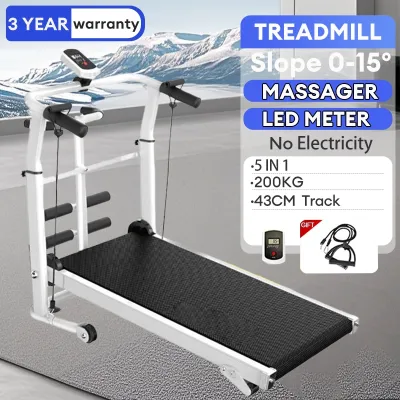
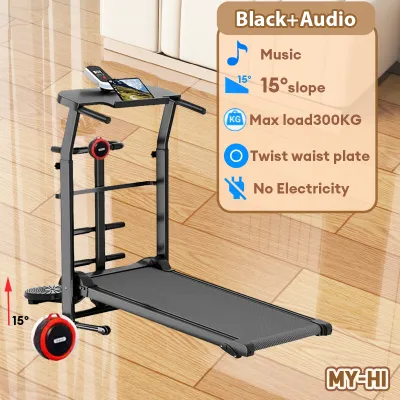
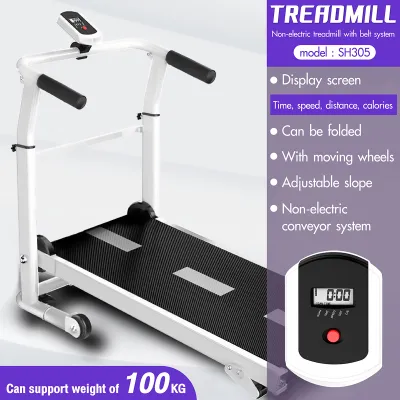
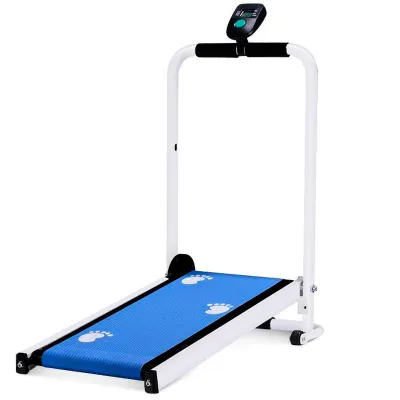
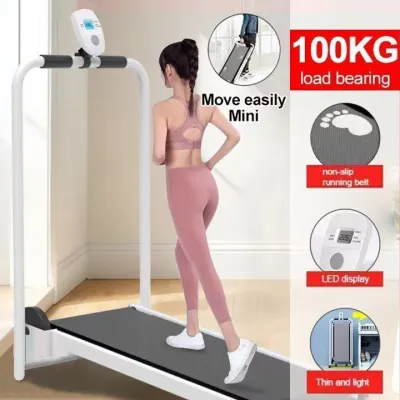

Prices are valid at publication and may change. Please refer to the product page for the latest price.
It is crucial to distinguish between the static footprint of the machine and the dynamic space required during a workout. While a manual treadmill might physically occupy a small corner, your body needs room to move safely without striking nearby walls or furniture. When you run or walk, your arms swing outward, and your body shifts slightly from side to side, requiring more lateral space than the frame itself.
Safety clearances are non-negotiable, especially for manual treadmills where your own physical effort drives the belt. You should maintain a clear zone of at least 1.5 meters behind the deck to prevent injury in case of a slip or fall. If you lose your balance, a clear space behind the machine ensures you can safely exit the deck without colliding with a wall, bed frame, or glass window.
Side clearances are equally important for daily usability and safety. Leave at least 0.5 meters of open space on both sides of the treadmill so you can easily mount and dismount the equipment without squeezing against a wall or a bed frame. This side clearance also allows you to perform routine maintenance, such as lubricating the belt or adjusting the tension bolts, without having to drag the machine out of its corner.
In a typical compact bedroom layout, you must account for existing furniture and daily traffic paths. Measure the swing radius of closet doors, bedroom entryways, and cabinet drawers to ensure they can open fully without hitting the treadmill frame. If a door strikes the treadmill, it can cause cosmetic damage to your furniture or restrict access to your belongings.
Consider the path you take to walk through the room. If the treadmill forces you to shimmy sideways past your bed or blocks the path to the bathroom, the layout is unsustainable and may lead to daily frustration or stubbed toes. Ensure that the primary walkways remain completely unobstructed, allowing for a natural flow of movement throughout the day.
Standard Dimensions and Footprints of Manual Treadmills
Manual treadmills generally fall into three design categories, each with distinct spatial requirements. Understanding these categories helps you narrow down which type aligns with your fitness goals and room layout. The right choice depends on whether you prioritize a minimal footprint, easy storage, or a more intense running experience.

Compact flat manual treadmills, often designed for walking or light jogging, have the smallest footprint. These models typically measure around 110 to 120 centimeters in length and 55 to 60 centimeters in width, making them highly suitable for tight spaces. They are lightweight and easy to position, making them an excellent entry-level option for casual home workouts.
Under-desk manual treadmills are similar in length but lack tall handrails or consoles, allowing them to slide under elevated furniture when not in use. However, their lack of support structures means they are best suited for walking rather than high-intensity running. If you choose an under-desk model, ensure you have a stable surface nearby to hold onto if you lose your balance.
Standard upright or curved manual treadmills are much larger, often exceeding 150 centimeters in length and 75 centimeters in width. These models provide a more robust frame and a curved running surface, but they require a dedicated, permanent spot in your room. They are designed for serious runners who need a sturdy platform that can withstand high-impact workouts.
Your physical height and stride length directly dictate the minimum belt size you can safely use. A belt that is too short will force you to take unnaturally small steps, which can alter your gait and increase the risk of tripping. Conversely, a belt that is too narrow can make you feel restricted and unstable during your workout.
For walking, a belt length of at least 100 centimeters is generally sufficient for average-height users. If you plan to jog or run, you will need a belt length of at least 120 to 130 centimeters to accommodate your expanded stride. Always check the running deck dimensions, not just the overall frame dimensions, to ensure the belt is long enough for your height.
Always verify the manufacturer’s fully assembled dimensions against the shipping box dimensions before purchasing. High-rise condo buildings often have narrow hallways, tight elevator doors, and sharp stairwell turns that can make transporting a large, unboxed frame incredibly difficult. Knowing the box dimensions beforehand helps you plan the delivery route and avoid delivery day headaches.
Evaluating Folding and Storage Options for Tight Spaces
Folding manual treadmills are highly popular for small apartments because they allow you to reclaim floor space when your workout is finished. However, the practicality of a folding model depends heavily on how easily you can operate the mechanism. If the folding process is too difficult, you may end up leaving the machine unfolded permanently.
Some folding designs use manual pin locks, while others feature hydraulic assist systems that reduce the physical lifting required. If the folding process is too strenuous or complicated, you may find yourself leaving the treadmill unfolded permanently, defeating the purpose of the feature. Look for models with user-friendly locking mechanisms that feel secure when upright.
Consider the weight of the machine and the quality of its transport wheels. A manual treadmill can weigh anywhere from 20 to over 50 kilograms; moving this weight across a bedroom floor requires adequate physical strength and smooth-rolling wheels. If you plan to move the machine daily, a lighter model with multi-directional wheels is highly recommended.
Test or verify how the wheels perform on your specific flooring. Small, plastic wheels can scratch delicate wood laminates or get stuck on thick rugs, making it difficult to roll the machine into a closet or under a bed frame. Rubber-coated wheels are generally gentler on floors and provide smoother mobility across different surfaces.
When storing a treadmill vertically, you must check your bedroom’s ceiling height and wall clearances. A vertically folded treadmill can stand over 150 centimeters tall, which might interfere with low-hanging light fixtures, ceiling fans, or wall-mounted air conditioning units. Measure the vertical height of the folded machine to ensure it fits comfortably under your ceiling.
Ensure the folded machine is highly stable and cannot be easily tipped over by pets, children, or accidental bumps. Many manufacturers provide safety straps or wall anchors to secure vertically stored equipment, which is a vital consideration for high-traffic rooms. Never store a heavy treadmill vertically if it feels unstable or top-heavy.
Safety, Floor Load, and Layout Checks Before Buying
Before placing a heavy piece of fitness equipment in a multi-unit residential building, you must evaluate the structural and environmental impact on your living space. This ensures your home gym setup remains safe, quiet, and durable. Taking these precautions helps prevent property damage and maintains a peaceful relationship with your neighbors.
While manual treadmills are generally lighter than motorized ones, their concentrated weight can still stress certain flooring materials. Placing a dense, high-quality rubber equipment mat under the machine helps distribute the weight evenly and prevents indentations on vinyl, laminate, or hardwood floors. The mat also prevents the treadmill from sliding during intense workouts.
Noise and vibration transfer are common sources of tension between condo neighbors. Because manual treadmills require you to push off the belt with your feet, the impact noise can easily travel through the floor slab to the unit below. This is especially true during running or high-intensity interval training.
To minimize this disturbance, choose a thick, shock-absorbing mat specifically designed for fitness equipment. Placing the treadmill away from shared structural columns or thin partition walls can also help dampen the acoustic transmission. Exercising during reasonable daytime hours is another simple way to respect your neighbors’ peace.
Proper room ventilation is essential for comfortable indoor workouts, especially in warm, humid tropical climates. Position your treadmill in an area with good airflow, such as near an open window or within the path of an electric fan, to help regulate your body temperature. Good ventilation also helps dry out sweat quickly, preventing moisture buildup on the machine.
Avoid placing the treadmill in direct sunlight or directly underneath an air conditioning unit. Prolonged exposure to intense sunlight can degrade plastic components and dry out the running belt, while condensation from an air conditioner can drip onto the frame and cause rust. Choose a dry, shaded spot that keeps your equipment protected from environmental wear.
Frequently Asked Questions (FAQ)
Can I use a manual treadmill on a carpeted bedroom floor?
Placing a manual treadmill directly on a carpeted floor is generally not recommended. High-pile carpets can compromise the stability of the machine, causing it to wobble during use, and can also block ventilation or get pinched in the moving belt. Additionally, carpet fibers and dust can easily migrate into the treadmill’s rollers and belt mechanism, increasing friction and wear. To use a treadmill on carpet safely, place a rigid, non-slip equipment mat over the carpet to create a level, protective barrier.
Do manual treadmills require electrical outlets or special wiring?
Purely manual, non-motorized treadmills do not require an electrical outlet or any special wiring to operate. The movement of the running belt is powered entirely by your own physical effort as you walk or run. However, some manual models feature small, battery-operated digital consoles to track your speed, distance, and time. Because they do not need to be plugged into a wall, you have complete freedom to position the treadmill anywhere in your bedroom without worrying about cord safety or outlet proximity.
Community discussion
Share your experience or ask a question. Comments are reviewed before publication.