
Quick Answer: How to Match Net Size to Space and Age
Choosing the right soccer net requires balancing player age with the physical limits of your playing area. Your primary rule of thumb is to match the net’s width and height to the player’s age group first, then verify that your physical space can safely accommodate those dimensions.
Standard soccer net sizes scale progressively to match player development. For toddlers, a compact 6×4 feet net is ideal. Intermediate youth players transition to 12×6 feet or 18.5×6.5 feet goals, while teens and adults require standard regulation nets measuring 24×8 feet to simulate competitive match conditions.
However, choosing a net based solely on front-facing width and height is a common mistake. You must also account for the net’s ground depth—the footprint it occupies from front to back—along with a safe run-off zone behind and around the frame. Without this extra clearance, players risk colliding with obstacles, and stray shots can easily cause property damage.
Products mentioned in this guide
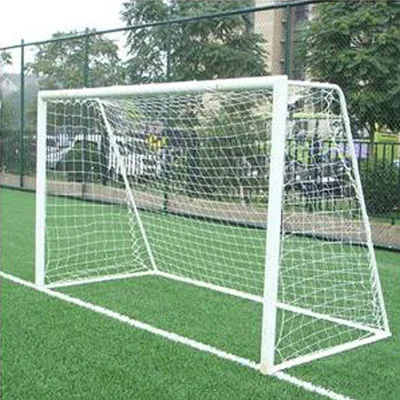
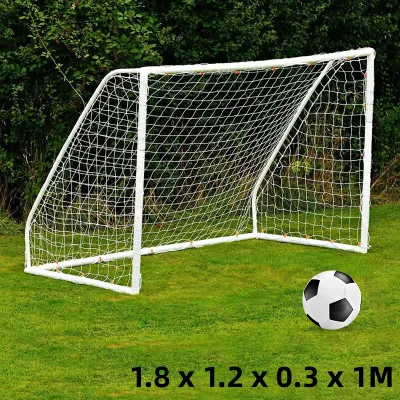
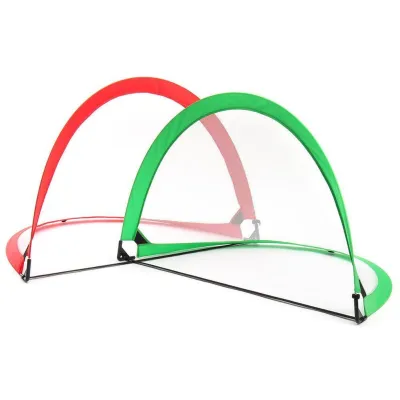
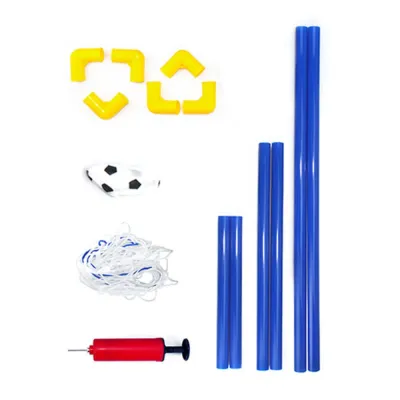
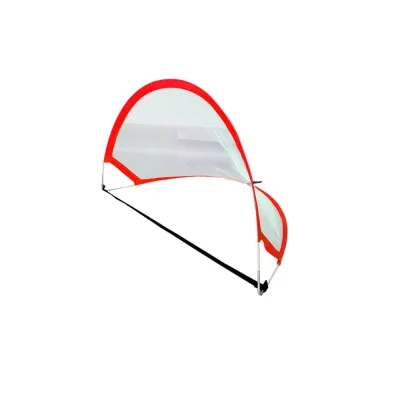
Prices are valid at publication and may change. Please refer to the product page for the latest price.
Recommended Soccer Net Sizes by Player Age
Youth and Junior Players (Under 8 to Under 12)
During early player development, matching the goal size to a child’s physical proportions is critical for building confidence and technical skill. For children in the Under-6 (U6) and Under-8 (U8) age brackets, a 6×4 feet net provides an approachable target. This size allows young players to focus on basic passing and shooting mechanics without being overwhelmed by a massive goalmouth.

As players transition to the Under-10 (U10) and Under-12 (U12) divisions, their physical strength and running speed increase. For these intermediate stages, goals measuring 12×6 feet or 18.5×6.5 feet are standard. These dimensions offer a realistic challenge for developing goalkeepers while encouraging outfield players to practice precise placement rather than relying solely on raw power.
Using scaled-down nets is not just about mimicking league rules; it directly impacts skill development. A net that is too large forces young goalkeepers to overreach, which can lead to shoulder or muscle strain. It also discourages outfield players from aiming for the corners, as almost any high shot will sail over a small goalkeeper’s head. Smaller goals keep the game competitive, realistic, and physically safe.
Knowing when to transition to a larger net depends on both age and observable skill levels. If your child is consistently outgrowing the physical challenge of their current goal, or if their local league is moving them up to a larger pitch format, it is time to upgrade. Transitioning too early can frustrate a developing player, while waiting too long can stunt their tactical awareness of space and positioning.
Teens and Adult Players (Under 14 and Above)
When players reach the Under-14 (U14) level, they begin training on full-sized pitches with larger goals. The transition size for U14 players typically involves a 21×7 feet net, which serves as a stepping stone before they reach full adult regulation dimensions. For high school players, college athletes, and adult recreational leagues, a standard 24×8 feet net is the official benchmark.
A full-size 24×8 feet net is necessary if you are preparing for competitive matches, high school tournaments, or adult club play. Training on a regulation-sized goal helps players develop accurate spatial awareness, teaches goalkeepers how to position themselves relative to the posts, and allows strikers to practice realistic shooting angles.
However, full-size nets come with logistical challenges that you must consider before purchasing. Because of their immense size, these frames require significantly more physical strength, tools, and time to assemble, move, or store. This operational reality should heavily influence your choice of frame material, as a heavy steel 24×8 feet net is virtually impossible for a single person to relocate without wheels or mechanical assistance.
How to Choose a Net Size for Your Available Space
Backyards and Small Gardens
In residential areas, particularly within typical subdivisions or urban neighborhoods in the Philippines, backyard space is often at a premium. If you are setting up a training area in a compact garden, smaller net sizes like 6×4 feet or 8×6 feet are highly recommended. These compact footprints fit comfortably within limited grass patches without dominating the entire outdoor living area.
Before purchasing any net, you must carefully measure the available clearance in your yard. Take a tape measure and map out the exact spot where the net will stand, ensuring there is ample distance from glass windows, perimeter fences, concrete walls, and fragile ornamental plants. A powerful shot can easily push a flexible net backward, causing the frame or the ball to strike and damage nearby property.
Managing ball retrieval is another major challenge in confined residential spaces. To prevent the ball from constantly flying into your neighbor’s yard, consider pairing your soccer net with a built-in ball catcher, a high-density target sheet, or a secondary backstop net. These accessories help absorb the impact of missed shots, keeping the ball within your property boundaries and maintaining peace with neighbors.
Driveways, Courts, and Indoor Spaces
Hard-surface environments, such as concrete driveways, asphalt parking areas, or indoor multi-purpose courts (like local barangay covered courts), present unique setup challenges. Because you cannot drive metal pegs into these hard surfaces, standard ground-anchored nets are impractical. For these venues, you should look for free-standing pop-up, foldable, or weighted rebound nets that maintain their structure without ground penetration.
If you plan to use a soccer net inside a garage, gym, or covered court, you must check the vertical clearance of the space. High-arcing shots or even the height of the net itself can interfere with low-hanging ceiling beams, light fixtures, utility pipes, or ceiling fans. Always verify the height of the ceiling against the maximum height of the net frame before assembling it indoors.
Additionally, you must protect the playing surface from damage caused by the net’s frame. Metal or rough plastic bases can easily scratch polished indoor court floors, scuff concrete, or wear down asphalt. To prevent this, choose a net with rubberized non-slip feet, or place protective foam tiles or heavy rubber mats underneath the frame’s contact points.
Open Fields and Full-Size Pitches
If you have access to an open grass field, a local park, or a dedicated sports complex, your options expand significantly. These spacious venues can easily accommodate full-size 24×8 feet nets or multiple smaller nets set up simultaneously for specialized training drills.
In wide-open spaces, proper anchoring is your primary safety concern. Open fields are highly exposed to environmental factors, including strong winds, sudden tropical gusts, and heavy monsoon downpours. To prevent a large net from turning into a sail and blowing over, you must secure the frame using heavy-duty metal U-pegs on grass, or utilize heavy, industrial-grade sandbags on synthetic turf pitches.
Safety planning in open areas also requires establishing a generous run-off zone around the net. You should ensure there is adequate clear space behind and beside the goal frame. This zone allows players to decelerate safely after a high-speed sprint, gives goalkeepers room to dive without hitting obstacles, and ensures that ball recovery can be done safely without stepping into drainage ditches or traffic.
Portable vs. Permanent Nets: Which Fits Your Space?
Deciding between a portable and a permanent soccer net depends on how you use your space, your storage capabilities, and the local climate. Portable or foldable nets are lightweight, highly mobile, and designed for quick setup and teardown. They are the ideal choice for multi-use spaces like shared driveways, public parks, or backyards that serve multiple family purposes. However, their lightweight construction makes them less stable in high winds, and ultra-light plastic or thin fiberglass frames can bend or crack under the impact of powerful adult shots.
Permanent or heavy-duty semi-permanent nets, on the other hand, offer the rigid stability and authentic rebound feel of a professional match goal. These nets are designed to stay in one place, making them perfect for dedicated home pitches, school fields, or private sports clubs. The clear trade-offs are their high weight, lack of mobility, and the requirement of a dedicated, permanent footprint on your property.
The frame material is a critical factor in determining both durability and ease of use. PVC frames are highly affordable and lightweight, making them easy to move, but they can become brittle over time when exposed to intense tropical sunlight. Fiberglass frames offer excellent flexibility and wind resistance, bowing slightly under impact rather than breaking. Steel and aluminum frames represent the premium tier; they are incredibly durable and stable, but you must ensure they are powder-coated or galvanized to resist the high humidity and heavy rainfall common in tropical environments.
In tropical regions like the Philippines, weather-conscious storage is essential for extending the lifespan of your soccer equipment. During heavy monsoon seasons, typhoons, or periods of prolonged rain, portable nets should always be dismantled and stored indoors. Leaving nets exposed to constant moisture and high UV rays leads to rapid material degradation, causing the netting fibers to rot and the frame joints to weaken. Storing your gear in a dry, well-ventilated space when not in use prevents mold growth and ensures the net remains safe for play.
Common Sizing Mistakes and Safety Boundaries
One of the most frequent errors buyers make is measuring only the width and height of the goal while completely ignoring the net’s depth. The depth refers to how far the frame and the net drape backward along the ground. A net that is 12 feet wide might require 4 to 5 feet of ground depth to stand stably. If you fail to account for this depth, you may find that the net extends into flowerbeds, walkways, or structural walls, making it impossible to set up correctly.
Another critical mistake is positioning the net too close to a physical boundary, such as a concrete wall, a metal fence, or a row of trees. This leaves zero run-off zone for active play. Goalkeepers diving to make a save or strikers chasing a loose ball need space to slow down safely. Placing a goal directly against a hard boundary dramatically increases the risk of severe impact injuries.
Unanchored soccer nets pose a severe, life-threatening safety hazard. Large metal or heavy PVC frames can easily tip over if a player climbs on the crossbar, or if a strong gust of wind catches the netting. You must mandate the use of heavy-duty ground anchors, spiral pegs, or weighted sandbags every single time the net is in use, regardless of how calm the weather appears. Never allow children to hang or swing from the crossbar under any circumstances.
Finally, before you purchase or install a large, permanent, or highly visible semi-permanent soccer net in a residential area, check your local homeowner or village association guidelines. Many subdivisions in the Philippines have strict covenants regarding visible structures, property line setbacks, and the use of shared community spaces. Verifying these rules beforehand prevents costly disputes and ensures your home training setup remains compliant with community standards.
Frequently Asked Questions (FAQ)
Can I use a full-size soccer net in a small backyard?
While you might physically fit a 24×8 feet net into a narrow yard, doing so is highly discouraged. Large nets require substantial ground depth and a wide safety run-off zone that small yards cannot accommodate. Without this buffer, the risk of shattering windows, damaging fences, and injuring players or goalkeepers who collide with nearby structures is exceptionally high.
How much extra space do I need behind the soccer net?
For casual backyard play and simple drills, you should maintain a minimum clearance of 3 to 5 feet behind the net to allow for safe ball retrieval and basic goalkeeper movement. For competitive matches, team training, or high-intensity play, a deceleration and run-off zone of at least 10 to 15 feet is highly recommended to prevent injuries.
What is the best soccer net size for a 10-year-old?
For a 10-year-old player (typically in the U10 or U11 age bracket), a net measuring 12×6 feet or 18.5×6.5 feet is the ideal size. These intermediate dimensions match their physical height and shooting power perfectly, encouraging accurate shot placement while allowing young goalkeepers a fair chance to develop proper positioning and diving techniques.
Community discussion
Share your experience or ask a question. Comments are reviewed before publication.