
Finding the right floor protection for high-impact home workouts involves a delicate balance between joint safety, rope clearance, and keeping the peace with your downstairs neighbors. For jumping rope, you need a high-density soundproof mat that is 6mm to 10mm thick to maintain stability and prevent tripping. For high-intensity interval training (HIIT) involving multi-directional jumps and heavy landings, a thicker 12mm to 20mm dual-layer or composite mat is ideal to absorb explosive forces and protect your joints.
In the high-density residential developments of Metro Manila and other urban centers across the Philippines, concrete floor slabs readily transmit the low-frequency vibrations of a jumping workout. Selecting the correct mat thickness and material density is the most effective way to isolate this impact noise while maintaining a safe, stable surface for your training.
Why Thickness and Density Matter for High-Impact Workouts
When evaluating fitness mats, many fitness enthusiasts mistakenly assume that thicker always means quieter and safer. In reality, soundproofing and shock absorption are governed by two distinct physical properties: thickness and material density. Understanding how these forces interact is key to selecting a surface that protects both your body and your living space.
Products mentioned in this guide
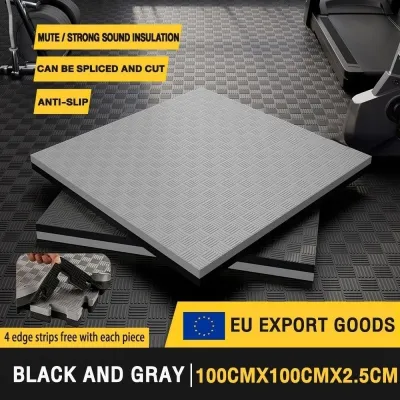
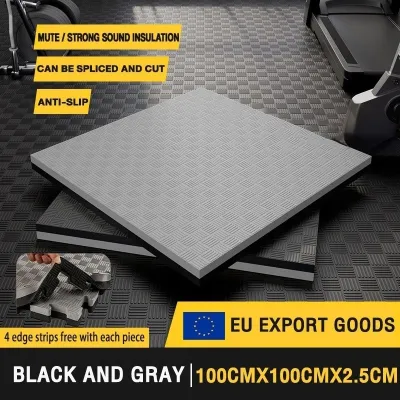
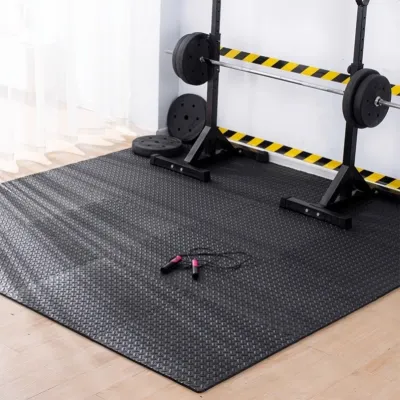
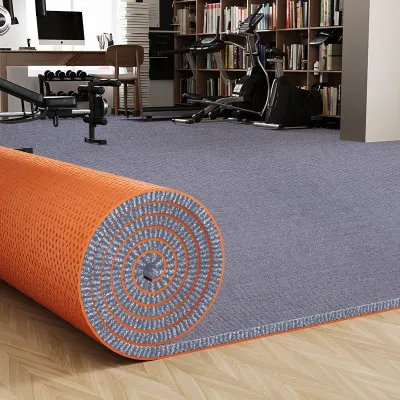
Prices are valid at publication and may change. Please refer to the product page for the latest price.
Soundproofing focuses on isolating structure-borne noise. When your feet strike the floor during a jump, kinetic energy travels directly into the building’s structure as low-frequency vibrations, which downstairs neighbors hear as loud, repetitive thuds. To block these vibrations, you need high-density materials that possess enough mass to decouple the impact energy before it enters the concrete slab. Thin, dense materials are far more effective at sound isolation than thick, airy foams that compress completely under load.
Shock absorption, on the other hand, is the mat’s ability to cushion your joints from the hard subfloor. While a softer, thicker mat provides immediate comfort, it introduces significant risks for high-impact training. If a mat is too thick or lacks sufficient density, your feet will sink into the material. This deformation destabilizes your ankles and knees, forcing your stabilizing muscles to overcompensate. Over time, this instability can lead to acute ankle sprains, tendonitis, or balance loss during rapid footwork.
Furthermore, tropical climates present unique challenges for home gym setups. In high-humidity environments, low-density open-cell foam mats act like sponges, absorbing sweat, ambient moisture, and dust. This not only causes the material to degrade rapidly but also creates a breeding ground for bacteria and mold underneath the mat. High-density, closed-cell materials or vulcanized rubber are essential to prevent moisture absorption and maintain structural integrity over years of use.
Ideal Mat Thickness for Jumping Rope vs. HIIT
Your choice of mat thickness should be directly dictated by the biomechanics of your specific workout. Jumping rope and HIIT routines place vastly different demands on your feet, joints, and equipment.

Jumping Rope: Prioritizing Stability and Ground Feedback
For a successful jump rope session, you need a firm, responsive surface that provides immediate ground feedback. A mat thickness of 6mm to 10mm made from solid vulcanized rubber or ultra-high-density EVA foam is the optimal range for this activity.
When jumping rope, your feet should only clear the floor by an inch or two, utilizing a rapid, repetitive rebound motion. An overly thick or soft mat absorbs too much of your downward energy, forcing your calves and arches to work twice as hard to push off for the next jump. This energy loss quickly leads to premature muscle fatigue and increases the risk of developing painful shin splints.
Additionally, a soft mat causes the jump rope cable to behave unpredictably. As the rope whips downward, it can dig into a soft foam surface, causing the cable to bounce, snag, or lose its tension, which disrupts your rhythm and causes tripping. A dense 6mm to 10mm rubber mat provides a smooth, resilient surface that allows the rope to graze the top without catching, while still dampening the high-frequency “slap” of the cable and protecting your floor from wear.
- Safety Check: Before starting any high-repetition jump rope routine, verify that your ankles feel stable on the mat. If you experience localized pain along your shinbones or the arches of your feet, immediately stop your workout. Equipment cannot replace proper landing mechanics; always land softly on the balls of your feet with slightly bent knees.
HIIT Workouts: Maximizing Shock Absorption and Noise Control
HIIT routines demand a highly versatile surface capable of handling multi-directional movements, lateral bounds, and heavy, explosive landings. For these workouts, a thicker 12mm to 20mm dual-layer or composite mat is highly recommended.
Unlike the vertical, low-amplitude hops of jumping rope, HIIT exercises like burpees, jumping lunges, tuck jumps, and box jump step-downs generate massive peak impact forces. A thicker mat with a progressive compression zone is necessary to decelerate these heavy landings safely, reducing the peak stress transmitted to your knees, hips, and lower back.
To handle these forces without sacrificing stability, look for composite mats that feature a dual-layer design. These mats utilize a highly dense, rigid bottom layer to prevent the mat from bottoming out against the concrete, topped with a slightly softer, textured upper layer that provides joint cushioning and traction.
Size and structural continuity are also critical for HIIT. Because you are moving dynamically in multiple directions, smaller individual mats or cheap puzzle tiles can easily slide apart or split at the seams. This separation creates dangerous tripping hazards mid-interval. Opt for a single, large solid mat (at least 6 feet by 4 feet) or commercial-grade interlocking tiles that lock together with deep, tight-fitting teeth to ensure the surface remains unified during lateral movements.
Beyond Thickness: Key Features to Look for in a Fitness Mat
To ensure your soundproof mat performs safely under heavy use, you must look beyond the thickness number on the product listing. Evaluate these critical material and design specifications before making your purchase:
- Material Composition: High-density vulcanized rubber is the gold standard for soundproofing, durability, and floor protection. It is heavy, highly resistant to tearing, and does not compress permanently over time. Standard EVA foam is lightweight and budget-friendly, but it compresses easily under body weight and loses its shock-absorbing properties within a few months of regular high-impact training.
- Surface Texture: Sweating is inevitable during intense workouts, especially in warm, humid climates. Ensure the mat features a non-slip, textured pattern on both the top and bottom surfaces. A textured top grip prevents your hands and feet from sliding during planks or mountain climbers, while a high-traction bottom pattern prevents the entire mat from shifting across smooth tile or polished wood floors.
- Design Format: Rolled mats offer a seamless, uniform surface that is highly durable and ideal for continuous jump rope sessions because there are no seams to catch the rope or split apart. Interlocking puzzle tiles offer excellent customizability for awkward spaces and are easy to disassemble and store, but they require high-precision edges to prevent the seams from lifting over time.
- Safety Edges: If you choose a thick mat (12mm to 20mm), look for models featuring beveled (sloped) outer edges. A sudden, vertical transition from a thick mat to a bare floor is a common tripping hazard when stepping on and off the workout area during fast-paced circuits.
Always check the manufacturer’s technical specifications for density ratings (often listed in kilograms per cubic meter or Shore A hardness) rather than relying on vague marketing terms like “extra cushion” or “cloud-like comfort.” A quality fitness mat should feel firm to the touch, requiring significant hand pressure to compress.
Quick Comparison: Mat Materials for High-Impact Training
No single material is perfect for every home workout scenario. Use this comparison table to evaluate the trade-offs of common mat materials based on your primary training focus and living situation.
| Material Type | Typical Thickness Range | Best Suited For | Noise Reduction Level | Stability & Joint Support |
|---|---|---|---|---|
| High-Density Vulcanized Rubber | 6mm to 10mm | Jump rope, heavy weightlifting, high-speed footwork | Excellent (dampens sharp impacts and rope slaps) | Outstanding stability; firm ground feedback with moderate joint cushion |
| EVA Foam Puzzle Mats | 10mm to 20mm | Low-budget setups, light bodyweight exercises, temporary spaces | Moderate (absorbs airborne noise but bottoms out under heavy impacts) | Soft joint support; poor stability for rapid lateral movements |
| Dual-Layer Composite Mats | 12mm to 20mm | Mixed HIIT, plyometrics, burpees, multi-directional training | Outstanding (combines mass density with a compression layer) | Balanced; excellent joint protection with a stable, non-slip top layer |
In the Philippine market, high-density rubber mats typically fall into a higher price band, ranging from ₱2,500 to ₱6,000+ depending on the size and thickness. While EVA foam puzzle tiles are highly accessible and budget-friendly (often costing under ₱1,000 for a set), they compress permanently under heavy use and will need frequent replacement if subjected to daily high-impact workouts.
Setting Up and Maintaining Your Home Gym Mat
Proper installation and regular maintenance are essential to maximize your mat’s lifespan, protect your subfloor, and ensure a safe training environment.
Installation and Placement When you first unbox a rolled rubber or composite mat, allow it to acclimate to your room’s temperature and humidity for 24 to 48 hours before unrolling it completely. This prevents the edges from curling upward during your first few workouts. If you are placing the mat on highly polished hardwood, laminate, or smooth ceramic tiles, use a thin, non-slip rug pad or double-sided mesh tape underneath the corners to prevent the mat from shifting during explosive lateral movements.
Subfloor Protection Before laying down your mat, ensure the underlying floor is completely clean, dry, and free of dust or grit. In humid tropical climates, any moisture trapped beneath a dense rubber or foam mat cannot evaporate. Over time, this trapped moisture can ruin wood laminates, warp parquet flooring, or cause mold and mildew to develop on the subfloor. Periodically lift the mat every few weeks to inspect the floor underneath and allow both surfaces to air out.
Cleaning and Maintenance Sweat contains oils and salts that can slowly degrade mat materials if left to sit. Wipe down your mat after every workout using a soft cloth and a mild, non-abrasive cleaning solution, such as a few drops of dish soap mixed with warm water. Avoid using harsh chemical bleach, highly concentrated alcohol, or abrasive scrubbing pads. These harsh agents can break down the synthetic binding glues in recycled rubber or dry out EVA foam, causing the material to crumble, crack, and void any manufacturer warranties.
Frequently Asked Questions (FAQ)
Will a soundproof mat completely eliminate noise for downstairs neighbors?
No mat can completely eliminate the low-frequency vibrations caused by heavy impact forces, such as a hard landing from a burpee or a tuck jump. While a high-density mat significantly reduces high-frequency sounds like the whip of a jump rope, some energy will still travel through the building’s concrete structure. To achieve the quietest possible workout, combine a high-density mat with proper landing mechanics, focusing on absorbing your own impact quietly by landing on the balls of your feet with bent knees.
Can I use a standard yoga mat for jumping rope and HIIT?
Standard yoga mats are entirely unsuitable for jumping rope and HIIT workouts. Typically measuring only 3mm to 5mm in thickness and made from low-density materials like PVC or TPE, yoga mats are designed to provide traction for static, low-impact poses. They lack the density and volume required to absorb high-impact shock or block structural noise, meaning they will bottom out instantly under a jump, offering zero protection for your joints or your floors.
How do I prevent my interlocking mats from sliding during burpees?
To secure interlocking puzzle mats on smooth flooring, place a thin, high-grip rubberized rug pad underneath the entire tiled area. Alternatively, you can apply heavy-duty double-sided carpet tape along the outer perimeter of the underside of the tiles. If the tiles continue to shift or separate during explosive lateral movements, it is a sign that the material lacks the weight and interlocking depth required for high-impact training, and you should consider upgrading to a single, solid rolled rubber mat.
Community discussion
Share your experience or ask a question. Comments are reviewed before publication.