
When selecting a 10 kg kettlebell, you are choosing a highly versatile tool for your home strength workouts. However, not all kettlebells are manufactured equally. A poor design can lead to hand discomfort, unstable floor exercises, or premature rusting in humid tropical climates. To find a model that supports your fitness goals safely, you must evaluate specific physical characteristics including handle design, base stability, material construction, and weight accuracy before making your purchase.
Handle Design and Grip Texture
The handle is your primary point of contact with the kettlebell, making its design critical for both safety and comfort during high-repetition movements like swings, cleans, and snatches. When inspecting a 10 kg kettlebell, check the handle clearance and diameter. The window space inside the handle must be wide enough to accommodate both of your hands comfortably for two-handed swings without pinching your fingers, yet compact enough that a single-hand grip does not slide excessively. For most general fitness users, a handle diameter between 30 mm and 35 mm offers a secure hold without overtaxing your forearm grip strength.
Surface texture plays a vital role in how the kettlebell interacts with sweat and gym chalk. In warm, humid environments, bare cast iron or smooth painted enamel can become incredibly slippery when wet, increasing the risk of losing your grip mid-swing. Look for a powder-coated finish, which provides a slightly textured surface that holds chalk well and offers a reliable grip even when your hands are sweaty. Conversely, avoid excessively rough finishes that can act like sandpaper on your palms.
Products mentioned in this guide
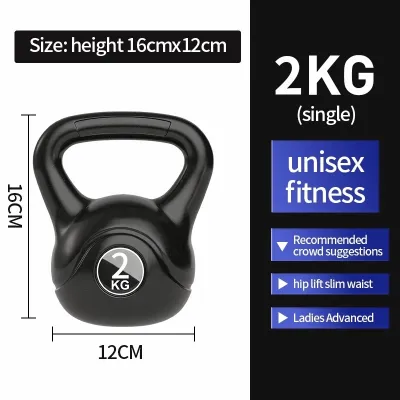
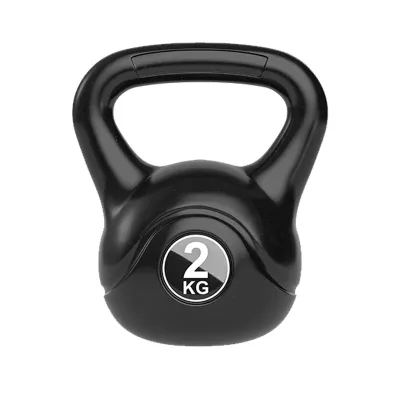
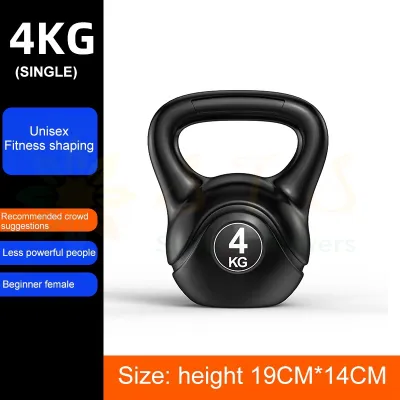
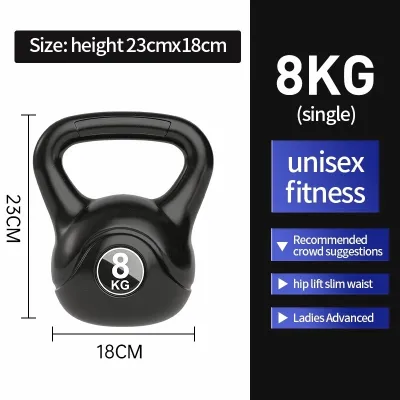
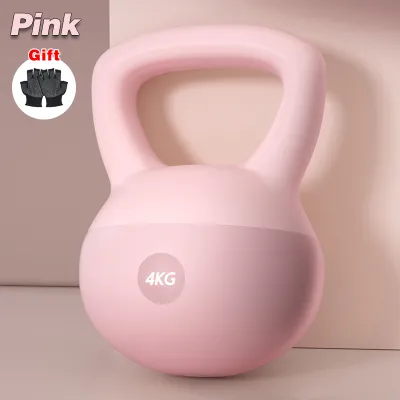
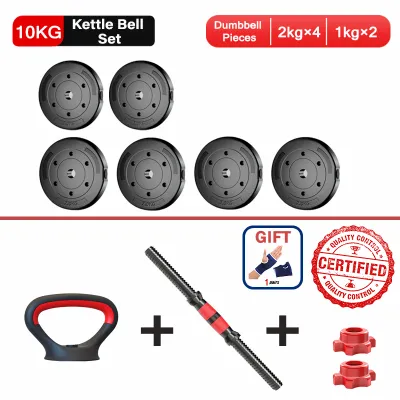
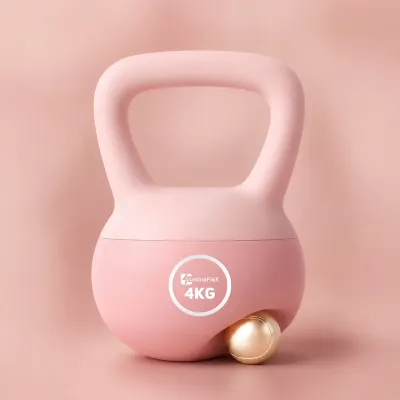
Prices are valid at publication and may change. Please refer to the product page for the latest price.
You should also inspect the underside of the handle for manufacturing seams. Many budget-friendly kettlebells are cast in two-part molds, leaving a raised ridge of metal along the inner curve of the handle. If this seam is not ground down completely smooth during manufacturing, it can quickly tear your skin and cause painful blisters during dynamic, high-friction exercises. Run your fingers along the entire handle to verify it is perfectly smooth before buying.
Base Flatness and Stability
A stable, flat base is essential for expanding the variety of exercises you can perform safely. Many functional fitness routines incorporate floor-based movements such as renegade rows, push-ups on the bell, or weighted planks. If the bottom of the kettlebell is uneven, rounded, or has excess casting metal protruding from the base, the bell can wobble or tip over under your body weight, potentially straining your wrists or causing an injury.

When shopping, place the kettlebell on a flat, hard surface and try to rock it gently. A high-quality kettlebell will remain firmly planted without wobbling. The base diameter should be proportional to the overall size; a wider base lowers the center of gravity, making the bell less likely to tip over during dynamic transitions or when resting on rubber gym mats.
For home workouts, consider how the base interacts with your flooring. Some kettlebells feature a protective rubber or silicone boot on the bottom, while others are fully encased in vinyl. These protective layers help cushion the impact when setting the weight down, reducing the risk of cracking ceramic tiles or scratching wooden floors. If you choose a bare metal kettlebell, ensure you have a dedicated rubber mat or protective flooring tiles to safeguard your living space.
Material and Construction Quality
The durability of your kettlebell depends heavily on its material composition. The gold standard is a single-cast solid iron or steel kettlebell, where the handle and the bell are molded together as a single piece. This construction eliminates weak points, ensuring the handle will never separate from the body. In contrast, multi-part models with welded handles or plastic shells filled with sand are far more prone to cracking or leaking over time.
Before purchasing, perform a visual and physical inspection of the kettlebell’s surface. Look for casting defects such as pits, air bubbles, or uneven patches, which can indicate poor manufacturing quality and potential structural weak points. If you are looking at adjustable models, check the locking mechanisms and internal plates to ensure there is no rattling or loose parts that could shift your balance mid-exercise.
The exterior coating is your primary defense against corrosion, which is a major concern in humid tropical climates. Enamel coatings look shiny but can chip easily when bumped against other weights, exposing the raw iron underneath to moisture and rust. Vinyl coatings protect floors but can trap moisture underneath if they crack. A high-quality powder coating or a premium polyurethane finish offers excellent resistance to chipping, peeling, and rust, ensuring your investment lasts for years.
Weight Accuracy and Tolerance
While a kettlebell may have “10 kg” stamped on its side, the actual weight can vary depending on the manufacturer’s quality control standards. Standard fitness kettlebells typically have a weight tolerance of around 2% to 5%, meaning a 10 kg bell could actually weigh anywhere from 9.5 kg to 10.5 kg. For general conditioning, fat loss, and cardiovascular workouts, these minor discrepancies are negligible and will not impact your overall progress.
However, if you are training for specific strength milestones, standardized physical tests, or competition preparation, precision becomes much more important. Competition-grade kettlebells are manufactured to much stricter tolerances, often within 1% or less of the target weight. If precision is a priority for your training program, you can verify the actual weight of the kettlebell using a calibrated digital scale before incorporating it into your routine.
When evaluating options, remember that a slight variation in weight is acceptable for most home gym users, provided the physical dimensions and grip comfort meet your needs. Focus on finding a well-balanced bell where the weight is distributed evenly, rather than worrying about minor deviations from the nominal 10 kg mark.
Frequently Asked Questions (FAQ)
Is a 10 kg kettlebell heavy enough for building muscle?
Yes, a 10 kg kettlebell can be highly effective for building muscle, especially when used correctly. Muscle growth, or hypertrophy, depends on progressive overload, creating sufficient time under tension, and training close to muscular failure rather than just lifting the heaviest absolute weight. A 10 kg load is excellent for high-repetition ballistic movements like swings and snatches, which target your posterior chain, as well as isolation exercises like overhead presses, bicep curls, and goblet squats for beginners. As your strength increases, you can continue to stimulate muscle growth by increasing your repetitions, slowing down your movement tempo, or reducing rest times between sets.
What is the difference between a standard and a competition kettlebell?
The primary difference lies in their dimensions and design consistency. Standard cast-iron kettlebells change in physical size as they get heavier; a 10 kg standard bell is noticeably smaller than a 24 kg standard bell, and the handle sizes often vary. Competition kettlebells, on the other hand, maintain a uniform physical size, handle diameter, and shape regardless of their weight. This allows athletes to maintain identical lifting mechanics and hand placement as they progress to heavier loads. Additionally, competition bells are made of steel and color-coded to international standards, whereas standard bells are typically made of cast iron and come in various finishes and shapes.
Community discussion
Share your experience or ask a question. Comments are reviewed before publication.