
A complete fishing rod set should provide everything you need to go from unboxing to casting your first line. At its core, a full set includes a matched rod and reel, fishing line (often pre-spooled), and a selection of terminal tackle like hooks, sinkers, swivels, and basic lures. Many packages also include a storage bag or tackle box to keep these components organized. For beginners in the Philippines, verifying these items before heading out to local coastal spots or freshwater ponds ensures you do not end up stranded with missing gear.
Evaluating a starter kit requires looking beyond the sheer number of pieces advertised on the box. A high piece count often includes dozens of tiny plastic beads or duplicate hooks rather than the essential tools you actually need. By systematically checking the quality of the core hardware, understanding the printed specifications, and assessing the included accessories, you can confidently choose a setup that is ready for the water.
The Core Hardware: Verifying the Rod, Reel, and Line
Before taking your new gear to the water, inspect the rod blank for any hairline cracks, deep scratches, or splintering. This is especially important for lightweight fiberglass or carbon composite rods, which can fail under pressure if the structural integrity is compromised. Run your fingers along the guides to ensure they are firmly attached and perfectly aligned. Rough or cracked guide inserts can easily fray your line under tension, leading to lost fish and tackle.
Products mentioned in this guide
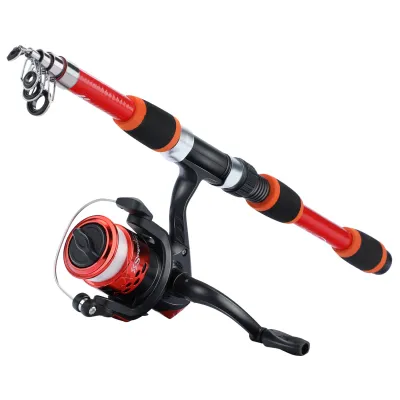
![[In Stock]Sougayilang Fishing Rod Set Full Set 1.8mTelescopic Fishing Rod and Spinning Fishing Reel and Fishing Accessories Fishing Rod Complete Set](https://img.lazcdn.com/g/p/e37753596223983276174dfaf93f2cb3.jpg_400x400q80.jpg_.webp)
![[COD]Fishing Rod and Reel Set Fishing Rod Set Full Set Fish rods 1.8m Telesscopic Fishing Rod Fishing Rod and Reel Combos](https://img.lazcdn.com/g/p/dd36fe77f96794e78e35359c533a3b87.jpg_400x400q80.jpg_.webp)
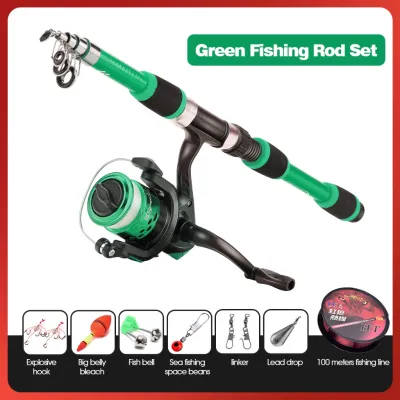
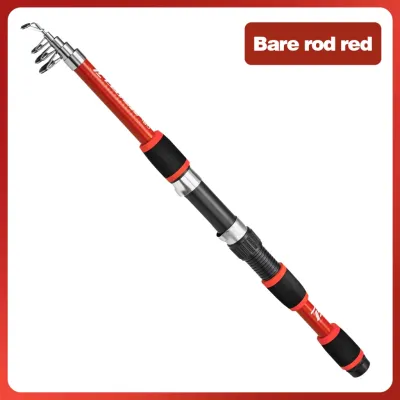
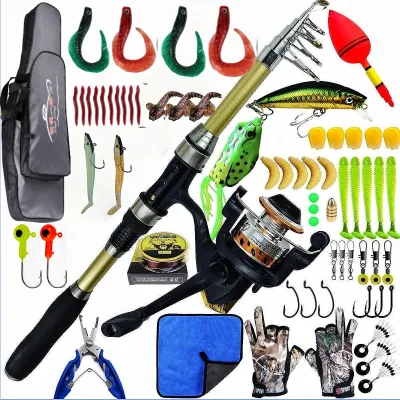
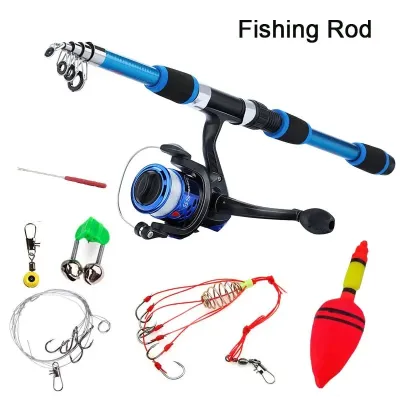
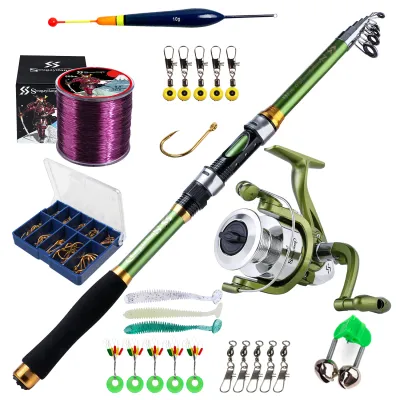
Prices are valid at publication and may change. Please refer to the product page for the latest price.
Most beginner sets feature a spinning reel, which is highly versatile and easy to operate in various environments. Ensure the reel foot fits securely into the rod’s reel seat and that the locking nut tightens down without slipping. Spin the handle to check for smooth rotation and verify that the bail arm clicks back and forth cleanly. If the reel feels gritty or stiff right out of the box, it may lack proper lubrication or suffer from internal alignment issues.
If the reel comes with line already wound onto the spool, inspect it for visible twists, kinks, or chalky discoloration. Monofilament line can degrade quickly when exposed to heat and sunlight during storage, making it brittle. Pull a few meters off the spool to check that it feels smooth and matches the line weight rating printed on the rod blank.
Decoding Rod and Reel Specifications for Beginners
Look at the printed labels near the handle of the rod to understand its power and action ratings. Power refers to the rod’s resistance to bending, ranging from ultra-light to heavy, while action describes where the rod bends. For general fishing in local estuaries or lakes, a medium-power, fast-action rod offers the best balance. This combination provides enough sensitivity to feel subtle bites and enough backbone to set the hook quickly.

Next, interpret the reel’s gear ratio, which is typically printed on the side of the reel body. A ratio like 5.2:1 means the spool spins 5.2 times for every single turn of the handle, offering a moderate retrieval speed that works well for most baits. Check the drag system by turning the drag knob on the front of the spool. It should adjust smoothly, allowing you to set a consistent resistance that prevents larger fish from snapping your line during a run.
To prevent equipment failure, the line weight must align with the ratings of both the rod and the reel. Using a line that is too heavy for a light rod can cause the rod blank to snap under a heavy load. Conversely, using a line that is too light makes it difficult to cast accurately and increases the risk of losing your tackle to underwater structures or strong currents.
Terminal Tackle and Accessories: Checking the Extras
A functional starter kit should include a variety of hook sizes, typically ranging from size 2 to size 8, to target different fish species. Look for split-shot sinkers or bullet weights that allow you to adjust your presentation based on water depth and current. Barrel swivels are also crucial because they prevent your line from twisting when using spinning lures or fishing in moving water.
Many full sets include soft plastic baits, spoons, or small hard lures. Inspect these items to ensure the hooks are sharp and the plastic bodies are supple. In tropical waters, bright or natural bait patterns tend to perform well, but if the included lures feel stiff or have rusted hooks, plan to replace them before your first trip.
Evaluate the included tackle box or utility bag for durability and organization. It should feature secure latches and adjustable compartments to keep small hooks and sinkers from mixing. A durable, water-resistant material is highly beneficial in humid environments to protect your metal tackle from premature rust.
Low-Impact Specs and Items You Can Upgrade Later
Manufacturers often highlight high ball-bearing counts as a sign of premium quality. However, for a beginner, a reel with three or four high-quality, well-sealed bearings will perform just as smoothly and reliably as a cheap reel stuffed with low-grade bearings. Focus on structural durability and smooth drag adjustment instead of chasing high numbers.
Do not worry if the set does not include high-end braided lines or specialized topwater lures. Basic monofilament line and standard live-bait hooks are more than enough to learn the basics of casting, knot tying, and fish handling. You can easily swap these out for advanced braided lines or specific lure types once you identify your favorite fishing style.
A complete fishing rod set should offer practical value, often costing under ₱2,500 for a reliable entry-level setup. Avoid paying extra for premium carbon fiber rods or high-speed reels if you are just starting out. A basic, well-matched set allows you to test the waters without a significant financial commitment.
Frequently Asked Questions (FAQ)
Is it better to buy a set with pre-spooled line or spool it myself?
Pre-spooled lines offer excellent convenience, allowing you to head straight to the water without learning how to spool a reel first. However, if the pre-spooled line feels stiff, has visible memory loops, or is too heavy for the rod’s rating, it is highly recommended to strip it off and spool it yourself with fresh monofilament line to ensure smooth casting.
Do I need a hard tackle box if the set includes a soft bag?
A soft bag is highly portable, lightweight, and easy to carry along rocky shorelines or crowded piers. However, if you plan to expand your collection with delicate hard lures, sharp treble hooks, or heavy sinkers, a hard tackle box provides better structural protection and prevents hooks from snagging the fabric of your bag.
Community discussion
Share your experience or ask a question. Comments are reviewed before publication.