
Starting out in angling can feel overwhelming due to the sheer volume of specialized gear. To choose the right beginner fishing rod set in the Philippines, you must prioritize versatility, durability against tropical elements, and ease of use. A well-balanced spinning rod and reel combination is generally the most reliable starting point, allowing you to learn basic casting techniques while remaining adaptable to both freshwater and light coastal environments.
Diagnose Your Primary Fishing Environment
Before looking at technical specifications, identify where you will spend most of your time on the water. The Philippines offers diverse aquatic landscapes, from inland freshwater lakes, rivers, and commercial fishponds (estanque) to vast saltwater coastlines, piers, and mangrove estuaries. Each of these environments demands different characteristics from your gear, and selecting the wrong setup can lead to broken lines or a severely corroded reel.
Freshwater fishing in locations like Laguna de Bay, Lake Taal, or local agricultural ponds typically targets species such as tilapia, dalag (mudfish), and hito (catfish). These environments generally require lighter, more sensitive setups because the fish are often smaller and the water is calmer. You do not need extreme casting distance or heavy-duty corrosion resistance to enjoy a successful day at a local freshwater fishpond.
Products mentioned in this guide
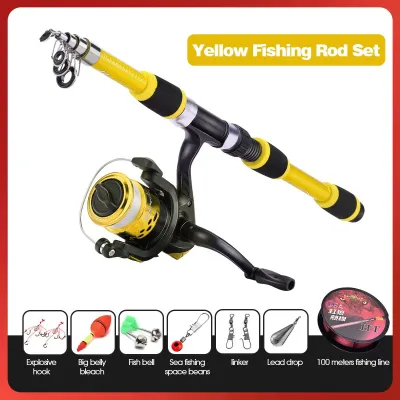
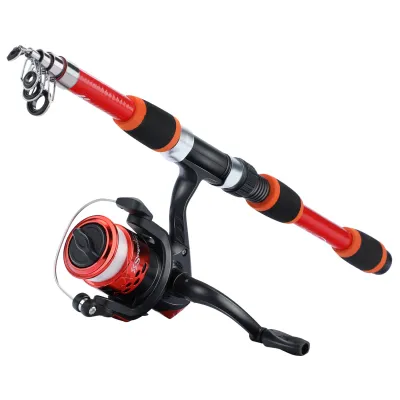
![[COD]Fishing Rod Set Full Set 1.8m 2 Sections Fishing Rod and Spinning Fishing Reel and Fishing Accessories Fishing Rod Complete Set](https://img.lazcdn.com/g/p/9b377f9568b20beb79e161e524425030.jpg_400x400q80.jpg_.webp)
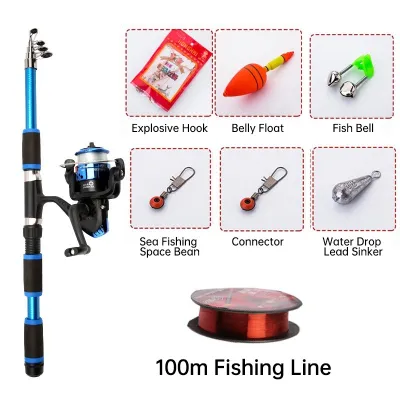
![[COD]Fishing Rod and Reel Set Fishing Rod Set Full Set Fish rods 1.8m Telesscopic Fishing Rod Fishing Rod and Reel Combos](https://img.lazcdn.com/g/p/dd36fe77f96794e78e35359c533a3b87.jpg_400x400q80.jpg_.webp)
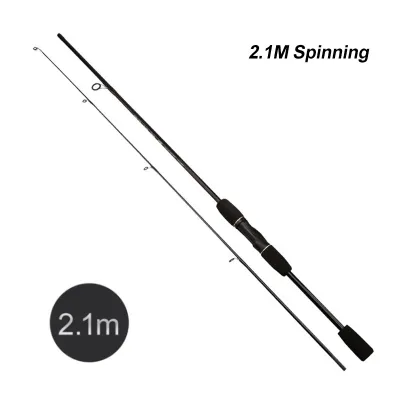
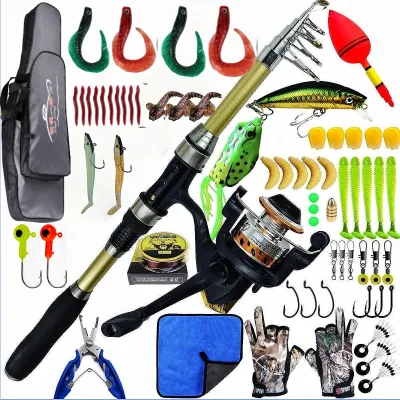
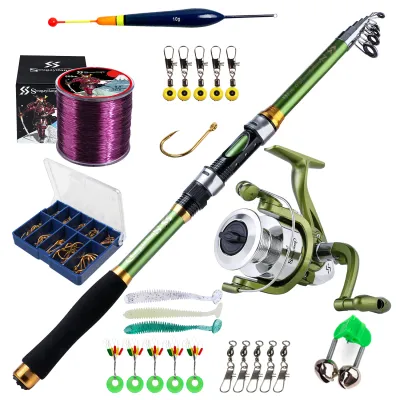
Prices are valid at publication and may change. Please refer to the product page for the latest price.
Conversely, saltwater fishing along coastal shores, rock walls, or concrete piers in provinces like Batangas, Zambales, or Cavite exposes your gear to highly corrosive salt spray and stronger currents. Here, you will likely target species like talakitok (trevally), mangagat (mangrove snapper), or small lapu-lapu (grouper). Saltwater environments require robust, corrosion-resistant materials and setups that can handle both the abrasive nature of saltwater and the sudden, powerful runs of marine fish.
Always prioritize safety before heading out. Check local weather forecasts, tide charts, and sea conditions before fishing along open coastlines or rocky shores. If waves are high or a storm is approaching, postpone your trip. Equipment cannot replace sound judgment and situational awareness.
To narrow down your choice, ask yourself a few diagnostic questions. Where is the closest accessible body of water where you plan to fish regularly? Will you be casting from a crowded pier, wading into sandy shallows, or sitting in a small boat? If you are undecided or want the freedom to explore both freshwater and light coastal saltwater, a versatile, medium-power setup is the safest and most practical starting point.
Verify the Essential Components of a Complete Set
When browsing retail stores or online marketplaces, you will find many packages labeled as a complete fishing rod set. However, the definition of “complete” varies wildly between manufacturers. It is crucial to verify exactly what is included in the box so you do not arrive at the water only to realize you are missing a critical piece of terminal tackle.

The Rod and Reel Combination
The core of any set is the rod and reel pairing. For beginners, setups generally fall into three categories: spincast, spinning, and baitcasting. Spincast reels feature a closed face and a push-button mechanism, which is highly user-friendly but offers limited casting distance and control. Baitcasting setups provide incredible accuracy and power but require advanced thumb-control techniques to prevent severe line tangles, making them frustrating for novices.
Spinning combos are overwhelmingly recommended as the gold standard for beginners. A spinning reel features an open-face design mounted underneath the rod, utilizing a folding metal bail arm to release the line. This configuration is highly versatile, easy to learn, and significantly less prone to tangles than a baitcasting reel. When evaluating a pre-packaged spinning set, always check the reel seat—the threaded mechanism that secures the reel to the rod. Ensure the reel mounts firmly with zero wobble, as any play in this connection will sap your casting accuracy and compromise your control over a hooked fish.
Line, Tackle, and Terminal Gear
A truly functional beginner set must provide more than just the rod and reel. Many entry-level sets come with pre-spooled fishing line already wound onto the reel spool. While convenient, factory-installed line on budget sets is often prone to “memory,” meaning it retains a coiled shape that causes tangles and reduces casting distance. Plan to inspect this line; if it feels stiff, wiry, or easily kinked, consider replacing it immediately with a fresh spool of quality monofilament line.
Beyond the line, verify that the set includes a selection of essential terminal tackle. This includes a variety of hooks (sized appropriately for small to medium fish), split-shot sinkers to weigh down your bait, and barrel swivels to prevent your line from twisting as your bait spins in the water. A few basic artificial lures, such as soft plastics or small metal spoons, are excellent additions that allow you to practice active retrieval techniques.
Finally, look for practical accessories that make transport and maintenance easier. A small, compact tackle box keeps your hooks and sinkers organized and safe from moisture. A simple pair of line clippers is indispensable for trimming excess line after tying knots, and a lightweight fabric rod sleeve or carrying bag protects the delicate rod guides from impact damage during transit on a motorcycle, jeepney, or in a car trunk.
Prioritize Beginner-Friendly Rod and Reel Features
Navigating the technical jargon of fishing gear can be confusing. Manufacturers often use complex terms to describe physical dimensions and performance ratings. Understanding three main characteristics—length, power, and action—will help you make an informed decision.
Rod Length, Power, and Action
The physical dimensions of a fishing rod dictate how far you can cast, how sensitive the setup is to subtle bites, and how much leverage you have when fighting a fish.
- Length: For a versatile beginner setup, look for a rod length between 6.0 and 7.0 feet (approximately 1.8 to 2.1 meters). A 6.5-foot rod offers an ideal balance, providing enough leverage for decent casting distance from a pier or shoreline while remaining manageable when fishing from a boat or under low-hanging tree branches. Shorter rods (under 6 feet) are easier to handle in tight spaces but lack casting distance, while longer surf-casting rods (over 8 feet) require specialized double-handed casting techniques.
- Power: Rod power refers to the amount of force required to bend the rod blank. It ranges from ultra-light to extra-heavy. For general beginner use in the Philippines, a medium or medium-light power rating is highly recommended. A medium-power rod has enough backbone to pull a decent-sized fish away from underwater structures like rocks or roots, yet it remains flexible enough to detect light nibbles from smaller species.
- Action: Action describes where along the blank the rod bends when pressure is applied. Fast-action rods bend primarily near the tip, offering high sensitivity and quick hook sets. Slow-action rods bend throughout the entire length, which is highly forgiving but less sensitive. A moderate or moderate-fast action is ideal for beginners, as it provides a forgiving bend that cushions mistakes during casting and prevents you from accidentally pulling the hook out of a fish's mouth.
Reel Size and Gear Ratio
The reel must be properly proportioned to the rod to ensure a balanced setup that does not fatigue your wrist during long hours of casting.
- Reel Size: Spinning reel sizes are designated by numbers, typically ranging from 1000 to 8000. For a beginner using a 6-to-7-foot medium-power rod, a 2000 to 3000 series reel is the perfect match. This size range holds an adequate amount of light-to-medium strength line (typically 6 to 12-pound test monofilament) without adding unnecessary weight to your hands.
- Gear Ratio: The gear ratio indicates how many times the spool's internal mechanism rotates for every single turn of the handle. For example, a 5.2:1 gear ratio means the rotor spins 5.2 times per handle turn. A moderate gear ratio between 5.0:1 and 5.8:1 is highly recommended for beginners. This speed is versatile enough for both slow bait fishing and moderate lure retrieval, helping to prevent line twists and allowing you to focus on learning proper retrieval rhythms.
- Drag System: The drag system consists of friction plates inside the reel that allow line to slip out under a specific amount of tension, preventing the line from snapping when a large fish pulls hard. Ensure the reel features a smooth, easily adjustable front drag knob. Avoid reels with jerky or sticky drag systems, as sudden resistance will break your line instantly.
Material and Build Quality
The materials used in construction directly impact the rod’s durability, weight, and sensitivity.
- Blank Material: Rod blanks are primarily made of graphite, fiberglass, or a composite blend of both. Graphite is incredibly lightweight and highly sensitive, allowing you to feel the faintest vibrations, but it can be brittle and prone to snapping if dropped or high-sticked (bent at an extreme angle). Fiberglass is heavier and less sensitive, but it is exceptionally durable and highly forgiving of beginner handling errors. A composite blank offers the best of both worlds, blending the sensitivity of graphite with the rugged durability of fiberglass.
- Line Guides: Inspect the circular guides running along the length of the rod. High-quality guides feature smooth inner ceramic, aluminum oxide, or stainless steel inserts. These smooth surfaces minimize friction as the line flies out during a cast, preventing heat buildup that can weaken the line and cause mysterious breakages. Avoid rods with cheap, stamped-metal guides that have sharp edges or rough finishes.
- Handle Material: The handle grip is typically made of either EVA foam or natural cork. EVA foam is highly durable, easy to clean, and resistant to the staining and degradation caused by saltwater and tropical humidity. Cork handles offer a classic look and excellent sensitivity, but they require regular cleaning to prevent mold and rot in humid climates. For most beginners in tropical environments, EVA foam is the more practical, low-maintenance choice.
Adapt Your Gear to Tropical and Saltwater Conditions
Fishing in the Philippines presents unique environmental challenges that can quickly ruin poorly constructed gear. The combination of intense tropical heat, high humidity, and highly corrosive saltwater requires proactive gear selection and strict maintenance habits.
- Corrosion Resistance: Saltwater is highly destructive to metal components. When selecting a fishing rod set, look for reels that explicitly feature stainless steel main shafts, anodized aluminum spools, and sealed or shielded ball bearings. Even if a set is rated for saltwater, salt crystals will inevitably form as water evaporates. Make it a mandatory habit to rinse your entire rod, reel, and line thoroughly with gentle, running freshwater after every single saltwater outing. Never submerge the reel entirely in water; a gentle spray or wipe-down is sufficient to dissolve salt deposits.
- Heat and UV Exposure: The intense tropical sun is a silent enemy of fishing gear. Ultraviolet (UV) rays degrade nylon monofilament lines over time, making them brittle and significantly reducing their breaking strength. Similarly, prolonged heat exposure can warp plastic reel components and dry out internal lubricants. Always store your fishing rod set in a cool, dry place inside your home, away from direct sunlight. Avoid leaving your gear inside a hot car trunk or exposed on a sunny balcony for extended periods.
- Target Species Alignment: Ensure your gear is matched to the realistic size of your target catch. For beginners targeting common freshwater species like tilapia or dalag, a light-to-medium setup with a 6-to-10-pound line rating is perfect. If you are heading to coastal piers to target small talakitok or mangagat, a medium setup with a 10-to-15-pound line rating provides the extra pulling power needed to keep fish from wrapping your line around sharp barnacle-covered concrete pilings. Always check the manufacturer's recommended line and lure weight ratings printed directly on the rod blank above the handle.
Decide Between Pre-Matched Combos and Custom Setups
As you prepare to make your purchase, you must decide whether to buy a pre-packaged combo or assemble a custom setup from individual components.
- Pre-Matched Combos: For absolute beginners, a pre-matched rod and reel set is almost always the best choice. These kits are highly cost-effective, often costing significantly less than buying the rod, reel, line, and tackle separately. Furthermore, manufacturers design these sets with balanced components, ensuring the reel size matches the rod's weight and action perfectly. This saves you from the complex task of calculating weight balances and line capacities on your own.
- Custom Setups: Assembling a custom setup becomes necessary once you outgrow your beginner gear or if you have highly specific physical requirements. For example, if you plan to fish exclusively in heavy saltwater environments and require premium, fully sealed marine-grade reels that are rarely found in budget beginner kits, a custom build is appropriate.
- Actionable Purchasing Advice: Before committing to a purchase, whether at a local tackle shop or through a reputable online outdoor retailer, perform a quick physical inspection. Assemble the rod sections and check that they fit together snugly without twisting. Spin the reel handle to ensure the rotation is smooth and silent, without any grinding sensations. Inspect each line guide to verify that the ceramic inserts are perfectly intact and free of cracks, as even a tiny hairline fracture in a guide can slice through your fishing line during a cast.
Frequently Asked Questions (FAQ)
Is a telescopic fishing rod set good for beginners?
Telescopic rods offer outstanding portability, making them easy to pack into a backpack or carry on a motorcycle. However, they have significant drawbacks for beginners. The multiple joints required for the rod to collapse create weak points that are prone to snapping under heavy loads. Additionally, maintaining proper guide alignment can be frustrating, and these rods generally offer far less sensitivity than standard two-piece rods. For most beginners, a standard two-piece rod is a much more reliable and durable option.
How much should I spend on my first fishing rod set?
For a reliable, durable entry-level fishing rod set from a reputable brand, expect to spend between ₱1,500 and ₱3,500. Avoid ultra-cheap, unbranded sets costing under ₱800, as these often utilize fragile plastic gears and brittle rod blanks that can fail mechanically on your very first cast. Conversely, there is no need to spend over ₱5,000 on professional-grade graphite rods and high-end reels before you have mastered basic casting and gear maintenance.
Do I need a special rod set for squid fishing?
Yes, squid fishing (locally known as jigging or pukot) requires highly specialized gear. Squid have soft, delicate tentacles that can easily tear if you use a stiff rod, and detecting their subtle, pulling bites requires an exceptionally sensitive, flexible rod tip. A standard beginner spinning rod set is generally too stiff and heavy to cast light squid jigs (egi) effectively or to provide the delicate action needed to hook a squid without tearing its flesh.
Community discussion
Share your experience or ask a question. Comments are reviewed before publication.