
When planning an outdoor getaway in the Philippines, from the breezy ridges of Benguet to the humid shores of Zambales, organizing your campsite is key to a comfortable experience. A reliable camping pole stand is a highly practical addition to your gear checklist, serving as a dedicated support for hanging lanterns, drying damp clothes, or keeping sensitive electronics off the wet ground. However, choosing the wrong model can lead to collapsed gear, rusted joints, or an unnecessarily heavy pack.
To find the right camping pole stand, you must look past generic marketing claims and decode the technical specifications. The most critical features to evaluate first are the material grade, maximum load capacity, adjustable height range, and folded length. These specifications dictate how well the stand will withstand unpredictable tropical weather, how much weight it can safely support, and how easy it will be to transport to your destination. Selecting the ideal stand requires balancing these four factors, as maximizing one specification—such as height—often requires a trade-off in stability or portability.
Material Specs: Decoding Alloys for Tropical Weather
When evaluating a camping pole stand, the material composition is the single most important factor determining its lifespan, weight, and resistance to environmental wear. In the hot and highly humid climate of the Philippines, salt air near coastal campsites and frequent rainfall during the monsoon season will quickly exploit low-grade metals, leading to rapid oxidation and structural failure.
Products mentioned in this guide
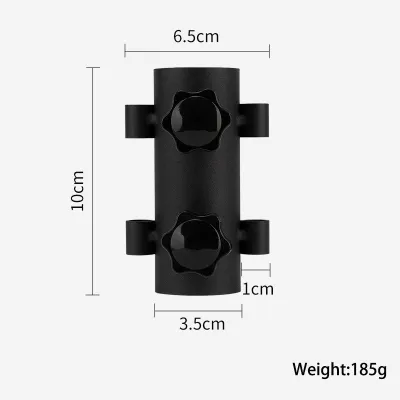
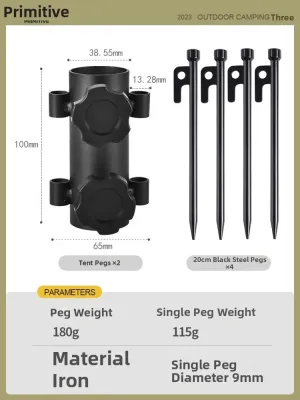
Prices are valid at publication and may change. Please refer to the product page for the latest price.
- 6061 Aluminum Alloy: This is the most common material used in mid-range stands. It offers an excellent balance of tensile strength, structural rigidity, and natural corrosion resistance. It is highly durable and cost-effective, making it the standard choice for most recreational campers.
- 7075 Aluminum Alloy: Often referred to as aircraft-grade aluminum, this alloy has a higher zinc content, giving it a significantly higher strength-to-weight ratio than 6061. If you are looking to minimize pack weight without sacrificing structural integrity, 7075 is the premium option.
- Stainless Steel: Highly durable and virtually immune to bending under heavy loads, stainless steel stands are exceptionally stable. However, they are heavy and can still rust over time if low-grade steel is used or if they are exposed to coastal salt air without proper protective coatings.
- Carbon Fiber: This material offers the ultimate weight savings and high rigidity, but it is expensive and brittle. Carbon fiber can crack or shatter under sudden lateral impacts, such as a falling branch or a sudden gust of wind.
To ensure your stand survives tropical humidity, verify that aluminum models feature an anodized surface treatment. Anodizing is an electrochemical process that thickens the metal’s natural oxide layer, providing superior protection against rust and pitting. Additionally, look for the manufacturer’s specified wall thickness. A pole with a wider diameter but paper-thin walls (under 1.0 mm) will buckle much faster under load than a slightly narrower pole with a thicker wall (1.2 mm to 1.5 mm). For casual car campers who do not need to carry their gear over long distances, ultra-lightweight materials are less critical; in these scenarios, heavier steel or thick-walled 6061 aluminum stands offer better wind resistance and cost savings.
Height and Adjustability Specs: Matching Your Camp Tasks
An adjustable camping pole stand allows you to customize your campsite layout based on your immediate needs. Different camp activities require different heights, and understanding how a stand adjusts will help you choose the right model for your specific tasks.

- Low Settings (60 to 100 cm): Ideal for positioning table-top lantern stands, low-level task lighting over a camp stove, or keeping mosquito repeller devices close to your seating area.
- Mid-Height Settings (100 to 180 cm): Perfect for hanging camp towels to dry, suspending small gear organizers, or placing general area lighting that does not cast harsh, long shadows.
- Maximum Height Settings (180 to 240+ cm): Essential for main area illumination, hanging wet clothes high enough to catch the breeze, or keeping trash bags elevated away from local wildlife.
How the pole adjusts is just as important as the height range itself. The two primary adjustment mechanisms are telescopic twist-locks and interlocking push-button segments. Telescopic twist-locks use internal friction expanders, allowing you to lock the pole at any precise height within its range. However, they require regular maintenance, as fine volcanic ash or beach sand can jam the internal threads, and high humidity can cause the plastic expanders to slip over time. Interlocking push-button segments use spring-loaded metal pins that click into pre-drilled holes. While this system limits you to fixed height intervals, it provides a highly reliable mechanical lock that cannot slip under vertical pressure.
Regardless of the locking mechanism, remember that extending any pole stand to its absolute maximum height specification significantly reduces its lateral stability. At full extension, the lever arm is at its longest, meaning even a moderate breeze can cause the pole to sway or bend. Always verify the wind conditions and consider lowering the stand by one segment if unexpected gusts occur.
Load Capacity and Anchoring Specs: What the Numbers Mean
Exceeding the weight limit of a camping pole stand can result in bent poles, broken joints, or damaged gear. When reading manufacturer specifications, it is critical to distinguish between static load capacity and dynamic or wet load capacity.
Static load refers to constant, stationary weight, such as a lightweight LED lantern. Dynamic or wet load accounts for variables like wind resistance, water-logged fabrics, or the downward pull of gravity when hanging an item. For example, a dry cotton beach towel might weigh less than 1 kg, but once saturated with water after a swim, its weight can easily triple. If a sudden gust of wind catches that wet towel, it exerts a dynamic force that can easily exceed a stand’s structural limits. To prevent accidents, always maintain a safety margin by choosing a stand with a rated load capacity that is at least double the weight of your heaviest dry gear.
Your stand’s load capacity is only as good as its connection to the ground. The effectiveness of the base depends heavily on the terrain of your campsite:
- Tripod Bases: These are self-supporting and work exceptionally well on hard, flat surfaces where you cannot drive pegs, such as rocky riverbeds, gravel paths, or concrete glamping pads. However, they have a wide footprint that can be a tripping hazard in tight campsites, and they can easily blow over in strong winds unless weighted down with heavy rocks or sandbags.
- Single-Peg Ground Stakes: These stands feature a sharp metal spike that you hammer directly into the ground. They take up virtually no floor space and are highly stable in packed clay, dirt, or grassy fields. However, they are unusable on solid rock or concrete, and they will easily pull out of loose beach sand unless the stake is exceptionally long (30 cm or more) and driven in at an angle.
To help you match your gear to the right specifications, refer to the load capacity guidelines below:
| Load Capacity Range | Recommended Gear Types | Recommended Base & Anchoring |
|---|---|---|
| Under 3 kg | Lightweight LED lanterns, insect repellers, small dry bags | Standard tripod base or single ground peg |
| 3 to 8 kg | Heavy camping lanterns, dry clothes, lightweight camp kitchen organizers | Weighted tripod base or deep ground stake |
| 8 to 15 kg | Wet towels, heavy jackets, lightweight tarps (vertical support only) | Heavy-duty ground stake secured with guy lines |
| Over 15 kg | Heavy water containers, structural tarps, multiple heavy packs | Not recommended for standard stands; use dedicated structural poles |
Packability Specs: Folded Length vs. Transport Style
The best camping pole stand is the one you can actually bring to your campsite. The trade-off between packed size and structural rigidity is directly tied to your method of transportation.
If you practice car camping, where your vehicle carries the weight directly to your pitch, packability is a secondary concern. In this scenario, you can prioritize thicker, heavier, and more stable poles with fewer joint segments, as fewer joints translate to a more rigid structure. These stands often have a folded length of 90 cm or more, which fits easily into a car trunk or truck bed.
Conversely, if you are backpacking, kayak touring, or motorcycle camping through remote provincial routes, space and weight are highly restricted. For these activities, look for multi-section poles that fold down to 40 cm or less. Before purchasing, verify the exact folded length specification of the stand to ensure it fits entirely inside your standard hiking backpack, dry bag, or motorcycle saddlebag. A pole that protrudes from your luggage can snag on low-hanging branches, throw off your balance, or get damaged during transit.
Frequently Asked Questions (FAQ)
How do I maintain an aluminum camping pole stand after a beach trip?
Saltwater and coastal air accelerate the corrosion of aluminum and can cause telescoping joints to seize. After returning from a beach trip, fully extend the pole stand and rinse it thoroughly with clean, fresh water to wash away salt residue and sand. Pay close attention to the joints and locking mechanisms. Wipe down the exterior with a soft cloth, and leave the pole fully extended in a shaded, well-ventilated area until it is completely dry. Never collapse and store a wet or damp pole stand inside its carry bag, as trapped moisture will lead to oxidation and mold.
Can I use a camping pole stand to support a tarp or awning?
Standard camping pole stands are designed to support vertical, downward weight and are not engineered to handle the continuous lateral tension of a stretched tarp or awning. Using a gear stand for structural shelter support can easily bend the aluminum segments or snap the plastic locking joints, especially during sudden wind gusts. If you must use a heavy-duty stand to support a lightweight tarp, check the manufacturer’s lateral load specifications first. Always anchor the setup securely using high-tensile guy lines and heavy-duty ground pegs driven into the earth at a 45-degree angle to counteract the sideways pull.
Community discussion
Share your experience or ask a question. Comments are reviewed before publication.