
A basketball coach board is an indispensable tool for translating complex tactical concepts into immediate on-court action. Whether you are drawing up a quick sideline out-of-bounds play during a high-stakes timeout or organizing defensive rotations during weekday practices, the right board ensures your players understand their assignments instantly. Selecting the ideal board requires balancing surface usability, court layout accuracy, physical durability, and accessory convenience.
In the Philippines, where basketball is played in environments ranging from air-conditioned collegiate arenas to humid, open-air barangay courts, your equipment must withstand unique physical demands. This guide outlines the essential factors to consider when purchasing a coaching board, helping you select a tool that matches your coaching level, environment, and budget.
Quick Guide: Core Factors for Selecting a Coach Board
When choosing a coaching board, three primary pillars should guide your decision: surface format, court standard compliance, and physical portability. The surface must allow for quick drawing and easy erasing, while the court lines must accurately reflect the rules of your specific league. Furthermore, the physical build must match how you transport and use the board during fast-paced games.
Products mentioned in this guide
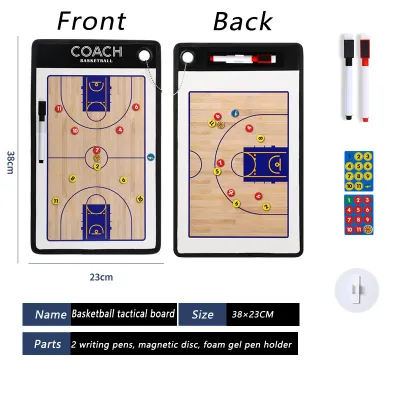
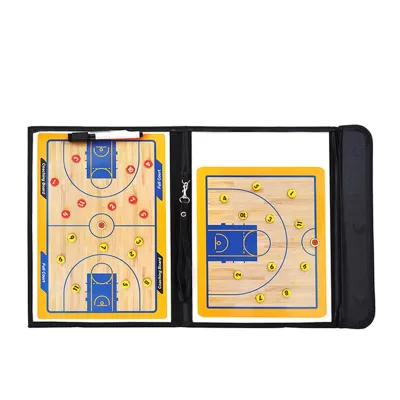
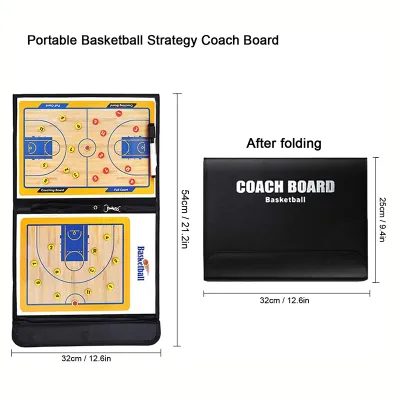
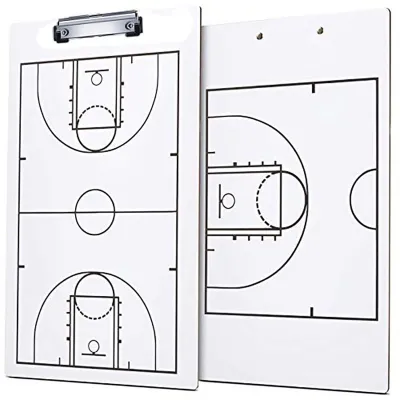
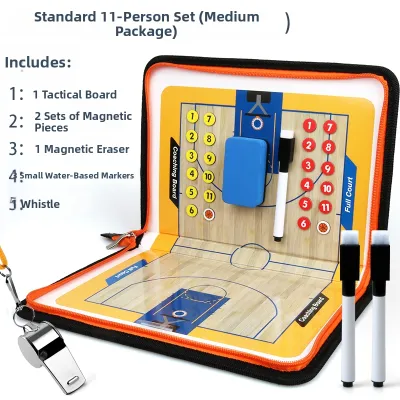
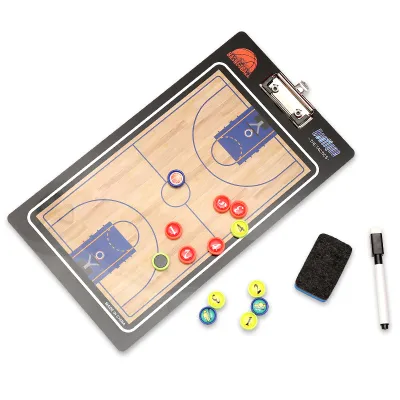
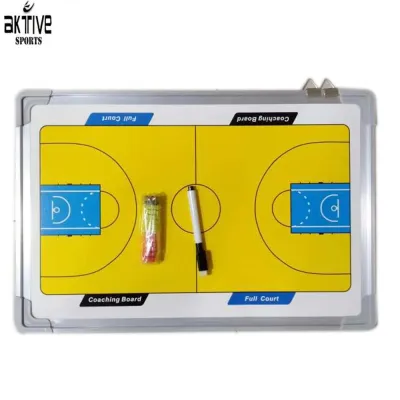
Prices are valid at publication and may change. Please refer to the product page for the latest price.
Coaches operating in high-intensity environments, such as outdoor community leagues or school tournaments, should prioritize sideline durability and grip over advanced tactical features. A board that slips out of sweaty hands or warps under intense tropical heat will quickly become a liability during critical timeouts. Look for textured backings, integrated hand straps, or ruggedized rubber borders that ensure a secure hold when the game pressure rises.
Before finalizing your purchase or accepting a delivery, use this initial checklist to verify the board’s readiness:
- Surface Flatness: Inspect the board for any bubbling, warping, or uneven lamination across the entire court layout.
- Magnetic Strength: Place the included player pieces on the board and hold it vertically to ensure they do not slide or fall off.
- Erasability Test: Draw several lines with the provided marker, wait two minutes, and wipe them away to check for immediate ghosting or staining.
- Line Alignment: Verify that the court markings are printed straight and do not peel at the edges.
Evaluating Board Formats: Magnetic, Dry-Erase, and Combo Surfaces
Magnetic coaching boards excel at providing tactile, spatial representations of player movement. By using physical discs to represent players and the ball, you can easily demonstrate screening angles, zone shifts, and spacing concepts without cluttering the board with marker lines. This format is highly effective for visual learners who need to see the physical relationship between offensive players and defenders during a play walkthrough.

Dry-erase surfaces offer unmatched speed for drawing complex plays, passing lanes, and rapid mid-game adjustments. During a brief thirty-second timeout, a coach can quickly sketch a custom set play, erase a mistake with a single swipe, and redraw an alternative option. The ability to use different marker colors allows you to clearly differentiate between player cuts, ball screens, and defensive rotations.
Combo boards merge these two styles, featuring a magnetic sheet that also accepts dry-erase markers. These dual-sided or multi-functional options provide the highest level of versatility, allowing you to set up your starting lineup with magnetic pieces on one side while drawing specific half-court sets on the other. When evaluating a combo board, ensure the dry-erase coating is applied directly over the magnetic metal layer rather than a cheap plastic film, which can degrade quickly.
Surface glare is a critical factor to consider, especially when coaching under bright gymnasium lights or direct sunlight on outdoor courts. High-gloss surfaces can reflect light intensely, making it difficult for players standing at the back of the huddle to see your instructions. Opt for boards with matte or low-glare finishes, and verify that the surface is compatible with standard dry-erase markers to avoid permanent staining.
Selecting the Correct Court Layout and Rule Standard
Using a board with the correct court markings is essential for teaching proper spacing and positioning. If your board’s three-point line or key shape does not match the court your team plays on, players may develop poor habits, such as setting screens too close to the basket or standing out of bounds. You must align your board selection with the specific rulebook of your league.
In the Philippines, the vast majority of competitive leagues—including collegiate associations like the UAAP and NCAA, regional tournaments, and local community leagues—follow FIBA rules. A FIBA-compliant board features a rectangular key, a three-point line set at 6.75 meters, and a clearly marked no-charge semi-circle under the basket. If you are coaching in a league that uses NBA or NCAA rules, you will need a board that reflects those specific dimensions, such as a wider key or a deeper three-point arc.
For developmental programs, youth leagues, or 3×3 training, specialized layouts can be highly beneficial. Many boards offer half-court templates on one side, which provide larger, more detailed areas for drawing half-court execution, zone offenses, or baseline out-of-bounds plays. Youth-focused boards may also include simplified markings that help younger players grasp basic positioning without the distraction of advanced professional lines.
Before purchasing, cross-reference the printed lines on the board with the current official rulebook of your target association. Ensure that the lines are crisp, high-contrast, and thick enough to be seen from several feet away. Avoid boards with outdated markings, such as the old trapezoidal FIBA key, unless you are specifically coaching in a recreational league that still utilizes older court designs.
Assessing Size, Portability, and Build Quality for Your Environment
The physical dimensions of your coaching board should match your primary coaching environment and transportation methods. A board that is too large will be cumbersome to carry to daily practices, while a board that is too small will limit visibility during crucial team huddles. Finding the right balance between size and portability is key.
Clipboard-style boards, typically measuring around 9 by 14 inches, are ideal for active sideline coaching. Their compact size allows you to hold them comfortably in one hand while gesturing with the other, and they fit easily into standard backpacks or equipment bags. These boards are highly suited for quick timeouts where you need to bring the huddle close and show a play to the five players currently on the floor.
Large folding or wall-mounted boards are better suited for locker room strategy sessions, pre-game briefings, and structured practice planning. These boards provide ample space for detailed tactical breakdowns and can be seen clearly by the entire roster at once. Folding models offer a compromise, expanding to a large format during meetings and collapsing into a portable size for travel between venues.
Frame materials play a significant role in the board’s overall durability and weight. Aluminum frames offer excellent structural rigidity and impact resistance, making them suitable for travel, though they can add weight to your gear bag. High-impact plastic frames are lighter and offer good drop protection, which is valuable during intense game moments where the board might be dropped or knocked off the bench.
For coaches in the Philippines, weather and moisture resistance are critical considerations. High humidity, sweat, and sudden tropical downpours can quickly ruin boards with cheap cardboard cores, causing them to warp, delaminate, or lose their magnetic properties. Look for boards constructed with solid plastic, composite, or aluminum cores that resist moisture absorption and maintain their shape even when exposed to damp environments.
Checking Accessories and Practical Sideline Features
A coaching board is only as useful as the accessories that accompany it. Losing a marker or a key player magnet during a game can disrupt your coaching flow and cause unnecessary stress. Evaluating the quality and organization of the included accessories is just as important as inspecting the board itself.
When reviewing magnetic boards, check the quality, size, and quantity of the included player pieces. The magnets should be strong enough to stay in place when the board is shaken, but easy enough to slide with a finger. Look for sets that include contrasting colors for opposing teams, numbered pieces to represent specific player positions, and a dedicated piece representing the ball.
Storage solutions are vital for keeping your accessories organized during travel and fast-paced games. Some boards feature built-in compartments, recessed slots, or zippered pouches attached to the back of the board to secure markers and magnets. Heavy-duty metal clips at the top of the board are also highly useful for holding playbooks, scouting reports, or stat sheets during play.
Protective covers, carrying cases, or padded sleeves help prevent the board’s surface from getting scratched or dented when packed inside an equipment bag with shoes, water bottles, and cones. A scratched surface not only looks unprofessional but can also trap marker ink, leading to permanent staining. Additionally, integrated hanging hooks or mounting hardware are excellent features for hanging the board on locker room walls or gym fences.
Aligning Board Specifications with Your Coaching Level and Budget
Your choice of a coaching board should ultimately align with your specific coaching context, the competitive level of your team, and your financial constraints. Different levels of play require different tool specifications, and overspending on advanced features you do not need is just as inefficient as buying a board that fails under game conditions.
For youth and grassroots coaching, prioritize durability, simplicity, and high-contrast visuals. Young players need clear, uncluttered representations of the court to understand basic concepts like spacing and passing lanes. At this level, a rugged, single-sided dry-erase clipboard with bold lines is often the most practical and cost-effective choice, as it can withstand rough handling by players and coaches alike.
Competitive high school, collegiate, and club levels demand greater tactical depth and precise standard compliance. Coaches at these levels should focus on dual-sided combo boards that feature a full-court layout on one side and a detailed half-court layout on the other. High-quality magnetic pieces are essential here for demonstrating complex offensive sets, zone presses, and defensive rotations during intense practice sessions.
Your role on the coaching staff also influences your board requirements. Head coaches, who are responsible for primary play-calling and quick timeout adjustments, benefit most from highly portable, fast-erasing clipboards. Assistant coaches, who often focus on tracking player statistics, fouls, or specific defensive matchups, may prefer boards with integrated clip holders or dedicated writing spaces for notes alongside the court layout.
When browsing online marketplaces or local sports retailers, you will generally encounter three price tiers:
- Entry-Level (Under ₱500): Typically lightweight plastic dry-erase clipboards. These are highly portable and budget-friendly but may lack magnetic capabilities and long-term durability against moisture and heavy drops.
- Mid-Range (₱500 to ₱1,500): Usually features dual-sided combo surfaces with aluminum or reinforced plastic frames. These boards offer a great balance of durability, magnetic functionality, and standard court layouts suitable for most school and community leagues.
- Premium (Above ₱1,500): Includes heavy-duty, large-format folding boards, professional-grade magnetic sets, and specialized carrying cases. These are designed for elite programs, professional coaches, and facilities requiring long-lasting, high-visibility tactical tools.
Frequently Asked Questions (FAQ)
How do I clean a magnetic basketball coach board without damaging the surface?
To clean your board without damaging the surface, use a soft microfiber cloth dampened with water or a specialized whiteboard cleaning spray. Avoid using harsh chemical solvents like acetone, paint thinner, or abrasive scrubbing sponges, as these will strip away the protective dry-erase coating and ruin the printed court lines. For stubborn marker residue or ghosting, apply a few drops of isopropyl alcohol to a soft cloth, gently wipe the surface, and dry it immediately with a clean towel.
Can I use a standard dry-erase board if I cannot find a dedicated basketball coach board?
Yes, you can use a standard dry-erase board as a temporary alternative by drawing the court boundaries yourself using thin, colored electrical tape or permanent markers. However, this workaround has significant limitations, as hand-drawn lines can easily smudge, lack precise scale, and do not offer the professional look needed for competitive play. Upgrading to a purpose-built basketball board is highly recommended for competitive leagues to ensure accurate spacing and clear communication during timeouts.
What is the best way to store magnetic player pieces to prevent loss during travel?
The most effective way to prevent losing your magnetic player pieces is to store them in a dedicated zippered pouch, a plastic utility box, or the board’s built-in storage compartment immediately after every use. You can also slide all the magnets together into a single stack and stick them to a metal clip on your clipboard or bag. Color-coding your pieces with small stickers and labeling them with player numbers or positions will also help you quickly identify if any pieces are missing before you leave the court.
Community discussion
Share your experience or ask a question. Comments are reviewed before publication.