
Starting a tennis journey from home requires the right tools to build muscle memory without constant court rentals. A self-training tennis set offers an accessible way to practice groundstrokes solo, but choosing the wrong equipment can lead to a frustrating experience of chasing a runaway base or dealing with snapped cords. To find a set that supports your learning curve, you must prioritize base stability, cord durability, and ball construction while ensuring the setup fits your physical space and skill level.
Understanding the Core Components of a Self-Training Set
A standard self-training tennis set relies on a simple yet effective mechanical loop to simulate a real rally. The system consists of three primary elements: a hollow, weighted base anchor, a high-stretch elastic rebound cord, and a specialized tennis ball attached to the end of the line. When you strike the ball, it travels outward until the cord reaches its maximum stretch, at which point the tension pulls the ball back toward you for the next shot. While some entry-level packages arrive as complete kits containing a beginner-friendly racket and a mesh carrying bag, other options are sold as standalone base-and-cord sets. Verifying exactly what is included in your chosen package prevents unexpected delays, allowing you to match the training tool with a racket that fits your hand size and swing style.
Key Specifications to Prioritize as a Beginner
Selecting your first training set requires looking beyond basic aesthetics to evaluate how the components handle repetitive, high-velocity impacts. Beginners should focus on three critical performance areas: the anchoring capacity of the base, the elasticity and thickness of the rebound cord, and the structural integrity of the tennis ball. Aligning these technical specifications with your current physical strength and swing speed ensures the ball returns at a manageable pace, reducing the risk of early equipment failure or physical strain.
Products mentioned in this guide
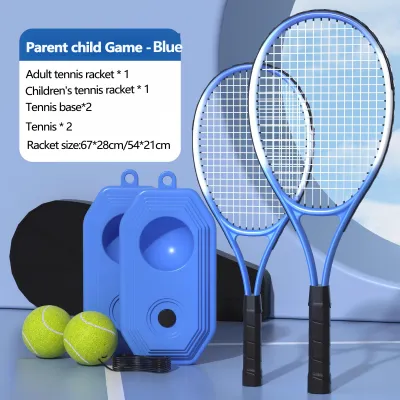
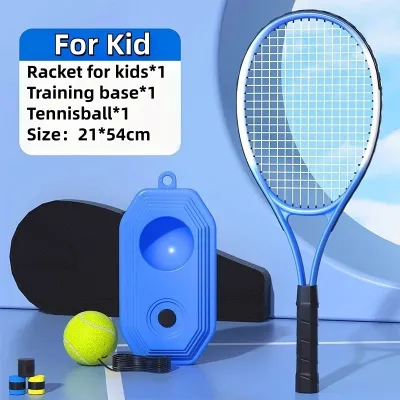
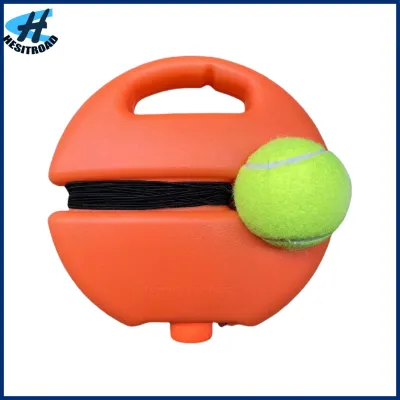
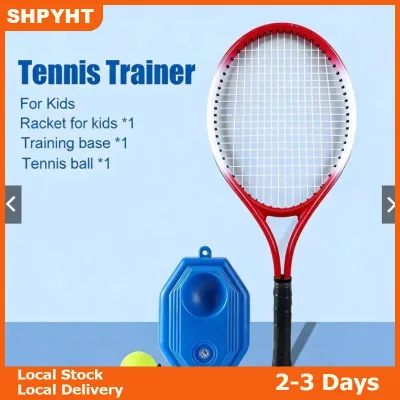
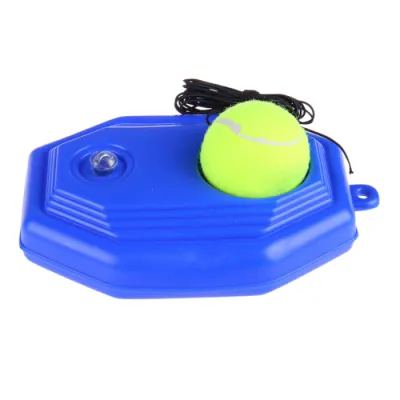
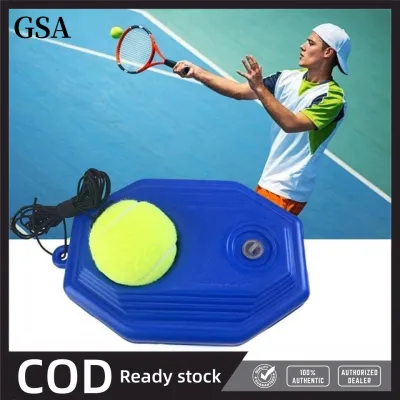
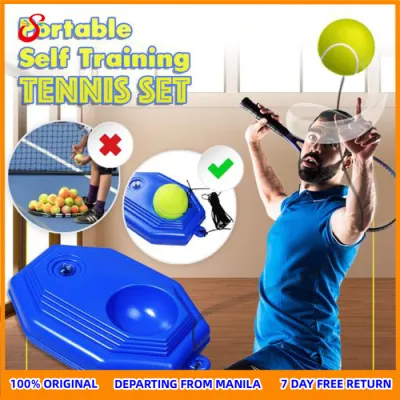
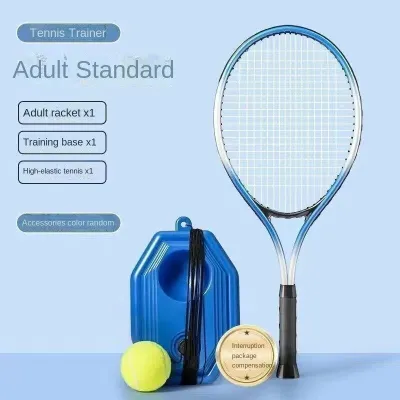
Prices are valid at publication and may change. Please refer to the product page for the latest price.

Base Stability and Filling Options
The foundation of any solo training system is its base, which must remain firmly anchored to the ground despite the continuous pulling force of your strokes. Most consumer sets feature a hollow plastic container designed to be filled with either water or sand to add the necessary ballast. Water is highly convenient, allowing you to fill and empty the base quickly for easy transport to a local park or driveway, though it can slosh around and cause slight shifting during heavy hits. Sand provides a denser, heavier anchor that minimizes base movement, making it the preferred choice for permanent home setups, even though it is more difficult to empty and transport. To prevent the base from sliding or tipping over during intense practice sessions, look for designs featuring a wide, low-profile footprint and non-slip rubber pads on the bottom. Additionally, because the tropical climate in the Philippines exposes outdoor equipment to intense sunlight and high humidity, verify that the base material is constructed from high-density polyethylene (HDPE) with UV-resistant additives to prevent the plastic from cracking or becoming brittle over time.
Cord Elasticity and Rebound Control
The elastic cord acts as the engine of the self-training set, directly dictating the speed, rhythm, and trajectory of the returning ball. Most training cords are made from latex or synthetic rubber cores wrapped in a protective nylon sleeve, balancing flexibility with resistance to abrasion against rough ground surfaces. Beginners should look for cords that offer adjustable length options, as a shorter cord returns the ball rapidly and demands quick reflexes, while a longer cord provides a more forgiving window to prepare your stance and swing. Over time, the repeated stretching and exposure to outdoor elements will inevitably degrade the elastic fibers, leading to a loss of tension or sudden snapping. Before each practice session, inspect the cord for visible warning signs such as micro-tears in the outer fabric sleeve, localized thinning of the inner rubber, or a permanent sag when the line is unstretched. Choosing a set that utilizes a heavy-duty, high-elasticity cord ensures a smoother rebound rhythm and extends the time between necessary replacements.
Tennis Ball Quality and Construction
The ball included with your training set significantly influences the tactile feel of each strike and how well the system mimics a real tennis court experience. Standard tennis balls are pressurized with gas, which provides an excellent, lively bounce but gradually loses pressure over weeks of use, resulting in a flat, dead response. For solo training, pressureless tennis balls are highly recommended because they rely on a thicker, more durable rubber core to generate bounce, maintaining their structural performance consistently over months of repetitive hitting. Because you will likely practice on hard outdoor surfaces like concrete driveways or asphalt, check that the ball features premium woven felt with reinforced seams to resist rapid fraying and abrasion. Furthermore, check whether the ball is permanently molded to the elastic cord or if it utilizes a replaceable attachment mechanism, such as a metal clip or a reinforced rubber loop. A replaceable system is highly advantageous, as it allows you to swap out a worn-down ball without needing to purchase an entirely new base and cord assembly.
Deciding Between Bundled Rackets and Racket-Free Sets
Many manufacturers offer all-in-one bundles that package the training base and cord with one or two entry-level tennis rackets. While these bundles present an attractive, convenient option for absolute beginners, it is essential to analyze the construction of the included rackets before making a decision. Most bundled rackets are made from lightweight aluminum, which is highly durable and inexpensive but lacks the vibration-dampening qualities of composite materials like graphite or carbon fiber. This lack of dampening means that the shock of each impact travels directly up your arm, which can lead to wrist fatigue or discomfort during extended solo practice sessions. Additionally, bundled rackets often feature a generic, mid-sized grip and a head-heavy balance that may not align with your physical stature or natural swing path. From a financial perspective, a bundled set in the Philippines typically ranges from entry-level prices to slightly higher tiers, but opting for a racket-free base set allows you to allocate your budget toward a standalone, beginner-friendly graphite racket. Investing in a separate racket tailored to your specific grip size and weight preferences provides better control, reduces the risk of strain, and ensures you have a high-quality frame that can transition smoothly from solo driveway practice to actual court play.
Space, Setup, and Safety Considerations for Home Practice
Setting up a self-training tennis set requires careful spatial planning to ensure you can swing freely without damaging property or risking personal injury. You must establish a clear practice zone with a minimum clearance radius of at least five to six meters around the base unit, ensuring there are no walls, parked vehicles, potted plants, or bystanders within the ball’s maximum travel path. The training base must always be positioned on a flat, level, and stable surface; concrete driveways, paved carports, or firmly compacted earth are ideal, whereas loose gravel, thick grass, or uneven tiles will cause the base to wobble and slide. Safety should be your primary concern during setup, starting with a thorough check of the elastic cord’s attachment points to ensure they are securely tied or clipped to both the base and the ball. Always verify that the base cap is tightly sealed to prevent water or sand from leaking onto your practice surface, which can create a dangerous slipping hazard. Additionally, keep the path between you and the base clear of any loose items, and remain mindful of the cord’s position to avoid tripping as you move laterally to strike the returning ball.
Pre-Purchase Verification Checklist
Before finalizing your purchase on any online marketplace or at a local sporting goods store, running through a quick verification checklist will save you time and prevent buyer’s remorse. First, carefully read the product description to confirm the package contents, ensuring it explicitly includes the weighted base, the elastic cord, and the ball, as some listings display rackets in their promotional images that are not included in the actual box. Next, review the seller’s return and warranty policies, looking for specific coverage regarding manufacturing defects such as leaking base seams or cords that snap within the first few uses. Finally, spend a few minutes analyzing user feedback and reviews, paying close attention to recurring complaints about base durability, water leakage, or poor rebound consistency. Prioritizing listings with high ratings for material thickness and cord elasticity will help you secure a reliable training tool that withstands the rigors of daily practice.
Frequently Asked Questions (FAQ)
Can I use a standard tennis ball with the elastic cord?
While it is technically possible to attach a standard tennis ball to your training set, doing so requires caution and the right attachment method. Most self-training sets use a specialized ball with a built-in metal eyelet or a reinforced rubber loop securely anchored through the ball’s core. If you attempt to pierce a standard, off-the-shelf pressurized tennis ball to tie a cord around it, you will release the internal gas pressure, instantly rendering the ball flat and unusable. If your training set features a clip-on attachment system, you must purchase compatible replacement balls designed specifically for rebound training, as standard balls lack the reinforced structural points required to withstand the constant pulling force of the elastic line.
How often should I expect to replace the elastic cord?
The lifespan of your elastic rebound cord depends heavily on your practice frequency, swing power, and environmental exposure. In tropical environments like the Philippines, high heat, intense UV rays, and humidity accelerate the degradation of synthetic rubber and latex, causing the cord to lose its elasticity or become brittle. For a beginner practicing two to three times a week, a standard elastic cord typically lasts between two to four months before showing significant signs of wear. To maximize the lifespan of your equipment, store the set indoors in a cool, dry place away from direct sunlight when not in use, and regularly check the manufacturer’s specifications to see if they offer standalone replacement cords so you do not have to replace the entire base.
Is a self-training set suitable for learning proper tennis strokes?
A self-training tennis set is an excellent tool for developing fundamental athletic skills, but it has distinct limitations when it comes to mastering advanced tennis techniques. The primary benefit of solo rebound training is the rapid improvement of hand-eye coordination, footwork agility, and the timing of your swing contact point. However, because the ball returns on a predictable, low-to-the-ground trajectory dictated by the elastic cord, it does not accurately simulate the complex spins, deep bounces, or varied angles you will face from a real opponent. To build a well-rounded game, use the self-training set as a supplementary tool for physical conditioning and rhythm, while combining your solo sessions with professional coaching or structured instructional videos to ensure you do not develop improper stroke habits.
Community discussion
Share your experience or ask a question. Comments are reviewed before publication.