
Selecting the right equipment for a home gym requires balancing space, budget, and physical safety. When looking for an ab roller, the decision goes far beyond picking the cheapest option on the shelf. The right tool must match your current core strength, wrist health, and home flooring to prevent injury and ensure consistent progress.
To get the most out of a roller abs exercise, you need to prioritize four key specifications: wheel width for stability, rebound assistance for rolling control, ergonomic grip materials to handle tropical sweat, and high-density knee protection. Understanding how these features interact with your body allows you to select a tool that builds deep core strength safely.
Wheel Configuration: Single vs. Multi-Wheel and Track Width
The physical design of the wheel dictates how much effort goes into keeping your body balanced versus moving the roller. Standard ab rollers generally fall into two categories: narrow single-wheel designs and wide-track or multi-wheel configurations. A narrow single wheel offers minimal contact with the floor, creating high lateral instability that forces your obliques and deep stabilizing muscles to work overtime just to keep you upright.
Products mentioned in this guide
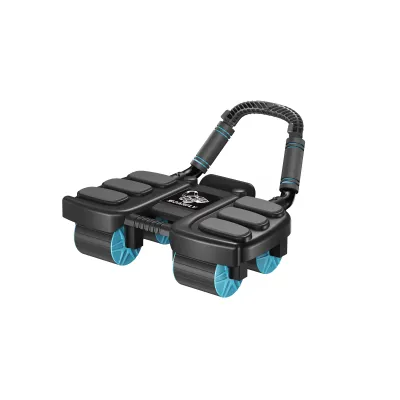
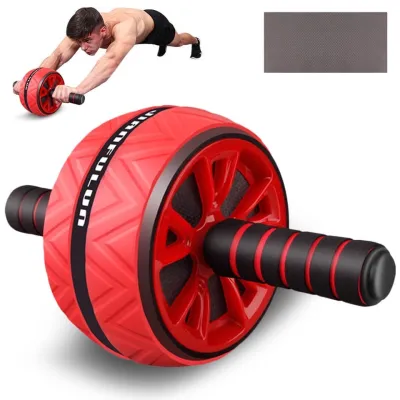
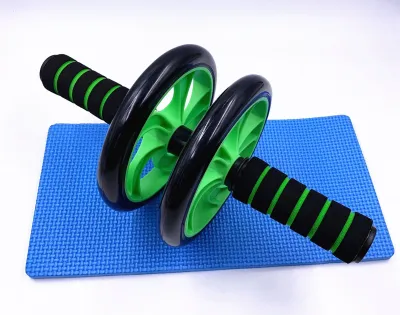
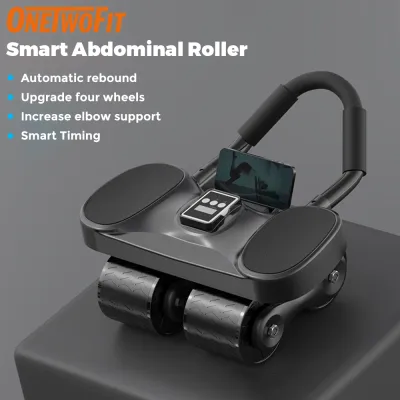
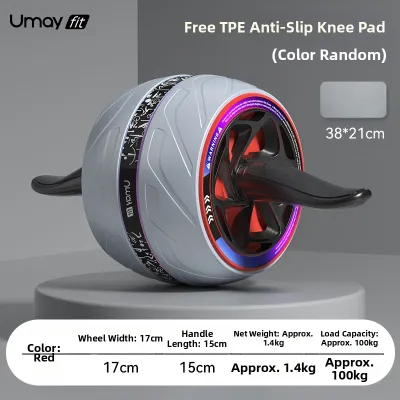
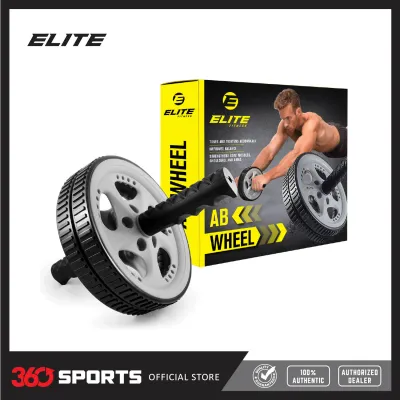
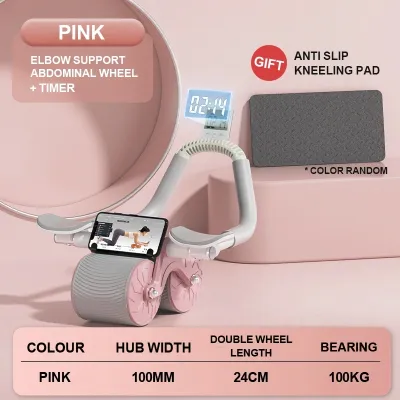
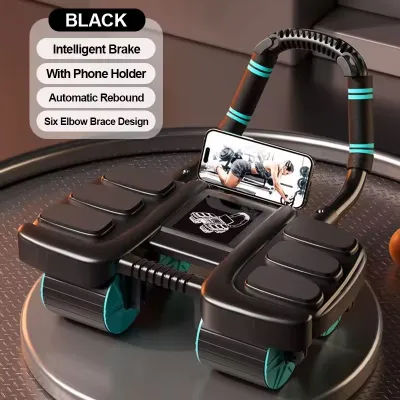
Prices are valid at publication and may change. Please refer to the product page for the latest price.
While a narrow wheel is highly effective for advanced athletes, it can be actively detrimental for beginners. Wide-track wheels or dual-wheel designs increase the lateral base of support, preventing the roller from tipping sideways. It is a common misconception that wider designs make the workout less effective. In reality, they provide the necessary stability to help you focus entirely on executing a proper posterior pelvic tilt. Maintaining this tilt is crucial because it keeps the tension on your rectus abdominis and prevents your lower back from sagging into hyperextension.
If you are new to the roller abs exercise or returning to fitness after a prolonged break, lateral stability should be your top priority. Struggling to balance on a razor-thin wheel often leads to micro-adjustments that strain the shoulders and lower back. By choosing a wider or multi-wheel setup, you can build a solid foundation of linear strength before introducing the balance challenges of narrower models.
Rebound Mechanisms: Do You Need a Spring-Assisted Roller?
Many modern ab rollers feature an internal carbon steel spring or elastic band mechanism designed to assist the return phase of the exercise. As you roll forward, the spring coils tighter, storing kinetic energy. Once you reach full extension and begin to pull yourself back to the starting position, the spring releases this energy, gently pulling the roller backward and assisting your ascent.

This automatic rebound feature offers significant benefits for those building baseline core strength. The eccentric phase of the rollout—where your muscles lengthen under tension—is incredibly demanding. If your abdominal wall lacks the strength to control this phase, your lower back often takes the brunt of the load. A spring-assisted mechanism reduces this eccentric strain, acting as a safety net that helps you return to the starting position without compromising your spinal alignment.
However, this assistance comes with a distinct trade-off. For intermediate and advanced users, the spring can create a false sense of core strength. Because the mechanism does a portion of the work during the hardest part of the movement, it alters the natural resistance curve of the exercise. This limits your ability to apply progressive overload, which is essential for long-term muscle development. Advanced trainees will find that standard, non-rebound rollers force the core to handle the entire load, offering a superior stimulus for true abdominal strength.
Therefore, your decision should align strictly with your physical capabilities. Choose a rebound-assisted model if you are recovering from an injury, lack the strength to perform a single unassisted rollout with perfect form, or want an extra layer of safety. Opt for a traditional, non-assisted roller if your goal is long-term progression and unassisted core mastery.
Handle Ergonomics and Grip Materials for Safe Extensions
The handles of an ab roller are your primary contact points, meaning their design directly impacts wrist alignment and overall control. Traditional ab rollers utilize straight cylindrical bars that run through the center of the wheel. While functional, straight bars force your wrists into a rigid, pronated position, which can cause joint discomfort or strain during deep extensions. Contoured or angled ergonomic grips, by contrast, mimic the natural alignment of your hands and wrists, distributing pressure more evenly and reducing joint stress.
Beyond the shape, the material of the grip is a critical safety factor, especially in tropical climates like the Philippines. High humidity and intense workouts lead to sweaty palms, which can cause your hands to slip off the handles mid-extension. Cheap, bare plastic handles offer virtually no traction and should be avoided entirely. While soft foam grips are comfortable, low-density foam acts like a sponge, absorbing sweat, harboring bacteria, and degrading rapidly over time.
For long-term durability and safety, look for high-density textured foam or non-porous rubber grips. Rubber provides excellent wet grip performance, is easy to wipe clean after a workout, and does not absorb moisture. Additionally, ignore low-impact specifications like built-in digital counters, phone holders, or digital timers. These electronic additions rarely improve your workout quality, add unnecessary bulk, and are highly prone to breaking when stored or dropped. Instead, focus your budget on structural integrity, high-quality steel shafts, and smooth internal bearings that prevent jerky movements.
Essential Accessories: Why Knee Pads Matter for Home Floors
The ab rollout is a kneeling exercise, meaning a significant portion of your body weight is concentrated directly on your patellas throughout the movement. Many homes in the Philippines feature hard flooring surfaces such as ceramic tiles, polished concrete, or hardwood. Performing rollouts on these surfaces without adequate cushioning can quickly lead to joint pain, bruising, and chronic knee inflammation.
A high-density knee pad is a non-negotiable accessory for safe home workouts. When evaluating an ab roller package, check the specifications of the included knee pad. It should feature a minimum thickness of 15mm to 20mm and be constructed from closed-cell foam, such as NBR (nitrile butadiene rubber) or EVA, which resists compression under load. The bottom of the pad should also have a non-slip textured pattern to prevent it from sliding across slick tile floors as you shift your weight.
Do not treat the knee pad as an afterthought. If a highly-rated ab roller does not come bundled with a quality pad, you must factor the cost of a separate, high-density exercise mat into your purchasing budget. Protecting your joints is just as important as challenging your muscles; painful knees will quickly derail your consistency.
How to Match Ab Roller Specs to Your Current Fitness Level
Selecting the perfect ab roller requires matching these technical specifications directly to your current physical capabilities. Choosing a tool that is too advanced can lead to poor form and injury, while a tool that is too basic may limit your long-term progress.
- Beginner Setup: If you are new to core training, your primary goals are safety and learning the movement pattern. Look for a wide-track or dual-wheel roller that offers maximum lateral stability. A spring-assisted rebound mechanism is highly recommended to help you manage the return phase safely. Ensure the package includes a thick, high-density knee pad (15mm to 20mm) and features ergonomic, sweat-resistant rubber or textured foam grips to keep your hands secure.
- Intermediate Setup: Once you can perform multiple controlled rollouts from your knees with perfect form, you can transition to an intermediate configuration. This setup features a standard single or dual-wheel design without any rebound assistance. Eliminating the spring forces your core to control both the eccentric and concentric phases of the movement. Look for durable, non-porous rubber grips and a sturdy steel internal shaft that can support your full body weight as you begin to experiment with deeper extensions.
- Advanced Setup: For advanced trainees looking to maximize core instability, a minimalist, narrow single-wheel roller is the ideal choice. This setup features no rebound assistance and minimalist, straight handles. The narrow wheel profile forces your obliques and deep stabilizers to work continuously to prevent lateral tipping. This configuration is also suitable for transitioning toward advanced variations, such as standing rollouts.
Regardless of your starting point, the golden rule of the roller abs exercise is to master the movement with a stable, assisted setup before moving to narrower, unassisted wheels. Safe progression ensures that you build functional, lasting core strength without subjecting your lower back or joints to unnecessary risk.
Frequently Asked Questions (FAQ)
Is a wider ab roller less effective for building core strength?
No, a wider ab roller is not less effective. While a wider wheel reduces the lateral instability that forces your obliques to balance, it allows you to focus entirely on sagittal plane movement. This stability helps you maintain a proper posterior pelvic tilt and achieve a deeper, fully controlled extension. For most users, this translates to better overall abdominal activation and a lower risk of lower back strain compared to struggling to balance on a narrow wheel.
Can I use an ab roller on a carpeted floor without a knee pad?
Even on a carpeted floor, using a dedicated high-density knee pad is highly recommended. While carpet provides a small amount of surface cushioning, it does not offer enough dense support to protect your patellas from the concentrated pressure of your body weight during a rollout. Over time, performing this exercise directly on carpet can lead to joint bruising, friction burns, and knee pain. A 15mm to 20mm closed-cell foam pad remains essential for joint safety.
Community discussion
Share your experience or ask a question. Comments are reviewed before publication.