
Selecting your first fixed gear bike requires focusing on three core pillars: frame geometry, drivetrain versatility, and reliable stopping power. Unlike standard multi-speed bicycles, a fixed gear bike—or “fixie”—features a rear cog locked directly to the movement of the rear wheel. When the wheel rolls, your pedals turn, creating a highly connected and minimalist riding experience. To find a model that keeps you safe and comfortable, you must evaluate how the bike’s specifications align with your local terrain, physical measurements, and riding experience.
Evaluate Your Route and Local Regulations
Before committing to a fixed gear setup, assess the topography of your daily routes. Fixed gear bikes require you to rely entirely on your leg strength to climb hills and control your descent. If your daily commute involves steep inclines or heavy, stop-and-go city traffic, a single-speed gear ratio can quickly become exhausting. Flat urban corridors and dedicated bike lanes are the ideal environments for a beginner to build confidence.
Local traffic laws are another critical factor to verify before making a purchase. In many municipalities, including urban areas across the Philippines, traffic regulations strictly mandate that all bicycles operating on public roads must be equipped with independent, functional hand brakes. Riding a completely brakeless track bike on public streets is often illegal and poses severe safety risks in unpredictable traffic environments.
Products mentioned in this guide
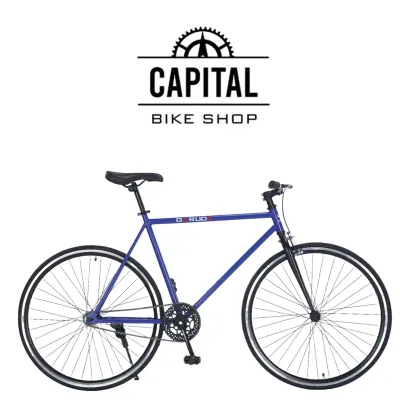
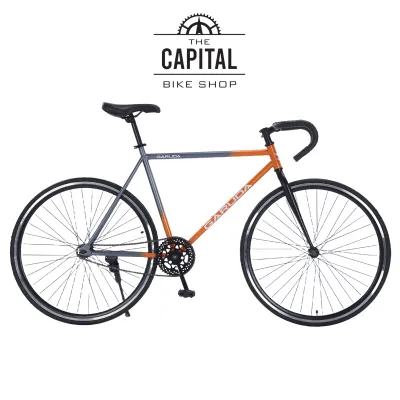
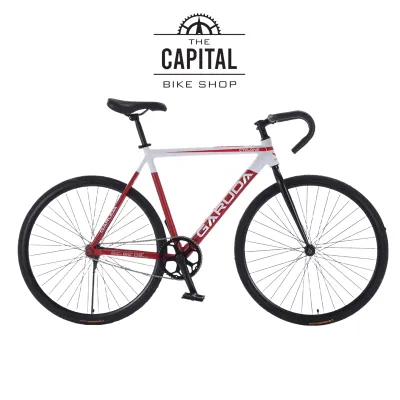
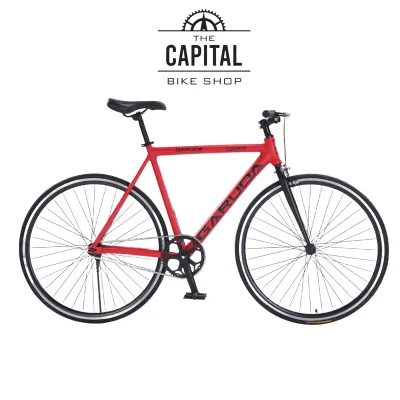
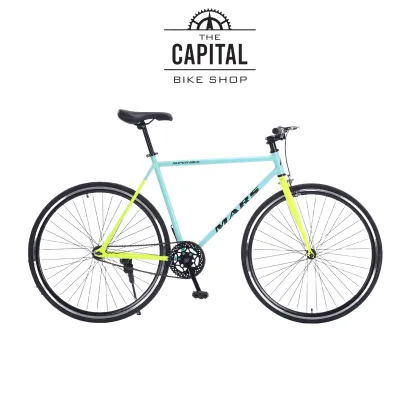
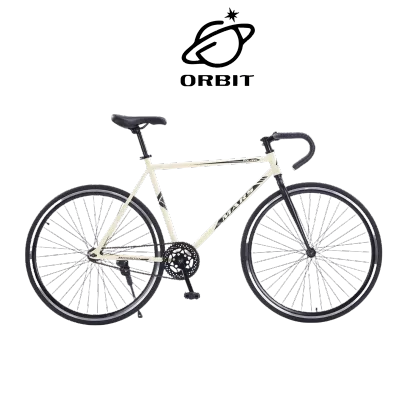
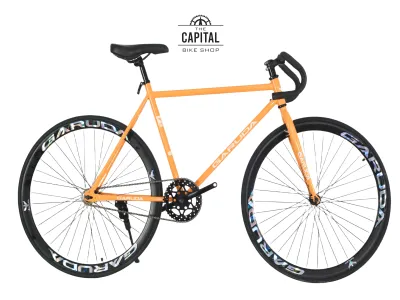
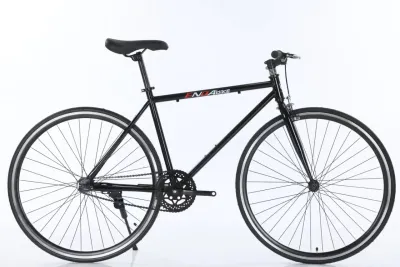
Prices are valid at publication and may change. Please refer to the product page for the latest price.
Finally, consider your daily storage and carrying needs. If you must carry your bicycle up several flights of stairs to an apartment or office, or if you frequently navigate humid, tropical downpours, a lightweight and low-maintenance frame is essential. Evaluating these environmental factors first will help you narrow down the specific materials and configurations that fit your lifestyle.
Choose the Right Frame Material and Fit
Frame material directly influences the bike’s weight, durability, ride quality, and cost. High-tensile steel is highly affordable but heavy, and it requires diligent maintenance to prevent rust in humid climates. Chromoly (CrMo) steel is a lighter, stronger alternative that offers excellent natural vibration dampening, smoothing out rough asphalt and road vibrations. Aluminum frames are exceptionally light and naturally rust-resistant, though they tend to deliver a stiffer, more jarring ride over potholes.

Frame geometry dictates your riding posture and overall comfort. Track-specific frames feature aggressive, steep angles that force you into a low, aerodynamic tuck. While excellent for speed on a closed velodrome, this stance can strain your neck, back, and wrists during long city commutes. For your first bike, look for urban or commuter geometry, which offers a more upright position for better visibility and comfort in traffic.
To ensure a safe and comfortable fit, always verify the manufacturer’s geometry chart against your physical measurements. When standing flat-footed over the top tube, you should have at least one to two inches of clearance between your body and the frame. A reach that is too long will force you to stretch uncomfortably, compromising your steering control, balance, and ability to react quickly to road hazards.
Understand Gearing and Hub Options
Your gear ratio determines how much effort is required to pedal and how fast you can travel. This ratio is calculated by dividing the number of teeth on the front chainring by the teeth on the rear cog. A common beginner-friendly ratio is around 46T (teeth) on the front and 16T on the rear. This setup provides a balanced compromise, allowing you to accelerate smoothly from a complete stop without spinning your legs out too quickly on flat stretches.
As a beginner, look for a rear wheel equipped with a flip-flop hub. This specialized hub features threads on both sides: one side holds a fixed cog, while the other holds a standard freewheel. If you find continuous pedaling too challenging or exhausting at first, you can simply remove the rear wheel, flip it around, and ride it as a single-speed bike that allows you to coast when your legs need a break.
Inspect the rear dropouts of the frame, which must be horizontal track ends. Because fixed gear bikes do not use derailleur pulleys to keep the chain tight, you must manually pull the rear wheel back in these horizontal slots to achieve proper chain tension. Ensure the track ends are sturdy and feature integrated chain tensioners if possible, as these make precise alignment and tension adjustments much easier.
Prioritize Brakes and Safety Features
For any beginner riding in traffic or on public roads, installing at least a front brake is non-negotiable. The front brake provides the vast majority of your stopping power and serves as a critical safety backup. Relying entirely on leg resistance or skid stopping to slow down carries immense risk, especially on wet, oil-slicked, or uneven city streets.
Skid stopping requires you to shift your body weight forward and lock your legs to stop the rear wheel from turning. This technique requires extensive practice, places high stress on your knees, and rapidly wears down your rear tire. Without a physical hand brake, your stopping distance increases dramatically, leaving you vulnerable to sudden traffic stops, pedestrians, or road hazards.
When shopping, verify that the frame and fork are drilled to accept caliper brakes. Some track-specific frames are completely smooth and lack these mounting holes. If a bike is advertised as a “brakeless” model, check the product specifications to confirm that brake mounts are present so you can install calipers, cables, and levers immediately before your first ride.
Check Wheels, Tires, and Comfort
Your wheels bear the brunt of daily road abuse, making durability a key priority. Look for double-walled aluminum rims, which offer superior structural integrity compared to single-walled options. A higher spoke count, such as 32 or 36 spokes per wheel, distributes weight more evenly and helps keep the wheel true when rolling over unexpected potholes, debris, or uneven pavement.
Frame and fork clearance is another vital factor for comfort and flat prevention. Narrow tires, such as 23mm, require high inflation pressure and transmit every bump directly to your body. Check if the frame can accommodate wider tires, such as 25mm or 28mm. Wider tires can be run at slightly lower pressures, providing a larger contact patch, better grip on wet surfaces, and a much smoother ride.
Finally, evaluate the included touchpoints for ergonomic comfort. Handlebar style heavily influences your control: riser bars keep you upright and offer excellent leverage for steering through tight spaces, while drop bars provide multiple hand positions for longer rides. Choose a saddle that supports your sit bones comfortably, and remember that these components can be easily swapped as your riding style evolves.
Run a Final Pre-Purchase Inspection
If you purchase your bike online, it will likely arrive partially assembled in a box. You will need to install the front wheel, handlebars, pedals, and saddle. Ensure you have a set of metric hex keys, a pedal wrench, and a 15mm wrench for the wheel nuts. If you are uncomfortable adjusting the headset or tightening the bottom bracket, take the bike to a local professional mechanic to ensure everything is torqued to specification.
Review the manufacturer’s warranty terms and the retailer’s return policy before completing your purchase. A reputable brand typically offers a warranty on the frame and fork against manufacturing defects. If you are testing a bike in person, listen closely for any unusual chain noise, as a properly aligned fixed gear drivetrain should run almost silently.
During an in-person test ride, verify that the wheels are centered in the frame and spin freely without wobbling. Squeeze the brake levers to ensure they feel firm and responsive, and check that the chain tension is taut but not binding. Taking the time to run these final checks ensures your first ride is safe, smooth, and enjoyable.
Frequently Asked Questions (FAQ)
Is a fixed gear bike hard to ride for beginners?
Riding a fixed gear bike requires a distinct mental and physical adjustment because you cannot coast. Your legs must keep moving as long as the bicycle is in motion. Beginners often instinctively try to stop pedaling when approaching an obstacle, which can cause a sudden jolt as the bike resists. It is highly recommended to practice in a flat, open area with minimal traffic to build the necessary muscle memory and leg strength before commuting on busy streets.
Can I convert a regular road bike to a fixed gear?
You can convert a traditional road bike, but the frame must have horizontal or semi-horizontal dropouts to allow for proper chain tensioning. Modern road frames with vertical dropouts cannot easily maintain chain tension without an external tensioner, which is incompatible with a true fixed gear setup. You will also need to purchase a dedicated fixed-gear rear wheel, a lockring, and a compatible track cog to complete the conversion safely.
Community discussion
Share your experience or ask a question. Comments are reviewed before publication.