
Starting your martial arts journey requires the right gear, and your first taekwondo uniform set—known as a dobok—is the most essential piece of equipment you will own. A proper uniform does more than just identify you as a practitioner; it directly impacts your mobility, comfort, and overall performance during rigorous training sessions. For beginners, selecting the right set involves balancing school requirements, fabric performance under humid conditions, and structural durability. Rather than purchasing the first option you see online, taking a systematic approach to evaluating the fabric, fit, and construction will ensure your uniform supports your training from white belt and beyond.
Assess Your Training Needs and Dojo Requirements
Before browsing any retail options, your absolute first step must be consulting your instructor or dojang (training hall) management. Every martial arts school operates under specific guidelines, and many adhere strictly to the regulations of international governing bodies. The two primary styles you will encounter are World Taekwondo (WT) and the International Taekwondo Federation (ITF). WT-style uniforms typically feature a solid V-neck collar (often white for color belts and black for black belts), designed as a pull-over jacket. ITF-style uniforms, on the other hand, generally utilize a vertical open-front jacket secured with hook-and-loop fasteners or zippers. Purchasing the wrong style can result in a uniform you are not permitted to wear in class.
Beyond the basic style, ask about color restrictions and branding. While traditional white is the universal standard for beginners, some schools allow colored uniforms for specific classes or sparring sessions. Additionally, verify if your dojang mandates a specific school patch, requires uniforms with pre-embroidered federation logos, or conversely, prohibits excessive commercial branding. If you plan to train multiple times a week, consider whether a single entry-level uniform is sufficient. High-frequency training often demands either a more durable mid-weight uniform that can withstand frequent washing or multiple sets to ensure you always have a clean, dry dobok ready for class.
Products mentioned in this guide
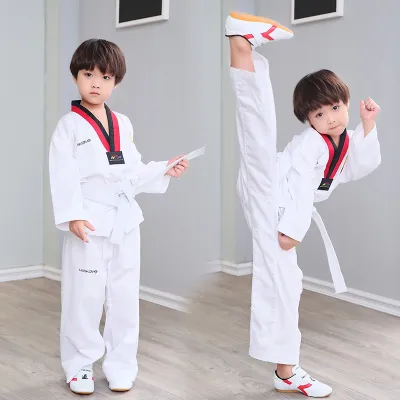
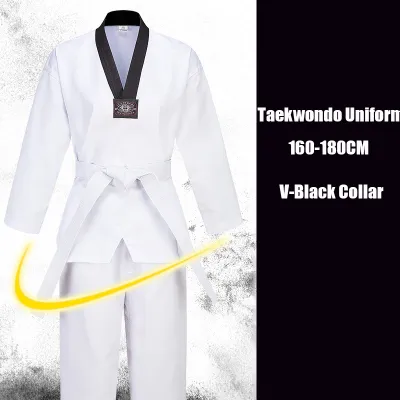
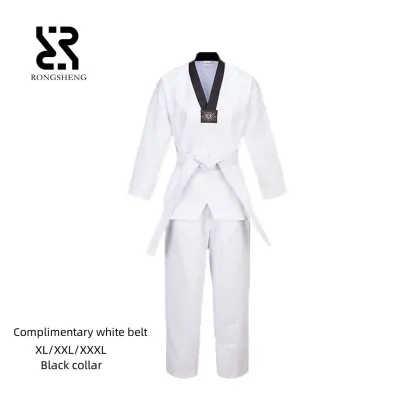
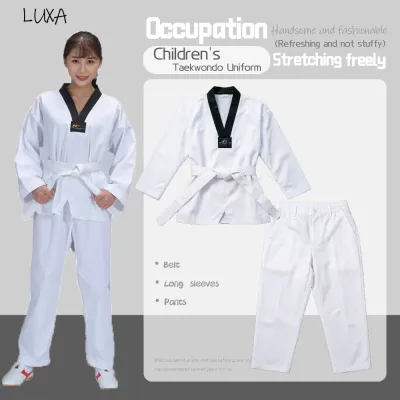
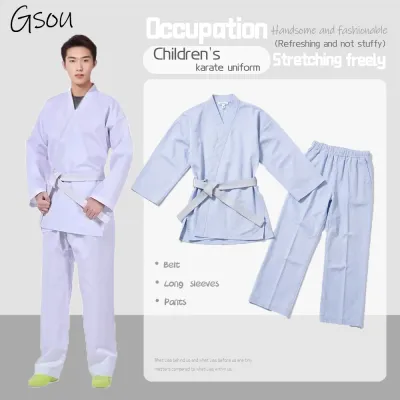
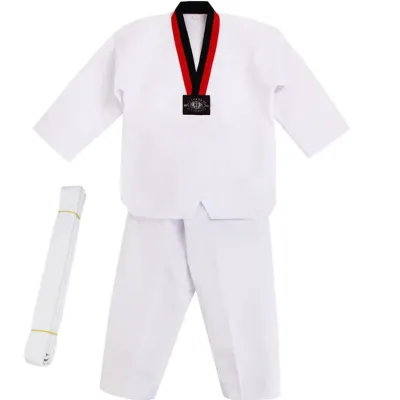
![[Ready Stock]Child Taekwondo Kick Boxing Karate Martial Art Unif Adult Karate Uniform Suit WTF](https://img.lazcdn.com/g/p/7ccabaaa3eb55b52f4a6d58aff239faa.jpg_400x400q80.jpg_.webp)
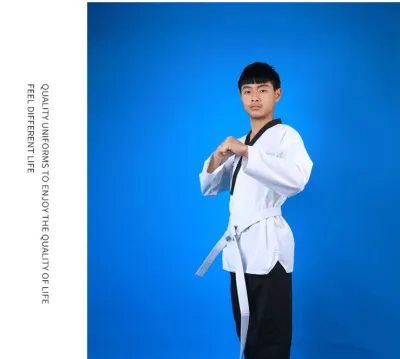
Prices are valid at publication and may change. Please refer to the product page for the latest price.
Evaluate Fabric Weight and Material Composition
The weight and material of your taekwondo uniform set play a critical role in how you manage heat, sweat, and movement. Uniform fabrics are categorized by weight, typically measured in ounces (oz) per square yard. Lightweight uniforms (around 5 oz to 6 oz) are highly recommended for beginners, children, and those training in warm environments. They offer excellent breathability and do not weigh you down. Middleweight uniforms (7 oz to 8 oz) offer a balance of durability and structure, providing that satisfying “snap” sound during crisp punches and kicks. Heavyweight uniforms (10 oz and above) are generally reserved for advanced practitioners or instructors who require high durability and a formal appearance.

In tropical climates where indoor training spaces can become exceptionally warm and humid, material composition is just as important as weight. A 100% cotton uniform is soft and natural, but it absorbs moisture heavily, becoming heavy and damp with sweat during intense workouts. It is also highly prone to shrinking and wrinkling. For most beginners, a poly-cotton blend (typically 55% cotton and 45% polyester, or 65/35) is the ideal choice. These synthetic blends wick moisture away from the skin more effectively, dry much faster, resist wrinkling, and maintain their shape and size after multiple washes. Look for fabrics with ribbed or honeycomb textures, as these patterns help keep the material from sticking to your sweaty skin during high-intensity drills.
Check the Fit, Sizing, and Cut
Finding the correct fit for a taekwondo uniform set requires a different approach than buying everyday casual wear. Dobok sizing is almost universally based on the practitioner’s total height, often categorized by a numbering system (such as Size 000 to Size 7) or directly by height ranges in centimeters. Always consult the manufacturer’s specific sizing chart, paying close attention to both height and weight limits. If you fall between sizes or have a broader build, it is generally safer to size up, as a uniform that is too tight will severely restrict your range of motion.
When trying on a uniform, pay attention to several critical fit points. The sleeves of the jacket should ideally end just before the wrist bone, ensuring they do not interfere with hand blocks or strikes. The pant legs should rest slightly above the ankle bone; pants that are too long pose a serious tripping hazard, especially when executing rapid footwork or spinning kicks. The shoulder seams should align comfortably with your natural shoulders without pulling tight when you cross your arms. Ensure the crotch area (gusset) is cut generously enough to allow for full side splits and high head-height kicks without binding or pulling the waistband down.
Inspect Stitching, Reinforcements, and Quality Indicators
A taekwondo uniform set must endure constant stretching, pulling, and friction. Inspecting the physical construction of the garment before committing to a purchase will save you from premature tears and seam failures. Start by examining the high-stress areas: the armpits of the jacket, the side slits of the hem, and the crotch gusset of the pants. High-quality uniforms feature double or triple stitching in these zones, along with reinforced fabric patches to distribute tension evenly during dynamic movements.
Next, evaluate the collar and the lapel. Even on a beginner’s V-neck jacket, the collar should have a clean, multi-row stitched border that maintains its shape. A flimsy collar will fold and sag, making the uniform look untidy. For the pants, inspect the waistband construction. Most beginner uniforms utilize a wide elastic waistband combined with an internal drawstring. Ensure the elastic is firm and the drawstring is long enough to tie securely. Check that the drawstrings are securely anchored inside the waistband so they do not slide out or snap under tension.
Budgeting and Where to Buy Safely
For a beginner in the Philippines, a reliable starter taekwondo uniform set typically ranges from ₱800 to ₱2,500. Entry-level poly-cotton sets from local sporting goods brands sit on the lower end of this spectrum, offering an affordable entry point for those testing their commitment to the sport. Mid-range uniforms, which often feature better moisture-wicking technology and official federation approvals, generally cost between ₱1,500 and ₱3,000. Investing slightly more in a reputable brand often yields a uniform that lasts significantly longer and feels much more comfortable during hot training sessions.
To ensure you are purchasing a genuine, high-quality product, prioritize buying directly from your dojang, authorized local sporting goods stores, or official brand websites. If you choose to shop on online marketplaces, exercise caution. Read customer reviews carefully, looking for feedback on sizing accuracy and fabric quality. Always verify the seller’s return and exchange policies before finalizing your order. Because martial arts uniforms have highly specific sizing, having the option to exchange an ill-fitting dobok for a different size is crucial for online shoppers.
Frequently Asked Questions (FAQ)
Do I need to buy a belt with my first taekwondo uniform set?
Most entry-level taekwondo uniform sets designed specifically for beginners include a basic white belt in the package. However, this is not a universal rule, and some mid-range or premium sets sell the jacket and pants separately without any belt. Always read the product description carefully before purchasing. If your set does not include a belt, or if your dojang requires a specific width, length, or material, you will need to purchase a standard white belt separately. Your instructor can also guide you on whether the school provides the initial belt as part of your enrollment package.
How should I wash my new dobok to prevent shrinking?
To preserve the lifespan and fit of your dobok, always wash it in cold water on a gentle cycle with a mild detergent. Avoid using bleach, as it can weaken the fabric fibers over time, even on white uniforms. Hang the uniform to air dry rather than using a mechanical dryer. High heat from dryers is the primary cause of shrinkage, particularly for uniforms containing cotton. If your uniform is a poly-cotton blend, air drying will be relatively fast. If you must iron your uniform to remove wrinkles, use a low-to-medium heat setting and avoid ironing directly over any printed logos or embroidered patches.

Community discussion
Share your experience or ask a question. Comments are reviewed before publication.