
When preparing for high-stakes cheerleading competitions in the Philippines, selecting the right equipment is just as critical as perfecting your stunts, pyramids, and tosses. The term “batoon” is widely used in local campus sports, intramurals, and national competitions to describe both cheerleading pom-poms and twirling batons. Selecting competition-grade gear requires a shift from the basic, lightweight accessories used in casual practice sessions to high-performance equipment designed for maximum visual impact, secure handling, and precise physical balance.
To choose the best gear for a competitive routine, you must prioritize three essential factors: visual impact (determined by the material and cut of the strands), secure handling (achieved through specialized grip and handle configurations), and appropriate sizing (tailored to the athlete’s physical build and the choreography’s physical demands). While simple practice gear is built for basic repetition and low-stress drills, competition-grade equipment must withstand high-speed choreography, sudden transitions, and intense aerial tosses without shedding strands, losing balance, or slipping from sweaty hands. The ideal gear choice depends heavily on the specific requirements of your routine, balancing the requirements of toss-heavy stunts against the fluid, rapid hand movements of dance-heavy segments.
Choosing the Right Batoon Material and Cut for Maximum Visual Impact
To capture the attention of judges and spectators under bright gymnasium spotlights, your cheer gear must deliver maximum visual impact. When selecting a competitive batoon, the material and cut of the strands or shaft play a decisive role in how light reflects off the team’s movements.
Products mentioned in this guide
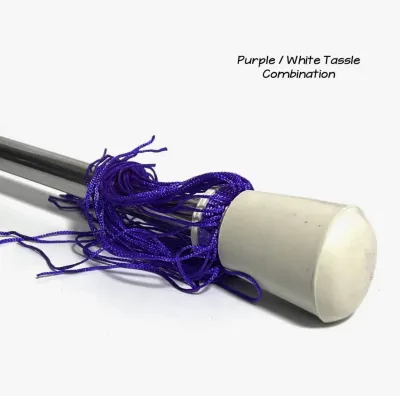
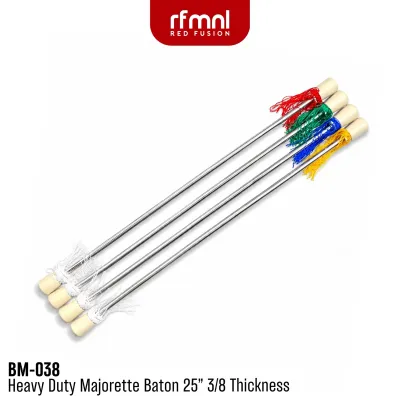
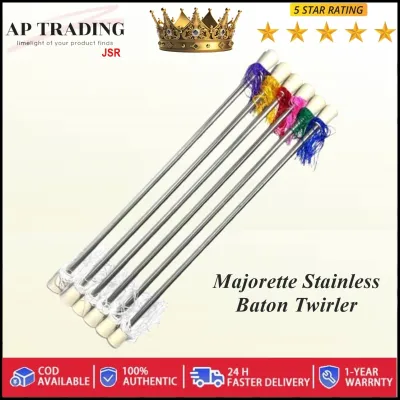
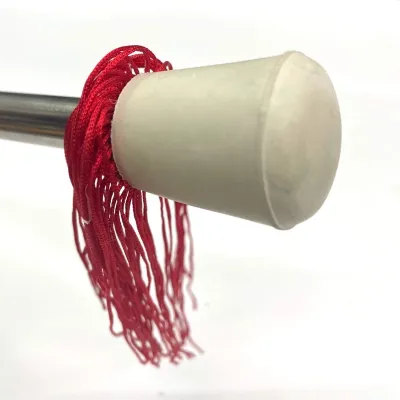
Prices are valid at publication and may change. Please refer to the product page for the latest price.
The two primary materials used for pom-pom strands are metallic film and poly-film (or plastic). Metallic film offers an exceptionally high shine and a classic, shimmering aesthetic that excels under intense arena lighting. However, low-quality metallic films can be thin and prone to tearing or static cling, which makes the pom-poms look flat or sparse over time. In contrast, poly-film or plastic options are highly durable and resistant to tearing. They are available in vibrant solid colors, with matte, semi-gloss, or high-gloss finishes. Many elite competitive teams opt for a mixed-material style, blending metallic strands with poly-film to achieve both the durability of plastic and the eye-catching sparkle of metal.
The cut of the strands also dictates how the gear behaves during fast-paced movements. Common cuts include flat, curly, and mixed variations:
- Flat cuts feature straight, uniform strands that create clean, sharp lines during rigid arm motions, making them ideal for traditional sideline cheering and precise motion techniques.
- Curly cuts feature pre-crinkled or textured strands that naturally puff outward, creating a fuller, more voluminous appearance that catches light from multiple angles even during subtle movements.
- Mixed cuts combine different strand widths or textures to add depth and dimension, preventing the pom-poms from looking thin when viewed from a distance.
For twirling batons, visual impact is determined by the shaft material and the design of the ends. Standard competition batons feature a chrome-plated steel or aluminum shaft that reflects light as it spins. To enhance visibility and provide visual contrast, these shafts are often paired with white or colored rubberized ends, or wrapped in specialized holographic or high-grip tapes.
When evaluating the quality of pom-poms, always check the film thickness, typically measured in mils (thousandths of an inch). Competition-grade pom-poms should feature a film thickness of at least 0.75 mil to 1.2 mil. Thicker film ensures that the strands retain their shape, resist stretching, and withstand the high-friction environment of rapid transitions and floor contact without tearing or shedding.
Handle Types: Ensuring a Secure Grip for Tosses and Stunts
In competitive cheerleading, a dropped prop can result in costly point deductions and disrupt the flow of a highly synchronized routine. Securing a reliable grip is paramount, particularly during high-risk tosses, partner stunts, and rapid-fire dance transitions. The handle mechanism of your gear dictates how securely an athlete can hold, spin, and release the equipment.

Pom-poms generally feature either hard handles or soft handles:
- Hard handles typically consist of a rigid plastic rod or a molded center bar that runs through the middle of the pom-pom. This style is highly recommended for precise grips, quick hand-to-hand transfers, and high-altitude tosses, as it provides a solid structure that does not deform under pressure.
- Soft handles utilize elastic bands, soft fabric loops, or flexible plastic straps that secure directly over the fingers or around the palm. These are highly favored for dance-heavy routines and younger athletes because they allow the hands to open fully during choreographic segments without dropping the prop, facilitating seamless transitions into hip-hop or lyrical segments.
For both twirling batons and hard-handle pom-poms, the inclusion of a secure wrist strap or finger ring is a critical safety feature. These attachments prevent accidental drops during complex aerial maneuvers, ensuring the gear remains anchored to the athlete even if their grip momentarily slips.
Safety Boundary: Before attempting any high-toss stunts or aerial maneuvers, athletes must thoroughly inspect all handle attachments, wrist straps, and center connection points for signs of structural wear, cracking, or tearing. Always check the applied product’s label and the treated item’s manufacturer instructions before use. If instructions conflict, the item is unidentified, or the use is not covered, stop and consult the manufacturer or a qualified professional. Equipment cannot replace proper training or athletic judgment. Never use compromised, loose, or damaged gear for aerial routines, as a detached handle or flying prop poses a serious injury risk to both the performer and spotters.
The tropical climate of the Philippines introduces additional challenges for competitive cheerleaders. High humidity and intense physical exertion lead to sweat-slicked hands, which can cause hard plastic handles to become dangerously slippery. To mitigate this risk, teams should apply high-quality athletic grip tapes, textured tennis overgrips, or non-slip rosin to the handles. These moisture-wicking solutions ensure a tacky, secure grip even under the hot, humid conditions of local school gymnasiums and outdoor arenas.
Sizing and Weight: Matching Gear to the Athlete and Routine
Selecting the correct physical dimensions and weight for your cheerleading gear is essential for preventing premature muscle fatigue, reducing injury risks, and ensuring the visual scale of the props matches the performance venue.
For pom-poms, sizing is determined by the length and count of the individual strands, which typically ranges from 4 inches to 12 inches:
- Youth and Beginners (4-inch to 6-inch): Smaller, lightweight pom-poms are ideal for younger athletes or beginners. They minimize shoulder and wrist fatigue, allowing developing athletes to focus on learning proper motion technique and arm placement without being weighed down.
- High School and Collegiate Competitions (8-inch to 12-inch): Larger, fuller pom-poms are the standard for major competitive stages. These sizes create a massive, commanding visual presence that easily fills large arenas and outdoor stadiums. However, they require significant upper-body strength, wrist stability, and endurance to control during fast-tempo routines.
When selecting twirling batons, the length of the shaft must be precisely matched to the athlete’s arm length. A baton that is too long will strike the performer’s body during close-proximity spins, while a baton that is too short will compromise the leverage needed for high tosses and complex releases. To measure for a baton, have the athlete stand straight and extend one arm fully forward, parallel to the ground. Measure from the base of the neck or the armpit to the tip of the middle finger; this measurement corresponds to the ideal baton length.
The weight distribution and balance point of a baton are equally critical. A competition-grade baton must have a perfectly centered balance point to ensure predictable flight paths and consistent rotation speeds during tosses. Improperly balanced batons require the athlete to make constant physical compensations, significantly increasing the risk of drops, miscalculated catches, and impact injuries to the fingers and face.
As a general guideline, lighter gear is best suited for routines featuring fast, intricate arm motions, rapid hand-to-hand transfers, and hip-hop segments. Conversely, heavier, larger, and more voluminous gear is better suited for traditional, sweeping sideline cheers, slow-tempo visual formations, and large-scale synchronization where maximum color coverage is the primary goal.
Recommended Pom-Pom and Baton Styles for Different Routine Needs
To help teams navigate the selection process, we have categorized the most effective gear styles based on specific competitive scenarios. Selecting the right equipment configuration ensures that your gear supports, rather than hinders, your choreography.
For Toss-Heavy and Stunt Routines
When a routine features frequent aerial tosses, high-speed spins, and physical stunts, durability and grip security are the absolute priorities. For these scenarios, teams should select hard-handle metallic pom-poms constructed with reinforced center holes and securely fastened wrist straps. The film used must be tear-resistant with a high mil thickness (1.0 mil or higher) to withstand the high-impact forces of catching and tossing. The rigid handle ensures a predictable release point, while the wrist strap serves as a fail-safe against drops that could disrupt the stunt sequence.
For Dance and Hip-Hop Routines
Routines that emphasize fluid hand movements, floor work, and intricate close-to-body choreography require gear that does not restrict hand dexterity. For these segments, soft-handle or hand-grip poly-film pom-poms are highly recommended. Choosing a curly cut or a shorter strand length (6 to 8 inches) prevents the strands from tangling in the athletes’ hair or costumes during rapid transitions. The soft elastic or fabric handles allow performers to open their palms fully for floor transitions or partner hand-offs without needing to drop or set aside their props, maintaining a seamless choreographic flow.
For Youth and Beginner Teams
To prevent early muscle fatigue and minimize the risk of impact injuries, youth and beginner divisions should utilize smaller, lightweight pom-poms. Models measuring 4 to 6 inches with soft, flexible elastic handles are ideal. These configurations are easy for small hands to grasp, reduce the physical strain on developing shoulder joints, and eliminate the risk of painful impacts if a hard plastic handle is accidentally dropped or swung during a routine.
For Baton Twirling Segments
For routines that incorporate dedicated baton twirling or majorette segments, standard competition batons are essential. These should feature a balanced steel shaft, rubberized high-visibility ends (often shaped like stars or hexagons to prevent rolling when dropped on the floor), and a precisely calculated center of gravity. Teams should strictly avoid overly heavy, unbalanced, or cheaply constructed novelty batons, as they lack the physical calibration required for safe, high-velocity spinning and catching.
Comparison of Competitive Cheer Gear Styles
| Routine Type | Recommended Style/Feature | Primary Limitation/Trade-off |
|---|---|---|
| Toss-Heavy & Stunts | Hard-handle, high-mil metallic film with reinforced center straps | Rigid handles can cause discomfort during extended floor work or rapid hand transitions |
| Dance & Hip-Hop | Soft-handle or hand-grip poly-film with curly or short-cut strands | Lacks the rigid structure needed for precise, high-altitude aerial tosses |
| Youth & Beginners | Small (4-6 inch), lightweight pom-poms with soft elastic loops | Lacks the massive visual presence and arena-filling volume of larger models |
| Baton Twirling | Balanced steel shafts with rubberized, high-visibility ends | Requires precise measurement and dedicated training; carries higher risk of impact injury |
Maintenance and Care to Extend the Life of Your Cheer Gear
Cheerleading equipment represents a significant financial investment for schools, clubs, and individual athletes. In the hot and humid climate of the Philippines, proactive maintenance is essential to prevent premature degradation, preserve the vibrant colors of the films, and ensure the structural integrity of the handles.
Before performing any cleaning or maintenance, check the applied product’s label and the treated item’s manufacturer instructions. If instructions conflict, the item is unidentified, or the use is not covered, stop and consult the manufacturer or a qualified professional. To clean pom-poms, gently wipe the strands and handles with a soft, damp cloth using clean water. Avoid using harsh chemical detergents, bleach, or submerging the pom-poms entirely in water. Submerging the gear can strip the reflective coatings from metallic films and cause water to seep into the internal handle components, leading to rust, mold growth, and eventual structural failure. For batons, wipe the metal shafts down after every practice with a dry microfiber cloth to remove sweat, hand oils, and dirt, which can corrode the chrome plating over time.
Proper storage is critical for maintaining the fluff and shape of your pom-poms. Always store your gear in breathable mesh bags rather than sealed plastic containers. Breathable bags allow trapped moisture and sweat to evaporate, preventing the film strands from sticking together, melting, or developing a musty odor. Keep all cheer gear in a cool, dry place away from direct sunlight and extreme heat, as prolonged exposure to UV rays will fade vibrant colors and weaken plastic handles, making them brittle.
Finally, establish a routine safety check before every practice and competition. Inspect the connection points where the strands meet the handle, checking for loose wires, cracking plastic, or excessive shedding. Any gear that displays sharp edges, loose internal components, or significant strand loss should be retired immediately to protect the safety of the athletes.
Frequently Asked Questions (FAQ)
Can I use the same pom-poms for both practice and competitions?
While it is physically possible to use the same pair, doing so is not recommended for competitive teams. Daily practice drills, floor contact, and repetitive packing subject pom-poms to intense friction, causing the strands to tear, flatten, and lose their reflective shine. To ensure your team looks pristine on the competition floor, it is best to dedicate a high-quality, vibrant pair exclusively for competition day. Use older, worn, or more durable plastic pairs for daily training sessions to preserve the visual impact of your competition gear.
How do I prevent metallic pom-poms from shedding or tearing during routines?
To minimize shedding and tearing, choose pom-poms made from high-mil film (at least 0.75 mil to 1.0 mil) with reinforced, double-anchored center attachments. During routines, instruct athletes to avoid scraping the pom-poms against rough gymnasium floors or catching them on the velcro closures of uniforms, as these are primary causes of strand tearing. Additionally, storing the pom-poms loosely in breathable bags rather than compressing them tightly will prevent the strands from tangling and snapping when pulled apart.
Community discussion
Share your experience or ask a question. Comments are reviewed before publication.