
Choosing your first Taekwondo uniform is an exciting milestone, but browsing local shops or online marketplaces can feel overwhelming. With various styles, fabric blends, and sizing systems available, finding the right gear requires a bit of preparation. Beginners need a uniform that balances comfort, durability, and freedom of movement without breaking the bank.
For most novices training in the Philippines, the ideal starter uniform is a lightweight (6 oz to 8 oz) cotton-polyester blend featuring an elastic waistband and a V-neck pullover design. This combination offers the perfect balance of breathability, ease of movement, and easy maintenance. However, before purchasing your first dobuk taekwondo uniform, you must understand the specific requirements of your training school and how to select the right fit for your body.
Verify Your Dojang and Federation Requirements First
Before you spend money on a new uniform, your absolute first step must be to consult with your instructor, known as the Sabomnim. Every martial arts school, or dojang, operates under specific rules, and buying the wrong style of uniform can make it completely unusable for your classes. Taekwondo is globally split into different governing bodies, and each has its own distinct uniform design.
Products mentioned in this guide
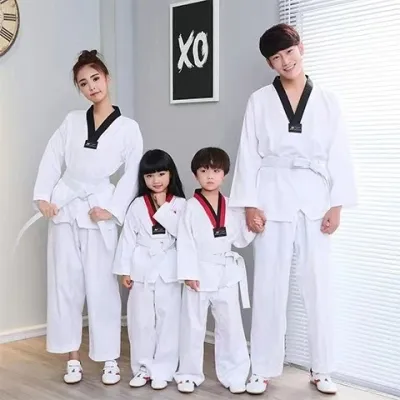
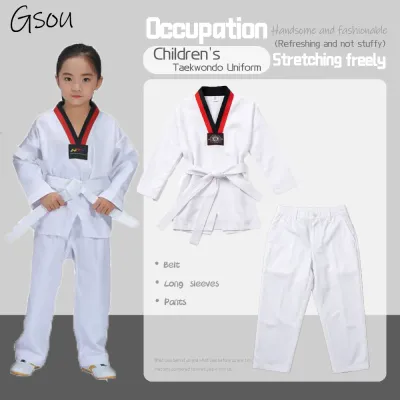
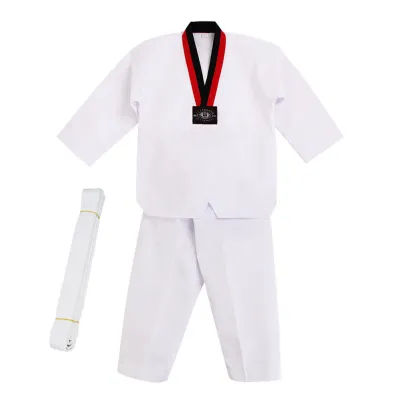
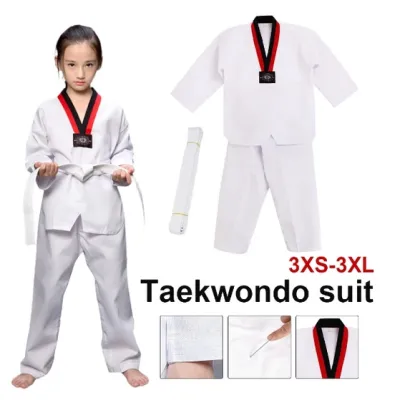
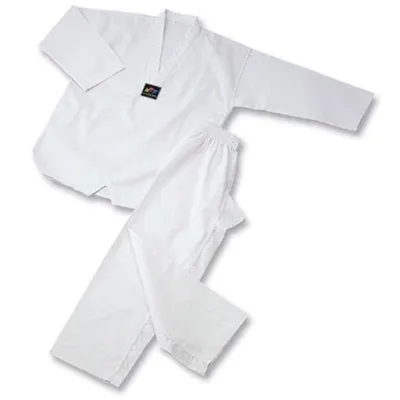
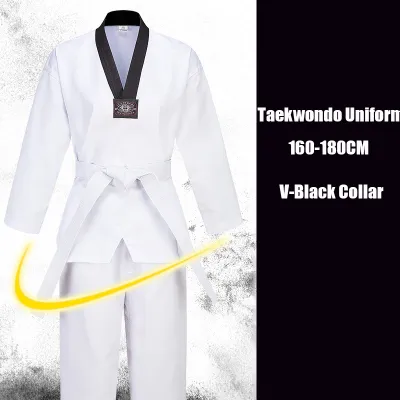
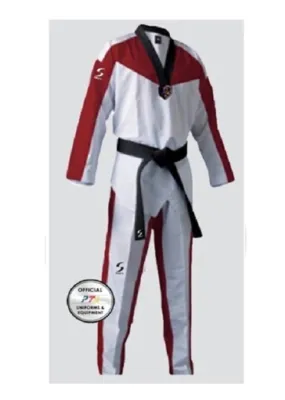
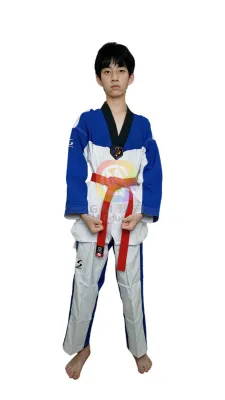
Prices are valid at publication and may change. Please refer to the product page for the latest price.
The primary distinction you will encounter is between World Taekwondo (WT) and the International Taekwon-Do Federation (ITF). WT-style uniforms feature a distinctive V-neck pullover jacket. For color belt beginners (geup students), this V-neck collar must be solid white. Black V-neck collars are strictly reserved for those who have achieved black belt status, while red-and-black collars are designated for junior black belts under the age of 15. Wearing a black-trimmed collar as a beginner is considered a major breach of etiquette in WT dojangs.
In contrast, ITF-style uniforms typically feature an open-front jacket that closes vertically down the middle using hook-and-loop fasteners (Velcro) or a zipper. These uniforms often have specific vertical trim and a different cut compared to WT designs. In the Philippines, the vast majority of dojangs are affiliated with the Philippine Taekwondo Association (PTA), which follows WT rules, but independent or ITF-affiliated clubs are also common.
Additionally, many local dojangs require students to wear uniforms featuring the school’s official patch or logo, which is typically sewn onto the left chest or the back of the jacket. Some schools also mandate specific brands or sell their own custom-branded uniforms directly to students. Always ask your instructor if the cost of your first dobuk taekwondo uniform is already included in your initial registration fee, or if they have a preferred local supplier you should use.
Select the Right Fabric Weight for Tropical Training
Training in the Philippines presents unique challenges due to the hot, humid tropical climate. Many local dojangs are located in community centers, school gymnasiums, or open-air spaces without air conditioning. During an intense training session filled with high kicks, footwork drills, and sparring, you will sweat heavily. Therefore, selecting the right fabric composition and weight is critical for your comfort and performance.

Traditional martial arts uniforms were made from 100% cotton canvas. While cotton is natural and highly breathable when dry, it acts like a sponge when you sweat. A 100% cotton uniform will absorb moisture, become heavy, and cling to your skin, which restricts your movement and makes training uncomfortable. Cotton is also prone to severe shrinkage during the first few washes and requires tedious ironing to keep it looking neat and professional.
For beginners, a cotton-polyester blend (typically 65% polyester and 35% cotton) is highly recommended. Polyester is a synthetic, hydrophobic fiber that does not absorb water. Instead, it wicks moisture away from your skin and allows the fabric to dry rapidly. Poly-cotton blends are lightweight, highly resistant to wrinkles, hold their bright white color over time, and experience minimal shrinkage in the wash. This makes them incredibly practical for daily training in humid conditions.
Fabric weight for a Taekwondo uniform is measured in ounces per square yard (oz). As a beginner, you should look for a lightweight uniform, typically between 6 oz and 8 oz. This weight provides excellent breathability, keeps you cool, and offers minimal resistance when you are learning basic kicks. It is also highly affordable, with basic starter uniforms in the Philippines typically ranging from ₱600 to ₱1,500. Avoid heavyweight uniforms (10 oz to 14 oz), which are designed for advanced poomsae (forms) competitors. While heavyweight canvas uniforms create a sharp, loud “snapping” sound during movements, they are far too stiff, hot, and expensive for a beginner’s daily drills.
Determine the Correct Sizing and Fit for Kicking
Unlike standard casual clothing, which uses sizes like Small, Medium, or Large, Taekwondo uniforms are sized based on the practitioner’s total height in centimeters. Standard sizes typically range from 110 cm to 210 cm, usually moving in 10-centimeter increments (such as 150, 160, 170, and 180). Getting the right fit is essential not just for appearance, but for safety and performance during dynamic kicking.
To find your correct size, start by measuring your total height from the top of your head to the floor. Always consult the specific manufacturer’s size chart before purchasing, as sizing can vary slightly between different brands. If you have a broader build, carry more weight, or fall right on the border between two height categories, it is generally best to size up. For example, if you are 165 cm tall with a broader frame, a size 170 will provide a much more comfortable fit than a size 160.
When trying on your new uniform, check for the following fit characteristics:
- Sleeves: The jacket sleeves should end near your wrist bone when your arms are relaxed at your sides. Sleeves that are too long will cover your hands, interfering with proper fist formation and hand blocks, while sleeves that are too short can look awkward and fail to provide adequate coverage.
- Pants: The hem of the pants should rest just above your ankle bone. If the pants are too long, you run the risk of stepping on the fabric during fast footwork, which can cause you to slip, trip, or tear the hem. If they are too short, they may ride up uncomfortably during high kicks.
- Crotch and Seat: Ensure there is ample room in the seat and crotch area. You should be able to drop into a deep horse-riding stance or perform a front split without feeling any tightness or restriction in the fabric.
Evaluate Beginner-Friendly Design Features
When shopping for your first uniform, paying attention to specific design details can make your training experience much more comfortable and less distracting. A well-designed starter uniform allows you to focus entirely on learning your techniques rather than constantly adjusting your clothing.
The classic WT-style V-neck pullover is highly favored for beginners because of its simplicity. Unlike open-jacket designs that rely on ties or ties and Velcro, a pullover jacket has no front flaps that can fly open during active sparring or dynamic kicking drills. It stays neatly in place, maintaining a clean, uniform appearance throughout your entire training session.
Another crucial feature to consider is the waistband of the pants. For beginners, children, and casual practitioners, an elastic waistband with an integrated internal drawstring is the absolute best choice. The elastic provides a secure, flexible fit that moves with your body, while the drawstring allows you to tighten the waist to your exact comfort level. Traditional tie-only waistbands, which require complex knotting, can easily slip down during intense kicking, leading to embarrassing distractions mid-class.
Finally, look for structural reinforcements in high-stress areas. Even basic starter uniforms should feature double-stitched seams along the shoulders, underarms, and outer pant legs. A particularly important feature is a gusseted crotch—a triangular diamond of fabric sewn into the crotch area. This design element distributes tension evenly in all directions, allowing you to perform high roundhouse kicks or deep stretches without putting excessive stress on the seams, significantly reducing the risk of accidental rips.
Plan for Uniform Care and Maintenance in Humid Climates
A clean, crisp, white uniform is a symbol of respect in Taekwondo—respect for your instructor, your training partners, and yourself. In the humid climate of the Philippines, keeping your uniform bright white and smelling fresh requires consistent care. Proper maintenance not only ensures you look your best on the mats but also extends the lifespan of your gear.
First and foremost, never leave a damp, sweat-soaked uniform crumpled inside your gym bag after training. The dark, warm, and humid environment of a closed bag is a breeding ground for bacteria, mold, and mildew (locally known as amag). This can lead to permanent sour odors and stubborn grey or yellow stains that are incredibly difficult to remove. As soon as you return home from the dojang, take the uniform out of your bag and wash it immediately, or hang it up to air out if you cannot wash it right away.
When washing your uniform, always use cold water and a mild laundry detergent. Cold water helps prevent any cotton fibers in the fabric blend from shrinking and protects the structural integrity of the collar. Avoid using harsh chlorine bleach on a regular basis. While it may seem like an easy way to keep your uniform white, chlorine bleach actually breaks down the synthetic polyester and natural cotton fibers over time, making the fabric thin, yellowed, and prone to tearing. Instead, use oxygen-based whiteners or pre-treat sweat-prone areas like the collar and underarms with a paste of baking soda and water.
For drying, hang your uniform on a sturdy hanger in a well-ventilated, shaded outdoor area or indoors under a ceiling fan. Avoid drying your white uniform in direct, harsh tropical sunlight for extended periods, as intense UV rays can cause the white fabric to yellow over time. Never use a high-heat setting in a mechanical dryer, as this can warp the stiff collar and cause unwanted shrinkage. If you prefer to iron your uniform, use a low-to-medium heat setting, and be careful to avoid ironing directly over any embroidered logos, patches, or brand labels to prevent melting.
Frequently Asked Questions (FAQ)
Do I need to buy a black belt with my first white dobok?
No, you do not need to buy a black belt. All beginners in Taekwondo start at the white belt level, which represents a clean slate and a readiness to learn. When you purchase a beginner’s uniform set from an online sports retailer or a local martial arts shop, a basic white belt is almost always included in the package. If you enroll in a local dojang, the school will often provide your first white belt as part of your registration or uniform package. Buying a black belt prematurely is not only unnecessary but also goes against the deep-seated traditions and etiquette of martial arts. You will earn your subsequent colored belts and eventually your black belt through consistent training, dedication, and formal promotional testing.
Can I wear a karate or judo gi for Taekwondo?
While they may look similar to an untrained eye, you should not wear a karate or judo gi for Taekwondo training. These uniforms are specifically engineered for the unique physical demands of their respective martial arts. A judo gi is constructed from incredibly thick, heavy, and heavily reinforced double-weave cotton designed to withstand intense grabbing, pulling, and throwing. Wearing a judo gi for Taekwondo will severely restrict your mobility, make you overheat quickly, and prevent you from executing fast, high kicks. Karate gis often feature an open, cross-over jacket design with ties, which can easily come undone during the dynamic, 360-degree spinning movements characteristic of Taekwondo. A proper Taekwondo uniform is specifically cut lighter and wider in the legs to facilitate maximum kicking speed and range of motion safely.
How many doboks should a beginner own?
When you are first starting out, owning just one uniform is perfectly fine to test your commitment to the sport. However, if you decide to continue training and increase your class frequency to two or more days per week, it is highly recommended to purchase a second uniform. Because of the high humidity in the Philippines, air-drying a uniform completely can easily take more than 24 hours, especially during the rainy season. Having a second uniform ensures that you will always have a clean, dry, and fresh dobok ready for every class, preventing the need to rush through laundry or wear a damp uniform to training.
Community discussion
Share your experience or ask a question. Comments are reviewed before publication.