
Choosing the right tennis gear bag is just as critical as selecting the perfect racket frame. If you are looking to invest in a Babolat tennis backpack, the ideal model depends directly on your weekly playing frequency and the exact number of rackets you need to carry. Casual players who hit the court once a week or less generally benefit from compact, lightweight standard backpacks that hold one or two rackets. Conversely, competitive players, daily trainers, and tournament participants require specialized racket holder backpacks that accommodate three or more frames alongside extra apparel, shoes, and recovery gear.
Matching your bag to your specific playing habits ensures that your equipment remains protected from physical damage and environmental wear while keeping your commute comfortable. Babolat offers a diverse range of bags designed to cater to these varying demands, from streamlined commuter packs to expandable multi-racket holders. By analyzing your storage needs, transportation methods, and local climate challenges, you can select a model that enhances your court experience rather than becoming a carrying burden.
How to Match Your Playing Frequency and Racket Count to a Backpack
To find the perfect balance between storage capacity and portability, you must first evaluate how often you play and how much gear you actually bring to the court. Tennis players generally fall into three distinct frequency categories, each with unique equipment demands.
Products mentioned in this guide
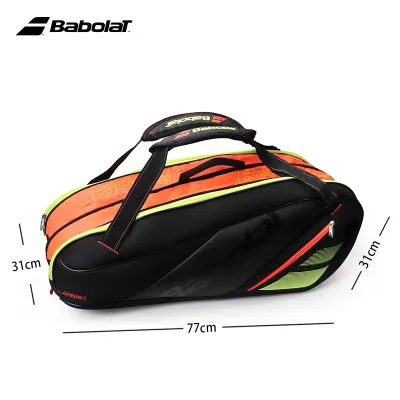
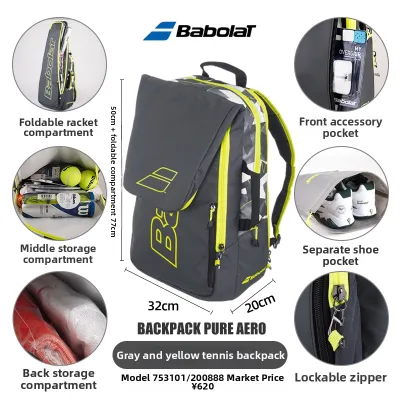
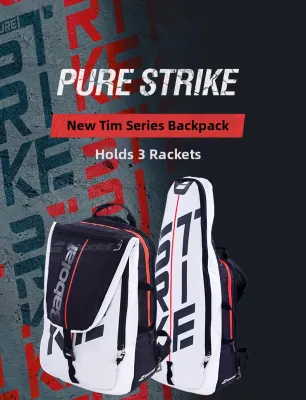
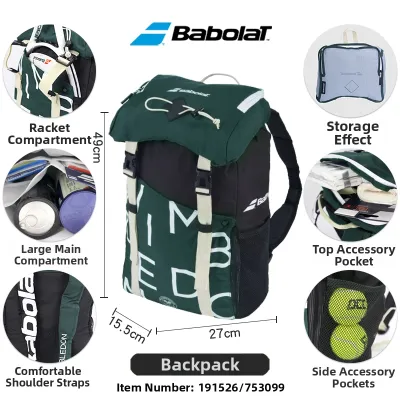
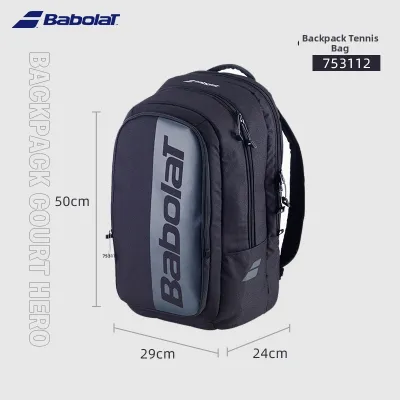
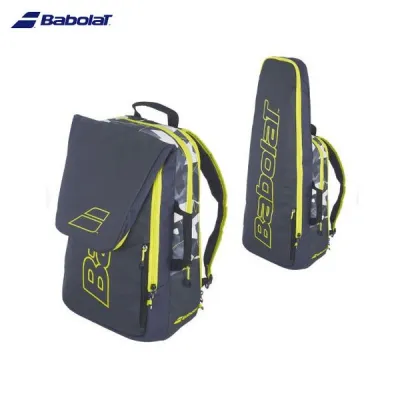
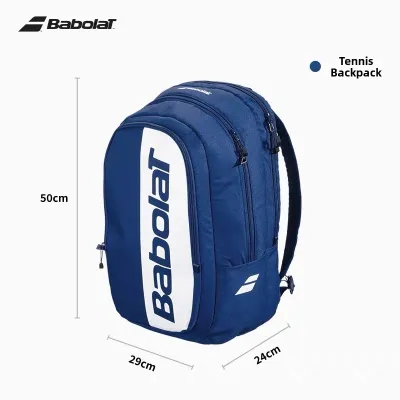
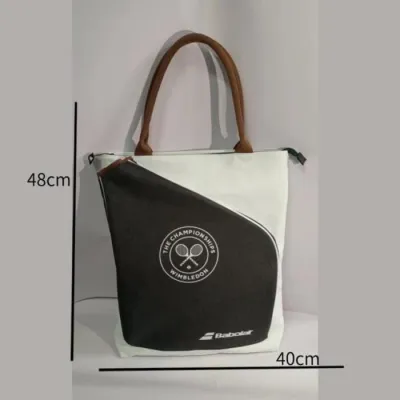
Prices are valid at publication and may change. Please refer to the product page for the latest price.
Casual and Weekend Players: If you play once a week, bi-weekly, or occasionally on weekends, your gear requirements are likely minimal. You typically need to carry one or two rackets, a can of tennis balls, a water bottle, and a few small personal items like keys and a smartphone. For this level of play, a standard tennis backpack is highly efficient. It provides a lightweight profile that is easy to carry on public transit, in a car, or on active transport, without the unnecessary bulk of a full-size tournament bag.
Regular and Weekly Players: If you hit the court two to three times a week for league matches, drills, or social singles, your gear needs will naturally expand. You may want to carry a backup racket in case a string breaks mid-match, a change of clothes, a towel, and extra grip wraps. At this frequency, you need a bag that offers dedicated compartments to separate sweaty apparel from dry gear, while still maintaining a manageable footprint.
Competitive and Daily Players: For those training daily, playing high-level club tournaments, or coaching, carrying three or more rackets is standard practice. You must prepare for different court conditions, string tension losses, and unexpected frame damage. This level of play demands a high-capacity racket holder backpack or an expandable hybrid bag. These models are engineered to distribute heavy loads evenly across your back while offering specialized protection for multiple frames.
The physical limits of standard backpacks versus racket holder backpacks are defined by their structural design. Standard backpacks store rackets vertically, often leaving the handles exposed to the elements. They rely on the main compartment’s zipper to hold the rackets in place, which can put stress on the fastening system over time. Racket holder backpacks, however, feature dedicated, reinforced compartments that enclose the entire racket or secure multiple frames parallel to your spine. This design shifts the center of gravity closer to your body, reducing lower back strain and preventing the rackets from shifting side-to-side as you walk.
Babolat categorizes many of its bags to match its iconic racket families, such as the Pure Aero (focused on spin and power), Pure Drive (focused on explosive power), and Pure Strike (focused on control and precision). While matching your bag’s aesthetic to your racket series is a popular choice for a cohesive look, you should prioritize the compartment layout and structural features over colorways. Before purchasing, it is highly recommended to verify the current collections, color options, and exact compartment configurations through authorized retail channels to ensure the model matches your functional requirements.
Best Babolat Backpacks for Casual and Weekly Players (1-2 Rackets)
For players who prioritize mobility and only need to transport one or two rackets, standard Babolat tennis backpacks offer an excellent blend of sport-specific utility and everyday versatility. These bags are designed to transition seamlessly from work or school directly to the tennis court, making them ideal for urban commuters and recreational players.

The primary benefit of a standard 1-2 racket backpack is its compact, lightweight profile. Unlike massive tournament bags, these backpacks fit easily into gym lockers, car trunks, or passenger seats. If you commute by bicycle or motorcycle, a compact backpack keeps your wind resistance low and ensures your peripheral vision is not blocked by protruding racket handles. The streamlined design also means you are not carrying excess fabric or empty space, which keeps your overall load as light as possible.
When evaluating standard Babolat backpacks, look for several essential compartments to maximize organization:
- Dedicated Racket Compartment: This pocket is positioned closest to your back to optimize weight distribution. It should feature locking zippers that prevent the compartment from sliding open while you are in motion, and a protective handle cover to shield your grips from dirt and light moisture.
- Separate Shoe or Tunnel Compartment: Keeping your court shoes isolated is crucial. A dedicated bottom or front pocket prevents clay, hard-court dust, and sweat odors from transferring to your clean shirts, towels, or racket grips.
- Accessory Pockets: Small, zippered side or front pockets are essential for organizing dampeners, replacement grips, wristbands, keys, and your phone, preventing them from getting lost at the bottom of the main compartment.
- Main Gear Compartment: This central space should be large enough to hold a change of clothes, a can of balls, and a water bottle without crushing your other gear.
Before finalizing your choice, create a personal checklist to verify the bag’s specifications. Check the official Babolat website or visit authorized sports retailers in the Philippines to confirm the exact dimensions of the model you are eyeing. Ensure that the shoulder straps are fully adjustable and feature breathable mesh padding to handle hot afternoon sessions. Verifying these details beforehand prevents the frustration of buying a bag that is too short for your racket’s frame size or uncomfortable against your shoulders.
Best Babolat Racket Holder Backpacks for Frequent Players (3+ Rackets)
When your playing frequency increases and you begin carrying three or more rackets, standard backpacks no longer provide adequate space or protection. Serious club players, tournament competitors, and coaches require Babolat racket holder backpacks or expandable hybrid bags designed specifically to manage heavier gear loads without sacrificing ergonomic comfort.
Carrying multiple rackets, extra strings, multiple cans of balls, training aids, and recovery equipment puts significant physical stress on both the bag and your body. To handle this weight, Babolat’s high-capacity bags feature reinforced internal frames and structured side panels. These elements prevent the bag from collapsing or sagging, which keeps the weight distributed evenly across your hips and shoulders. Additionally, these bags utilize heavily padded, ergonomic shoulder straps that are often adjustable at both the top and bottom, allowing you to customize how high the bag sits on your back to prevent lumbar strain.
However, choosing a larger racket holder backpack involves clear trade-offs that you must consider:
- Increased Weight and Bulk: A structured, multi-racket bag is inherently heavier when empty due to the reinforced materials, extra zippers, and thermal linings. It occupies significantly more space, making it more challenging to transport on crowded public transit or store in small spaces.
- Maximum Protection and Organization: In exchange for the added bulk, you receive unparalleled protection for your valuable frames. Dedicated compartments prevent rackets from scraping against one another, while specialized thermal linings shield your strings from extreme temperature fluctuations.
- Advanced Gear Separation: These bags offer distinct zones for clean apparel, wet gear, shoes, and multiple rackets, ensuring that your equipment remains organized and ready for competitive play.
To ensure you select the right high-capacity model, verify the exact racket capacity and structural specifications before purchasing. Some models feature expandable zippers that allow you to convert the bag from a sleek 3-racket commuter pack into a full 6-racket holder. Check the manufacturer’s product descriptions for explicit mentions of thermal protection in the racket compartments, as this is vital for maintaining string performance. Finally, verify the warranty conditions offered by authorized local distributors to protect your investment against manufacturing defects in the zippers, seams, or straps.
Essential Features to Verify Before Buying
Investing in a tennis backpack requires looking beyond brand aesthetics to evaluate the practical, real-world durability of the bag’s components. Because tennis gear is subjected to harsh outdoor environments, court dust, and heavy loads, verifying specific build features will ensure your bag lasts for multiple seasons.
Thermal Protection: In the hot and humid climate of the Philippines, thermal protection is not a luxury—it is a necessity. High temperatures inside car trunks or on exposed courts can cause tennis strings, particularly polyester and nylon multifilaments, to lose tension rapidly, a phenomenon known as “tension creep.” Extreme heat can also degrade the adhesives used in racket frames and cause replacement grips to become slick or unraveled. When browsing Babolat models, check the product labels or online specifications for terms like “Isothermal Compartment.” This specialized lining reflects radiant heat, keeping your rackets at a stable temperature and preserving your string playability.
Shoe Compartment: A ventilated shoe compartment is essential for maintaining hygiene and protecting your gear. Tennis shoes collect clay, court grit, and intense moisture during play. Storing them in the same compartment as your clean apparel or rackets can lead to mold growth, fabric staining, and unpleasant odors. Ensure the bag you choose features a dedicated shoe tunnel with mesh ventilation grommets. This design allows air to circulate, helping your shoes dry out faster while keeping dirt completely isolated from the rest of your gear.
Material and Durability: The longevity of your tennis backpack depends heavily on the quality of its fabrics and hardware. Look for bags constructed from high-denier polyester or polyurethane-coated fabrics, which offer excellent abrasion resistance and shield your gear from light rain. Examine the zippers closely; they should be heavy-duty, smooth-gliding, and ideally feature lockable pull tabs on the racket compartments. Reinforced stitching at the stress points—where the shoulder straps and top handle connect to the main body—is a critical indicator of a bag built to withstand heavy daily use.
Ergonomics: Carrying several kilograms of gear to and from the court can quickly lead to shoulder and neck fatigue if your bag lacks proper ergonomic support. Verify that the backpack features thick, high-density foam padding along the back panel, with air-mesh channels to promote ventilation against your back. Adjustable sternum straps are highly beneficial for high-capacity bags, as they clip across your chest to keep the shoulder straps from slipping and help distribute the weight more comfortably across your torso.
Frequently Asked Questions (FAQ)
Can a standard Babolat backpack hold more than two rackets?
While you might physically fit a third racket into the main compartment of a standard Babolat backpack, doing so is highly discouraged. Standard backpacks are structurally engineered and balanced for a maximum of two rackets. Exceeding this limit forces the zippers to strain against the frames, which can lead to zipper failure or torn seams. Furthermore, crowding three rackets into a space designed for two causes the frames to rub together, resulting in paint chips, structural scratches, and premature wear on your grip wraps. If you regularly need to carry three or more rackets, upgrading to a dedicated racket holder backpack is the safest way to protect your gear and maintain comfortable weight distribution.
Are Babolat tennis backpacks waterproof?
Most Babolat tennis backpacks are constructed with water-resistant materials and protective coatings designed to repel light drizzle and moisture. However, they are not fully waterproof. During heavy tropical downpours, water can eventually penetrate through the zipper seams and stitching, potentially exposing your rackets, strings, and electronics to moisture. To protect your gear during severe weather, check the product specifications for water-resistant ratings. If you frequently commute during the rainy season, it is highly recommended to pack a separate, lightweight waterproof rain cover to wrap around your backpack, or store sensitive electronics and spare grips inside dry bags within the main compartment.
How do I clean and maintain my Babolat tennis backpack?
To extend the lifespan of your Babolat tennis backpack, regular and gentle maintenance is essential. Start by completely emptying all compartments, shaking out any court grit, clay, or debris. Wipe down both the interior and exterior surfaces using a soft microfiber cloth dampened with lukewarm water and a mild, non-abrasive soap. Allow the bag to air-dry completely in a shaded, well-ventilated indoor area before storing it or packing gear. Never use harsh chemical solvents, bleach, or abrasive brushes, as these can permanently strip away water-resistant coatings and damage delicate thermal linings. Avoid machine washing, tumble drying, or leaving the bag in direct sunlight to dry, as extreme heat and mechanical agitation can warp the bag’s structural panels and degrade the synthetic fabrics.
Community discussion
Share your experience or ask a question. Comments are reviewed before publication.