
Choosing the first wheeled toy for a one-year-old is an exciting milestone, but navigating the options can be overwhelming. At twelve months old, a child is undergoing rapid physical changes, transitioning from crawling to taking their first tentative steps. Finding a toy that matches their current motor skills is essential for both their safety and their physical development.
For a one-year-old, a foot-to-floor ride-on toy is the most appropriate and safest choice. These toys feature a highly stable, low-to-the-ground design that allows babies to use their natural walking motion to move forward while keeping both feet securely on the floor. Tricycles are only suitable at this stage if they are convertible models equipped with a parent push handle, secure safety harnesses, and footrests, essentially functioning as a stroller. Standard two-wheel balance bikes are generally too advanced for a twelve-month-old, as they require a level of dynamic balance, coordination, and leg length that toddlers do not typically develop until they are closer to two years old.
By understanding how these different options align with your child’s physical capabilities, you can select a toy that builds confidence, encourages active play, and keeps your little one safe during their daily adventures.
Products mentioned in this guide
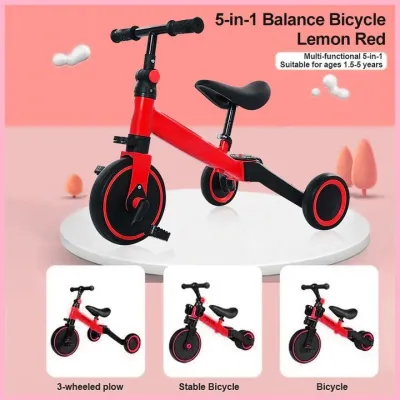
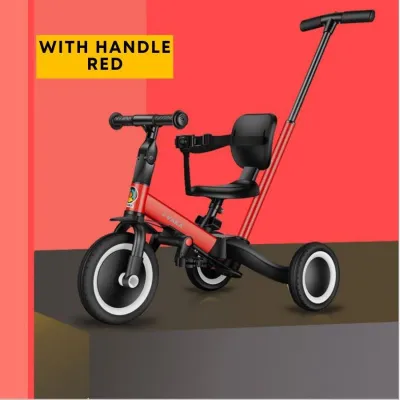

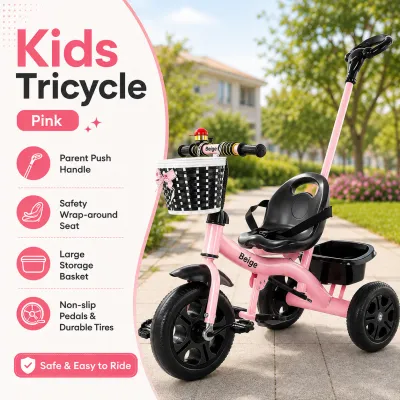
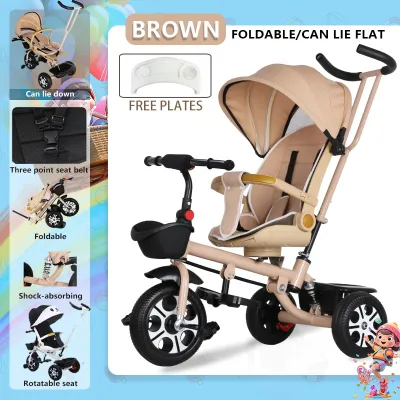
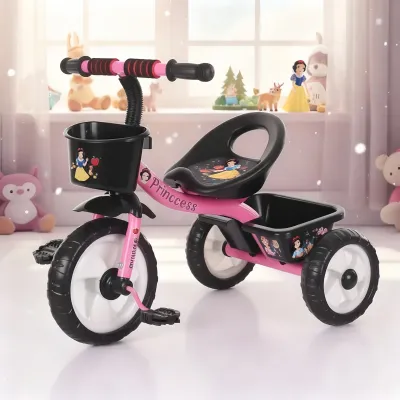
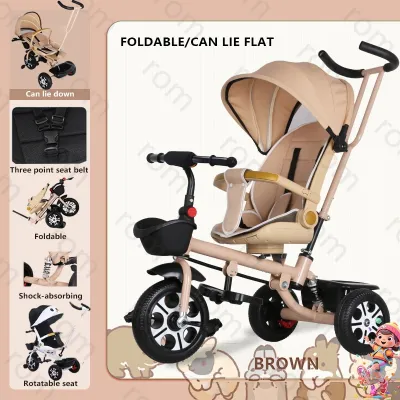
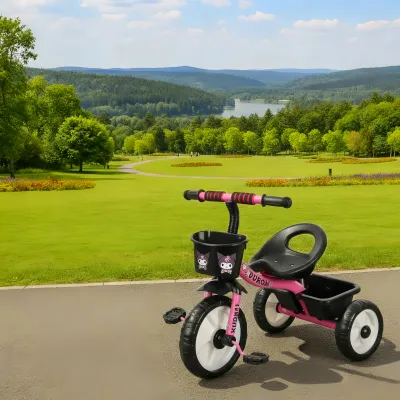
Prices are valid at publication and may change. Please refer to the product page for the latest price.
Matching Bike Types to a 1-Year-Old's Physical Abilities
At twelve months of age, a toddler’s physical development is centered around mastering upright balance and basic locomotion. Most babies at this stage are either crawling, cruising along furniture, or taking their first independent steps. Their leg strength is developing, but they do not yet possess the bilateral coordination required to push pedals in a continuous circular motion. Consequently, any toy that relies on pedaling for movement will be unusable for a child of this age without direct parental assistance.
Sizing is another critical factor when evaluating wheeled toys for a one-year-old. For a toddler to ride safely and confidently, the seat height of the toy must allow them to plant both feet completely flat on the ground with a slight bend in their knees. This flat-footed stance is crucial because it serves as their primary braking and steering mechanism. If a child has to tip-toe to reach the ground, they will struggle to balance, leading to frequent tips and falls.
Furthermore, a one-year-old’s physical proportions differ significantly from older children. Toddlers have a relatively high center of gravity because their heads are large in proportion to their bodies. This makes them prone to tipping forward or sideways if a toy is too tall or unstable. To compensate for this, toys designed for this age group must feature a low center of gravity, excellent lateral stability, and built-in steering limiters that prevent the handlebars from turning too sharply.
Ride-On Toys: The Ideal First "Bike"
Foot-to-floor ride-on toys are specifically engineered to support the developmental stage of a twelve-month-old. Because these toys do not have pedals, they allow toddlers to focus entirely on the sensation of movement and basic steering. The child simply sits on the saddle and pushes off the ground with their feet, mimicking the natural gait of walking while enjoying a boost in speed and mobility.

When shopping for a ride-on toy, stability should be your top priority. Look for models with a wide wheelbase, where the wheels are positioned far apart at both the front and the rear. This wide footprint prevents the toy from tipping sideways when the child leans or attempts to climb on and off. Additionally, enclosed wheels or solid wheel designs are highly recommended, as they protect tiny toes from getting pinched or run over during play.
Ergonomics play a vital role in how comfortable and safe the ride-on toy will be for your child. Opt for a contoured seat that curves slightly upward at the back, which helps keep the toddler centered and prevents them from sliding off the rear of the toy. The handlebars should be positioned at a comfortable height and distance, allowing the child to grip them firmly without leaning excessively forward, which could compromise their balance.
Finally, verify that the ride-on toy is equipped with a steering limiter. This safety feature restricts the turning angle of the front wheels, preventing the child from making sudden, sharp turns that could cause the toy to roll over. In tropical climates like the Philippines, where indoor play on smooth tiled floors is common during hot afternoons or rainy days, a lightweight plastic or high-quality wooden ride-on with rubberized wheels is ideal, as it provides excellent traction without scratching indoor surfaces.
Tricycles: Evaluating Push-Trike Options for Toddlers
Traditional tricycles, where the pedals are fixed directly to the front wheel, are not suitable for independent riding at one year old. Children typically do not develop the leg length, joint flexibility, and cognitive coordination required to pedal a tricycle until they are between two and three years of age. Expecting a twelve-month-old to pedal independently will only lead to frustration and potential injury.
However, convertible push-trikes offer a practical workaround for parents who want a toy that grows with their child. These multi-stage vehicles feature a long parent push handle that allows an adult to control the steering and speed from behind. At one year old, the tricycle is used in its initial stage, functioning essentially as an interactive stroller where the child is securely buckled in and enjoys the ride.
For a push-trike to be safe for a one-year-old, it must include several specific features. First, a secure three-point or five-point safety harness is essential to keep the toddler upright and prevent them from sliding out of the seat. Second, the trike must have dedicated footrests where the child can rest their feet safely away from the ground and the moving pedals. Finally, look for a model with a pedal-clutch mechanism that allows you to unlock the pedals, letting them spin freely without moving the front wheel, which prevents the pedals from striking your child’s shins while you push.
As your child grows, these convertible trikes can be adjusted to match their developing skills. Eventually, the safety surrounds and parent handle can be removed, and the pedals can be engaged, transforming the vehicle into a traditional tricycle. This adaptability makes push-trikes a popular, long-term investment for many families.
Balance Bikes: Why Most Are Too Advanced (and What to Look For)
Standard two-wheel balance bikes have become incredibly popular for teaching young children how to ride, but they are generally too advanced for a typical one-year-old. Riding a two-wheel balance bike requires a child to run, push off, and glide while balancing on just two narrow contact points. This demands a level of vestibular development, core strength, and spatial awareness that a twelve-month-old has not yet achieved.
In addition to the developmental hurdles, physical sizing is a major barrier. Most standard 12-inch balance bikes have a minimum seat height of 11 to 12 inches. Because a typical one-year-old has an average inseam of only 8 to 10 inches, they will not be able to touch the ground flat-footed while seated on a standard balance bike, making safe operation impossible.
If you are eager to introduce the concept of a balance bike early, look for specialized four-wheel baby cruisers or ultra-low mini balance bikes. These modified designs feature two wheels at the front and two at the rear, spaced closely together. This configuration provides just enough stability to keep the bike upright when stationary, while still requiring the child to use their core muscles to steer and lean, serving as an excellent stepping stone to a true balance bike.
Before purchasing any balance bike, always consult the manufacturer’s specification label. Check the minimum seat height, weight limits, and recommended age range. Do not rely solely on generic age recommendations on online marketplaces; instead, compare the physical measurements of the bike directly to your child’s current measurements to ensure a safe and comfortable fit.
Essential Safety Features and Sizing Checklist
To ensure you select a safe and durable ride-on toy or bike for your one-year-old, it is helpful to use a structured checklist during your search. Taking the time to verify these details beforehand will prevent accidents and ensure the toy provides hours of safe entertainment.
- Measure the Inseam: Before shopping, measure your child's inseam. Have them stand flat-footed against a wall while wearing their typical play shoes, and measure from their crotch down to the floor. Compare this measurement directly to the minimum seat height of the toy. The seat must be at least half an inch to an inch lower than your child's inseam to ensure they can plant both feet flat on the ground.
- Inspect for Pinch Points: Carefully examine the toy's steering column, folding joints, and wheel attachments. Ensure there are no open gaps or exposed springs where small fingers or toes could get trapped or pinched during play.
- Check the Materials: Look for high-quality, non-toxic materials. In warm and humid tropical environments, rubber or textured plastic handlebar grips are essential, as they prevent sweaty hands from slipping. Ensure all plastic parts are thick and durable, and that any metal components are treated to resist rust if exposed to humidity.
- Verify Locking Mechanisms: If the toy features adjustable parts, such as a telescoping parent handle or an adjustable seat post, inspect the locking clamps. These mechanisms must be heavy-duty and secure, requiring adult strength to release, ensuring they will not slip or collapse while the child is riding.
- Evaluate Wheel Material: For indoor play on smooth floors, look for wheels made of EVA foam or rubberized plastic, which offer quiet operation and excellent grip. For outdoor play on concrete or rougher pathways, wider wheels with textured tread will provide better stability and traction.
Frequently Asked Questions (FAQ)
This section addresses common safety and sizing questions that parents often have when choosing a first bike or ride-on toy for their toddler.
Does a 1-year-old need to wear a helmet on a ride-on toy?
Yes, it is highly recommended that your child wears a helmet during any wheeled activity, even on a slow-moving ride-on toy indoors. Introducing a helmet at twelve months old helps establish a lifelong safety habit, making it a natural part of the riding routine as they transition to faster bikes later on. Falls can happen quickly, and even a minor tip-over onto a hard tiled floor or concrete patio can result in a head injury.
When choosing a helmet for a one-year-old, look for an ultra-lightweight toddler-specific model that does not put undue strain on their developing neck muscles. Ensure the helmet features an adjustable dial system at the back for a snug fit, and verify that it carries recognized safety certification labels on the packaging. The helmet should sit low on the forehead, covering the temples, and the chin strap should be adjusted so that no more than two fingers can fit between the strap and the child’s chin.
Are there specific bike features meant for baby boys versus girls?
No, there are no structural or functional differences between ride-on toys or bikes designed for baby boys versus baby girls. At twelve months of age, physical development, hip anatomy, and motor skill capabilities are identical across genders. Any marketing that suggests a bike is structurally optimized for one gender over another is simply a design preference.
When selecting a toy, ignore gendered marketing and focus entirely on the physical fit, stability, and safety features of the product. You can choose colors, patterns, or themes that appeal to your child’s personal interest or match your family’s aesthetic preferences, but the core engineering of the toy should always prioritize safety and ergonomic compatibility.
Community discussion
Share your experience or ask a question. Comments are reviewed before publication.