
Choosing the right boxing body protector depends entirely on your training intensity, sparring style, and the specific areas of your torso that take the most impact. Rather than defaulting to the thickest option available, you should diagnose your actual protection needs by evaluating your current training environment and matching it to the coverage, mobility, and impact dispersion of chest guards, rib protectors, and full body armor.
In tropical training environments, such as typical local boxing gyms in the Philippines, heat and humidity add another layer to this decision. Heavy, non-breathable gear can quickly lead to overheating, excessive sweating, and rapid fatigue. Therefore, choosing a body protector is not just about buying the thickest padding available; it is about matching the gear’s coverage and ventilation to your specific training demands.
Assess Your Training Intensity and Sparring Style
Before selecting a body protector, you must evaluate the intensity of your typical training sessions. Light technical sparring focuses on speed, timing, and placement rather than power. In these sessions, heavy padding is rarely necessary, and a bulky protector can actually hinder your ability to practice realistic head movement and footwork. For technical work, a minimalist guard that allows free core rotation is usually the most practical choice.
Products mentioned in this guide
Prices are valid at publication and may change. Please refer to the product page for the latest price.
Moderate contact sessions and competitive sparring require a significant step up in impact absorption. When punches are thrown with real force, your body needs a reliable barrier to disperse the kinetic energy before it reaches your ribs or internal organs. If you regularly spar with partners who throw heavy hooks to the body or powerful straight punches to the solar plexus, your gear must match that level of incoming force.
Your primary defensive vulnerabilities and opponent attack patterns should also dictate your choice. Some fighters naturally keep a tight, high guard that leaves their midsection and lower ribs exposed to lateral hooks. Others struggle more with straight punches down the middle, which target the sternum and solar plexus. Identifying where you take the most damage during sparring helps you pinpoint whether you need centralized chest protection or wrap-around lateral coverage.
Finally, consider your personal injury history and physical condition. Recovering from a cracked rib or a severe intercostal muscle strain requires specialized protection if you want to return to light training without risking reinjury. Even if you are fully healed, a history of torso injuries often justifies wearing more comprehensive protection than your sparring partners might typically use, ensuring you can train consistently without setbacks.
Chest Guards: Coverage, Mobility, and Ideal Use Cases
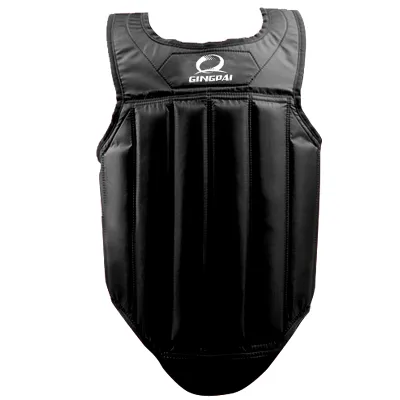
A standard boxing chest guard is designed to protect the central line of your torso. This gear typically covers the sternum, the solar plexus, and the upper abdomen, shielding these highly sensitive areas from direct, straight punches. Because the solar plexus is a primary target for straight lefts and jabs to the body, having dedicated padding over this nerve center can prevent you from getting winded or dropped by a well-placed shot.

However, chest guards have distinct coverage limitations. They generally offer minimal protection for the lower ribs, flanks, and the sides of your body where the liver and spleen are located. If your sparring partner throws wide hooks or shovel hooks to the body, a standard chest guard will leave these vulnerable lateral zones completely exposed to impact.
The primary advantage of a chest guard is its lightweight design and superior mobility. Because it does not wrap fully around your sides or hips, it allows for unrestricted core rotation, bending, and twisting. This freedom of movement is highly beneficial for defensive fighters who rely on slipping, ducking, and rapid footwork to avoid punches entirely rather than absorbing them on their guard.
Additionally, the open-back and open-side designs of most chest guards offer excellent breathability. In hot, humid gym conditions, this ventilation is crucial for keeping your core temperature down and reducing sweat buildup. If you are a beginner learning distance management, or an intermediate fighter engaging in high-volume, low-impact technical sparring, a chest guard provides a practical balance of central protection and athletic mobility.
Rib Protectors: Targeted Defense for Side Impacts
Rib protectors are specialized pieces of gear engineered specifically to shield the lower ribs, flanks, and lateral organs. The liver, located on the right side of your torso, and the spleen, on the left, are highly vulnerable to deep body hooks. A powerful liver shot can instantly incapacitate a fighter, making targeted lateral protection incredibly valuable during intense body-punching drills.
These protectors typically wrap around the midsection, focusing their thickest padding on the sides of the waist while leaving the upper chest relatively open. This design ensures that the lower rib cage is fully cradled, absorbing the crushing force of lateral hooks and dispersing it across a wider surface area. Many rib protectors feature adjustable strapping systems that allow you to secure the guard tightly against your flanks, preventing it from shifting during rapid movement.
Depending on the design, a rib protector can function as standalone gear or as a supplementary layer worn under or over other training equipment. Some minimalist rib belts are slim enough to fit comfortably under standard boxing trunks, providing a hidden layer of defense during technical sparring. Other, heavier models are designed to be worn externally, featuring thick foam barriers specifically built to withstand repetitive, high-impact lateral strikes.
A rib protector is the ideal choice for fighters who frequently face hook-heavy opponents or those who are actively recovering from rib cartilage damage. It is also highly useful for heavy bag work and partner drills where the primary focus is practicing powerful body hooks. By isolating protection to the midsection, a rib protector keeps your upper chest and shoulders completely free, allowing for natural punching mechanics and a tight high guard.
Full Body Armor: Maximum Coverage for Heavy Sparring
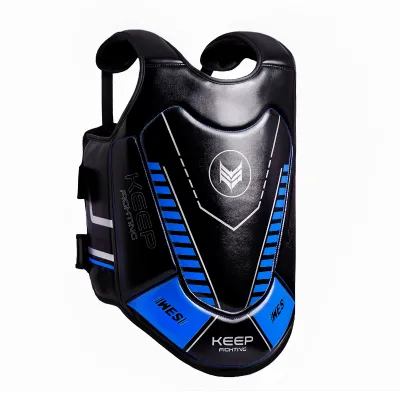
Full body armor, often referred to as a coach’s protector or heavy-duty body shield, offers the most comprehensive coverage available in boxing. This gear wraps entirely around your torso, covering the chest, ribs, abdomen, and flanks, and sometimes extending up to the collarbone or around the back. It is designed to turn your entire midsection into a highly shielded zone, capable of absorbing maximum-force impacts from elite strikers.
The primary function of full body armor is total impact dispersion. It utilizes multiple layers of high-density foam, gel inserts, and sometimes plastic reinforcement plates to distribute the force of a punch across the entire surface of the protector. This ensures that even a devastating blow to the solar plexus or liver is reduced to a manageable thud, protecting the wearer from internal bruising, windedness, and structural injury.
However, this extreme level of protection comes with significant practical trade-offs. Full body armor is heavy, bulky, and inherently restrictive. It limits your ability to rotate your core, bend at the waist, and move your arms freely. The added weight can also accelerate fatigue, making your shoulders and legs feel heavy much faster during a long training session.
In tropical climates, full body armor can act like a sauna suit, trapping body heat and sweat against your skin. This lack of ventilation can lead to rapid dehydration and heat exhaustion if you do not manage your training intervals and hydration carefully. Because of these limitations, full body armor is rarely used for standard, high-mobility sparring.
Instead, full body armor is the standard for specific, high-intensity scenarios. It is indispensable for boxing coaches who must absorb hundreds of powerful body shots daily while holding mitts or Thai pads for professional fighters. It is also highly valuable for heavy contact amateur sparring sessions where fighters need to practice inside fighting and short-range power punching without the risk of injury.
How to Verify Fit, Condition, and Protection Standards
Regardless of the type of body protector you choose, verifying its fit and condition is essential for ensuring your safety in the ring. When trying on a protector, pay close attention to the strap and closure systems. The straps should be adjustable enough to secure the gear tightly against your torso without restricting your breathing or digging into your armpits. If the protector shifts, slides up, or twists when you move or throw a punch, it is either the wrong size or poorly adjusted.
You must also ensure that the gear does not limit your ability to maintain a proper boxing stance and guard. If the shoulder straps are too thick, they may prevent you from keeping your chin tucked or your elbows close to your ribs. Walk around the gym, throw a few light combinations, and practice slipping punches to verify that the protector allows for comfortable core twisting and natural arm movement.
Before purchasing or using a body protector, review the manufacturer’s specifications and labels. Look for details regarding the internal padding materials, such as multi-layered EVA foam, closed-cell foam, or shock-absorbing gel. Avoid relying on generic marketing claims like “complete protection” or “indestructible armor.” Instead, verify that the gear is rated for the specific combat sport you practice, as boxing protectors require different impact dispersion characteristics than those designed for taekwondo or karate.
Finally, establish clear stop-use conditions to determine when your body protector needs to be replaced. Over time, the internal foam of any protective gear will degrade, lose its elasticity, and compress permanently under repetitive impacts. Inspect your gear regularly for visible signs of wear, such as cracked outer synthetic leather, torn stitching, or failing Velcro closures that slip during training.
If you notice that the padding feels soft, hollow, or fails to rebound after being compressed, the protector can no longer safely disperse impact. Continuing to use a worn-out body protector transfers the shock of a punch directly to your ribs and internal organs, significantly increasing your risk of injury. In humid climates, also check for persistent mold or mildew buildup inside the lining, which can weaken the materials and pose skin health risks.
Frequently Asked Questions (FAQ)
Can I wear a rib protector and a chest guard together?
While it is technically possible to layer a slim rib belt under a standard chest guard, doing so is generally not recommended for active sparring. Layering multiple pieces of protective gear creates excessive bulk around your midsection, which can severely restrict your core rotation, bending, and overall mobility. This added bulk can also force you to alter your natural boxing stance and guard, potentially opening up new defensive gaps that opponents can exploit.
Furthermore, wearing both protectors simultaneously in a hot, humid environment will trap an extreme amount of body heat, leading to rapid dehydration and overheating. If you feel that a single chest guard or rib protector does not offer sufficient safety, it is much safer and more comfortable to upgrade to a dedicated full body armor unit designed to provide integrated, comprehensive coverage without the awkward overlapping of separate straps and buckles.
How do I know if my boxing body protector is worn out?
You can determine if your boxing body protector is worn out through a series of simple visual and tactile checks. First, press firmly on the high-impact zones of the protector; if the foam feels thin, mushy, or fails to spring back to its original shape immediately, the internal structure has collapsed. You should also inspect the outer cover for deep cracks, tears, or exposed padding, as well as checking that the straps, buckles, and Velcro closures still hold securely under tension.
A reliable test of a body protector’s integrity is how it performs during training. If you begin to feel a sharp, localized sting or persistent pain from punches that the gear previously absorbed with ease, the protector is no longer dispersing impact energy effectively. Once a body protector starts transferring shock directly to your body rather than spreading it across the padding, it has reached the end of its usable lifespan and must be replaced immediately to prevent serious injury.
Community discussion
Share your experience or ask a question. Comments are reviewed before publication.