
Selecting the right treadmill for your home gym in the Philippines requires balancing your personal fitness aspirations with the practical realities of your living space. Whether you are trying to maintain your running routine during the humid summer months or seeking a reliable indoor alternative when the rainy season keeps you off the local tracks, a home treadmill offers unparalleled convenience. Chris Sports provides a diverse lineup of fitness equipment, making it essential to evaluate how different models align with your training intensity, household footprint, and budget. By focusing on key structural and technical specifications, you can confidently select a machine that supports your long-term health journey.
Assess Your Available Space and Storage Needs
Before browsing specific models, you must carefully measure the physical footprint of your designated workout area. A treadmill requires more than just enough floor space to rest its frame; it demands adequate vertical and horizontal clearance to operate safely. Start by measuring the length and width of the floor space, keeping in mind that the machine will remain a permanent or semi-permanent fixture in the room.
Ceiling height is an often-overlooked factor that can severely limit your workout options, especially if you plan to use the incline features. When you run on an incline, your body rises several inches higher than your flat-surface running height. To calculate the minimum ceiling height required, add the height of the treadmill deck at its maximum incline to your own height, and then add at least an extra foot of clearance to prevent accidental head injuries.
Products mentioned in this guide
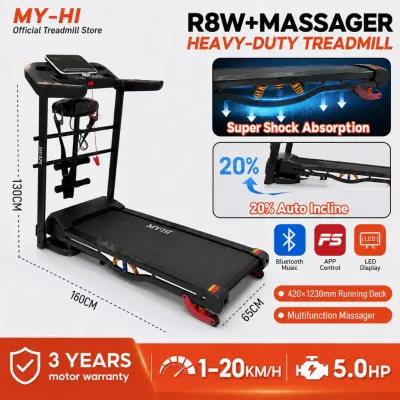
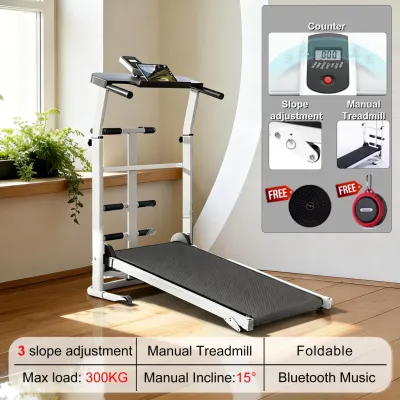
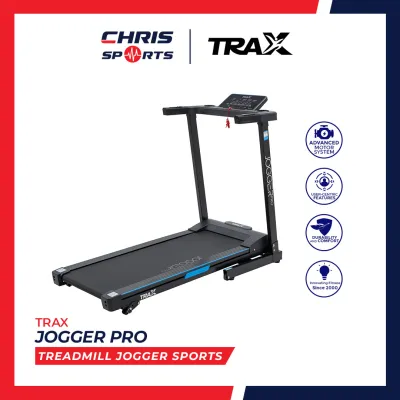
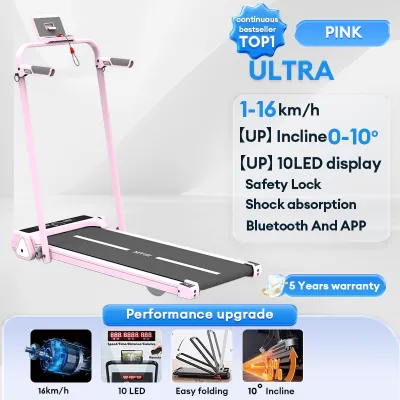
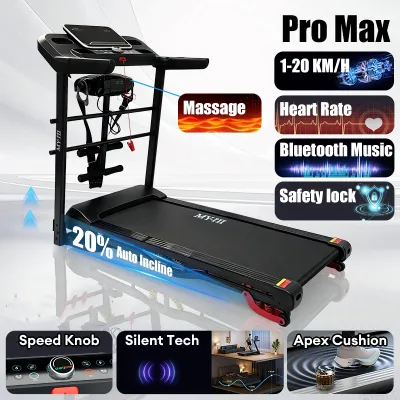
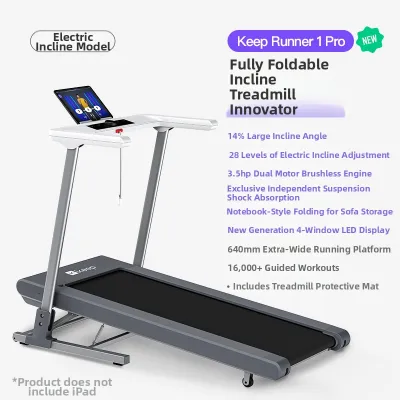
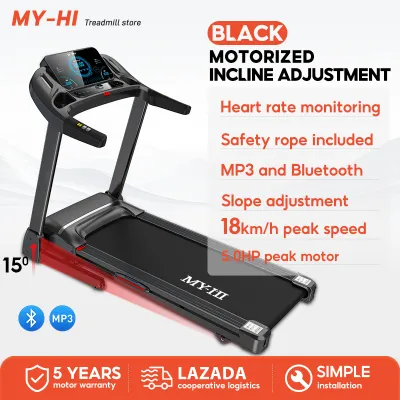
Prices are valid at publication and may change. Please refer to the product page for the latest price.
For urban dwellers in high-density areas like Metro Manila, where condominium living and compact apartments are common, storage design is a critical consideration. Folding treadmills feature hydraulic assist mechanisms that allow you to lift the deck upward when the machine is not in use, reclaiming valuable floor space for daily activities. However, while folding models offer excellent space-saving benefits, they may sometimes trade off a small degree of frame rigidity compared to heavy-duty, non-folding fixed-frame designs.
Safety clearances around the perimeter of the machine are non-negotiable for preventing injuries during a fall or sudden stop. Standard safety guidelines recommend leaving a clear, unobstructed zone behind the treadmill deck, as well as adequate open space on both sides of the machine. This ensures that if you lose your footing or need to dismount quickly in an emergency, you will not collide with walls, furniture, or other gym equipment.
Define Your Fitness Goals and Running Style
Your primary exercise modality dictates the level of structural durability and motor performance your treadmill must possess. If your routine consists primarily of light walking or casual jogging to meet daily step goals, a lighter, more compact entry-level model will likely suffice. These machines are engineered for lower-impact, steady-state cardio and do not require the heavy-duty reinforcement needed for high-velocity training.

Conversely, dedicated runners training for marathons or performing high-intensity interval training (HIIT) require a robust machine built to withstand repetitive, high-impact forces. High-speed running places immense stress on both the motor and the frame, demanding a sturdier build with a thicker deck and a more powerful motor. Choosing a machine that matches your highest expected workout intensity prevents premature wear and ensures a smoother, safer running experience.
The physical attributes of the primary users, including height and weight, must also guide your selection process. Taller users naturally have longer strides, which require a longer running surface to prevent them from accidentally stepping off the back of the belt. Additionally, heavier users exert greater force on the deck with each step, meaning the machine’s internal components must be rated to handle that specific load without straining the motor or compromising the deck’s structural integrity.
Joint protection is another vital consideration, particularly for those recovering from injuries or looking to minimize long-term wear on their knees and ankles. Look for models equipped with advanced shock absorption systems, which typically utilize elastomeric cushions or specialized deck suspension to absorb a portion of the impact energy. A well-cushioned deck significantly reduces the jarring forces transmitted to your joints compared to running on outdoor concrete or asphalt.
Essential Treadmill Specifications to Evaluate
Motor Power and Running Belt Size
When evaluating treadmill motors, it is crucial to understand the difference between continuous horsepower (CHP) and peak horsepower. CHP represents the motor’s ability to maintain a consistent power output over prolonged periods of continuous use, making it the most reliable metric for home fitness equipment. Peak horsepower, on the other hand, only indicates the maximum power the motor can reach for brief intervals, which does not accurately reflect everyday performance.
The dimensions of the running belt directly influence your comfort and safety during a workout. A belt that is too narrow can make you feel restricted, forcing you to constantly focus on maintaining a perfectly straight line rather than enjoying your run. For walking and light jogging, a standard belt width is usually sufficient, but high-speed running typically requires a wider and longer belt to accommodate natural lateral movement and stride elongation.
To ensure the longevity of your investment, verify that the motor specifications align with your household’s usage patterns. If multiple family members plan to use the treadmill consecutively, or if you intend to run at high speeds for extended periods, look for a higher CHP rating. A motor that constantly operates near its maximum capacity will overheat and degrade quickly, whereas a properly rated motor will run cooler, quieter, and last significantly longer.
Frame Stability and Console Features
A treadmill’s maximum user weight capacity is a direct indicator of its overall build quality and structural integrity. Always choose a model with a weight capacity that exceeds the weight of the heaviest user in your household by a safe margin, ideally at least twenty kilograms. This safety buffer ensures that the frame, motor, and belt can handle the dynamic forces generated during active running without flexing or shaking.
The console interface serves as the command center for your workouts, ranging from basic digital displays to highly interactive touchscreen systems. Basic consoles typically track essential metrics such as speed, distance, time, and estimated calories burned, which is perfect for users who prefer a straightforward, distraction-free workout. More advanced consoles offer built-in workout programs, virtual running routes, and wireless connectivity to sync with fitness apps or heart rate monitors.
The materials used in the frame construction, along with the total weight of the machine, play a major role in preventing unwanted movement during intense workouts. Heavy-duty steel frames provide the necessary ballast to keep the treadmill firmly anchored to the floor, eliminating the annoying rocking or sliding that can occur with lightweight, plastic-heavy models. While heavier machines are more challenging to move during initial setup, their superior stability offers a much safer and more professional training environment.
Matching Your Profile to a Chris Sports Setup
To simplify your decision, categorize your household into one of three distinct user profiles to find the most logical equipment configuration. Compact apartment walkers should prioritize folding models with a small footprint, lower motor power, and easy-to-use storage wheels. Dedicated home runners should focus on robust, high-CHP machines with spacious running belts and advanced shock absorption to support daily high-mileage training. Multi-user households require a versatile mid-to-high-tier treadmill with a durable motor and customizable user profiles on the console to accommodate varying fitness levels.
Establishing a realistic budget in Philippine Pesos (₱) is essential, and it should extend beyond the initial purchase price of the treadmill itself. When planning your investment, factor in the potential costs of professional delivery and on-site assembly, especially for heavy-duty models that require precise calibration. Additionally, set aside a small portion of your budget for long-term maintenance essentials, such as specialized belt lubricants and protective equipment mats, to keep your machine running smoothly.
Before finalizing your purchase, always verify current stock availability, exact model specifications, and warranty terms directly with authorized Chris Sports retailers or their official brand stores. Because product lineups and technical features can change, confirming these details directly ensures you receive genuine equipment backed by local customer support and repair services. Taking this final step protects your investment and guarantees that your new home gym setup will serve you reliably for years to come.
Frequently Asked Questions (FAQ)
How much clearance do I need behind a treadmill?
Maintaining a clear, unobstructed safety zone behind your treadmill is critical for preventing severe friction burns or impact injuries if you happen to slip or fall off the moving belt. If you lose your balance, the rapidly moving belt will quickly push you toward the rear of the machine; if a wall or piece of furniture is too close, you could become trapped against the spinning belt. To ensure a safe fall zone, always consult your specific Chris Sports user manual for the exact clearance distance recommended for your particular model.
Do I need a special floor mat for my treadmill?
Using a dedicated equipment mat underneath your treadmill is highly recommended to protect both your home’s flooring and the machine’s internal components. The mat acts as a protective barrier that absorbs heavy vibrations, significantly reducing the noise transmitted through the floor to adjacent rooms or lower-level neighbors. Furthermore, it prevents carpet fibers, dust, and pet hair from being sucked into the motor housing, while also shielding hardwood or tile floors from scratches and sweat accumulation. Ensure the mat you select is compatible with your floor type and large enough to fully accommodate the treadmill’s footprint.

Community discussion
Share your experience or ask a question. Comments are reviewed before publication.