
Selecting the perfect soccer ball from Decathlon requires looking beyond the vibrant colors and panel designs. To find the ideal model, you must match the ball’s construction to your primary playing environment, training frequency, and skill level. Decathlon, primarily through its soccer brand Kipsta, categorizes its lineup into distinct tiers designed for casual recreation, structured training, and competitive matches. By understanding how these categories align with your needs, you can ensure optimal performance, a satisfying touch, and excellent durability.
For players in the Philippines, this choice is heavily influenced by local conditions. Whether you are kicking a ball around on a concrete barangay court, practicing drills on an artificial turf pitch in Manila, or competing in a league on natural grass during the rainy season, the surface and climate dictate which ball will survive and perform. Choosing a ball that cannot withstand abrasive concrete will lead to rapid wear, while using a basic recreational ball in a high-stakes match can compromise your passing accuracy and ball control.
Understanding Your Playing Scenario and Local Surface Conditions
To make an informed decision, you must first define your primary playing scenario. Soccer activities generally fall into three categories: casual kickabouts with friends, structured team training sessions, and competitive league matches. Each scenario demands different characteristics from a soccer ball. Casual play requires extreme durability to survive rough handling, training requires consistent performance and shape retention over hundreds of repetitions, and matches demand precise aerodynamics, optimal weight, and minimal water absorption.
Products mentioned in this guide
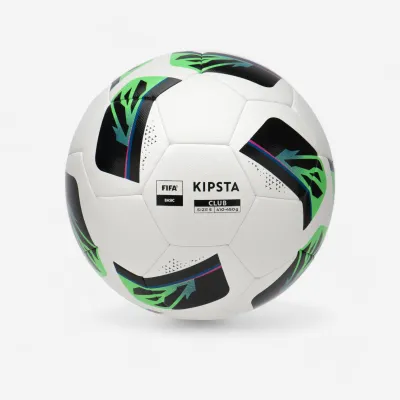
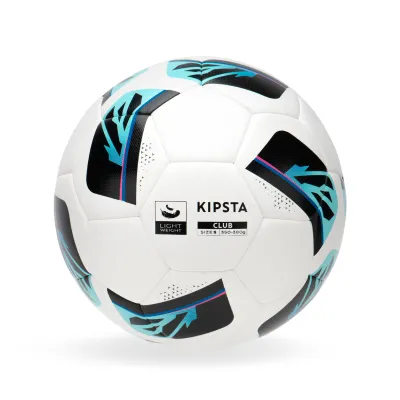
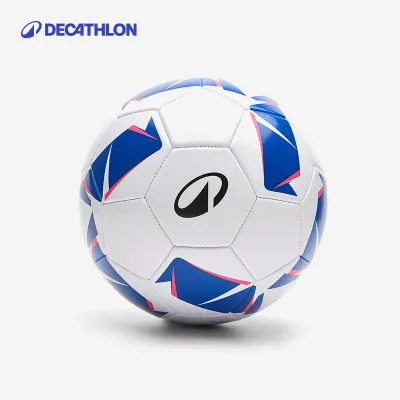
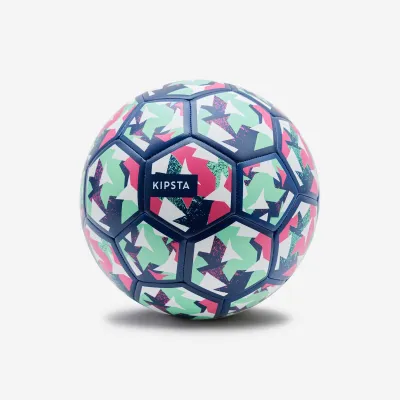
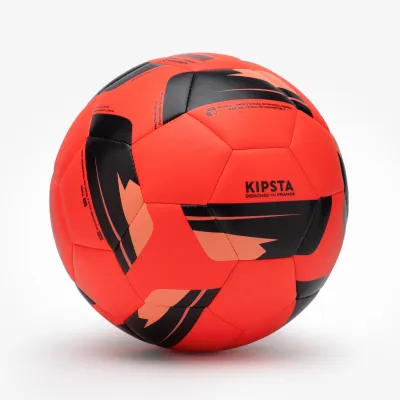
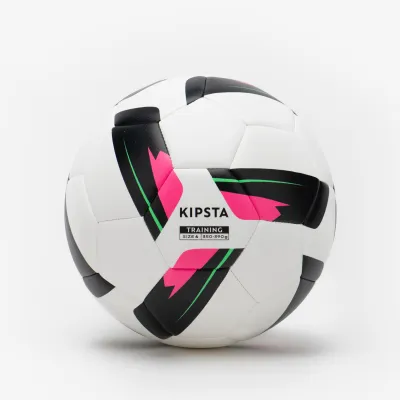
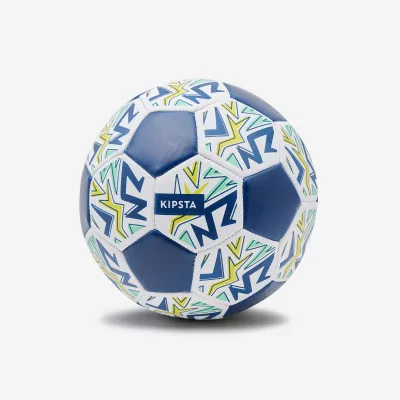
Prices are valid at publication and may change. Please refer to the product page for the latest price.
In the Philippines, the playing surface is one of the most critical factors determining a ball’s lifespan. Multi-purpose concrete courts, commonly found in local barangays, are highly abrasive and will quickly tear through premium, soft-skinned match balls. Artificial turf pitches offer a more consistent surface but can still generate high friction and heat. Natural grass fields, while traditional, often become uneven, hard-packed during the dry season, or muddy and waterlogged during the monsoon months.
The tropical Philippine climate also plays a major role in how materials behave. High humidity and intense heat can accelerate the degradation of adhesives used to bond panels together. Furthermore, sudden afternoon downpours can quickly turn a dry pitch into a wet, slippery environment. If a soccer ball absorbs too much water, it becomes heavy and sluggish, increasing the risk of ankle or foot injuries and ruining the flow of the game.
To navigate these challenges, always check the manufacturer’s intended use labels and technical specifications on Decathlon’s packaging. Kipsta balls are clearly marked with their recommended surfaces and playing frequencies. Relying solely on the visual design or assuming all soccer balls perform the same on concrete and grass is a common mistake that often leads to premature product failure.
Choosing a Decathlon Soccer Ball for Casual Play and Recreation
For weekend kickabouts, family gatherings, or spontaneous games on local streets and concrete courts, a recreational soccer ball is the most practical choice. In these settings, high-end performance features like perfect aerodynamic flight take a backseat to sheer durability and affordability. You need a ball that can repeatedly strike concrete walls, asphalt, or gravel without tearing apart or losing its shape, all while remaining within a budget-friendly price range of around ₱400 to ₱800.

When browsing Decathlon’s recreational range, pay close attention to the construction details listed on the product label. Look for machine-stitched panels, which offer a reliable and cost-effective construction method for casual play. These balls typically feature a durable thermoplastic polyurethane (TPU) or polyvinyl chloride (PVC) outer casing. Many recreational models also incorporate a thick foam-backed layer beneath the outer skin, which helps cushion impacts on hard surfaces and provides a more comfortable touch for players who might not be wearing specialized soccer cleats or shin guards.
Size and weight are also important considerations for casual games, which often feature mixed age groups and varying physical abilities. Decathlon offers recreational balls in standard sizes, allowing you to match the equipment to the players. A lighter, slightly softer ball is highly recommended for family games to prevent injuries and keep the activity enjoyable for younger participants.
To verify if a ball is built for this level of play, look for terms like “recreational,” “beginner,” “leisure,” or “hard ground” in the product specifications. These models are engineered specifically to withstand the high-friction wear of abrasive surfaces, making them the most cost-effective option for casual players who want a durable ball that does not require delicate handling.
Selecting the Right Ball for Regular Training Drills
If you are a club player, coach, or dedicated enthusiast participating in structured training sessions multiple times a week, you need a ball that balances durability with a realistic touch. Training drills involve repetitive passing, shooting, and dribbling, which put consistent stress on the ball’s seams and bladder. For these demanding routines, the ball must maintain a perfectly spherical shape, deliver a predictable flight path, and resist water absorption during humid or rainy training sessions.
When examining Decathlon’s intermediate training range, look for hybrid construction. Hybrid-stitched balls represent a major technological step up from basic machine-stitched models. In a hybrid ball, the panels are first stitched together by machine, and then the seams are chemically bonded and sealed internally. This dual construction method hides the stitching away from the abrasive surface, protecting the threads from wearing out while creating a highly effective barrier against moisture and water intake.
Another critical specification to check on the training ball’s spec sheet is the bladder type. Decathlon training balls typically utilize either butyl or latex bladders. For regular training, a butyl bladder is highly recommended. Butyl rubber has excellent air retention properties, meaning the ball can hold its pressure for weeks without needing to be reinflated before every practice. This is a massive convenience for coaches managing large gear bags or players who want to grab their ball and head straight to the pitch.
To maximize the lifespan of your training equipment, practice proper gear rotation. If you are managing team sessions, rotating through a set of several identical training balls ensures that no single ball takes all the punishment. This practice distributes the wear evenly across your inventory, ensuring that your training gear remains consistent in feel and performance throughout the entire season.
Finding Match-Ready Decathlon Soccer Balls for Competitive Games
When it comes to official league matches and tournament play, minor inconsistencies in a soccer ball can have a major impact on the outcome of a game. Competitive players require a ball that delivers predictable aerodynamics, consistent rebound height, and an exceptional touch. Match-ready balls must meet strict structural standards to ensure that every pass, shot, and cross behaves exactly as the player intends, regardless of the pressure of the game.
The defining feature of a premium Decathlon match ball is thermal bonding. Unlike machine-stitched or hybrid balls, thermally bonded panels are glued together using heat and a specialized mold, resulting in a completely seamless surface. This seamless construction ensures a perfectly round shape, which minimizes aerodynamic drag and prevents the ball from knuckling or veering off course mid-air. Furthermore, the lack of stitched seams means water absorption is virtually zero, allowing the ball to maintain its exact weight and performance characteristics even on a heavily soaked grass pitch during a tropical downpour.
To guarantee that a ball is suitable for competitive tournaments, look for official certification marks printed directly on the outer casing. Decathlon’s top-tier match balls are submitted to rigorous independent testing to earn “FIFA Quality” or “FIFA Quality Pro” certifications. These tests evaluate critical performance parameters, including weight consistency, sphericity, roundness retention after thousands of high-velocity impacts, water absorption limits, and bounce uniformity at various temperatures.
It is crucial to note that these high-performance match balls are highly specialized pieces of equipment. They are designed exclusively for use on high-quality natural grass or modern, well-maintained artificial turf pitches. Using a thermally bonded match ball on concrete courts, gravel, or poor-quality turf filled with sharp debris will rapidly degrade the outer casing, split the delicate thermal bonds, and void any performance warranties. To protect your investment, reserve these premium balls strictly for match days and high-quality playing surfaces.
Cross-Scenario Compatibility: Can One Ball Handle Everything?
For many players and parents in the Philippines, buying multiple highly specialized soccer balls may not be practical or necessary. If you are looking for a single ball that can handle casual weekend games on turf, mid-week training drills, and occasional competitive matches, you will need to look for a versatile “hybrid” model. Decathlon’s mid-tier hybrid training balls are designed specifically to bridge this gap, offering a balanced compromise between rugged durability and refined performance.
However, choosing a single ball for all scenarios requires an understanding of the inevitable trade-offs involved. If you take a high-end match ball and play with it on a concrete barangay court, you will ruin its premium outer casing and thermal seals within a few sessions. Conversely, if you bring a heavy, hard-skinned recreational ball to a competitive match on turf, you will struggle with a stiff touch, unpredictable bounces, and a flight path that feels heavy and unresponsive.
To help you decide whether to buy one versatile ball or invest in a specialized multi-ball setup, consider this simple decision checklist:
- Primary Surface: If more than 50% of your games take place on concrete or asphalt, prioritize a dedicated, abrasion-resistant recreational ball. Do not attempt to use a match ball on these surfaces.
- Playing Frequency: If you play casually once a week or less, a single mid-tier hybrid training ball will easily meet all your needs without breaking the bank.
- Competitive Goals: If you train multiple times a week and play in an organized weekend league, you will benefit greatly from owning two balls. Use a durable hybrid ball for your intense training drills, and keep a pristine, thermally bonded match ball in your gear bag reserved exclusively for official match play on grass or turf.
Maintenance and Storage Tips for Humid Climates
Proper maintenance is essential to protecting your soccer ball from the harsh, humid tropical climate of the Philippines. Sweat, mud, and moisture can accumulate on the ball’s surface during play, and if left untreated, they can degrade the synthetic leather, weaken the panel stitching, and damage the valve. Taking a few minutes to care for your ball after each session will significantly extend its lifespan and maintain its performance.
After playing, always clean the ball using safe, low-risk methods. Wipe away mud, dirt, and grass stains with a soft, damp cloth. Avoid using harsh chemical cleaners, solvents, or abrasive scrubbing pads, as these can strip away the protective outer coatings of the synthetic leather and compromise the thermal or hybrid panel bonds. Once clean, dry the ball thoroughly with a clean towel before storing it.
Storage conditions are equally critical in high-humidity environments. Always store your soccer ball in a cool, dry, and well-ventilated indoor space. Avoid leaving your ball in direct sunlight, inside a hot car trunk, or on an exposed outdoor balcony. Prolonged exposure to extreme heat and ultraviolet (UV) radiation will warp the internal bladder, dry out the synthetic outer casing, cause colors to fade, and weaken the adhesive bonds holding the panels together.
Finally, establish a routine for regular pressure checks. Temperature fluctuations—such as moving from a cool, air-conditioned room to a hot, humid outdoor pitch—cause the air inside the bladder to expand and contract. Use a reliable hand pump equipped with a built-in pressure gauge to adjust the inflation level. Always refer to the recommended pressure range printed directly around the ball’s valve (typically between 8 and 11 PSI or 0.6 to 0.8 bar) to ensure a true bounce and prevent over-inflation, which can stretch the seams and permanently warp the ball’s shape.
Frequently Asked Questions (FAQ)
What size soccer ball should I choose for my age group?
Selecting the correct ball size is vital for a player’s physical development, skill acquisition, and safety on the pitch. Decathlon offers its soccer ball ranges in three standard sizes:
- Size 3: Designed for young children, typically under the age of 8. These balls are smaller and lighter, making them easier for young players to control and kick without straining their muscles.
- Size 4: Engineered for youth players between the ages of 8 and 12. This intermediate size helps developing players transition their skills before moving up to adult equipment.
- Size 5: The standard size used for players aged 13 and older, as well as in all official professional and amateur matches worldwide.
Always verify the size printed on the product label before purchasing, as Decathlon provides these standard sizes across their various recreational, training, and match quality tiers.
Can I use a Decathlon futsal ball on outdoor concrete courts?
While it may be tempting to use a futsal ball on outdoor concrete courts due to its heavy feel, it is not recommended. Futsal balls are highly specialized pieces of equipment designed specifically for indoor sports halls or polished outdoor courts. They feature a low-bounce bladder, which is filled with foam or synthetic fibers to keep the ball low to the ground, and a softer outer skin optimized for clean, flat indoor surfaces.
Using a futsal ball on rough, abrasive outdoor concrete will quickly shred its outer casing and compromise its internal structure. Additionally, the low-bounce characteristics of a futsal ball will feel highly unnatural and unresponsive on uneven outdoor surfaces, making it difficult to pass or shoot effectively. For outdoor concrete play, you should always choose a dedicated outdoor recreational soccer ball designed with a durable, high-abrasion TPU or rubber casing.
Community discussion
Share your experience or ask a question. Comments are reviewed before publication.